
 Azzam Bilal Chamdy
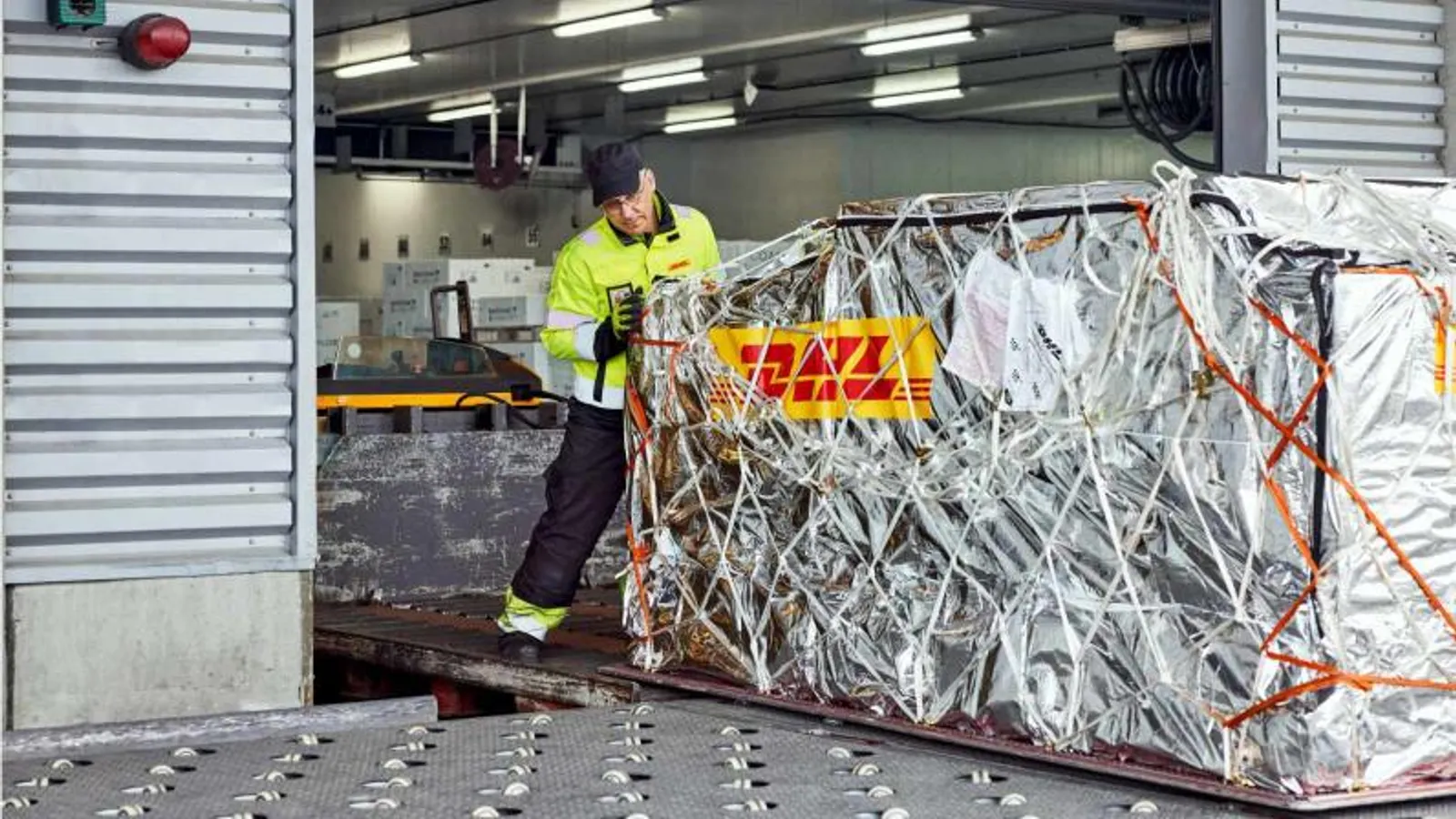
As the global pharmaceutical landscape undergoes a profound transformation—driven by the rise of complex biologics, life-saving vaccines, and the globalization of clinical trials—the demand for highly specialized, temperature-sensitive logistics has reached a fever pitch. In response to this critical market shift, DHL is aggressively expanding its Health Logistics Cold Chain Network, a sophisticated infrastructure initiative designed to ensure the integrity of sensitive medical goods as they traverse the globe.
By integrating advanced temperature-controlled aviation technology with strategic ground infrastructure, DHL is positioning itself as a linchpin in the healthcare supply chain, linking North American and European manufacturing hubs with the rapidly evolving markets of Asia-Pacific.
Main Facts: Strengthening the Pharmaceutical Lifeline
The core of DHL’s recent expansion lies in the optimization of its "healthcare corridors." These are not merely standard shipping routes; they are dedicated, GDP-compliant (Good Distribution Practice) channels designed specifically for the transport of temperature-sensitive pharmaceuticals, biologics, and clinical trial materials.
According to DHL Freight spokesperson Laura Lehnen, these corridors were established in direct response to a significant uptick in customer demand for reliable, end-to-end connectivity between key global healthcare markets. The network utilizes a fleet of Boeing 777 aircraft, which are uniquely equipped with three distinct temperature-controlled compartments. This multi-zone capability allows the logistics giant to transport diverse medical products—each requiring specific climate environments—on a single flight without compromising efficacy.
The network’s operational footprint is anchored by specialized gateways, most notably the Cincinnati/Northern Kentucky International Airport (CVG) hub. This facility serves as a critical nexus for cold chain operations, offering advanced storage solutions and specialized handling equipment that ensures compliance with the stringent regulatory requirements governing pharmaceutical transit.
Chronology: A Roadmap of Strategic Investments
DHL’s commitment to the healthcare sector is the result of a multi-year strategic roadmap aimed at hardening its infrastructure against the vulnerabilities of global supply chain disruptions.
- Early 2025: DHL formalizes its focus on dedicated healthcare corridors, identifying the need for higher-frequency, temperature-controlled routes between the West and the Asia-Pacific region.
- February 2026: DHL Group launches the Brussels (BRU) to Cincinnati (CVG) route, a flagship corridor specifically designed to bridge the gap between European pharmaceutical innovation and the North American market.
- Current Phase (Mid-2026): The company is currently optimizing its capacity to handle the surge in inbound volume from Asia, aligning its air freight availability with the specific requirements of pharmaceutical hubs in the region.
- Near-Future (2026-2027): DHL is set to roll out specialized temperature-controlled dollies. These assets will serve as a vital buffer, protecting pharmaceutical shipments from ambient temperature fluctuations during the transfer between aircraft and climate-controlled warehouse facilities, particularly during extreme weather events.
- 2027 and Beyond: The company has announced the development of a new airside facility at CVG, which will provide dedicated storage for Unit Load Devices (ULDs). This will be complemented by a new off-airport facility focused on ULD build-up and break-down, significantly increasing the total volume of temperature-sensitive cargo DHL can process at its North American gateway.
Supporting Data: The Shift in Trade Flows
The pharmaceutical industry is currently characterized by a "hub-and-spoke" model, where high-value, R&D-intensive manufacturing occurs in North America and Europe, while production of essential components and finished goods increasingly shifts to Asia.
DHL’s data indicates a pronounced volume weight toward inbound shipments from Asia. This shift reflects the evolving manufacturing strategies of major pharmaceutical conglomerates that are seeking to leverage Asian manufacturing hubs to serve global demand.
"We are seeing stronger demand from pharmaceutical manufacturing hubs in North America and Europe to Asia," Lehnen noted. "In turn, current volume expectations are weighted toward inbound Asia shipments, with most of the corridor’s available air freight capacity dedicated to those Asia Pacific trade flows."
To quantify this, the logistics industry relies on the "Cold Chain Index," which measures the volatility of transit times versus the stability of temperature maintenance. By deploying its Boeing 777 fleet on these specific routes, DHL is aiming to reduce "dwell time"—the amount of time sensitive cargo spends on the tarmac. With the upcoming investment in five specialized dollies and a new airside facility, the company aims to eliminate nearly 95% of the thermal risks currently associated with ground handling at major hubs like CVG.
Official Responses: Aligning Strategy with Market Evolution
The leadership at DHL emphasizes that their logistics strategy is intentionally flexible. Rather than locking themselves into static, unidirectional routes, the company is building a "bidirectional" network.
"DHL can support both directions of trade as customer demand evolves and manufacturing and distribution patterns continue to develop," said Lehnen. This philosophy is essential in an era where trade policy, geopolitical shifts, and healthcare crises can alter the movement of goods overnight.
The expansion at CVG is supported by a broader regional strategy. In addition to the airport hub, DHL maintains a dedicated life sciences and healthcare facility in Indianapolis, Indiana. By linking the CVG air gateway with the Indianapolis storage facility, DHL creates a "closed-loop" system that minimizes the time pharmaceutical products spend in transit, thereby reducing the risks of spoilage and regulatory non-compliance.
Implications: The Competitive Landscape of Life Sciences Logistics
DHL is not operating in a vacuum. The race to capture the high-margin, high-complexity healthcare logistics market has intensified as global players recognize that pharmaceuticals are among the most resilient categories in international trade.
The Rivalry
Competitors such as FedEx have been moving aggressively to carve out their own share of the market. In June 2025, FedEx launched a specialized suite of services focused exclusively on life sciences and pharmaceutical logistics. This initiative was designed to capitalize on the same trends driving DHL: the need for visibility, temperature integrity, and regulatory compliance. FedEx also solidified its own route from Dublin (DUB) to Indianapolis (IND), directly targeting the Irish pharmaceutical manufacturing sector—a major global hub for medical production.
The Regulatory Imperative
The primary implication of these developments is the rising standard for "compliance-as-a-service." Logistics providers are no longer just transportation companies; they are now partners in the regulatory compliance process. Because pharmaceutical products are subject to stringent oversight by agencies like the FDA and the EMA, any failure in the cold chain can lead to massive financial losses and, more importantly, public health risks.
DHL’s move to invest in off-airport facilities and airside ULD storage signals a shift toward "total environment control." By taking responsibility for the cargo from the moment it leaves the production line to the moment it arrives at the distribution center, DHL is effectively insulating pharmaceutical manufacturers from the risks associated with third-party logistics fragmentation.
Long-Term Economic Impact
For the broader economy, the growth of these cold chain networks means greater stability for the pharmaceutical supply chain. During the recent past, global supply chain shocks highlighted the fragility of vaccine and medicine delivery. By investing in permanent, robust, and scalable infrastructure, companies like DHL are providing the "industrial muscle" necessary to ensure that future healthcare innovations—whether they be personalized gene therapies or mass-produced vaccines—can reach patients regardless of their geographical location.
As the industry looks toward 2027 and beyond, the competition between DHL, FedEx, and other logistics giants will likely center on the technological integration of the cold chain. We can expect to see further integration of IoT (Internet of Things) devices for real-time tracking, AI-driven demand forecasting, and an even deeper integration between air and ground logistics to ensure that the "last mile" of the cold chain is as secure as the "first mile."
In conclusion, DHL’s expansion of its Health Logistics Cold Chain Network is a strategic imperative that mirrors the maturation of the global pharmaceutical market. Through a blend of high-capacity aviation assets, sophisticated ground-level infrastructure, and a keen focus on the evolving needs of the Asian-Pacific and Western trade corridors, the company is effectively building a modern-day silk road for medicine—one that prioritizes the cold, constant, and compliant delivery of life-sustaining goods.

 Reynand Wu

 Nila Kartika Wati

 Ammar Sabilarrohman

 Asep Darmawan

 Asro

 Layla Zulfa


 Muslim
