
 Azzam Bilal Chamdy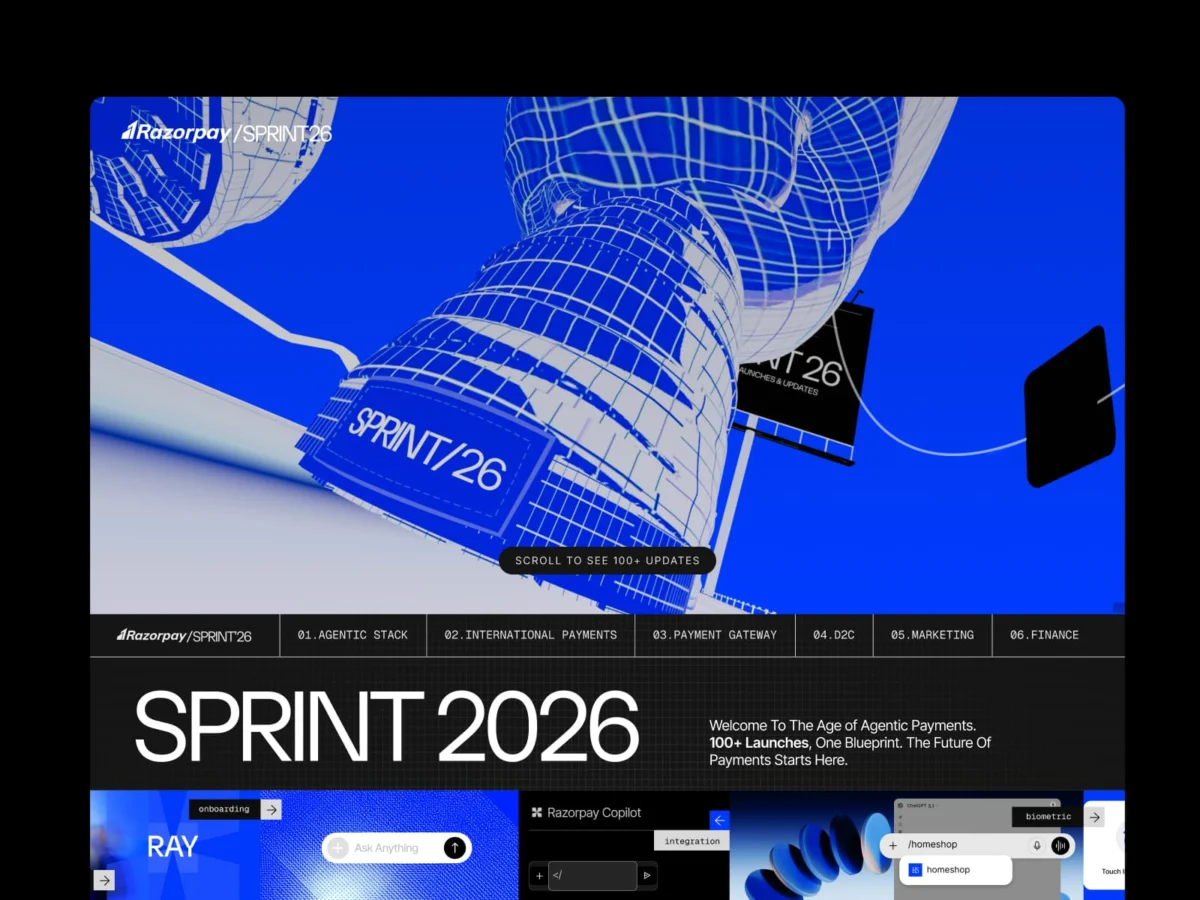
In the hyper-competitive world of B2B fintech, there exists a rigid, unspoken manifesto for product marketing. The script is familiar: keep the interface sterile, emphasize “trust signals” above all else, lead with a feature-heavy pricing table, and ensure the hero section features a pristine shot of a software dashboard. It is a playbook designed to signal reliability, but it often results in a sea of digital sameness.
Razorpay, the Indian fintech giant, decided to burn that playbook.
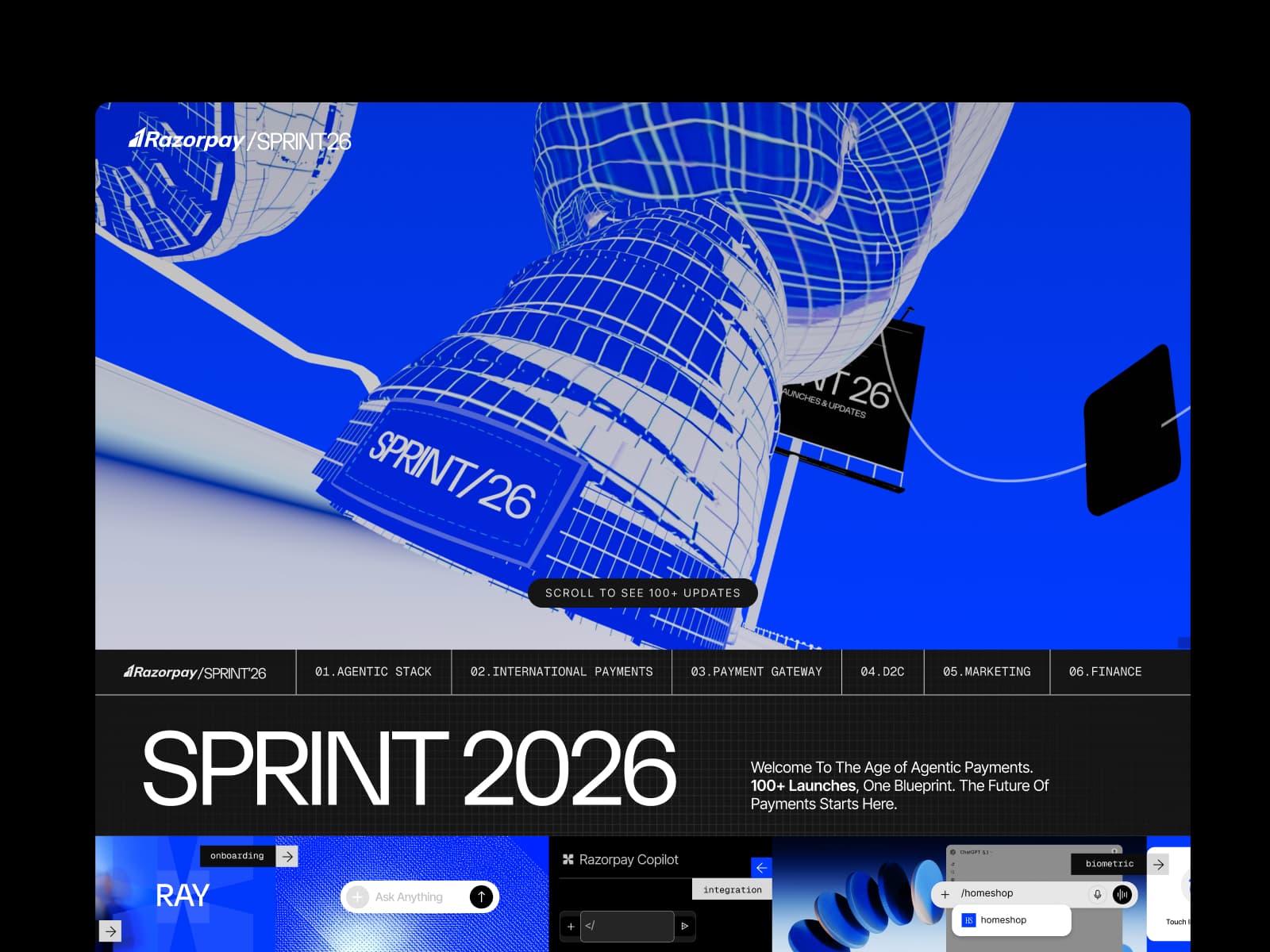
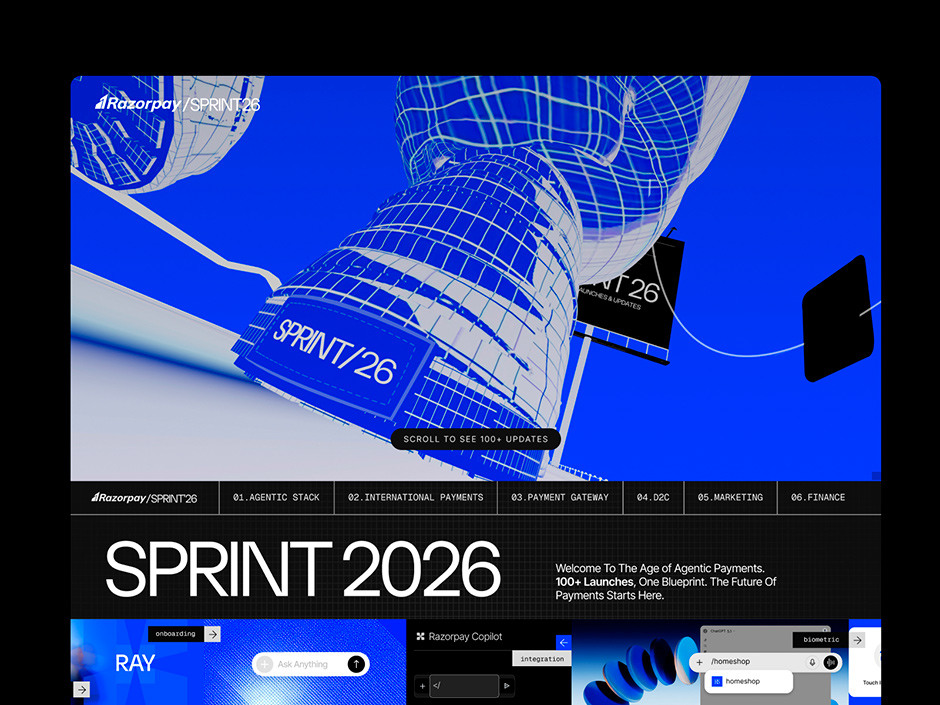
For its 2026 annual product showcase, Sprint26, the company unveiled a digital experience that eschews traditional corporate minimalism in favor of a surreal, narrative-driven journey. The site opens not with an API key or a payment gateway demo, but with a massive, hyper-realistic 3D sneaker floating in a void. It is a bold, jarring, and highly intentional departure from industry norms—a deliberate act of creative rebellion that signals a shift in how fintech products are launched, perceived, and consumed.
The Chronology of a Disruption
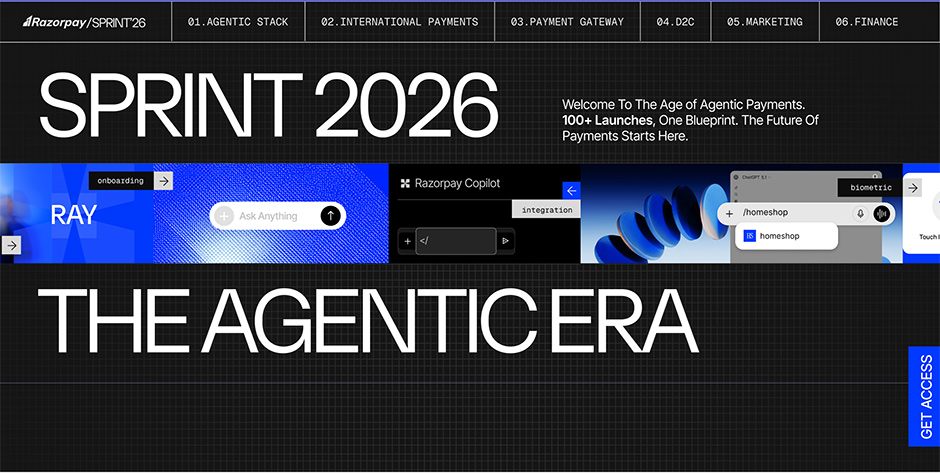
Sprint26 is the culmination of Razorpay’s year-long innovation cycle. Historically, such events are treated as static landing pages—digital brochures housing a list of press releases. However, the 2026 edition aimed to consolidate over 100 distinct product updates into a single, cohesive narrative.
The process began with a fundamental design brief: Don’t just list the updates; tell a story.
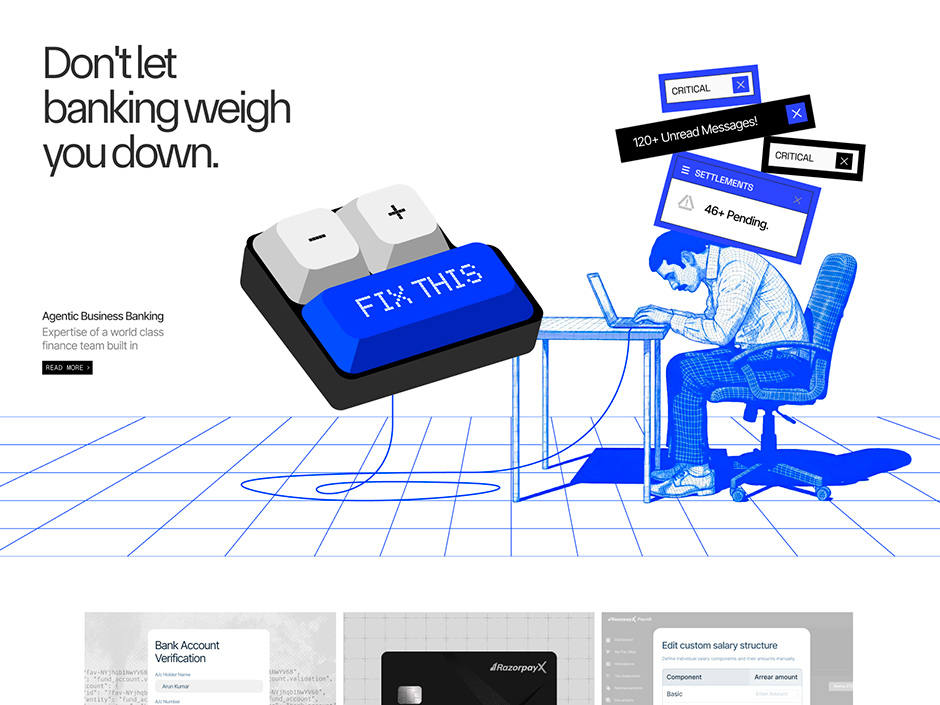
The creative team realized early on that a grid of product cards would fail to capture the magnitude of the six verticals being announced: Agentic Stack, International Payments, Payment Gateway, D2C, Marketing, and Business Banking. The development phase was a rigorous two-month sprint, executed entirely in-house by Razorpay’s Communication Design team. By bypassing external agencies and keeping the build within the design unit, the team eliminated the "translation loss" that often occurs when designers hand off complex visions to external developers.
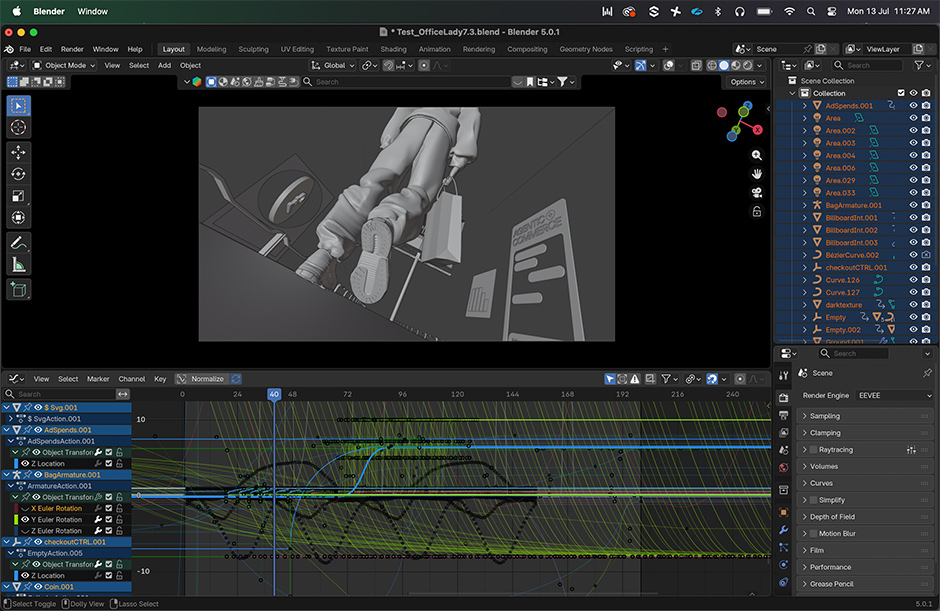
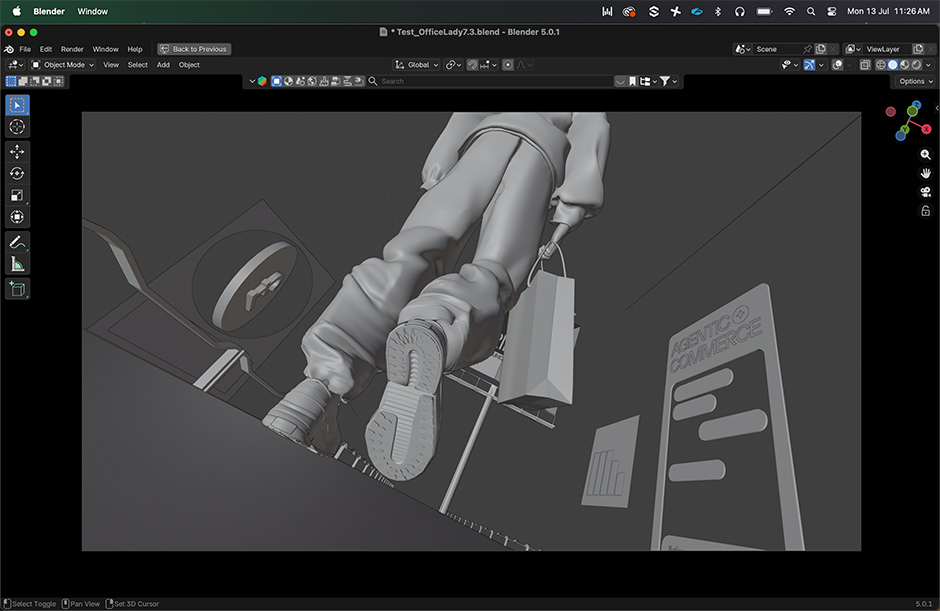
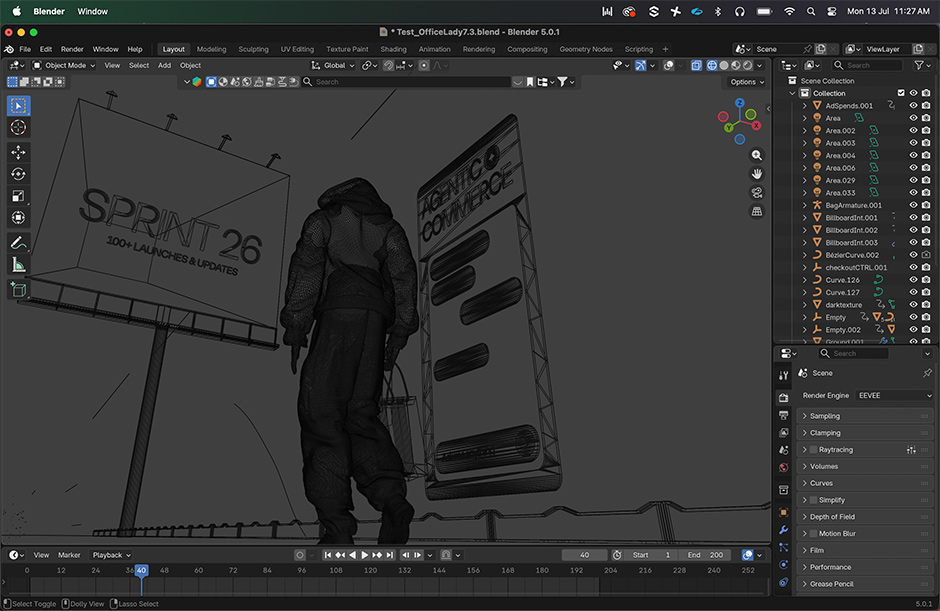
The project utilized a cutting-edge stack—Webflow, Rive, WebGL, Three.js, and Blender Studio—to create a seamless, 3D-spatial environment. From the first frame to the final scroll, the team ensured that the technology served the narrative, not the other way around.
The Central Metaphor: A Shopper’s Journey
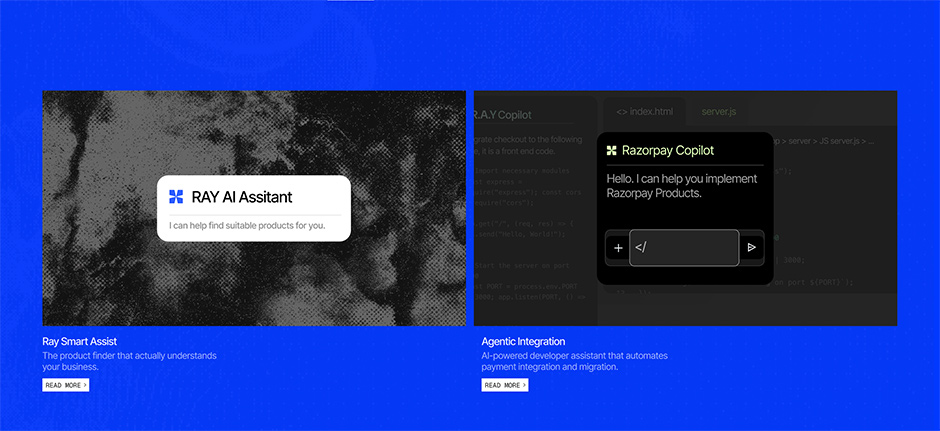
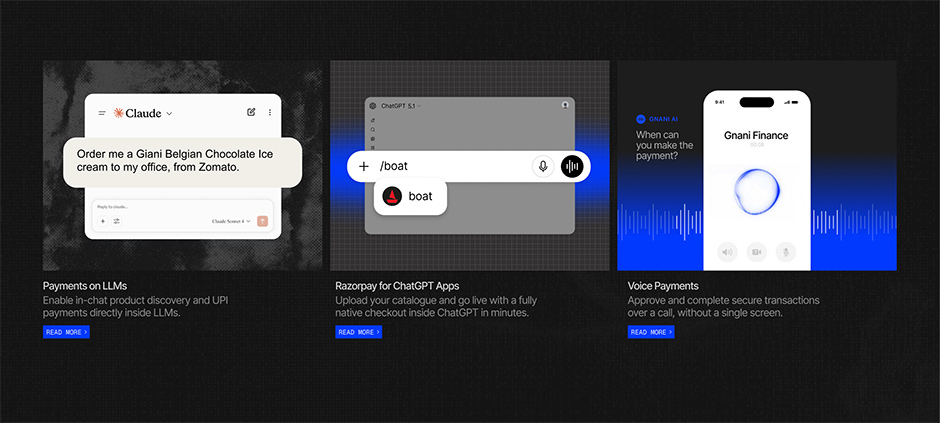
The decision to lead with a giant shoe was not a random creative whim; it was a thesis statement. The core of Sprint26 is the announcement of "Agentic Payments"—a future where commerce is no longer confined to static checkout pages. In this vision, AI agents facilitate the entire shopping experience—browsing, deciding, and transacting—within conversational interfaces.
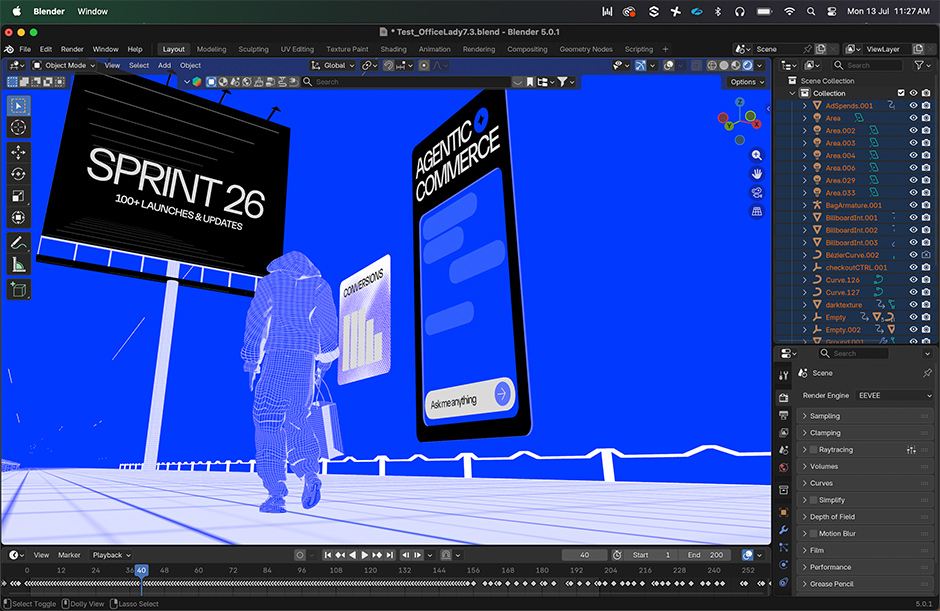
By using the sneaker as a metaphorical "entry point," the website mirrors the user’s journey through this new AI-led commerce ecosystem. As the visitor scrolls, a digital shopper appears, walking through a virtual environment that gradually populates with Razorpay’s new infrastructure. The shoe becomes the symbol of the end-consumer’s journey, while the background shifts to reveal the complex, behind-the-scenes engineering powering that purchase.
This is not a list of features; it is an immersive environment. The user doesn’t just read about the product; they "walk" through the architecture of the future of payments.
Technical Execution: Data and Interactivity
The technical prowess required to pull off Sprint26 is significant. The site features over 100 individual scroll-triggered interactions, all built using Rive. Unlike traditional animations, which can be resource-heavy and sluggish, Rive’s runtime, which compiles to WebAssembly, allowed the site to maintain high performance while housing complex, interactive state machines.
The Anatomy of the Tech Stack:
- Narrative Flow: Three.js and WebGL provided the backbone for the 3D spatial transitions, allowing for the smooth movement between the six product verticals.
- Asset Creation: Blender Studio was employed to iterate and refine the 3D models before porting them into the web environment.
- AI-Integrated Workflow: The team utilized Claude for architecting content and interaction logic, and ChatGPT for research and iteration. These were not mere "novelty" tools; they were embedded into the production pipeline, proving that AI-native workflows can drastically accelerate the ship-cycle without sacrificing craft.
- Color Discipline: Despite the complexity, the site maintains a brutalist color palette: Electric Blue (#0039FF) and Near-Black (#151515). This chromatic restraint serves as the anchor, ensuring that the 100+ animations remain cohesive rather than chaotic.
Official Perspectives: The Philosophy of the Build
In an industry where developer-designer friction is common, the success of Sprint26 stands as a case study in the efficacy of the "Designer-as-Builder" model.
"In most organizations, the final product is a compromise," noted members of the design leadership team. "It’s filtered through developer interpretations, sprint constraints, and technical debt. By building in-house, the person who imagined the scale of the shoe was the same person who placed it in the DOM."
This approach underscores a growing trend in high-end product design: the erasure of the wall between aesthetic intent and technical execution. The leadership at Razorpay emphasized that the goal was to avoid "safe" design choices. They argued that because their new products—such as the Agentic Stack—are inherently forward-looking and disruptive, the marketing site needed to be equally radical. To present a revolutionary AI product in a traditional, static, and "safe" website would have been a fundamental mismatch of medium and message.
Implications for the Fintech Sector
The success of Sprint26 carries profound implications for the B2B landscape in India and beyond. It challenges the conventional wisdom that "B2B must be boring."
1. The Death of the Feature Grid
For years, the feature-card grid has been the default template for B2B. Sprint26 proves that complexity can be managed through narrative structure rather than visual categorization. By grouping 100+ updates into a single "walk," the user engagement becomes emotional rather than just transactional.
2. The Rise of "Agentic" Design
As the industry moves toward agentic, ambient, and invisible payments, the websites explaining these technologies must shift from "demonstrating a UI" to "explaining a flow." Razorpay has set a benchmark for how to visualize software that no longer exists on a screen.
3. The In-House Renaissance
By demonstrating that an in-house team, armed with modern AI tools and high-fidelity design software, can produce a global-tier experience without external agencies, Razorpay has provided a blueprint for other tech companies. This model of "tool-native" teams—where designers possess the range to execute at every level—is likely to become the standard for high-growth tech firms.
Conclusion: Beyond Good
The Sprint26 project serves as a mirror for the team that built it. A fintech company opening its most important product moment with a fashion object is a sign of confidence. It suggests that they are no longer competing just on transaction speeds or API uptime; they are competing on the quality of their vision.
By rejecting the safe, the predictable, and the conventional, Razorpay has done more than launch 100 products. They have demonstrated that in an age of AI, the most important asset a company has is the ability to tell a story that people actually want to walk through.
The "Blueprint for a New Kind of Fintech Web" is no longer theoretical. It is a live, scrolling, 3D reality. And for the rest of the industry, the bar has been irrevocably raised.

 Neng Nana
 Asep Darmawan
 Reynand Wu
 Nila Kartika Wati
 Raul Delapena Setiawan
 Dwi Wanna
 Muslim
 Nana Wu