
 Dwi Wanna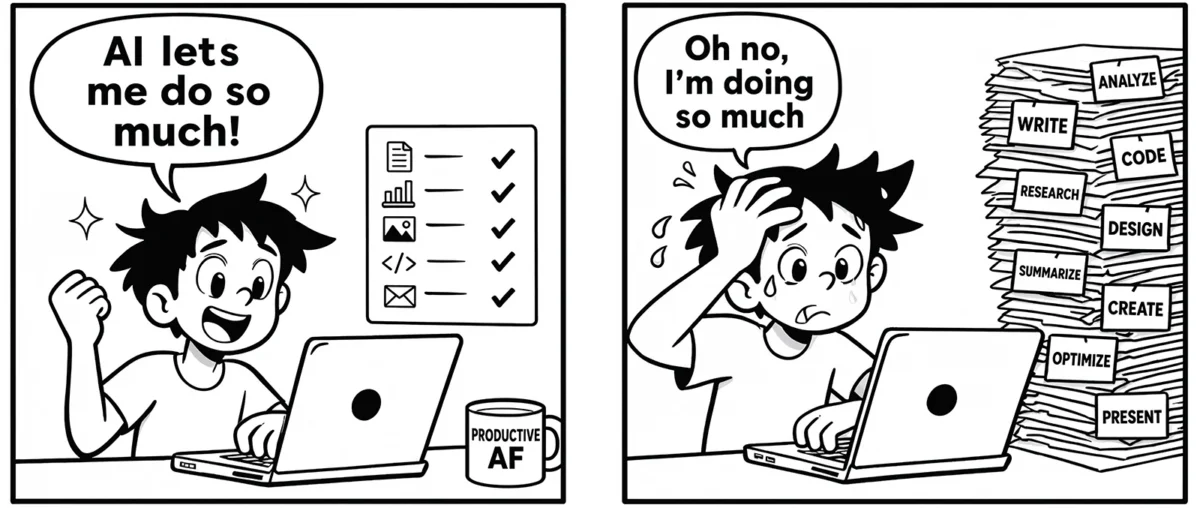
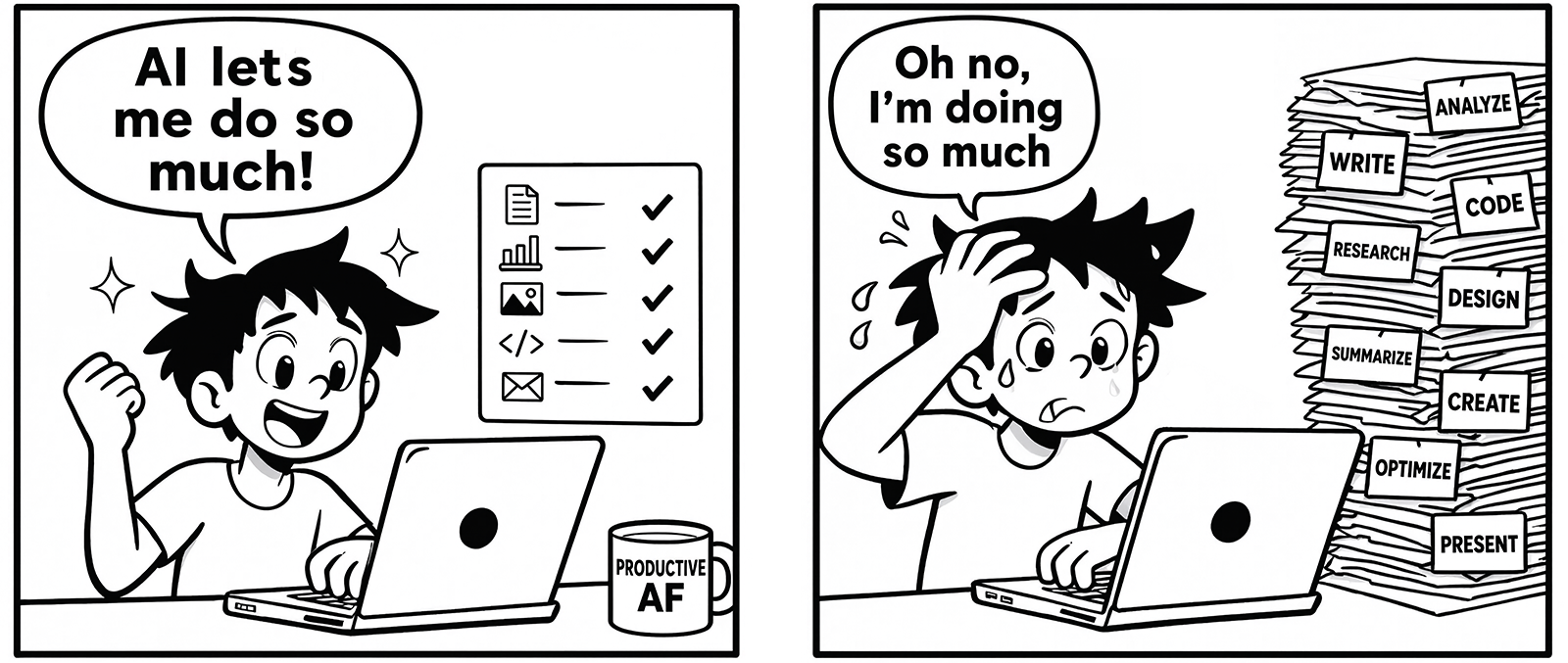
In the rapidly evolving landscape of generative artificial intelligence, a dangerous narrative has taken root: the "full-stack" fantasy. We are witnessing a surge in tools that promise to turn designers into makeshift developers and developers into amateur designers. While the capability to perform tasks outside one’s professional scope is technically possible, a growing chorus of industry experts is warning that this trend may lead to a workforce of "Mediocre Men"—individuals who can do everything at a baseline level but excel at nothing.
The real opportunity afforded by AI is not the ability to assume other people’s roles, but the potential to scale one’s own unique professional intuition to unprecedented levels. By moving away from the "do-it-all" trap and toward "collaborative steering," professionals can encode their expertise into the very DNA of their projects, ensuring that quality and intent remain constant, even when the work is performed by machines.
The Rise of the "Generalist Illusion"
The modern developer spinning up Figma Make or the designer prompting Claude Code to generate complex application logic are participating in a fundamental shift in labor. The promise is efficiency: the ability to bypass cross-functional dependencies and ship products in isolation.
However, the reality is far more nuanced. While a designer can generate a CSS layout, they lack the years of pattern recognition that inform a developer’s understanding of component architecture, state management, and performance optimization. Conversely, a developer can generate a wireframe, but they lack the decades of visual training that allow a designer to distinguish between a functional interface and a cluttered, confusing mess.
The Chronology of the "Mediocre Man"
The trajectory toward this dilution of expertise has been steady:
- The Tooling Era (2010–2020): Low-code and no-code tools emerged, allowing non-technical stakeholders to build basic interfaces. The quality was often lackluster, but the speed was undeniable.
- The LLM Inflection Point (2022–2023): Generative AI moved beyond simple templates to writing functional code and generating high-fidelity design assets.
- The "Full-Stack" Fallacy (2024–Present): The current sentiment suggests that AI bridges the gap between domains, potentially rendering specialized roles redundant.
The data suggests that while AI can replicate outputs, it cannot replicate intent. When an individual spreads themselves across three different disciplines, the "precision of expertise" is inevitably diluted. The result is a project that looks passable but lacks the structural integrity or cohesive vision that only deep, domain-specific expertise can provide.
Your Unique Value: Beyond the Seat at the Table
Years ago, the design team at Yahoo! grappled with a challenge that remains relevant today: how to prove the value of design in a boardroom dominated by metrics and business strategy. Their solution was not to mimic the business leaders, but to double down on what designers uniquely brought to the table: pattern recognition and the ability to clarify complex systems through visual communication.
The Strategic Pivot
The lesson learned during the "Board to Board" initiative at Yahoo! was simple: stop trying to be a poor imitation of another role. Instead, identify the specific skills that differentiate you and apply them to the broader organizational story.
- Designers: Your value is not just in moving pixels, but in establishing the visual rules, motion patterns, and hierarchy that dictate how a user perceives a brand.
- Developers: Your value is not just in writing syntax, but in architecting scalable, maintainable, and secure systems that ensure the software lives long after the launch.
When you attempt to perform every role, you lose the "unique value" that got you hired in the first place. The goal of the modern professional should be to use AI to amplify that unique value, effectively cloning their best decisions across a project rather than performing the manual labor of a novice in a field they haven’t mastered.
Encoding Expertise: The Power of Collaborative Steering
If AI should not be used to replace your role, what is its optimal function? The answer lies in collaborative steering. This methodology shifts the professional’s role from "worker" to "architect."
What is Collaborative Steering?
Collaborative steering involves creating a shared context—a set of "intent files"—that serves as the North Star for both humans and AI agents. Instead of simply prompting an AI to "write a checkout page," a designer or developer encodes the rules of that page.
- The Designer’s Intent: The designer creates a manifesto for the AI regarding the grid system, the typography, the motion rules, and the color system.
- The Developer’s Intent: The developer creates instructions on how code should be organized, how components should be tested, and what standards must be maintained.
When these instructions are embedded into a codebase, any agent—or any human team member—working on that project is forced to adhere to these standards. The designer does not need to manually design every screen; their "intent" is effectively scaled across the entire application. The grid remains the grid, regardless of who or what is writing the code.
Precision as the New Professional Skill
A common trap in the age of AI is the belief that "more is better." Users often dump massive amounts of documentation into LLM prompts, hoping the model will "figure it out." In reality, this leads to information overload and a degradation in the quality of the output.
The Art of the Essential
Precision is the new currency. To effectively steer an AI agent, you must know:
- The Three Things That Matter: What are the three non-negotiable pillars of this project? (e.g., accessibility, load speed, brand consistency).
- The Hierarchy of Instructions: What order of operations should the agent follow to maintain integrity?
- The Limits of Automation: Where does the AI’s capability end and human judgment begin?
This is where true expertise shines. A novice might ask an AI to "build a website," resulting in a generic, bloated output. An expert will instruct the AI to "build a website using this specific design system, prioritizing these three performance metrics, and avoiding these common anti-patterns."
Knowing what to ignore is just as important as knowing what to include. This filtering process is the manifestation of years of professional training. It is the "value add" that cannot be faked, and it is the most important thing you can encode for the rest of your team.
Implications for the Future of Work
The implication of this shift is profound: we are moving toward a model of high-leverage craftsmanship.
1. The Death of the "Generalist"
Companies will stop valuing employees who can "do a bit of everything." Instead, they will seek out deep subject matter experts who can encode their expertise into the tools that the rest of the team uses. The most valuable person in the company will be the one who defines the standard that everyone else—human or AI—must follow.
2. Scaled Intent
For years, the constraint on growth was human capacity. We could only produce as much as our hours allowed. With collaborative steering, the constraint is no longer labor; it is the clarity of intent. If your intent is poorly defined, your AI agents will produce high-quality, high-speed, and high-volume errors. If your intent is sharp, precise, and well-encoded, you can scale your excellence across an entire product ecosystem.
3. A New Professional Identity
We must move past the insecurity of "AI taking our jobs" and embrace the reality of "AI taking our tasks." By offloading the mechanical, repetitive aspects of our roles to AI, we are liberated to focus on the highest-order functions of our professions: systems thinking, strategic decision-making, and ethical governance of the tools we build.
Conclusion
The siren song of the "full-stack" AI generalist is a trap. It offers the illusion of speed but delivers the reality of mediocrity. The future belongs to those who recognize their unique, irreplaceable human intuition—the hard-won pattern recognition that comes from years of deep work—and use AI not to become everyone else, but to become more of themselves.
Do not settle for being a "Mediocre Man" who plays every role on the screen. Instead, be the expert who encodes their wisdom into the foundation of the work, allowing your unique vision to scale, persist, and flourish in a world of automated execution. The tool is ready; the question is, what will you choose to encode?

 Lina Irawan
 Pevita Pearce
 Ammar Sabilarrohman
 Suro Senen
 Jia Lissa
 Evan Lee Salim

 Ali Ikhwan