
 Iffa Jayyana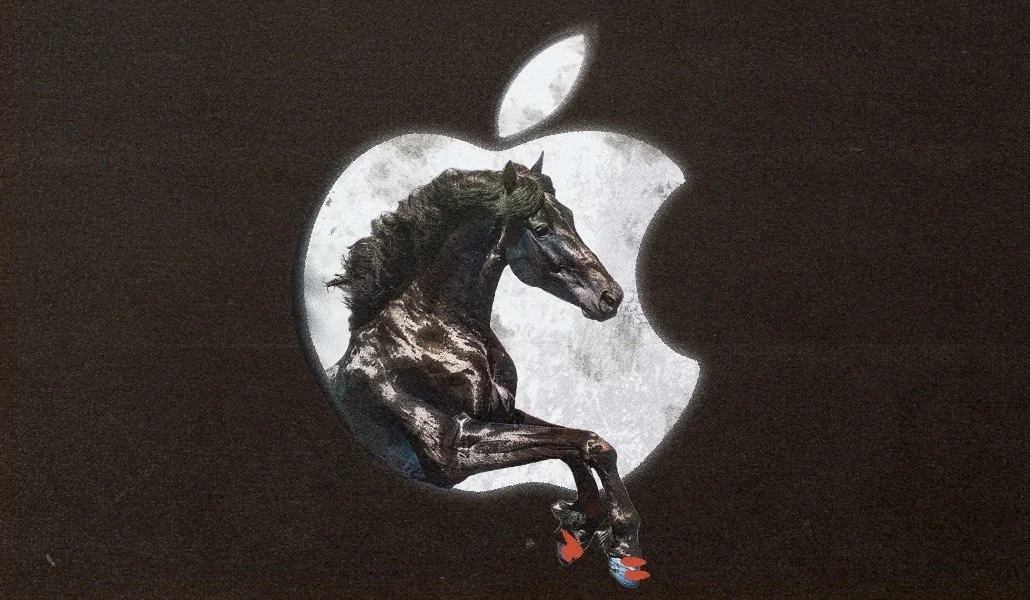
For years, the digital publishing industry treated the erosion of third-party cookies and the tightening of browser privacy as a "someday" problem—a looming, hypothetical storm that they could navigate with gradual adjustments. That "someday" has officially arrived, and it bears the signature of Apple.
With its latest software updates, Apple has begun aggressively blocking ad-tech vendors that track user behavior across the internet. By cutting these companies off within the Safari browser without warning or transparency, Apple has effectively triggered a crisis for digital publishers who rely on these third-party intermediaries to make their audiences addressable and, by extension, profitable.
As revenue dips hit the bottom line, the industry is scrambling to move away from client-side tracking, shifting its gaze toward a solution that was previously deemed too complex or costly: the IAB Tech Lab’s Trusted Server framework.
The Anatomy of the Block
The current digital advertising model is built on a "chatter" system. When a reader opens a news article on an iPhone or iPad, the device does not simply load the text and images. In the background, the browser executes a flurry of requests, pinging dozens of ad-tech vendors to share data about the reader and solicit bids for the available ad space.
Safari, under its updated privacy protocols, can now identify these clandestine handshakes. When it detects a company on its proprietary, non-public blocklist, it kills the connection. This prevents the transmission of user data and, consequently, stops the ad from being served or measured.
For publishers, the impact is immediate. When an ad-tech vendor is silenced, the bidding competition for that publisher’s traffic thins out, leading to a direct and often painful drop in revenue. Because these blocks are applied at the browser level, the publisher is often the last to know, discovering the issue only when they notice a sudden, inexplicable cratering of ad-tech performance.
A Chronology of the Reckoning
- Early 2025: The IAB Tech Lab introduces the "Trusted Server" framework. At the time, it is pitched as a way to enhance site performance and regain control of data. Adoption remains sluggish as publishers weigh the technical overhead against the uncertain ROI.
- August 2024: Paradium (formerly Arena Media Group) begins aggressive testing of Trusted Server, becoming a rare early adopter that helps refine the framework’s architecture.
- The "Blackout" Week: Apple implements silent updates to its Safari privacy blocklist. Major ad-tech vendors—including key players like Permutive—find their ability to track Safari users suddenly disabled.
- The Aftermath: Publishers report "broken" ad delivery across their sites. A wave of panic ensues, with industry leaders realizing that the "privacy" updates are, in effect, a massive disruption to the digital supply chain.
- The Present: A surge of interest in Trusted Server occurs. Publishers are now treating server-side integration not as an optional efficiency, but as an existential necessity.
The Pivot to Trusted Server: Taking Back Control
The allure of the IAB Tech Lab’s Trusted Server is simple: it moves the ad-tech handshake away from the user’s device and into a secure, publisher-controlled environment.
By offloading the ad-auction process to a server under the publisher’s direct management, the browser—and by extension, Apple—is effectively blinded to the specific third-party vendors involved in the transaction. The device only interacts with the publisher’s site, and the publisher’s server manages the backend connections. Since Apple cannot block the news site itself without breaking the web experience for its users, this architecture provides a vital layer of insulation.
Rowena Lam, senior director of privacy and data at IAB Tech Lab and the product lead for Trusted Server, confirms that the events of the past week have served as a catalyst. "Certainly, in this week, we’ve seen a big influx of publishers reaching out to get a better understanding of Trusted Server and or committing to deploying it to test," Lam noted. While Tech Lab is preparing to go live with its first major publisher deployment, the interest has shifted from theoretical to urgent.
Case Study: Paradium’s Defensive Strategy
Paradium, the parent company of titles like Men’s Journal and Parade, serves as the industry’s current bellwether. Because they were early collaborators on the Trusted Server project, they were uniquely positioned to weather the Apple-induced storm.
When Apple’s blocklist rendered their existing Permutive setup inert on Safari, Paradium didn’t have to scramble to find a new vendor. Instead, they simply migrated their existing Permutive code to run through the Trusted Server.
However, Stephanie Mazzamaro, head of revenue and data at Paradium, warns that the transition is not a "magic button." "In practice, that should help some signals much more than others, such as ID longevity, ad-block resilience, and clean auction data," she explained. "Viewability, verification, and getting buyers to accept our numbers are where most of the work remains." The transition involves a complex trade-off: while you regain control, you also inherit the responsibility for maintaining server-side infrastructure that was previously handled by third-party vendors.
The "Bigger Picture": Market Power and Potential Abuse
While Trusted Server is the primary candidate for a solution, it is not the only one. Companies like Aditude are pushing their own Prebid Server alternatives, which utilize APIs to connect with identity providers like LiveRamp and ID5 outside the browser’s direct line of sight.
Despite these options, the industry is grappling with a deeper, more uncomfortable question: Is this about privacy, or is it about market consolidation?
Justin Wohl, VP at Aditude and a consultant for Salon, points out the danger of the "operating system" power grab. "The concern for me is that we observed an industry impact coming not from a browser change but an operating system change," Wohl said. "It’s a defining moment and a moment of reckoning; those in control of the operating system have great control and great potential to vertically integrate for their own advantage and profit."
The numbers support this suspicion. Apple’s "Services" division, which includes its growing advertising business, hit a record $30.7 billion in revenue for the quarter ending in June. As Apple expands its presence in the ad market—through Apple Ads in the App Store, Search Ads, and new placements in Maps—every vendor they block on Safari clears a little more room for their own proprietary ecosystem.
The Ethical and Operational Void
Perhaps the most damning criticism from publishers is not the fact that their data is being restricted, but the manner in which it is being done.
"Our concern with the iOS 27 change is less about any single vendor and more about how it was done," says Mazzamaro. "Safari now blocks certain companies outright based on a list Apple hasn’t published, with no notice to the businesses affected and no clear way to appeal."
This lack of transparency creates an impossible operating environment. Publishers are forced to play a game of "whack-a-mole," where they only realize a vendor is blocked after the revenue loss has already occurred. This isn’t just a technical challenge; it is a market power issue that threatens the viability of the open web.
Conclusion: A New Era of Publisher Autonomy
The era of the "laissez-faire" digital publisher is over. The reliance on third-party ad-tech vendors, once the standard for monetization, is now a vulnerability that tech giants like Apple can exploit at will.
As publishers move toward server-side solutions like Trusted Server, they are effectively choosing to re-internalize the ad-tech stack. It is a costly, complex, and technically demanding transition, but it represents the only viable path to independence in an ecosystem where the browser is no longer a neutral gateway, but an active gatekeeper.
For the industry, the lesson is clear: if you do not control your own infrastructure, you are subject to the whims of those who do. The "deadline" has passed, and for those who survive, the future of digital publishing will be built on the servers they own, rather than the cookies they borrowed.


 Suro Senen
 Raul Delapena Setiawan
 Laily UPN
 Rifan Muazin
 Lina Hope
 Lina Irawan