
 Dwi Wanna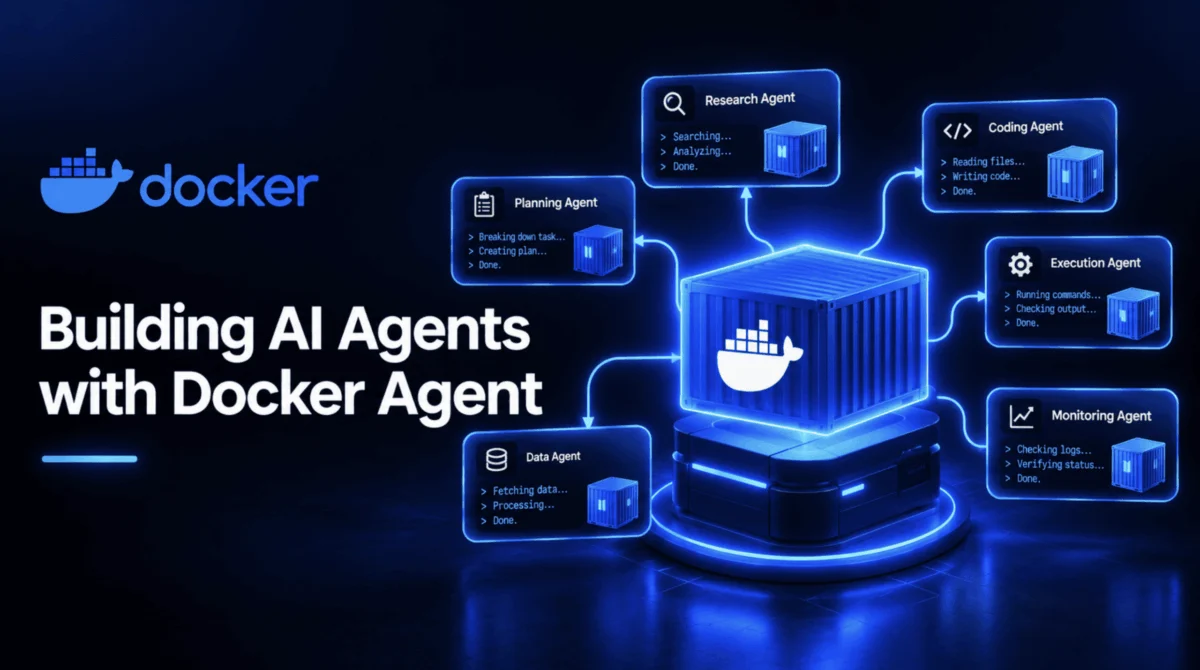
Docker revolutionized the software landscape with a simple, powerful mantra: "Build once, run anywhere." By containerizing applications, the company decoupled software from the underlying infrastructure, effectively ending the "it works on my machine" era. Today, Docker is applying that same architectural philosophy to the burgeoning field of Artificial Intelligence. Enter Docker Agent, an open-source CLI plugin that promises to treat AI agents not as ephemeral code snippets, but as versioned, portable, and distributable OCI (Open Container Initiative) artifacts.
The Evolution of Agentic Infrastructure
The trajectory toward Docker Agent was not a sudden pivot but a calculated evolution. Throughout 2025, Docker Engineering systematically laid the groundwork for this transition. The initial sparks were seen in mid-2025 when Docker expanded its Compose specification to natively support AI models and agentic workflows. This was followed by the release of "Docker Model Runner," a tool designed to democratize access to local LLMs by removing the friction of cloud API keys.
Docker Agent serves as the culmination of these efforts. Rather than bolting agentic capabilities onto existing tools, Docker has created a dedicated interface. With over 3,300 GitHub stars and nearly 10,000 commits in its early lifecycle, the project has gained significant traction, signaling a market hunger for the "containerization" of AI intelligence. By shifting the definition of an agent from a complex, opaque Python script to a declarative YAML or HCL configuration, Docker is lowering the barrier to entry for developers and systems engineers alike.
The Technical Architecture: Why YAML Matters
At its core, Docker Agent is about abstraction. In traditional agent development, engineers often find themselves trapped in "framework lock-in," where an agent is deeply coupled to a specific library or vendor SDK. Docker Agent disrupts this by acting as a provider-agnostic orchestrator.
Declarative Intelligence
By using YAML files, developers define an agent’s identity, its model source (OpenAI, Anthropic, Gemini, or local models), its toolsets, and its hierarchical relationships with other agents. This approach yields several critical advantages:
- Portability: Since the agent is defined by its configuration, it can be pushed to and pulled from any OCI-compliant registry (like Docker Hub or GitHub Container Registry).
- Versioning: Because agents are stored as images, teams can leverage git-like workflows to version control their AI agents, ensuring that a "Research Agent v1.2" behaves identically across different developer environments.
- Tool Isolation: By leveraging the Model Context Protocol (MCP), Docker Agent can run tools within isolated containers, ensuring that a misbehaving agent or an external API tool cannot compromise the host environment.
Chronology of the Docker Agent Ecosystem
To understand the significance of this tool, one must look at the rapid timeline of its development:
- Early 2025: Docker begins internal R&D into unifying AI model deployment with container orchestration.
- July 2025: Official announcement of expanded Docker Compose support for AI models, signaling the move toward agentic infrastructure.
- March 2026: Initial public tagged releases of the
docker-agentGo module appear on pkg.go.dev. - Present Day: The tool has matured into a production-ready CLI plugin, supporting complex multi-agent orchestration and schema validation.
Hands-On: From Concept to Multi-Agent Team
The power of Docker Agent is best illustrated through its multi-agent capabilities. In a real-world scenario, a "Coordinator" agent acts as the brain, delegating specialized tasks to "Researcher" and "Writer" agents.
Building the Team
In a multi-agent configuration, the Coordinator uses a specific model for logic (e.g., Claude Sonnet), while the Researcher might leverage a different, specialized model (e.g., GPT-5) configured for high-accuracy data retrieval. This "best-of-breed" model selection is managed entirely within the YAML configuration:
agents:
  root:
    model: anthropic/claude-sonnet-4-5
    sub_agents: [researcher, writer]
    instruction: "Coordinate research and synthesis."
  researcher:
    model: openai/gpt-5
    toolsets: [type: mcp, ref: docker:duckduckgo]
This structural modularity allows developers to swap out models without rewriting the core application logic. If a more efficient local model is released, the user simply updates the model tag in the YAML file.
Supporting Data and Validation
One of the most robust features of the Docker Agent ecosystem is its commitment to schema-driven development. Unlike many AI frameworks that rely on "prompt engineering by trial and error," Docker Agent employs strict schema validation. By using jsonschema, developers can verify their configurations before deployment, ensuring that every toolset and model parameter conforms to the expected specification.
This validation layer is critical for enterprise adoption. It allows CI/CD pipelines to automatically reject malformed agent configurations before they reach production, preventing runtime errors that could lead to unexpected agent behaviors or security vulnerabilities.
Implications for the AI Industry
The rise of Docker Agent has profound implications for the future of AI development.
1. Standardizing the "Agent" Concept
By treating agents as OCI artifacts, Docker is effectively creating a "Docker Hub for Agents." Imagine a marketplace where a developer can pull a pre-configured, audited "Data Cleaning Agent" or a "Security Audit Agent" and deploy it into their stack with a single command: docker agent run company/security-bot:latest. This commoditization of agentic logic will likely accelerate the adoption of AI in enterprise environments.
2. Security and Governance
One of the primary concerns with AI agents is their autonomy. By running agents within the Docker container runtime, organizations can apply standard security policies, network isolation, and resource limits to their AI workloads. This brings AI under the umbrella of existing IT governance, making it far more palatable for CTOs and security teams.
3. Reproducibility
In the research and data science communities, the "reproducibility crisis" is a known issue. By pinning agents to immutable OCI digests (@sha256:...), teams can guarantee that the agent running in production is exactly the same version that was tested in the lab. This eliminates the "silent drift" often caused by API updates or dependency changes in cloud-based AI services.
Official Stance and Future Outlook
Docker Engineering has positioned this tool not as a replacement for current LLM providers, but as the "plumbing" that connects them to the real world. By focusing on the developer experience—specifically the CLI-first, configuration-driven workflow—they are targeting the millions of developers who already use Docker daily.
The project is under active development, with the community pushing for deeper integrations with Kubernetes, allowing agents to scale horizontally across clusters. As the ecosystem grows, we can expect to see an explosion of specialized MCP servers, further expanding the "hands" and "eyes" available to Docker Agents.
Conclusion: The Path Forward
For those looking to integrate AI into their workflows, the lesson from Docker Agent is clear: stop treating your AI as a special, isolated pet that lives in a notebook. Start treating it as a standard component of your infrastructure.
By defining your agents in YAML, validating them against schemas, and shipping them through OCI registries, you move away from the chaotic experimentation of the "Wild West" AI era and into a more disciplined, scalable, and professional development cycle. Whether you are building a simple coding assistant or a complex, multi-agent research team, the tools to build, version, and share your intelligence are finally here.
About the Author: Shittu Olumide is a software engineer and technical writer dedicated to demystifying complex systems. His work bridges the gap between bleeding-edge technology and practical application, helping developers navigate the rapid advancements in cloud-native and artificial intelligence tools. You can follow his technical insights on Twitter or connect with him on LinkedIn.

 Nana Wu
 Asro
Asro
 Laily UPN
 Iffa Jayyana
 Rifan Muazin
 Suro Senen
 Lina Hope
 Lina Irawan