
 Nana Wu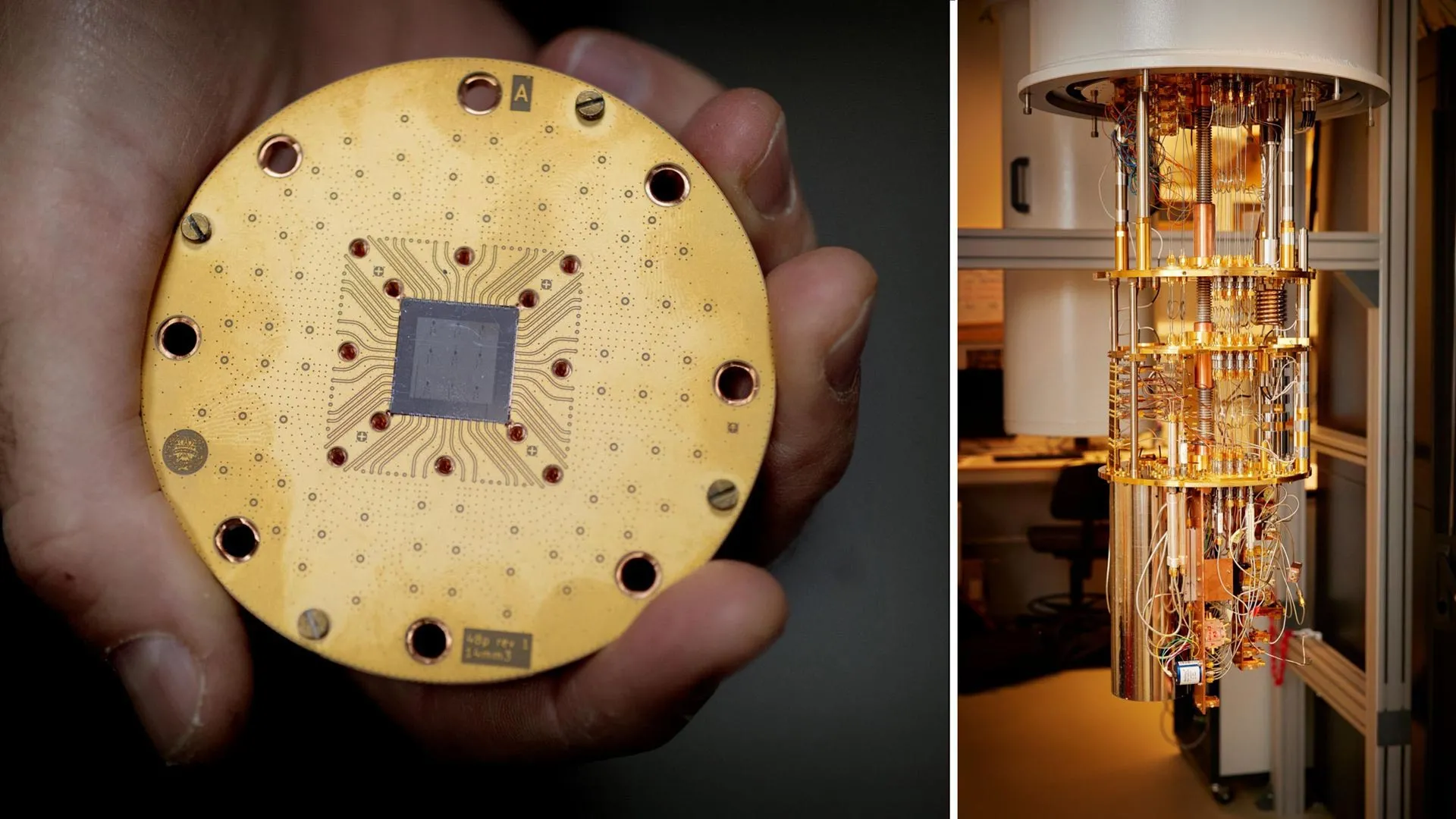
Introduction: The Fragility of the Quantum Frontier
Quantum computing stands as the most ambitious technological frontier of the 21st century. With the potential to revolutionize industries ranging from pharmaceutical drug discovery and sustainable energy technology to complex logistics and advanced cryptography, these machines promise to solve problems that would take classical supercomputers millennia to compute. However, the path to a functional, large-scale quantum computer is obstructed by a formidable technical challenge: the extreme fragility of quantum information.
Quantum computers are notoriously error-prone, sensitive to even the most microscopic environmental disturbances. Electrical noise, cosmic radiation, and minute temperature fluctuations can destabilize the quantum states necessary for computation, leading to the rapid decay of data. Now, a breakthrough from researchers at Chalmers University of Technology in Sweden has introduced a method to accelerate quantum operations by over a thousand times, marking a pivotal step toward achieving the "holy grail" of the field: fault-tolerant quantum computing.
The Core Problem: Why Quantum Systems Collapse
In the realm of classical computing, errors are rare and easily managed. Decades of engineering have produced robust error-correction protocols that detect and repair data corruption in milliseconds. Quantum systems, conversely, rely on qubits—the fundamental units of information—which exist in a state of superposition. This state is exceptionally delicate; the longer a quantum operation takes to complete, the greater the exposure to environmental "noise."
"The fundamental building blocks of quantum computers, known as qubits, are so sensitive that even the smallest disturbance can cause the quantum state to deviate from the target, resulting in the loss of information," explains Lei Du, a researcher in Applied Quantum Physics at Chalmers and lead author of the study recently published in Physical Review Letters. "If too many errors accumulate before they can be corrected, the computation fails entirely."
This race against time is the central bottleneck in quantum development. If a computer takes too long to execute a gate operation, the "decoherence" of the system effectively wipes out the computation before it can yield a result.
A New Paradigm: Bosonic Codes and Superconducting Circuits
To circumvent the inherent instability of individual qubits, researchers have turned to "bosonic quantum codes." Unlike standard models that store information in individual qubits, this strategy utilizes the microwave fields trapped within superconducting circuits.
"Rather than storing quantum information in individual qubits, bosonic codes encode information in the microwave fields found within superconducting circuits," says Tangyou Huang, a researcher in Quantum Technology at Chalmers and co-author of the study. "This approach has been shown to provide stronger protection against certain types of errors, as the physical properties of the microwave resonator offer a more stable environment than isolated qubits."
However, implementing these codes has historically been a slow and cumbersome process. Controlling these states previously required guiding a quantum system through thousands of repeated driving cycles. In the high-speed world of quantum mechanics, this latency is catastrophic, as it creates thousands of opportunities for external interference to corrupt the calculation.
The Breakthrough: Quantum Lattice Gates and Single-Cycle Control
The team at Chalmers, including Lei Du, Tangyou Huang, and colleague Lingzhen Guo, has fundamentally altered this landscape. Their research introduces a method that replaces thousands of slow, iterative cycles with a single, high-speed driving cycle.
The Mechanics of the "Shortcut"
The team’s innovation hinges on the use of "Quantum lattice gates." If we visualize the construction of a quantum circuit as building a complex Lego castle, traditional methods required assembling the structure brick-by-brick, leaving the castle vulnerable to collapse at every step.
"Quantum lattice gates act like pre-built Lego modules that can be connected quickly and efficiently," explains Huang. By utilizing these gates, the researchers can execute a diverse range of operations in a single cycle. This represents a performance jump of more than 1,000 times compared to previous Floquet-based control methods. By drastically reducing the "on-time" of the gate, the system minimizes its exposure to the environment, effectively "outrunning" the errors that would otherwise destroy the data.
Chronology of the Research
The development of this technique follows a specific trajectory of discovery within the field of quantum control:
- Early Exploration (2020-2022): Theoretical interest in bosonic codes grew as researchers realized that traditional qubit-based error correction was scaling poorly. The Chalmers team began investigating how to control microwave resonators more effectively.
- Development of Quantum Lattice Gates: The team proposed a universal set of quantum gates designed specifically for these bosonic systems, laying the groundwork for more efficient control.
- Refining Floquet Control: The researchers analyzed existing Floquet control methods—which use periodic signals to manipulate quantum systems—and identified that the bottleneck was the reliance on multiple, slow cycles.
- The "Single-Period" Synthesis: In the final phase, the team successfully demonstrated theoretically that their lattice gates could be integrated into a single driving period. This research was recently formalized in their paper, “Single-Period Floquet Control of Bosonic Codes with Quantum Lattice Gates.”
Supporting Data and Technical Context
The significance of this jump in speed cannot be overstated. In quantum error correction (QEC), the threshold for success is defined by the ability to correct errors faster than they appear. By speeding up operations by three orders of magnitude, the Chalmers researchers have significantly lowered the "error budget."
Key Metrics:
- Previous Latency: Thousands of cycles per operation.
- New Latency: One single driving cycle.
- Reliability Gains: By reducing the time-to-completion, the system experiences a proportional decrease in the likelihood of environmental decoherence.
- Platform Compatibility: The method is specifically optimized for superconducting quantum circuits, which are currently the industry standard for firms like IBM, Google, and Rigetti.
Official Responses and Expert Perspectives
The research community has noted the work for its practical applicability. Because the method does not require entirely new hardware—instead relying on the existing architecture of superconducting quantum circuits—it is considered highly viable for near-term implementation.
"A key advantage of our approach is that it can be implemented using existing superconducting quantum circuit platforms," says Huang. "We are already discussing possible experimental realizations with colleagues at Chalmers, and we hope to see a demonstration of the method in the near future."
Lei Du emphasizes that this is not merely a theoretical exercise, but a solution to a production-level bottleneck. "Our results address one of the major bottlenecks in the field: how to quickly and reliably create and control the error-correcting quantum states that could play an important role in future quantum computers."
Implications: The Road to Fault-Tolerance
The implications of this research extend far beyond the laboratory in Gothenburg. If this method proves successful in experimental testing, it could accelerate the development of a 100-qubit (or larger) quantum computer, a target currently being pursued by the Chalmers team and other international institutions.
1. Scaling Quantum Capacity
Fault-tolerant computing requires thousands of physical qubits to create a single "logical" qubit capable of error correction. By making operations faster and more reliable, researchers can focus on increasing the number of qubits without being overwhelmed by the cumulative error rate of the system.
2. Impact on Practical Applications
Once fault-tolerance is achieved, the applications are vast:
- Drug Discovery: Simulating molecular interactions at the quantum level to create life-saving medicines.
- Energy Technology: Designing more efficient catalysts for carbon capture or better materials for battery storage.
- Cryptography: While this threatens current encryption, it also paves the way for quantum-secure communication networks.
3. Strengthening European Quantum Leadership
Funded by the Wallenberg Centre for Quantum Technology (WACQT), the Knut and Alice Wallenberg Foundation, and the National Natural Science Foundation of China (NSFC), this study highlights the importance of global scientific collaboration in solving the "quantum puzzle."
Conclusion
The path toward a fully functional quantum computer is paved with thousands of small, incremental victories. The work of Lei Du, Tangyou Huang, and Lingzhen Guo is a massive leap forward, proving that the solution to quantum error correction may not just be better shielding, but simply faster, smarter control. As the team moves toward an experimental demonstration, the scientific community watches with anticipation, knowing that each cycle saved brings us closer to a future where quantum machines unlock the deepest secrets of our physical world.


 Asro
Asro
 Laily UPN
 Iffa Jayyana
 Rifan Muazin
 Suro Senen
 Lina Hope
 Lina Irawan