
 Ammar Sabilarrohman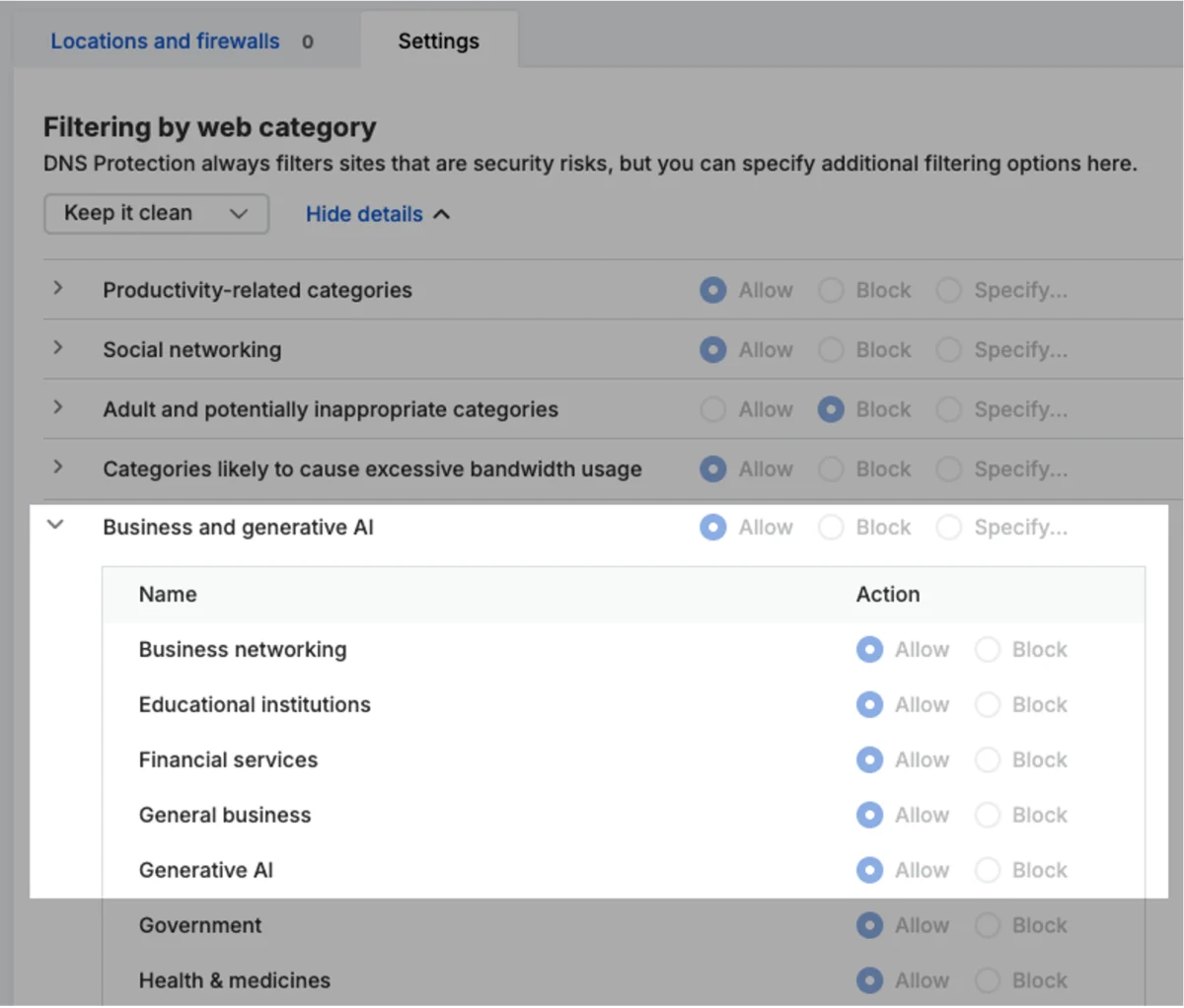
In an era where Generative Artificial Intelligence (AI) has become an integral component of daily business operations, enterprise security teams are facing a new frontier of visibility and control challenges. Sophos, a global leader in next-generation cybersecurity, has announced a significant update to its Sophos DNS Protection service. By introducing a dedicated "Generative AI" category into its web and domain policy framework, the company is providing IT administrators with the granular tools necessary to monitor, manage, and secure network traffic directed toward AI-driven platforms.
This update, which integrates seamlessly into the broader Sophos ecosystem, marks a shift in how organizations handle the rapid proliferation of Large Language Models (LLMs) and AI-assisted tools. As these services become ubiquitous, the ability to distinguish between standard information technology resources and generative AI utilities is no longer a luxury—it is a security imperative.
Main Facts: What the Update Entails
The core of this announcement is the expansion of the Sophos DNS Protection policy engine. Previously, most generative AI domains were bundled under the broader "Information Technology" category. While this served as a temporary stopgap, it prevented administrators from applying specific access controls to AI services without inadvertently affecting legitimate IT infrastructure.
Key features of this release include:
- Dedicated Categorization: A new "Generative AI" category is now live across the Sophos product portfolio, allowing for specific policy enforcement rather than reliance on general IT classification.
- Seamless Policy Migration: To ensure continuity, existing policies have been automatically configured so that the new category inherits the same permissions previously applied to the "Information Technology" category. This prevents service disruptions while allowing for immediate fine-tuning.
- Enhanced Visibility: The new category is now fully integrated into DNS Protection reports. For customers utilizing Sophos XDR (Extended Detection and Response) and MDR (Managed Detection and Response), the category appears in LiveDiscover queries, enabling security analysts to identify AI traffic patterns across the enterprise.
- Endpoint-Level Precision: Customers utilizing Workspace Protection with Endpoint DNS Protection can now drill down to specific devices and users, identifying exactly who is accessing generative AI domains, thereby closing the gap between network-level policy and individual behavior.
Chronology: The Evolution of AI Traffic Management
The journey toward this update reflects the rapid maturation of the AI market and the reactive nature of cybersecurity infrastructure.
- Pre-2023: Generative AI was largely viewed as a niche subset of web development or R&D. Most traffic to these sites was categorized under general technical or IT research labels.
- Early 2023: As tools like ChatGPT and similar LLMs exploded in popularity, enterprises began to report "shadow AI"—employees using these tools without corporate oversight, leading to concerns regarding data leakage and compliance.
- Mid-2023: Security vendors, including Sophos, began identifying the need for specific AI-focused security policies. The industry moved toward identifying common AI domains as a distinct traffic class.
- Current Phase: Sophos has officially codified this requirement into its DNS Protection layer, moving beyond manual filtering toward a scalable, automated categorization system that gives IT teams real-time control over the AI footprint in their networks.
Supporting Data: Why Visibility Matters
The necessity for this update is backed by shifting trends in enterprise networking. According to industry data, traffic to generative AI platforms has grown by over 400% in the last 18 months. This surge represents a massive increase in "unknown" traffic for IT teams who are struggling to differentiate between productivity-enhancing AI and unauthorized or potentially risky tools.
Sophos’s internal telemetry indicates that without dedicated categorization, up to 60% of traffic destined for AI platforms was previously mislabeled as "General IT." This ambiguity leads to significant blind spots. By partitioning these sites into a dedicated category, administrators gain the ability to perform:
- Traffic Analysis: Establishing baselines for bandwidth consumption attributed to LLM queries.
- Risk Profiling: Identifying high-frequency users of AI tools who may be inadvertently inputting proprietary code or sensitive data into public models.
- Compliance Auditing: Providing documentation for internal or regulatory audits regarding the use of AI tools within the corporate perimeter.
Official Responses and Strategic Vision
In discussions regarding the launch, Sophos representatives emphasized that the goal is not to block innovation, but to provide "guardrails" for it.
"The rapid adoption of generative AI creates a double-edged sword," a spokesperson for Sophos stated. "On one hand, it is a powerful productivity multiplier. On the other, it introduces a significant attack surface and potential for data exfiltration. Our update is designed to empower organizations to embrace these tools safely. By providing the granular visibility required to monitor, allow, or block these services, we are ensuring that the security posture of an organization remains intact even as its software stack evolves."
The strategic decision to integrate this at the DNS level—rather than just the proxy or application level—is deliberate. DNS Protection serves as the first line of defense; by preventing the resolution of malicious or unauthorized AI domains before a connection is even established, the network avoids the overhead of managing traffic that shouldn’t be there in the first place.
Implications: Managing the AI Frontier
The introduction of the Generative AI category carries several profound implications for IT and security professionals.
1. Reclaiming Control Over Shadow AI
One of the primary headaches for CISOs is "Shadow AI"—the unauthorized use of AI tools. With this update, organizations can now set an "Alert Only" policy for Generative AI, allowing them to collect data on tool usage without breaking existing workflows. This provides a clear picture of what the workforce is using before deciding whether to implement stricter blocking or approved AI procurement strategies.
2. Streamlined Incident Response
For XDR and MDR customers, the ability to query LiveDiscover for "Generative AI" traffic is a game-changer. During an investigation into potential data loss, an analyst can now quickly determine if a specific endpoint has been communicating with AI services, significantly shortening the Mean Time to Detection (MTTD).
3. Granular Compliance and Data Protection
Different generative AI tools have different terms of service regarding data retention. Some are "enterprise-grade" and do not train their models on user inputs, while others are "public-grade" and may ingest sensitive corporate data. By categorizing these sites, IT teams can effectively curate a list of "safe" vs. "unsafe" AI, using DNS policies to steer users toward company-approved platforms while blocking those that pose a data privacy risk.
4. Integration with the Xstream Protection Bundle
This update is not a standalone feature; it is part of the broader Sophos Xstream architecture. By bundling this capability into the Sophos Firewall and Workspace Protection, Sophos ensures that organizations do not need to overhaul their existing security stack to gain AI visibility. The synergy between endpoint, network, and cloud intelligence remains the cornerstone of the Sophos approach to modern defense.
Moving Forward: Recommendations for IT Teams
As AI becomes an increasingly permanent fixture in the enterprise landscape, Sophos recommends that administrators take the following steps:
- Review Existing Policies: Immediately log into the Sophos dashboard to review how the "Generative AI" category has been mapped from the previous "Information Technology" setting. Ensure that this aligns with the organization’s current acceptable use policy.
- Enable Logging and Reporting: Even if you do not plan to block AI services, enable logging for the new category to begin establishing a baseline of usage patterns.
- Conduct an Audit: Use the data provided by the new category to identify which departments are using which tools. This information is invaluable for procurement teams looking to consolidate subscriptions and reduce costs.
- Educate the Workforce: Transparency is key. Use the data gathered to inform employees about which AI tools are approved for corporate use and explain the risks associated with unauthorized platforms.
Sophos’s commitment to updating its DNS Protection in response to the rise of Generative AI demonstrates a proactive stance on emerging threats. By moving the conversation from "all AI is IT" to a nuanced, category-driven framework, Sophos is providing the control necessary to harness the power of AI without compromising the integrity of the network. As the landscape continues to shift, the ability to categorize, monitor, and control the flow of data to these platforms will remain a critical competency for any enterprise security team.


 Jia Lissa
 Layla Zulfa

 Suro Senen

 Evan Lee Salim

 Ali Ikhwan