
 Layla Zulfa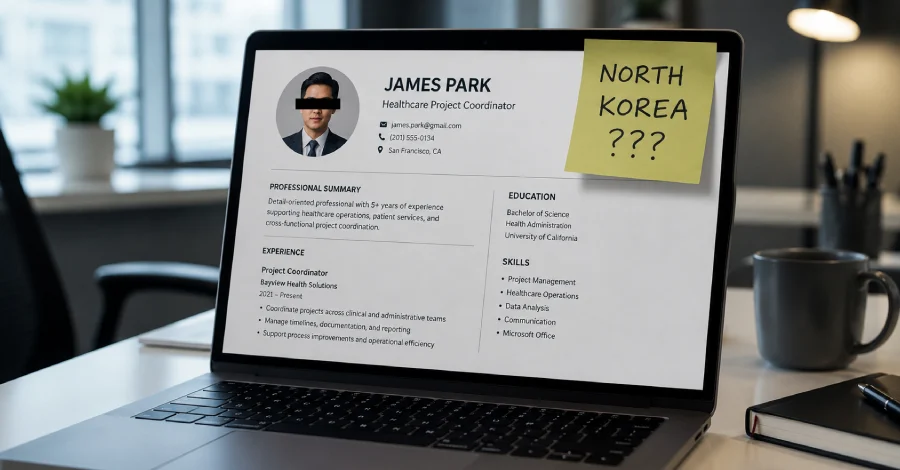
In a sophisticated evolution of cyber-enabled economic warfare, state-sponsored actors linked to the Democratic People’s Republic of Korea (DPRK) are expanding their infiltration tactics far beyond the information technology sector. Recent intelligence reports and forensic investigations reveal that these operatives—formerly concentrated in software development—are now successfully embedding themselves into sales, marketing, and medical professions. This expansion marks a significant pivot in the "IT worker scheme," a clandestine, years-long campaign designed to bypass international sanctions and funnel hard currency into Pyongyang’s nuclear weapons and ballistic missile programs.
The Mechanics of the Infiltration
The DPRK’s strategy relies on a "labor-enabled access model" that eschews traditional malware-based intrusion in favor of social engineering and large-scale identity fraud. By presenting themselves as highly qualified remote workers, these individuals trick unsuspecting Fortune 500 companies and private firms into hiring them. Once onboarded, they often perform legitimate work to maintain their positions, all while exploiting their access to facilitate data theft, corporate espionage, and financial extraction.
To achieve this, the actors utilize a complex infrastructure of VPNs, proxy services, and stolen or synthetic identities. Intelligence agencies have tracked this activity under various aliases, including Famous Chollima, PurpleDelta (formerly TAG-121), UNC5267, and Wagemole.
Chronology of Recent Investigations
The scale of this threat has reached a fever pitch throughout 2026, with security firms like Huntress and Recorded Future documenting a steady stream of detections that highlight the increasing sophistication of these actors.
The Australian Healthcare Breach (February 2026)
In a notable case involving an Australian healthcare firm, three employees were identified as fraudulent actors. The investigation revealed that these individuals were using stolen or forged identity documents to impersonate Chinese nationals. Forensic analysis uncovered a trail of suspicious technical footprints: consistent connections via Astrill VPN and IPRoyal Proxy, inconsistencies in passport imagery, and glaring anomalies in electronic utility bills submitted as proof of residence. The discovery served as a wake-up call to the healthcare sector, which had previously perceived itself as less susceptible to these "IT-centric" threats.
The Financial Services Infiltration (Mid-2026)
Months later, an unnamed financial services firm discovered that one of their remote employees had installed PiKVM—a device used to gain remote control over a computer—on their company-issued hardware. This hardware was paired with a Guermok USB capture card, allowing the actors to feed pre-recorded video into web conferencing platforms like Zoom. This setup is a hallmark of the North Korean "laptop farm" strategy, where a single operator manages multiple fraudulent identities simultaneously, using AI to generate responses and mimic human presence during meetings.

The Identity Theft Pivot (August 2026)
By August 2026, investigators encountered a case in the sales and marketing sector that highlighted a darker trend: the exploitation of public records. A newly hired employee had assumed the identity of an individual who had recently been arrested. The DPRK operative had taken the real person’s publicly available information—name, date of birth, and mugshot—and digitally manipulated the face to fit their own appearance, successfully passing through a background check that failed to cross-reference the live applicant against current law enforcement databases.
Supporting Data: The "PurpleDelta" Machine
The intensity of these operations is best exemplified by the PurpleDelta cluster. According to Recorded Future’s Insikt Group, this group applied to over 1,100 companies between late 2024 and early 2025. Their operational tempo is industrial:
- Volume: At least 60 job applications per day across 10 different hiring platforms.
- Infrastructure: The use of AI-generated personas, multi-account browsers, and sophisticated tracking spreadsheets to coordinate dozens of concurrent identities.
- Tooling: Extensive reliance on Telegram and Slack for coordination, and the use of illicit services like "TrustID Card" to procure high-quality synthetic identity documents.
The group’s integration of Artificial Intelligence is perhaps the most alarming development. By using custom ChatGPT assistants and real-time transcription tools during interviews, operators are now capable of navigating technical and cultural screening processes that would have previously been impossible for them to pass. They repeat AI-generated answers verbatim, allowing them to secure high-paying, long-term contracts in roles they may not fully understand.
Official Responses and Global Alert
The persistence and scale of these infiltrations have forced a rare, coordinated international response. Late last month, a coalition of intelligence and security agencies from the United States, Japan, South Korea, Australia, Canada, France, Germany, Italy, the Netherlands, New Zealand, and the U.K. issued a joint alert.
The communiqué urges organizations to:
- Strengthen Identity Verification: Mandate in-person or high-assurance remote identity proofing.
- Enhance Background Checks: Move beyond automated verification to include deep dives into employment history and professional references.
- Detect Anomalous Network Behavior: Implement systems that flag consistent use of VPNs, proxy services, and unrecognized hardware like KVM switches.
"Mitigating the risk of fraudulent workers begins at the interview stage," analysts at Huntress noted. "When in doubt, performing standard background checks, searching the individuals online, and verifying any employment history will help to weed out DPRK workers early in the interview process."

Implications for Global Business
The consequences of failing to identify these actors extend far beyond the initial loss of a salary.
Legal and Compliance Risks
Employing or paying these workers constitutes a direct violation of U.N., U.S., and U.K. financial sanctions. For a global corporation, the discovery that they have been funding a state-sponsored weapons program through payroll—even inadvertently—can result in catastrophic legal liability, massive regulatory fines, and permanent reputational damage.
The "Insider" Threat
Unlike traditional hackers who must "break in" through a vulnerability, these actors are "let in" by the company’s own HR department. This gives them a layer of legitimacy that makes them incredibly difficult to detect. Once inside, they have authorized access to internal communications, proprietary data, and infrastructure. As they expand into healthcare, finance, and marketing, the potential for sensitive data exfiltration—such as patient records or proprietary market strategies—becomes a critical concern.
The Future of Remote Work
The DPRK’s success highlights a fundamental vulnerability in the post-pandemic "remote-first" hiring model. As organizations continue to prioritize convenience and speed in their hiring processes, they inadvertently create the perfect environment for synthetic identities to flourish. The burden of proof has now shifted to the employer; in an era where identities can be forged with AI, the traditional "trust-based" hiring process is no longer sufficient.
As the international community grapples with this evolving threat, the directive from global security agencies is clear: vigilance is no longer optional. For the modern enterprise, the vetting process must become as rigorous as the technical security protocols designed to keep external hackers at bay. The "IT worker scheme" is not just a technological challenge—it is a front-line battle in the effort to protect the global economy from being weaponized by rogue states.

 Basiran
 Iffa Jayyana
 Raul Delapena Setiawan
 Reynand Wu
 Sagoh
Sagoh

 Azzam Bilal Chamdy
 Ali Ikhwan