
 Raul Delapena Setiawan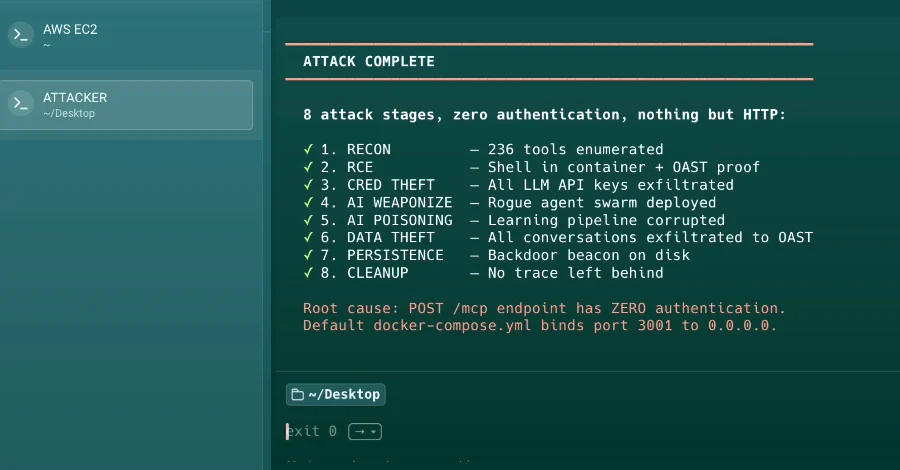
In a stark reminder of the escalating security risks inherent in the rapid adoption of autonomous AI, cybersecurity researchers have uncovered a maximum-severity vulnerability in Ruflo, a popular open-source meta-harness for AI agent orchestration. The flaw, identified as CVE-2026-59726, grants unauthenticated attackers full remote code execution (RCE) capabilities, effectively turning sophisticated AI agent swarms into tools for malicious actors.
The vulnerability, dubbed "RufRoot" by the research team at Noma Security, has sent ripples through the AI infrastructure community, as it highlights how easily the bridge between AI models and local execution environments can be weaponized if security protocols are neglected.
The Core of the Vulnerability: A Gateway to Chaos
At the heart of the issue lies the Model Context Protocol (MCP) bridge within the Ruflo platform. Originally launched under the name "Claude Flow," Ruflo has gained significant traction among developers for its ability to deploy multi-player agent swarms, coordinate complex autonomous workflows, and integrate conversational AI systems. With over 66,500 stars on GitHub, the project is a cornerstone for many organizations experimenting with advanced AI agent architectures.
However, researchers discovered that Ruflo’s default configuration exposed a massive attack surface. The platform granted access to 233 distinct tools—ranging from terminal shell execution and database operations to agent management and long-term memory storage—via an MCP bridge that was open to the network by default.
The Technical Failure
The root cause of the vulnerability was a misconfiguration within the project’s docker-compose.yml file. By default, the configuration bound the MCP bridge to port 3001 on the 0.0.0.0 interface. In networking terms, this effectively "opened the doors" to the entire internet for any machine hosting the instance.
Unless a user had strictly configured firewall rules or network segmentation, any instance of Ruflo running versions prior to 3.16.3 was accessible to anyone with network reach. An attacker could bypass all authentication protocols with a simple, crafted HTTP POST request to the /mcp endpoint, allowing them to execute arbitrary terminal commands directly within the container.

Chronology of the "RufRoot" Discovery
The timeline of this incident reflects the rapid nature of both modern software development and the threat landscape surrounding AI.
- Pre-June 2026: The insecure configuration existed as the default setting for the Ruflo project, potentially leaving thousands of deployments vulnerable since the inception of the current architecture.
- June 30, 2026: Noma Security’s research team formally disclosed the findings to the project maintainers. The severity was immediately apparent, as the proof-of-concept demonstrated how easily a shell could be obtained within the container environment.
- July 1, 2026 (Within 24 hours): Project maintainer Reuven Cohen pushed a comprehensive security patch (v3.16.3). The speed of the response was lauded, as the patch not only addressed the binding issue but also hardened the architecture against future unauthorized access.
- Post-Patch: The community shifted toward remediation, with the NVD and various security outlets issuing formal CVE notices to ensure all users updated their deployments.
Implications: When AI Becomes a Weapon
The implications of CVE-2026-59726 extend far beyond a typical server breach. Because Ruflo is designed to manage AI, a compromise of the platform equates to a total loss of trust in the integrity of the AI agents themselves.
1. API Key Theft and Financial Loss
Once an attacker gains a shell via the terminal execution tool, they can access the environment variables within the container. This includes the API keys for major LLM providers (such as Anthropic, OpenAI, or others). An attacker can siphon these keys to fuel their own operations, resulting in massive, unauthorized costs for the victim.
2. AI Memory Poisoning
Perhaps the most insidious aspect of the breach is the potential for "memory poisoning." Ruflo uses a database (AgentDB) to store conversational history and agent "learnings." By injecting malicious instructions or patterns into this database, an attacker can influence the future behavior of the AI. Even after the attacker is evicted from the system, the AI may continue to function according to the corrupted instructions, effectively creating a "stealth backdoor" that persists indefinitely.
3. Agent Weaponization
An attacker can spawn their own "attacker-controlled" swarms using the victim’s existing infrastructure. By leveraging the victim’s authorized API keys and trusted environment, the attacker can use the AI agents to perform automated phishing, data exfiltration, or social engineering attacks that appear to originate from the legitimate organization.
Official Responses and Remediation
The maintainer of the project, Reuven Cohen, was transparent regarding the failure in the release notes. "The MCP bridge shipping in ruflo/docker-compose.yml exposed POST /mcp with no authentication," he acknowledged. "The docker-compose defaults bound the bridge and MongoDB to all interfaces."

Patch Details
The update to version 3.16.3 introduced several critical security controls:
- Interface Binding: The MCP bridge now defaults to the loopback interface (
127.0.0.1), ensuring it is not reachable from outside the host machine. - Tool Gating: The
terminal_executefunction is now protected by server-sideexecuteToolcontrols, preventing unauthenticated users from invoking high-privilege commands. - Database Security: MongoDB authentication has been enabled by default, preventing unauthorized access to the sensitive AgentDB store.
Best Practices for Affected Organizations
For those who were running an exposed instance of Ruflo prior to the patch, simply updating the software is insufficient. Noma Security and other industry experts emphasize a "Total Compromise" recovery strategy:
- Immediate Network Isolation: Close all firewall ports, specifically 3001 and 27017, until the system has been thoroughly audited and patched.
- Credential Rotation: Treat all API keys that were present on the system as compromised. Rotate every LLM provider key immediately.
- Forensic Audit: Examine the AgentDB store for suspicious entries. Look for injected "pattern-store" entries that could indicate the AI has been "steered" by an unauthorized actor.
- Full Rebuild: Because the breach allows for the writing of persistent payloads to the
/appdirectory, simply patching the code may leave hidden backdoors. Organizations are strongly advised to rebuild their containers from a clean, trusted image. - Database Inspection: Check MongoDB logs for unauthorized queries or data manipulation that may have occurred during the period of exposure.
The Future of AI Infrastructure Security
The "RufRoot" incident serves as a bellwether for the future of AI development. As developers continue to build increasingly complex autonomous agent swarms, the "meta-harnesses" that glue these systems together become prime targets for attackers.
"The ability to write malicious instructions into a platform’s persistent AI memory means an attacker can influence the responses that AI gives to every future user of the platform, long after the original intrusion has ended," the Noma Security team warned.
This event underscores a critical shift in the cybersecurity paradigm: AI security is not just about protecting the data; it is about protecting the logic. When we outsource decision-making to autonomous agents, the security of the infrastructure that hosts them is no longer an IT concern—it is a foundational requirement for operational integrity.
As the industry moves forward, projects like Ruflo and their maintainers must prioritize "Security by Default." In an era where AI agents can be "taught" to be malicious, the barrier to entry for attackers must be made insurmountable through robust authentication, strict network segmentation, and the principle of least privilege. For the thousands of developers utilizing these platforms, the message is clear: if you are orchestrating swarms, you are managing a powerful, high-stakes infrastructure that requires a security-first mindset.

 Jia Lissa
 Layla Zulfa
 Ammar Sabilarrohman
 Suro Senen

 Evan Lee Salim

 Ali Ikhwan