
 Layla Zulfa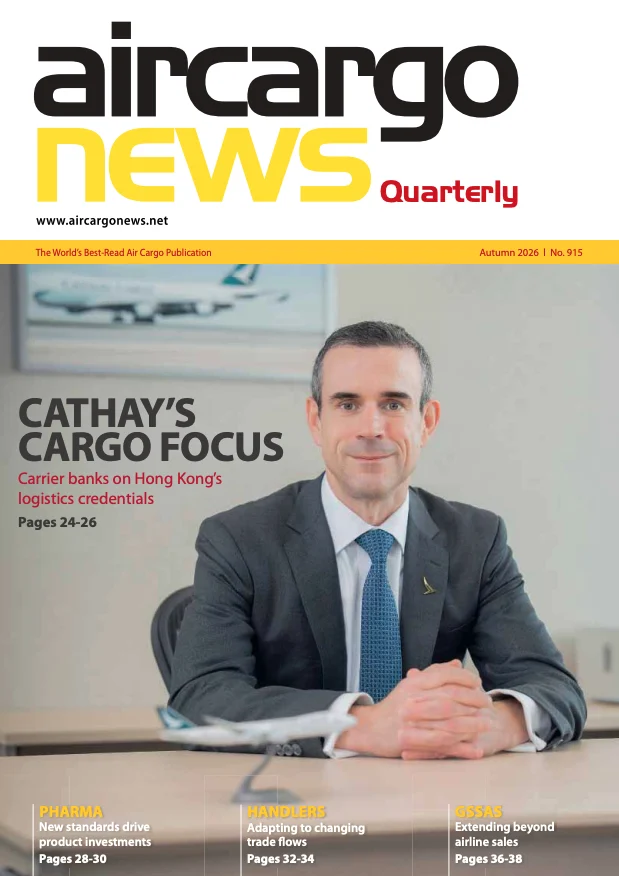
Published: 8 October 2026
The global air cargo industry stands at a critical juncture as we enter the final quarter of 2026. Following a period of fluctuating demand and supply chain recalibration, the Autumn 2026 edition of Air Cargo News offers a comprehensive diagnostic of the sector. From the regulatory reprieve of the Boeing 777F to the strategic consolidation of major carrier partnerships, the landscape is shifting toward a more integrated and technologically resilient model.
Main Facts: The State of the Industry
As of October 2026, the air freight sector is defined by three primary pillars: regulatory stability for freighter fleets, the deepening of cross-continental carrier alliances, and the professionalization of specialized cargo handling.
The most significant development involves the Boeing 777F reprieve. After months of speculation regarding environmental mandates and noise restrictions that threatened the viability of existing fleets, regulators have granted a temporary extension, allowing operators to maintain their 777F assets with updated operational protocols. This decision has sent a ripple of relief through the logistics sector, preventing a sudden capacity crunch that would have otherwise triggered a spike in freight rates.
Parallel to this, the partnership between IAG Cargo, Qatar Airways, and MASKargo has moved into an execution phase. This tripartite alliance is not merely a branding exercise; it represents a fundamental shift in how cargo capacity is shared across the Atlantic and the Asia-Pacific corridors, creating a seamless interline network that challenges the dominance of traditional integrators.
Chronology: A Season of Strategic Shifts
To understand the current state of the market, one must look at the progression of key events over the last six months:
- May 2026: Initial concerns regarding the phase-out of older-generation widebody freighters reach a fever pitch, with industry bodies lobbying for a transition period.
- June 2026: IAG Cargo and Qatar Airways announce the expansion of their joint business agreement, with MASKargo joining as a strategic partner to leverage Southeast Asian hubs.
- August 2026: Anchorage International Airport (ANC) reports record-breaking throughput for the summer months, cementing its status as the "Center of the World" for air cargo refueling and logistics.
- September 2026: Regulatory bodies formally announce the Boeing 777F reprieve, contingent upon engine noise mitigation and carbon emissions reporting standards.
- October 2026: The official launch of the Autumn 2026 Air Cargo News digital edition, detailing the convergence of these events.
Supporting Data: Capacity, Containers, and Infrastructure
The Autumn 2026 data indicates a nuanced market. While general cargo demand has stabilized, the high-value segments—specifically pharmaceuticals and perishables—are driving profitability.
The Container Market Update
The ULD (Unit Load Device) market has seen a 12% increase in demand for smart-connected containers. As shippers demand greater transparency in the cold chain, traditional aluminum containers are rapidly being supplemented by IoT-enabled units that provide real-time location, temperature, and humidity tracking.
Airport Focus: Anchorage
Anchorage (ANC) remains the undisputed barometer for trans-Pacific air freight. With the 777F fleet continuing its long-haul operations, ANC has invested an additional $450 million into automated cargo handling facilities. The airport’s role is no longer just a "technical stop" for refueling; it has become a value-added logistics hub where cargo is screened, sorted, and trans-shipped with minimal dwell time.
Freighter Market Trends
Despite the rise of passenger-to-freighter (P2F) conversions, the demand for purpose-built freighters remains robust. The industry is currently witnessing a "flight to quality," where airlines are prioritizing fuel-efficient, long-range aircraft to mitigate the volatility of jet fuel prices, which have remained stubbornly high throughout the year.
Official Responses and Industry Sentiment
The industry reaction to the current climate is one of "cautious optimism."
In an exclusive interview with Air Cargo News, leadership at Cathay Cargo noted that the primary challenge for the remainder of 2026 will be "managing the transition between high-demand holiday peaks and the potential for a sluggish early 2027." Cathay emphasized that while capacity is currently sufficient, the "quality of capacity" is what dictates competitive advantage.

Regarding the Boeing 777F reprieve, the International Air Transport Association (IATA) issued a statement welcoming the move:
"The decision provides the industry with the necessary predictability to plan fleet renewals without jeopardizing the global supply chain. It is a win for both the environment and the economic stability of the air cargo sector."
Conversely, independent Cargo Handlers have expressed concern over the increased regulatory burden associated with the new handling protocols for pharmaceutical shipments. Representatives from the Global Cargo Handlers Association (GCHA) argued that while the technology exists to improve safety, the cost of implementing these standards often falls disproportionately on ground staff, calling for more collaborative investment from the airlines they serve.
Implications: What Lies Ahead?
The implications of the developments observed in Autumn 2026 are far-reaching.
1. The Consolidation of Networks
The IAG-Qatar-MASKargo model signals the end of the "siloed" airline approach. We expect to see more alliances form as carriers realize that global reach is more important than fleet size. By pooling capacity, these airlines can offer more frequent service on secondary routes that would otherwise be unprofitable.
2. The Pharma Imperative
The focus on pharmaceutical logistics is set to become a permanent feature of the air cargo narrative. With the rise of complex biotech drugs and temperature-sensitive vaccines, air cargo is becoming an extension of the hospital supply chain. Carriers that fail to achieve IATA CEIV Pharma certification will likely find themselves locked out of the most lucrative segments of the market.
3. Sustainability as a Competitive Moat
The Boeing 777F reprieve is not a permanent pass; it is a stay of execution. The industry must now accelerate its investment in Sustainable Aviation Fuel (SAF) and next-generation, ultra-efficient airframes. Sustainability is no longer a CSR goal—it is a license to operate. Operators who fail to align with global net-zero trajectories will face increasing operational restrictions and potential exclusion from major international hubs.
4. The GSSA Evolution
General Sales and Service Agents (GSSAs) are finding themselves in a unique position of power. As airlines outsource more of their commercial functions, GSSAs are evolving from simple sales teams into comprehensive logistics partners. We anticipate that by early 2027, the role of the GSSA will expand further into digital cargo booking and dynamic pricing, effectively acting as the "digital front-end" for global air cargo.
Conclusion: The Path to 2027
As we close the final quarter of 2026, the air cargo industry proves once again that it is the most adaptive component of the global economy. The challenges of the past year—regulatory pressure, geopolitical shifts, and the need for constant modernization—have forced a degree of collaboration that was unthinkable a decade ago.
The Autumn 2026 edition of Air Cargo News serves as both a scorecard and a roadmap. It highlights the winners of this new era: the airlines that embrace partnership, the airports that invest in automation, and the handlers that prioritize the integrity of the cold chain. As the industry looks toward the new year, the focus must remain on agility. In a world of shifting trade routes and evolving environmental mandates, the ability to pivot is the only currency that truly matters.
For those operating within the global freight market, the message is clear: the period of disruption is yielding to a period of consolidation. The infrastructure is being built, the partnerships are being tested, and the technology is finally catching up to the demand. The air cargo sector is not just moving goods; it is moving the future of global commerce.


 Raul Delapena Setiawan
 Evan Lee Salim
 Dwi Wanna
 Muslim
 Nana Wu

 Rifan Muazin