
 Ali Ikhwan
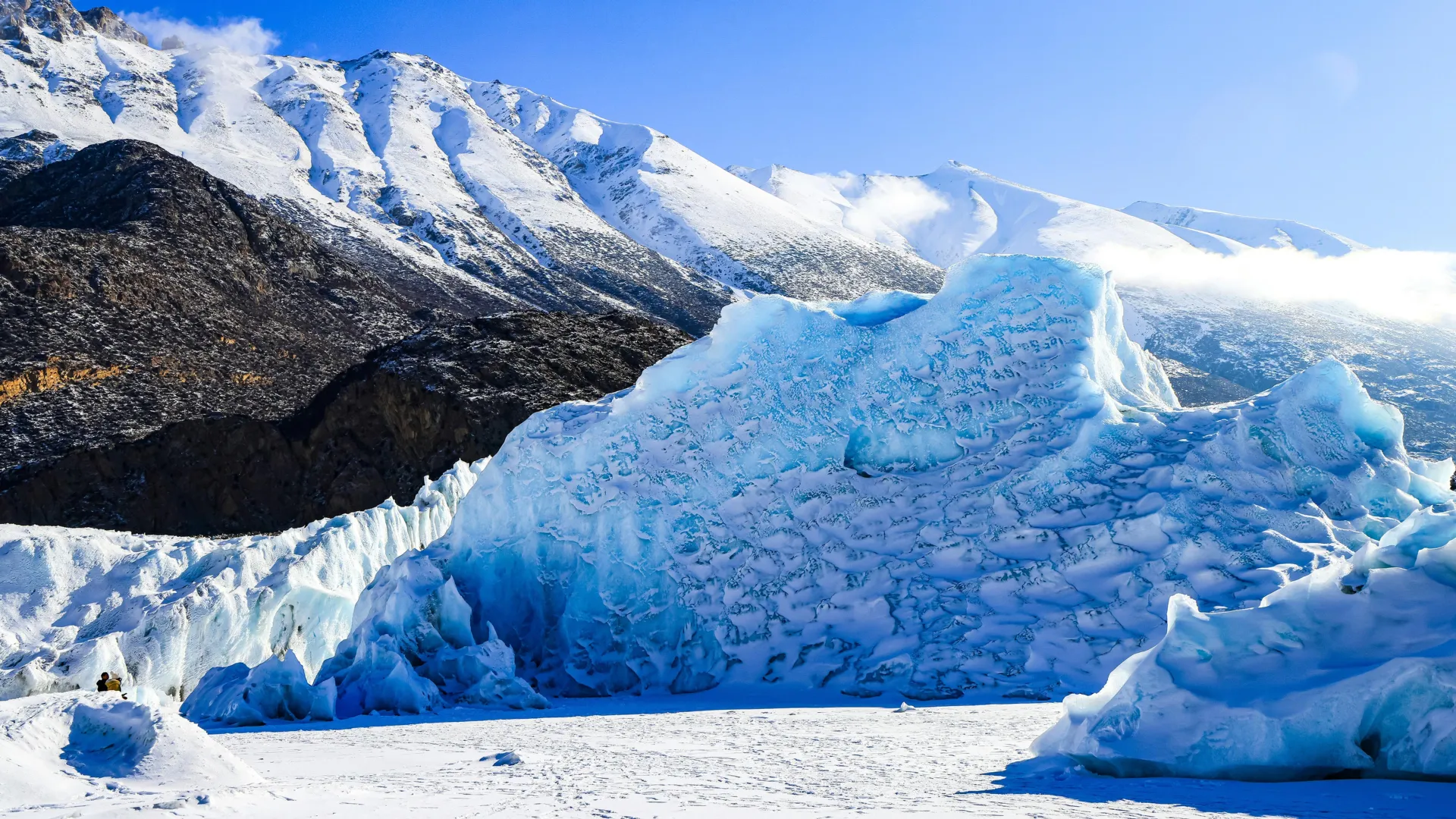
Deep within the frigid, high-altitude expanse of northwestern Tibet’s Guliya Plateau, a team of international scientists has unearthed a geological treasure trove. Beneath the surface of an ancient ice cap lies a frozen chronicle of Earth’s environmental history, a record that may stretch back more than 128,000 years. This discovery, recently published in the journal Science Advances, provides a rare and extraordinary window into the planet’s past, offering evidence that mountain glaciers are far more resilient—and historically significant—than previously understood.
By extending the known glacial record of the region by over 100,000 years, researchers have identified these samples as the oldest ice cores ever retrieved from this part of Tibet. The discovery not only challenges existing models of glacial persistence but also provides a vital benchmark for understanding how mountain environments have weathered the tumultuous shifts of Earth’s climate since the last ice age.
The Chronology of Discovery: Bridging Decades of Research
The path to this discovery was decades in the making, defined by a unique scientific collaboration that spanned more than twenty-three years. The data analyzed in this study originated from two distinct expeditions to the Guliya Plateau: one conducted in 1992 and another in 2015.
For years, the initial 1992 cores presented a scientific puzzle. Earlier interpretations suggested that the Guliya ice cap was a relatively modern formation, dating back only to the middle of the Holocene—the current geological epoch that began approximately 12,000 years ago following the end of the last ice age. However, as analytical technology advanced, questions began to emerge regarding the true age of these high-altitude archives.
When researchers returned to the same site in 2015 to drill new samples, they were met with a startling revelation: the oxygen isotope patterns found in the 2015 cores matched the 1992 samples with near-perfect precision. This reproducibility was a "eureka" moment for the team. It confirmed that the ice had not been subjected to significant melting or shifting, but rather had remained a stable, stratified archive of environmental data for over a century of human investigation.
Supporting Data: Decoding the Radioactive Clock
Determining the age of ice that has remained frozen for over 100,000 years is a formidable technical challenge. Standard carbon dating is often insufficient for ice, which lacks the organic material necessary for traditional radiocarbon analysis. To overcome this, the international research team utilized advanced geochronological techniques involving radioactive isotopes of beryllium and chlorine.
These isotopes, which exist in the atmosphere and are trapped within the snow as it falls, decay at highly predictable rates. By measuring the concentrations of these elements within the deepest, most compressed layers of the ice, scientists could create a sophisticated timeline.
A pivotal moment in this dating process involved the identification of the Leschamp Geomagnetic Excursion. This was a dramatic, albeit temporary, reversal of Earth’s magnetic field that occurred approximately 41,000 years ago. As the magnetic field weakened, it allowed more cosmic radiation to reach the Earth’s surface, resulting in a measurable spike of specific isotopes in the ice. Finding this "chemical fingerprint" within the Guliya core provided an absolute anchor point for the timeline.
When the team cross-referenced this data with oxygen isotope records recovered from nearby Tibetan cave deposits (stalagmites), the pieces of the puzzle aligned. The consistency between the ice cores and the cave deposits suggests that the Guliya record is not just a fragment of history, but a continuous, high-resolution timeline extending back well beyond 128,000 years, placing it firmly within the late Pleistocene.
Official Responses and Scientific Significance
Lonnie Thompson, a distinguished professor of earth sciences and senior research scientist at the Byrd Polar Research Center at The Ohio State University, led the study. For Thompson, the findings represent a paradigm shift in how we view high-altitude glaciers.
"Reproducibility of the records within a given ice cap is extremely important," Thompson stated. "If you get an identical record a quarter of a century later, it can tell you a lot about the behavior of the ice over time."
Thompson emphasized the global rarity of this record. While polar ice sheets in Greenland and Antarctica have long provided climate data, mountain glaciers are usually more susceptible to environmental degradation, such as melting and flow-induced distortion.
"It’s a really critical finding, because outside of the polar regions, this is the only ice core we have from the mountaintops that goes back that far," Thompson noted. "Records out of Huascarán [in the Andes] only go back over 30,000 years, not over 100,000, so that makes Guliya a very unique record."
The study was a collaborative international effort, supported by the U.S. National Science Foundation, and featured key contributions from experts at the Swiss Federal Institute of Aquatic Science and Technology, ETH Zurich, the Chinese Academy of Sciences, and Northwest University in China.
Implications: The Resilience of Ancient Ice
The most profound implication of this discovery lies in what it tells us about the survival of ice sheets during the planet’s transition from the last glacial period to the warmer Holocene. Previously, many climatologists assumed that the massive temperature shifts at the end of the last ice age would have caused a significant portion of Tibetan glacial ice to melt away.
"If we only had Holocene-era ice in Tibet, that would mean that the big ice sheets from the last ice age didn’t persist through the early Holocene," Thompson explained. "But evidence shows that it did."
This resilience suggests that the Guliya ice cap exists in a unique micro-environment—a "climate refuge" where high elevation and specific topographical features allow ice to survive conditions that would otherwise cause massive retreat. Understanding why this ice survived is crucial for modern climate modeling. As the world warms today, identifying which glaciers are most vulnerable and which might persist is a vital component of water security and disaster risk management for the millions of people who rely on Himalayan and Tibetan glacial runoff.
Furthermore, the revised timeline opens a new door for paleoclimatological research. With a validated, long-range scale, scientists can now go back through the cores to look for previously overlooked data. This includes trace elements, dust particles, and ancient pollen grains that can reveal the history of monsoon patterns, volcanic activity, and atmospheric composition over the last 128 millennia.
Looking Ahead: The Future of Paleoclimatology
The Guliya ice cores serve as a reminder that the Earth’s history is written in the ice, waiting for the right technology and the right questions to unlock it. For the research team, the current results are merely the beginning. Future analyses will focus on high-resolution sampling of the deepest layers, aiming to reconstruct the climate with unprecedented detail.
The consistency of the results—where radioactive dating, isotope analysis, and independent geological markers all tell the same story—gives the researchers immense confidence in their findings. As Thompson concluded, "The big picture is that our results tell a very consistent story. If you get the science right, it’s consistent. It’s our understanding of what it’s trying to tell us that has to catch up."
As climate change continues to alter the planet’s cryosphere, these ancient records become increasingly precious. The Guliya Plateau has proven that the mountains are not just passive observers of climate change; they are active, enduring keepers of the planet’s memory. By decoding this frozen history, scientists are better equipped to understand the natural cycles of the past and the unprecedented challenges of the future.


 Iffa Jayyana

 Basiran

 Asep Darmawan

 Reynand Wu

 Sagoh
