
 Asep Darmawan
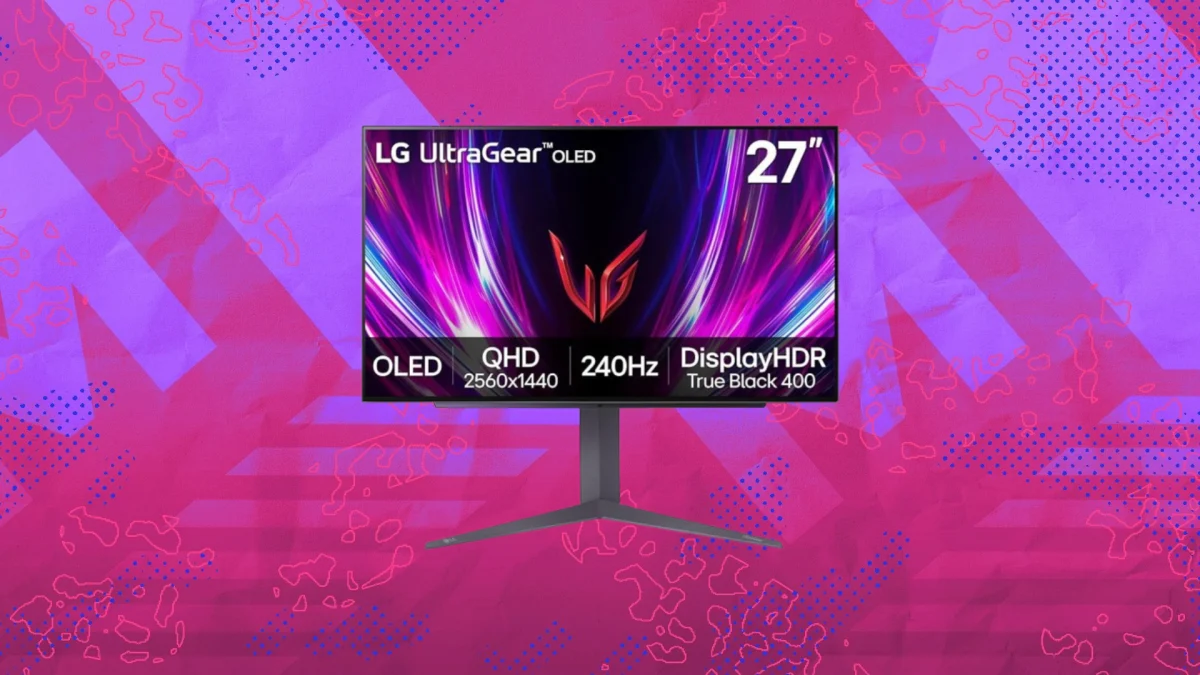
In the rapidly evolving world of display technology, OLED (Organic Light-Emitting Diode) panels have long been the "holy grail" for competitive gamers and visual enthusiasts alike. For years, the barrier to entry for high-performance OLED gaming monitors remained prohibitively high, often locking casual enthusiasts out of the market. However, as of October 27, that barrier has effectively crumbled. Amazon has launched a staggering promotion on the 27-inch LG UltraGear OLED QHD Gaming Monitor (model 27GS93QE), slashing the price to just $499.99—a significant 44% reduction from its $899.99 list price.
This deal represents the lowest price ever tracked for this specific model, positioning it as one of the most compelling hardware values currently available in the consumer electronics sector.
Main Facts: A Paradigm Shift in Display Value
The LG UltraGear 27GS93QE is not merely another monitor; it is a high-performance instrument designed for those who demand precision. At its current price point, the monitor bridges the gap between high-end professional equipment and mid-range consumer hardware.
Key Specifications at a Glance:
- Panel Type: OLED
- Resolution: QHD (2560 x 1440)
- Refresh Rate: 240Hz
- Response Time: 0.03ms (GtG)
- Color Gamut: 98.5% DCI-P3
- Connectivity: HDMI 2.1 and DisplayPort 1.4
The combination of QHD resolution and a 240Hz refresh rate is widely considered the "sweet spot" for modern PC gaming. While 4K monitors offer higher pixel density, they often require prohibitively expensive graphics cards to achieve the high frame rates necessary to utilize their refresh rates. The LG UltraGear, by contrast, offers a balanced experience that favors fluid motion and responsiveness over sheer pixel count, making it the ideal choice for competitive titles like Valorant, Counter-Strike 2, or Apex Legends.
Chronology of Market Positioning
The trajectory of LG’s UltraGear series has been defined by a commitment to rapid innovation. When LG first pivoted their OLED technology toward the desktop gaming monitor market, prices consistently hovered near the $1,000 threshold.
Early 2023: Initial models of OLED gaming monitors hit the market, establishing a new standard for contrast ratios and response times. However, early adopters faced steep "pioneer taxes," paying upwards of $900 for 27-inch panels.
Mid-2024: As competition intensified from rivals like ASUS, MSI, and Alienware, LG began optimizing its production cycles. The 27GS93QE was introduced as a refined iteration of their original OLED lineup, focusing on improved durability and color accuracy.
October 27, 2024: The market saw a tactical shift. By dropping the price to $499.99, Amazon and LG have effectively triggered a "price floor" event. This move suggests that LG is looking to move significant volume ahead of the Q4 holiday shopping season, potentially forcing competitors to re-evaluate their own pricing strategies for the remainder of the year.
Supporting Data: The Physics of Performance
To understand why this monitor is a significant acquisition, one must look at the underlying hardware performance metrics that separate OLED from traditional LED or IPS panels.
The 0.03ms Advantage
In competitive gaming, "ghosting"—the trail left behind a moving object on a screen—is the enemy of clarity. Traditional LCD panels rely on liquid crystals that must physically twist to allow light through. Even with "Fast IPS" technology, this process takes time. OLED, conversely, works by emitting light directly from self-lit pixels. Because these pixels can turn on and off almost instantaneously, the LG UltraGear achieves a 0.03ms response time. This is not just a marketing figure; it is a physical reality that results in unparalleled motion clarity during high-intensity gameplay.
Contrast and Color Fidelity
The VESA DisplayHDR True Black 400 certification is a hallmark of this display. Because OLED pixels can shut off completely to create "true black," the contrast ratio is effectively infinite—or, as measured by technical standards, 1.5 million-to-one. In scenes featuring dark environments or high-dynamic-range lighting, this creates a sense of depth that IPS panels simply cannot replicate. Furthermore, the 98.5% coverage of the DCI-P3 color spectrum ensures that games appear as the developers intended, with vibrant, accurate, and punchy colors.
Adaptive Sync Technologies
The inclusion of both Nvidia G-Sync Compatibility and AMD FreeSync Premium Pro ensures that the monitor remains hardware-agnostic. Whether a user is running an Nvidia RTX 40-series card or an AMD Radeon RX 7000-series GPU, the monitor will synchronize its refresh rate with the frame output of the PC, eliminating the "tearing" or "stutter" that occurs when the monitor and GPU are out of sync.
Official Perspectives and Industry Implications
Industry analysts have noted that the sub-$500 price point for a high-refresh OLED monitor is a "watershed moment." By making OLED technology accessible to the average enthusiast, LG is essentially democratizing premium visual fidelity.
Historically, OLED panels were criticized for their susceptibility to "burn-in"—a phenomenon where static images left on the screen for extended periods could cause permanent discoloration. However, modern LG panels include robust software protections, such as automatic pixel cleaning and screen shift features, which mitigate these risks significantly. The current market aggressive pricing suggests that LG is confident in the longevity of these panels and is prioritizing brand loyalty and market share over short-term profit margins on this specific unit.
Furthermore, the physical versatility of the 27GS93QE—which includes a highly adjustable stand capable of height, tilt, and pivot adjustments—indicates that LG is positioning this as a "daily driver." It is not just a monitor for gaming; it is a monitor for content creation, office work, and media consumption.
Implications for the Consumer
For the average consumer, this sale presents a rare opportunity. Usually, high-end display technology follows a slow depreciation curve. A 44% discount on a flagship-tier product that is still current in its product lifecycle is unusual.
Why the Price Matters
- Future-Proofing: With HDMI 2.1 support, this monitor is fully compatible with the PS5 and Xbox Series X, allowing those consoles to reach their 120Hz/1440p potential.
- Desk Real Estate: The ultra-thin bezel and compact footprint make this an excellent choice for users with limited desk space who refuse to sacrifice performance.
- Cost-to-Value Ratio: At $499.99, the price-per-hertz and price-per-contrast ratio is arguably the best in the industry right now.
Final Considerations
Before purchasing, consumers should ensure their current hardware is capable of driving 1440p at high frame rates. While the monitor is excellent, the visual benefits of a 240Hz OLED are only fully realized when the PC pushing the signal is capable of outputting a high frame count.
As of the current writing, the promotion remains active on Amazon. Given the nature of these flash sales and the high demand for OLED technology at this price point, inventory is expected to move quickly. For those who have been waiting for the "perfect moment" to retire their aging 60Hz or 144Hz monitors, the window to act is narrowing.
The LG UltraGear 27GS93QE at $499.99 is more than a discount; it is a signal that the era of the premium OLED monitor has officially arrived for the mass market. Whether you are a professional esports competitor or a casual player seeking the most immersive visual experience available, this deal serves as a benchmark for what consumers should expect from the display industry moving forward.


 Reynand Wu

 Ammar Sabilarrohman

 Ali Ikhwan

 Sagoh


 Nana Muazin
