
 Basiran
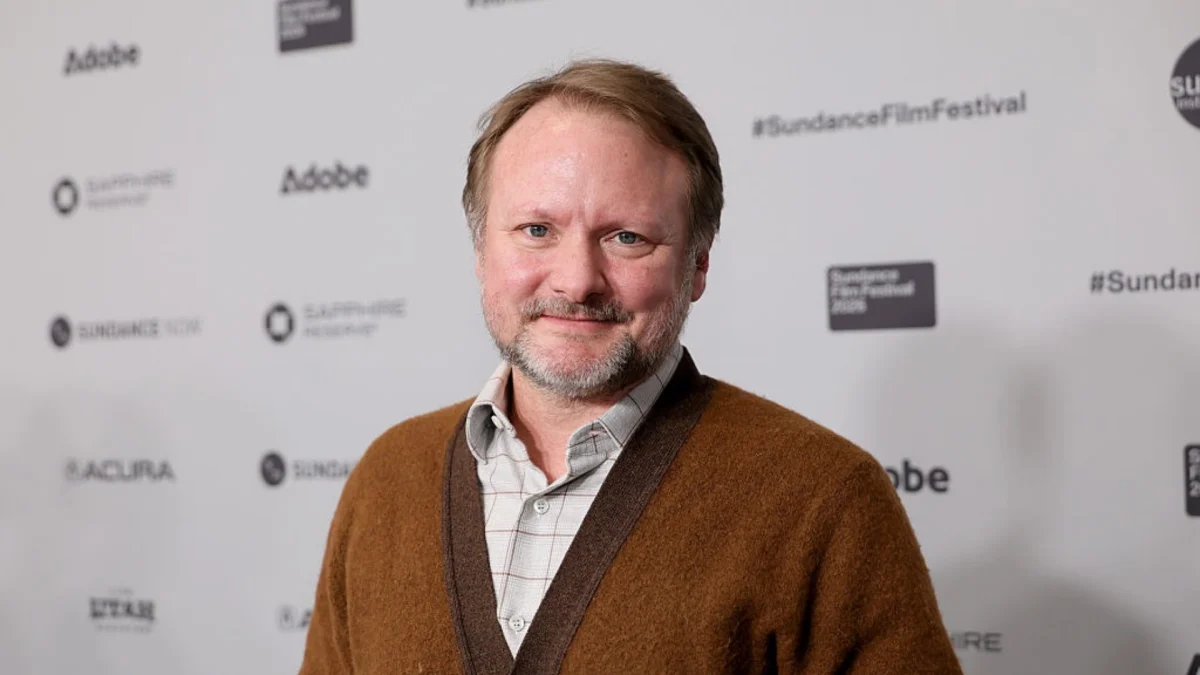
For years, cinephiles have analyzed the distinct visual language of Rian Johnson’s filmography. From the sun-drenched, high-contrast aesthetic of Knives Out to the atmospheric, moody tones of Glass Onion, Johnson—in collaboration with his long-time cinematographer Steven Yedlin—has cultivated a look that feels both timeless and deeply intentional. Now, that proprietary "special sauce" is no longer restricted to multi-million dollar studio productions; it is available for $12.99 on the Apple App Store.
The launch of the Chromagraph Camera app represents a fascinating intersection of professional color science and consumer-grade mobile photography. Developed by Johnson alongside Yedlin and programmer Eric Cameron, the app promises to bring the sophisticated image processing pipeline of Hollywood cinema to the casual iPhone user. But as the app gains traction, it raises questions about the democratization of film aesthetics and the limitations of software-driven photography.
The Genesis of Chromagraph: From Set to Smartphone
The story of Chromagraph began, somewhat unceremoniously, as a personal project. Rian Johnson, an avid photographer who frequently captures behind-the-scenes moments on set, found himself dissatisfied with the standard computational photography provided by the iPhone’s native camera app.
"I honestly just asked Steve (and our genius color science coder friend Eric Cameron) to make it because I take a ton of pics with my phone and wanted to have it for myself," Johnson explained in a series of posts on X (formerly Twitter). What began as a bespoke utility for a director’s private use eventually evolved into a consumer product. Johnson, Yedlin, and Cameron realized that the image-processing algorithms they had refined for the silver screen held a unique appeal for the general public—a demographic increasingly tired of the hyper-processed, over-sharpened look that defines modern mobile imagery.
The development process was not merely about slapping a filter over a JPEG. It was about porting the actual color science—the mathematical approach to how pixels are interpreted, color-graded, and textured—into an iOS environment. The result is a "one-stop-shop" that avoids the typical "filter-on-top" approach, instead processing the image directly from its raw data source.
Technical Foundations: How It Works
To understand why Chromagraph feels different from the plethora of editing apps currently on the market, one must understand the difference between standard post-processing and the Chromagraph pipeline.
Most smartphone cameras utilize aggressive computational photography. When you tap the shutter button, the phone captures multiple frames and uses AI-driven algorithms to sharpen edges, reduce noise, and boost dynamic range. While this creates a "perfect" technical image, it often strips away the organic texture and "filmic" quality that professional cinematographers prize.
RAW Processing vs. Post-Filtering
Chromagraph operates by shooting in RAW. By capturing unprocessed image data, the app retains the full fidelity of the sensor’s input before the phone’s operating system imposes its own stylistic choices. The app’s processing engine then applies Yedlin’s color science directly to this raw data.
Because the processing happens in this early stage, the results are fundamentally baked into the image’s DNA rather than being a skin applied over the top. This results in:
- Reduced Digital Sharpening: The "halos" and harsh edge-contrast found in standard iPhone photos are eliminated.
- Natural Color Rendition: The colors are graded to mimic film stock, favoring warmth and depth over the clinical, high-saturation look common in social media apps.
- Dynamic Range Management: By controlling the exposure and color curves at the raw level, the app achieves a higher "filmic" feel that balances shadow detail and highlights with a cinematic roll-off.
The Limitations of the "Cinematic" Experience
Despite the hype, Chromagraph is not a panacea for all mobile photography woes. It comes with a distinct set of guardrails that reflect both the technical challenges of the project and the intentional creative vision of its creators.
The "No-Android" Dilemma
One of the most frequent questions surrounding the launch is the absence of an Android version. Johnson was characteristically transparent about this decision. The diversity of hardware in the Android ecosystem—varying sensors, different image signal processors (ISPs), and fragmented software versions—presents a monumental hurdle for a small development team.
"Android devices are much more varied, and there’s no way with our small team we could dial it in for every device," Johnson noted. By limiting the app to iOS, the team can ensure that the "special sauce" performs exactly as intended, maintaining the integrity of the color science across a standardized set of hardware.
Restricted Editing and RAW Access
For power users who expect to manipulate every aspect of their photos, Chromagraph may feel restrictive. The app does not grant users access to the underlying RAW files for external editing; instead, it provides a curated set of tools for exposure, color, grain, and halation.
This design choice is intentional. By limiting the scope of adjustments, Johnson and his team are forcing the user to remain within the "creative sandbox" they have built. It is an exercise in restraint—a philosophy often echoed by cinematographers who believe that too much control can lead to an image that loses its soul.
Implications for the Future of Mobile Photography
The release of Chromagraph arrives at a cultural inflection point. As AI-generated and AI-enhanced imagery becomes the industry standard, there is a burgeoning counter-movement among enthusiasts who crave "imperfection." The "filmic look"—characterized by grain, softer contrast, and naturalistic color—is experiencing a massive resurgence.
The Professionalization of the Casual User
Chromagraph serves as a bridge. It allows a casual user to produce an image that looks like it was captured on a 35mm lens, without requiring the user to have a degree in color theory. In this sense, the app functions as a pedagogical tool. By showing users what a "good" image looks like—devoid of excessive sharpening and artificial HDR—it may influence the broader aesthetic trends of social media photography.
The "Pro-sumer" Divide
The app also highlights the growing gap between the snapshot and the photograph. Professional photographers will undoubtedly point to the app’s lack of granular control as a dealbreaker. For those who want to manipulate their own RAW files, the app is redundant. However, for the demographic that Johnson is targeting—people who want the look of a film without the labor of a professional workflow—the app is a revelation.
Chronology of the Launch
- Mid-2024: Rian Johnson and Steven Yedlin begin experimenting with a private utility to streamline the director’s personal mobile photography.
- Late 2024: After realizing the efficacy of the tool, Johnson, Yedlin, and programmer Eric Cameron formalize the project as "Chromagraph."
- Early 2025 (Release): The app is officially launched on the iOS App Store, priced at $12.99.
- Post-Launch: Initial reviews from the film and photography communities highlight the app’s distinct "filmic" aesthetic, with users praising the absence of standard smartphone "digital harshness."
- Ongoing: Johnson confirms that while video functionality is currently absent, it may be a feature for future iterations, specifically for Pro-model iPhones capable of handling the increased data load.
Official Responses and User Sentiment
The reception on social media has been largely positive, though nuanced. Users have been quick to share their results, often comparing them directly to shots taken with the stock Apple camera. The consensus among the early adopters is that Chromagraph excels in "mood."
One user on X remarked, "It’s the first time my phone has taken a photo that didn’t look like a phone." Another observed, "It’s darker, it’s warmer, it’s not trying to show me every single blade of grass in high-definition digital detail."
However, the discourse is not without its skeptics. Professional colorists have noted that while the "look" is impressive, the price point of $12.99 for a tool with limited manual control might deter those who are already comfortable using apps like Lightroom Mobile or Capture One. Yet, the brand value of Rian Johnson and the pedigree of Steven Yedlin—a cinematographer renowned for his technical mastery of digital acquisition—provide a unique marketing cachet that few other photography apps possess.
Conclusion: Is It Worth the Download?
Chromagraph Camera is not trying to be a replacement for a DSLR or a professional-grade raw editor. It is an opinionated piece of software. It has a specific look, a specific philosophy, and a specific audience.
For the filmmaker who admires the visual style of Knives Out, or the photography enthusiast who wants to bypass the "AI-ification" of the modern smartphone image, Chromagraph is a compelling proposition. It represents a rare opportunity to own a piece of a director’s creative process. By distilling the complex, often impenetrable world of cinematic color science into a simple, elegant interface, Rian Johnson has successfully lowered the barrier to entry for high-end aesthetics.
Whether this marks the beginning of a trend where directors release their own proprietary software tools remains to be seen. But for now, Chromagraph stands as a testament to the idea that sometimes, the best technology isn’t the one that does everything—it’s the one that does the right thing, beautifully.
As we move further into an era of automated, algorithm-heavy image capture, tools like Chromagraph provide a necessary reminder that photography is, at its heart, an art form defined by human choices—even when those choices are written in code.

 Asep Darmawan
 Reynand Wu

 Ali Ikhwan

 Sagoh
