Pevita Pearce
NEW YORK, NY – In a city often defined by its relentless pace and competitive spirit, one Brooklyn-based artist has meticulously carved out a thriving entrepreneurial path, transforming a passionate pursuit into a six-figure design enterprise. Hannah Bigeleisen, a sculptural furniture and lighting designer, has successfully transitioned from a demanding career in full-time education to spearheading her eponymous studio, demonstrating how artistic vision, coupled with astute business acumen, can lead to remarkable financial growth and creative fulfillment.
Bigeleisen, who launched her design practice in 2020 after a standout debut at Brooklyn Designs, is now averaging an impressive $10,000 to $15,000 in monthly sales, with projections to gross close to $200,000 this year. This represents a significant leap from an initial studio income of approximately $40,000 annually, effectively tripling her earnings since dedicating herself fully to her craft. Her remarkable journey underscores the potential for independent artists and makers to build sustainable and lucrative practices, a feat she largely attributes to invaluable business fundamentals learned through her involvement with 3pts, a creative business consultancy and co-op founded by Kim Robinson Jr.
A Chronology of Creative Evolution and Strategic Shifts
Hannah Bigeleisen’s trajectory is a testament to perseverance, adaptability, and the courage to embrace risk. Her story weaves through rigorous artistic training, impactful teaching experiences, and a strategic pivot that ultimately illuminated her entrepreneurial path.
Early Artistic Roots and NYC Beginnings
Bigeleisen’s artistic foundation was laid at the Cleveland Institute of Art, where she immersed herself in sculpture and drawing, with a particular emphasis on printmaking. Upon graduating in 2010, she moved to the vibrant art scene of New York City, immediately diving into the practicalities of the art world as an artist assistant. This period proved profoundly formative, offering firsthand exposure to large-scale artistic production. Working with established artists such as Katrin Sigurdardóttir, assisting in the fabrication of her piece for the prestigious Venice Biennale, and Orly Genger, contributing to her installation in Madison Square Park, provided tangible proof of what was possible. "Okay. I can see them doing this. This is an attainable thing for me," Bigeleisen recalls thinking, finding immense inspiration in witnessing successful female artists navigate the professional landscape.
To support her artistic endeavors and secure a studio space in the city while preparing for graduate school, Bigeleisen began teaching. Her initial foray into education at an arts preschool was a "low stakes but exciting way" to explore the field, appreciating the uninhibited creativity of young children.

The Intersection of Education and Art: A Dual Path
Her pursuit of higher education led her to the Rhode Island School of Design (RISD) in 2014, where she earned an MFA in printmaking. During her time at RISD, she also took on teaching roles, experiences that, while challenging, solidified her commitment to impactful education. Reflecting on her professors, Bigeleisen articulated a clear vision: "We need educators who have a more diversified background and who have student goals in mind instead of their own agendas." This conviction propelled her to apply for the New York City Teaching Fellows Program upon graduation in 2016. This subsidized program offered a pathway to a higher education degree while teaching full-time in public schools, providing crucial stability at a time when her husband was also transitioning his own studio practice from a partnership to a solo venture. Bigeleisen’s dedication to teaching, often balancing full-time instruction, curriculum development, and graduate studies, was a demanding but fulfilling period that simultaneously supported her burgeoning studio work.
The Pivotal Shift Towards Functionality
For three years, Bigeleisen taught history and English in New York City public schools, finding profound satisfaction in engaging students through these subjects. However, it was during this intense period that her artistic practice began an organic, yet transformative, evolution. From solely creating sculptural works, she started to explore functionality. Her husband, a designer himself and a longtime creative confidant, consistently encouraged this shift. "This piece could be a shelf," he would suggest, or "You should make this into a pattern." Bigeleisen initially resisted, fearing that functionality would compromise her artistic vision. "In reality," she now acknowledges, "functionality just adds to it. But it was a journey I had to go on myself." Conversations with curators about integrating light into her pieces further catalyzed this change, leading her to experiment with illuminated sculptures.
Illuminating a New Path: The Birth of a Design Business
This pivotal shift culminated in the creation of her first functional piece, a venture that would ultimately redefine her career.
The Ellsworth Lamp and First Sales Success
Driven by her newfound exploration of functionality and light, Bigeleisen designed the Ellsworth Lamp. Heavily influenced by the minimalist painter Ellsworth Kelly and her material studies in aggregate and cement, the lamp became a tangible representation of her evolving artistic direction. In 2019, on a whim and with just two weeks to prepare, she applied for Brooklyn Designs, a low-entry show during Design Week that several friends had participated in. Her acceptance marked her official foray into the world of design. The show proved to be a watershed moment. A call from the show’s organizer soon after revealed that a buyer was keenly interested in her pieces. The subsequent sale was a powerful affirmation. "If I can do this once, I can do it again," she realized, sensing the untapped potential in her functional designs.
A Student’s Question, a Life-Changing Decision
Despite the success, balancing a full-time teaching schedule with 300 students and a burgeoning studio practice was immensely taxing. While teaching was fulfilling, it drained her time and energy. Her students, aware of her artistic pursuits, often attended her shows for extra credit. A particular conversation with a graduating student, nervous about his future, became a profound turning point. Bigeleisen offered words of encouragement: "It’s okay to not know what you want to do, but you have to work towards something. You have to follow your dreams. Whatever they are, you have to follow them in whatever capacity that takes you." His poignant response – "Okay, well, are you following your dreams?" – resonated deeply. "I remember walking home that day, and that was just really resonant with me," she recounts. "I’ve had these opportunities. I’ve had proven success in the field. I need to take a risk on myself that I haven’t done before." It was at that moment Bigeleisen knew she would eventually leave full-time teaching to pursue her studio practice.

Strategic Transition and Continued Growth
The transition was gradual and strategic. Bigeleisen continued to teach part-time, serving as an adjunct instructor for five years in the design department at LaGuardia Community College and teaching painting, drawing, and art history at the Summer Institute for Sotheby’s Institute of Art. These more aligned teaching roles offered flexibility, allowing her to dedicate the majority of her time to prototyping and fabricating new works. This strategic phasing out of full-time commitments provided the necessary space for her design business to truly take root.
Mastering the Business of Art: The 3pts Partnership
Early in her entrepreneurial journey, Bigeleisen admits to a significant gap in her knowledge: the business side of art.
Overcoming Business Intimidation
"In the early days, I didn’t really understand the business part of my practice," she confesses. Sales came organically through Instagram or her "super rudimentary" website, but she lacked proactive strategies. "I wasn’t doing any outreach. I didn’t understand marketing or how to structure a business." For many artists, the word "business" can be intimidating, often seen as antithetical to the creative process. Bigeleisen shared this sentiment, viewing business as a daunting, separate entity.
The "Plan for Growth" Catalyst
This changed dramatically in 2023 when she enrolled in a class called "Plan for Growth." This pivotal course, described as a "pillar class for independent design in New York City" and run through the Small Business Development Center (SBDC) – a subsidized creative entity supporting small businesses – introduced her to Kim Robinson Jr., founder of 3pts. Meeting Robinson and engaging with the curriculum was a revelation. The class systematically broke down business fundamentals, covering everything from marketing strategies and email list building to overall business structuring. "Business was no longer a scary word," Bigeleisen affirms, highlighting the transformative impact of this education. Joining 3pts’ creative agency further amplified her growth, providing crucial "back end of things, brainstorming, strategizing" support that allowed her to focus on her core creative work. This partnership with 3pts became a cornerstone of her studio’s accelerated growth, bridging the critical gap between artistic talent and commercial viability.
Tangible Success and Strategic Expansion
With a solidified business foundation, Hannah Bigeleisen’s studio practice has flourished, marked by impressive financial milestones and strategic approaches to growth.
From $40,000 to a $200,000 Horizon
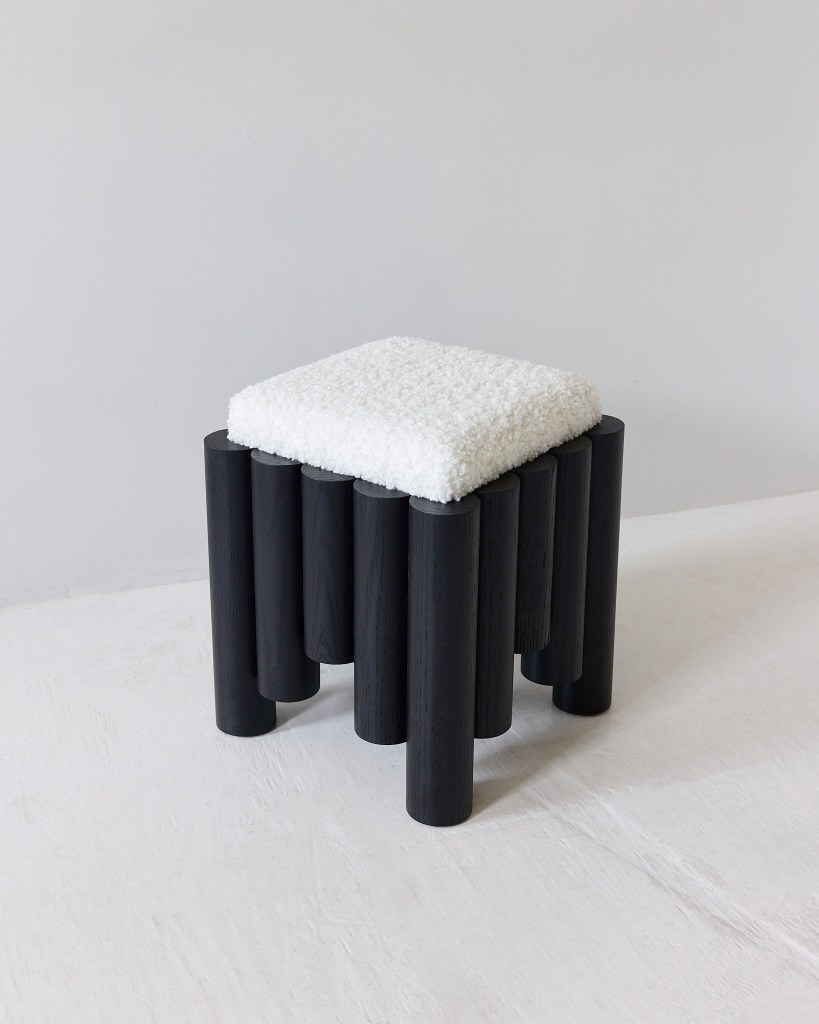
The financial trajectory of Bigeleisen’s studio illustrates a powerful growth story. For the first few years, her studio income hovered around $40,000 annually, with teaching remaining her primary source of revenue. However, in the past two years, her studio practice has become the dominant income stream. While last year grossed $86,000, Bigeleisen is confidently on track to nearly triple that, projecting closer to $200,000 this year. Her monthly sales consistently hit her target range of $10,000 to $15,000, demonstrating sustained and substantial growth. The variability of income, typical for project-based creative work, is managed through a mix of long lead-time commissions and immediate stock sales.
The Foundation of Stability: Subsidized Studio Space
A critical component of her studio’s stability and growth is its physical home. Bigeleisen shares a studio space with her husband that is subsidized by the Greenpoint Manufacturing and Development Corporation (GMDC). GMDC’s mission to support manufacturing spaces for small businesses in New York offers an invaluable advantage: significantly lower cost per square foot compared to the surrounding area, coupled with a rare five-year lease. This stability allows Bigeleisen to plan and invest in her practice without the constant pressure of escalating rent, a common challenge for artists in NYC. Now in their fourth year at the location, the studio provides an ideal environment for creation and production.
Diverse Revenue Streams and Network Power
Bigeleisen’s success is not solely dependent on direct sales of her primary works. She employs a multifaceted approach to income generation, drawing from several channels: organic word-of-mouth referrals, participation in in-person events and shows, a robust internet presence, and a well-maintained email list. Furthermore, strategic public relations garnered from exhibitions and features contribute significantly to brand visibility and sales.
Beyond direct sales, Bigeleisen has actively cultivated diversified income streams, most notably through licensing work. This strategy allows her to expand her reach and influence without directly managing all production and sales. "Creating different forms or streams of income is key," she emphasizes. Licensing enables her to design a piece, which is then produced and sold by another company, opening new markets and audience segments.
A prime example of this is her collaboration with Robert Sukrachand, who runs Pern Baan. Together, they created a marble sconce. This partnership proved "eye-opening," as it allowed her designs to be placed in interiors that might not have previously considered her other works. This approach not only expands her audience through different price points but also through diverse material translations, showcasing the versatility of her aesthetic.

Crucially, Bigeleisen stresses the importance of fostering a strong professional network. "It’s not always about selling the work, but about maintaining those relationships," she advises. The creative community and the small business world are deeply intertwined, providing a vital ecosystem for empathy, advice, and collaboration. Leaning into this community has been a cornerstone of her journey, as has the pragmatic necessity of having solid contracts in place.
Implications and the Road Ahead
Hannah Bigeleisen’s journey offers profound implications for aspiring artists and underscores the evolving landscape of creative entrepreneurship.
A Future Unburdened by Teaching
This summer marks a significant milestone for Bigeleisen: her first summer completely free from teaching commitments. The prospect of this newfound freedom is "kind of unfathomable" to her, representing an unprecedented opportunity to channel her full creative energy into her studio. This dedicated time will be focused on intensive prototyping and the development of entirely new bodies of work. She is particularly excited about showcasing new works on paper during Design Week, a return to her printmaking roots, and exploring how to integrate this "more ethereal form of drawing with furniture," whether through inset panels in case pieces or further illumination work with sconces. This phase promises a rich period of artistic innovation, unconstrained by external demands.
Enduring Lessons for Creative Entrepreneurs
Bigeleisen’s story distills vital lessons for anyone considering turning their passion into a business. Her overarching advice is simple yet powerful: "Just don’t stop." She challenges the common misconception of a single "big aha moment" that grants clarity or permission to cease other activities. Instead, she advocates for relentless perseverance. "You have to support yourself in every way, however that looks: part-time job, full-time job, multiple jobs, whatever it is. And you have to just continue to make things. You cannot stop making things. You can’t ever give up." This philosophy highlights the blend of practicality and unwavering commitment required for sustained creative entrepreneurship.
The Broader Impact of Support Systems
Beyond individual tenacity, Bigeleisen’s narrative also illuminates the critical role of external support systems. Programs like the NYC Teaching Fellows, the SBDC’s "Plan for Growth" class, the 3pts consultancy, and GMDC’s subsidized studio spaces are not merely peripheral services; they are foundational pillars that enable artists and small business owners to thrive in challenging urban environments. These entities provide education, mentorship, and crucial resources that bridge the gap between artistic talent and the complex demands of running a sustainable business.
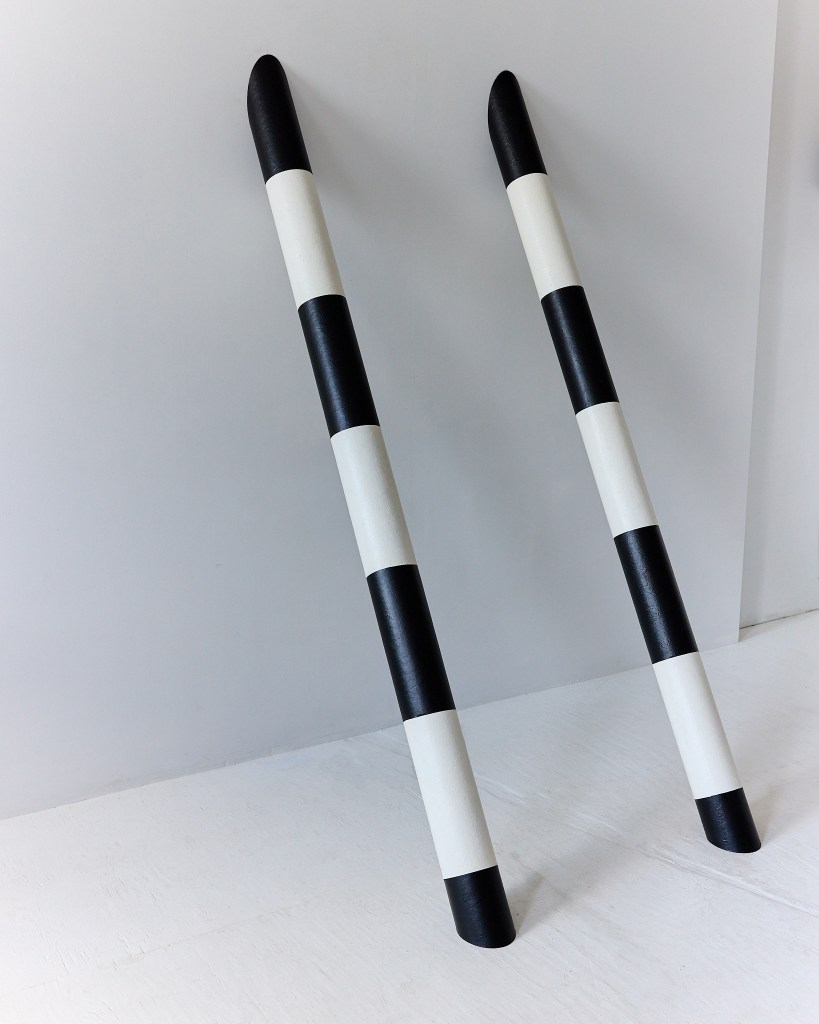
Hannah Bigeleisen’s transition from a dedicated educator to a flourishing design entrepreneur stands as an inspiring blueprint. It demonstrates that with strategic planning, a willingness to learn business fundamentals, the courage to take calculated risks, and an unwavering commitment to one’s craft, artists can indeed redefine success on their own terms, creating not just beautiful objects, but also a financially robust and deeply fulfilling life.


 Siti Muinah
 Lina Hope
 Nila Kartika Wati
 Jia Lissa
 Basiran
 Sagoh
Sagoh