Lina Hope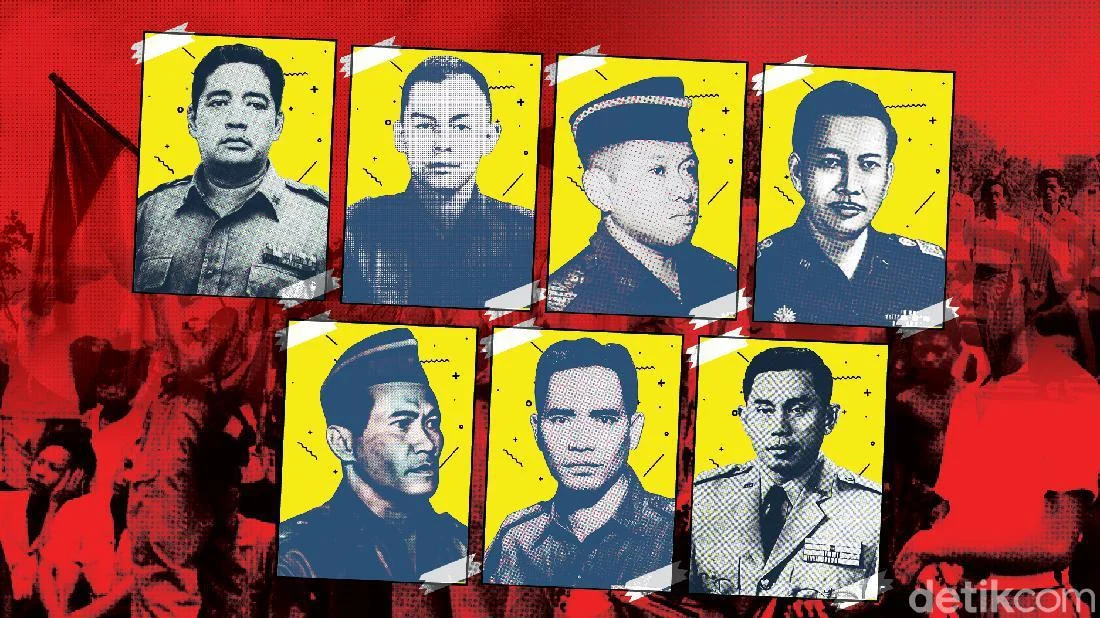
Jakarta, Indonesia – The transition from September 30th to October 1st, 1965, marks one of the darkest and most pivotal chapters in Indonesia’s national history. This fateful night witnessed a brutal uprising and an audacious coup attempt orchestrated by the Indonesian Communist Party (Partai Komunis Indonesia – PKI), an event that irrevocably altered the nation’s political landscape and ushered in an era of profound transformation. Known as the Gerakan 30 September 1965 PKI (G30S PKI), this rebellion culminated in a bloody confrontation, leading to the tragic deaths of seven esteemed Indonesian generals, revered as Heroes of the Revolution.
The official narrative, widely disseminated and upheld in Indonesian historical accounts, attributes primary responsibility for this catastrophe to the then-Chairman of the PKI’s Central Committee (CC), Dipa Nusantara Aidit, more commonly known as DN Aidit. His leadership and the party’s ideological ambitions are consistently cited as the driving forces behind the coup. The events of G30S PKI unfolded against a backdrop of intense ideological struggle, Cold War tensions, and a precarious balance of power within Indonesia itself, making it a complex and deeply scarring episode in the nation’s journey.
The Precarious Political Climate Leading to 1965
The years preceding 1965 were characterized by a volatile political environment in Indonesia. On July 5, 1959, President Sukarno, the nation’s charismatic founding father, declared the implementation of "Guided Democracy" (Demokrasi Terpimpin). This system sought to replace the Western-style parliamentary democracy, which Sukarno deemed unsuitable for Indonesia’s unique character, with a more authoritarian, centralized model where his leadership was paramount.
Under Guided Democracy, the PKI experienced a dramatic resurgence and significant political growth. Capitalizing on Sukarno’s "Nasakom" (Nationalism, Religion, Communism) ideology, which aimed to unite disparate political forces under his leadership, the PKI skillfully expanded its influence across various sectors of society. By 1965, the PKI had become the largest communist party outside of China and the Soviet Union, boasting millions of members and sympathizers. Their growing power and their open alignment with the People’s Republic of China’s communist ideals fueled ambitions to establish a communist government in Indonesia, a proposition that was met with fierce resistance from conservative elements, particularly within the Indonesian Army (TNI AD) and religious groups.
The deepening ideological divide between the PKI and the Army created a chasm of distrust. The PKI, increasingly bold, began circulating rumors of a "Dewan Jenderal" or Council of Generals within the Army. This alleged council, according to PKI propaganda, was supposedly planning a coup to depose President Sukarno and seize power. This insidious rumor, designed to sow discord and justify their own subsequent actions, significantly escalated tensions and set the stage for the tragic events that followed.
Further exacerbating the already tense situation was the deteriorating health of President Sukarno. In July 1965, reports emerged of Sukarno’s serious illness, prompting DN Aidit to bring a team of doctors from China to examine him. The Chinese doctors reportedly conveyed a grim prognosis, suggesting that Sukarno might not survive much longer. This alarming news, combined with the escalating political friction, propelled the PKI to act swiftly, fearing a power vacuum that could be filled by their military adversaries.
The Chronology of Treachery: September 30, 1965
The meticulous planning for the coup reached its climax on September 28, 1965, when the PKI leadership convened a crucial meeting. The outcome of this meeting was a definitive decision to launch their pre-emptive strike. As detailed in Prof. Dr. Sutan Remy Sjahdeini’s "Sejarah Hukum Indonesia" (History of Indonesian Law), the movement was set into motion on the night of Thursday, September 30, 1965. The PKI’s objective was clear: to seize control of Indonesia and establish a government under their dominion.
The operational command of the G30S PKI fell to Lieutenant Colonel Untung Syamsuri, the Commander of Battalion I of the Cakrabirawa Regiment, President Sukarno’s elite presidential guard. Untung issued direct orders for the immediate capture of seven high-ranking generals, to be brought in "dead or alive." The targeted generals were:
- General Ahmad Yani
- Major General R. Soeprapto
- Major General M.T. Haryono
- Major General S. Parman
- Brigadier General D.I. Pandjaitan
- Brigadier General Sutoyo Siswomiharjo
- First Lieutenant Pierre Andreas Tendean
As documented in Hairul Amren Samosir SSos MPd’s "Pancasila," the PKI forces executed the kidnappings by arriving at the generals’ residences under the guise of presidential guards. They falsely claimed that President Sukarno had summoned the generals for an urgent meeting, a ploy designed to gain entry and overcome any initial resistance.
A particularly poignant moment occurred at the residence of General Abdul Harris Nasution, one of the primary targets. His aide, First Lieutenant Pierre Andreas Tendean, bravely confronted the approaching PKI troops. In an act of extraordinary self-sacrifice, Tendean, besieged and threatened at gunpoint, identified himself as General Nasution to protect his superior. The PKI forces, believing they had apprehended their target, immediately seized Tendean and took him away. General Nasution himself managed to evade capture by escaping through a back door, though not without devastating consequences for his family.
The captured generals—R. Soeprapto, Sutoyo Siswomiharjo, S. Parman, and Pierre Andreas Tendean—were initially taken alive to a remote base in Pondok Gede, East Jakarta. What awaited them there was a horrific fate.
The Horrors of Lubang Buaya and the Tragic Deaths
Upon arrival at the Pondok Gede base, the captured generals were not, as promised, brought before President Sukarno. Instead, they were subjected to brutal torture and summary execution by the PKI forces. The bodies of R. Soeprapto, Sutoyo Siswomiharjo, S. Parman, and Pierre Andreas Tendean were then callously dumped into an unused, shallow well, approximately 0.75 meters in diameter and 12 meters deep. This grim site would later become infamously known as Lubang Buaya (Crocodile Hole).
Meanwhile, the other three targeted generals—Ahmad Yani, M.T. Haryono, and D.I. Pandjaitan—met equally tragic ends. They were shot dead in their respective homes during the abduction attempts, their bodies subsequently transported to the same base and thrown into the very same well at Lubang Buaya. The savagery of these murders underscored the ruthlessness of the coup attempt.
General A.H. Nasution, the initial primary target, miraculously survived the assassination attempt. However, his escape came at an immense personal cost. His five-year-old daughter, Ade Irma Suryani Nasution, became an innocent victim of the violence. As PKI troops stormed their home, firing indiscriminately, Ade Irma, held by her mother Johanna Nasution, was tragically hit by bullets. Johanna, in a desperate attempt to shield her husband, transferred Ade to her sister-in-law. But as the door to the room was opened, a barrage of shots pierced Ade’s small body and wounded A.H. Nasution’s sister. Johanna, with incredible courage, then cradled her blood-soaked daughter while guiding her husband to safety through a rear exit.
Ade Irma Suryani was rushed to Gatot Subroto Army Central Hospital (RSPAD Gatot Subroto) in Jakarta, where she remained conscious but critically weak. Doctors immediately recommended surgery. Despite intensive medical care, the severe injuries proved fatal. Ade Irma Suryani Nasution succumbed to her wounds five days later, on October 6, 1965, a tender life tragically cut short by the political turmoil. Her death became a powerful symbol of the innocence lost and the immense human cost of the G30S PKI incident.
The Counter-Operation and the Fall of PKI
The morning after the assassinations, Lieutenant Colonel Untung, unaware of the broader military response brewing, publicly announced the formation of a "Revolutionary Council" via a broadcast on Radio Republik Indonesia (RRI). In this declaration, Untung also proclaimed that the PKI, along with sympathetic military elements, had successfully seized control of several strategic locations in Jakarta.
However, this announcement was swiftly met with a decisive counter-offensive by the loyalist Indonesian government forces. By the afternoon of October 1, 1965, an operation to crush the G30S PKI rebellion was fully underway. This crucial operation was spearheaded by the Army’s Strategic Reserve Command (KOSTRAD), under the leadership of then Major General Suharto. The elite RPKAD (Resimen Para Komando Angkatan Darat, now Kopassus), commanded by Colonel Sarwo Edhie Wibowo, played a pivotal role, alongside units like Para Kujang/328 Siliwangi and cavalry battalions.
These loyalist forces rapidly moved to reclaim the strategic points in Jakarta that the PKI had boasted of controlling. Their swift and coordinated action quickly neutralized the rebels’ hold on the capital. The main headquarters of the G30S PKI was subsequently located and secured at Halim Perdanakusuma Air Force Base.
Following intensive investigations and intelligence gathering, the gruesome discovery of the well at Lubang Buaya was made. The bodies of the seven slain generals, who would later be posthumously honored as Heroes of the Revolution, were recovered from the well, confirming the barbaric nature of the coup attempt.
The military’s operations extended beyond Jakarta. Significant anti-PKI campaigns were launched in various regions, such as Operasi Trisula (Trident Operation) in South Blitar and Operasi Kikis (Eradication Operation) along the border of Central Java and East Java, aimed at rooting out remaining PKI strongholds and leadership. During these extensive operations, numerous PKI figures were arrested. DN Aidit, the alleged mastermind of the coup, was ultimately located and killed during the suppression efforts, marking the symbolic end of the PKI’s organized resistance.
Implications and Lasting Legacy
The G30S PKI incident triggered a monumental shift in Indonesian politics and society. The immediate aftermath saw the rapid dismantling of President Sukarno’s authority. His perceived inaction and perceived sympathy towards the PKI during the crisis severely undermined his position. By March 1966, through the Supersemar (Surat Perintah Sebelas Maret – Order of Eleventh March) decree, Sukarno was compelled to transfer extensive executive powers to Major General Suharto. This effectively marked the end of Sukarno’s Guided Democracy and the beginning of the "New Order" (Orde Baru) under Suharto, who would eventually assume the presidency in 1967.
Perhaps the most devastating and controversial consequence of the G30S PKI event was the widespread anti-communist purges that swept across Indonesia from late 1965 into 1966. Fueled by intense anti-communist fervor, propaganda, and fear, and often orchestrated by the military with civilian support, these mass killings targeted alleged PKI members, sympathizers, ethnic Chinese, and others deemed communist or anti-government. Estimates of the death toll vary widely, ranging from hundreds of thousands to over a million, making it one of the largest mass killings of the 20th century. The purges left an indelible scar on Indonesian society, creating a culture of silence and fear that lasted for decades.
The G30S PKI also cemented an official historical narrative that firmly placed sole blame on the PKI, portraying them as treacherous, godless, and a perpetual threat to the Pancasila state ideology. This narrative was institutionalized through education, media, and public commemoration. Each year, October 1st is observed as Hari Kesaktian Pancasila (Pancasila Sanctity Day), a national holiday dedicated to commemorating the nation’s triumph over the communist threat and reaffirming the Pancasila as the unshakeable foundation of Indonesia.
While the official account remains dominant, historical debates continue regarding the precise orchestrators, motivations, and external influences surrounding the G30S PKI. The complexities of this event, including the role of various internal factions, external powers, and the exact chain of command, are still subjects of scholarly inquiry and public discussion. However, the fundamental truth of the tragic loss of life and the profound impact on Indonesia’s trajectory remains undisputed. The G30S PKI stands as a chilling reminder of the fragility of peace and the devastating consequences of ideological conflict, forever etched into the collective memory of the Indonesian nation.


 Siti Muinah
 Nila Kartika Wati

 Jia Lissa
 Basiran
 Sagoh
Sagoh