Lina Hope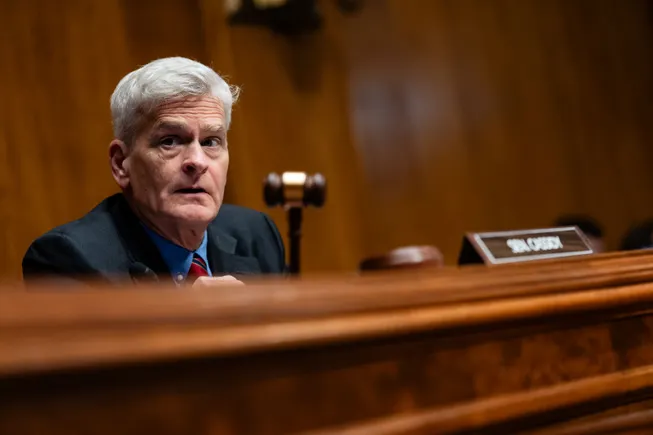
The U.S. Department of Education (ED) currently finds itself at the epicenter of a high-stakes legislative and administrative tug-of-war. Since May 2025, the department has aggressively pursued a strategy of transferring key K-12 and higher education responsibilities to other federal agencies through a series of 14 interagency agreements (IAAs). While the Trump administration frames this shift as a vital move to dismantle federal bureaucracy and empower states, a bipartisan coalition in Congress is moving to assert oversight, demanding transparency and questioning the legal and practical implications of this wholesale restructuring.
Main Facts: The Scope of the Shift
The core of the current conflict lies in the Education Department’s effort to offload traditional administrative functions to entities such as the Department of Health and Human Services (HHS), the Department of Labor, and the Department of Justice. The administration asserts that these IAAs are essential tools for streamlining government, reducing the footprint of the federal education apparatus, and shifting fiscal and policy authority closer to the state level.
However, the rapid nature of these transfers—14 agreements finalized in under a year—has sparked alarm on Capitol Hill. Legislative efforts, most notably S. 5046, have been introduced to establish guardrails around these transfers. Proponents of the bill argue that while efficiency is a noble goal, the current trajectory of these agreements risks undermining the statutory mandates that have governed American education for decades.
A Chronology of Institutional Change
The timeline of this transition reflects a rapid pivot in federal education philosophy:
- May 2025: The Department of Education begins executing a wave of interagency agreements, seeking to redistribute departmental responsibilities to partner agencies.
- Late 2025: As the scope of these agreements becomes clear, congressional committees begin scrutinizing the administrative burden and the potential loss of federal oversight for landmark education programs.
- Early 2026: House Republicans introduce a package of 10 bills intended to codify the outsourcing of federal education programs, going beyond temporary IAAs by proposing permanent statutory transfers of authority.
- Present Day: The Senate Health, Education, Labor, and Pensions (HELP) Committee holds a markup session for S. 5046, highlighting a fractured bipartisan response. While some legislators support the concept of pilot programs for efficiency, others demand immediate accountability and transparency regarding costs and legal authority.
Supporting Data and Financial Transparency
One of the most contentious issues surrounding these agreements is the lack of public fiscal reporting. Senator Patty Murray (D-Wash.) brought this to the forefront during recent committee deliberations, noting that the Department of Education has already funneled over $1 million toward the implementation of a single agreement with the Department of Labor.
“Show us the receipts,” Senator Murray stated during the markup. “There are now 13 more of these agreements, and Congress has not received any information about what they cost.”
The absence of a clear budget for these administrative shifts has fueled skepticism. If the goal of these agreements is to reduce bureaucracy, critics argue that the taxpayer should not be footing a massive bill for the mere administrative act of moving responsibilities from one federal building to another. The Senate’s recent amendment to S. 5046, which mandates a comprehensive cost report on all IAAs, represents the first major legislative attempt to force the administration to quantify the financial impact of its "efficiency" drive.
Official Responses and Political Friction
The debate has created unusual bedfellows and unexpected fissures within both parties.
The Administration’s Stance
U.S. Education Secretary Linda McMahon has remained a staunch defender of the IAAs. In a letter sent to Congressional leadership, McMahon pushed back against what she described as "misconceptions" surrounding the department’s strategy. She argued that the agreements have already produced "measurable results" by driving stronger grant competitions and streamlining government operations. The administration maintains that these moves are necessary to achieve better outcomes for American students by ending the "one-size-fits-all" approach previously managed by the Education Department.
The Congressional Divide
The Senate HELP Committee reflects the complexity of the issue. Committee Chairman Sen. Bill Cassidy (R-La.) has adopted a nuanced, and at times contradictory, position. While he opposes the sweeping nature of the current transfers, he remains hesitant to vote against the administration’s right to pilot efficiency programs.
"I do think the administration should be allowed to pilot how to address inefficiencies and the potential for efficiencies by operationalizing these IAAs," Cassidy noted. However, he specifically singled out the agreement between HHS and the Office of Special Education and Rehabilitative Services (OSERS) as a point of contention, suggesting that some programs are too sensitive for such radical administrative shifts.
On the other side of the aisle, Sen. Tim Kaine (D-Va.), the architect of S. 5046, has framed his legislation as a rescue mission for the department’s "core components." Kaine admitted that he limited the scope of his bill to ensure a bipartisan consensus, suggesting that there are many more services at risk that he would like to protect if the political climate allows.
Implications: The Future of Special Education and Civil Rights
The most significant concern for stakeholders is the impact on protected classes and vulnerable student populations. Senator Susan Collins (R-Maine), a co-sponsor of S. 5046, highlighted the potential damage to the Individuals with Disabilities in Education Act (IDEA).
The agreement between HHS and OSERS has become the focal point of this debate. Critics argue that HHS lacks the specific expertise and historical context required to manage the nuanced requirements of special education. As Senator Collins noted, the special education program was established in 1975 with the express intent of ensuring that children with disabilities receive a free and appropriate public education—a mission she believes is fundamentally misaligned with the current administrative restructuring.
Furthermore, the House GOP’s legislative package poses a more permanent threat. By attempting to codify the transfer of statutory responsibilities, these 10 bills seek to make these administrative changes permanent law. While these bills have notably excluded certain civil rights activities, the move signals a broader intent to move the federal government away from the oversight of equitable education access.
Conclusion: A System in Flux
The battle over the Education Department’s interagency agreements is more than a bureaucratic dispute; it is a fundamental clash over the role of the federal government in American life.
If the administration succeeds in its mission, the U.S. Department of Education may find itself hollowed out, serving as a shell of its former self while its duties are scattered across the federal bureaucracy. If, however, Congress succeeds in implementing the oversight mechanisms proposed in bills like S. 5046, the administration will be forced to justify each transfer with clear fiscal data and legislative rationale.
For parents, educators, and state policymakers, the stakes could not be higher. As the funding and regulatory oversight for critical programs remain in a state of flux, the primary question remains: will this restructuring lead to a more efficient and localized educational system, or will it result in a fragmentation of support that leaves the most vulnerable students behind? As the "receipts" are tallied and the legislative debates continue, the future of the federal education infrastructure hangs in the balance.


 Siti Muinah
 Nana Muazin
 Nila Kartika Wati
 Jia Lissa
 Basiran
 Sagoh
Sagoh