
 Rifan Muazin
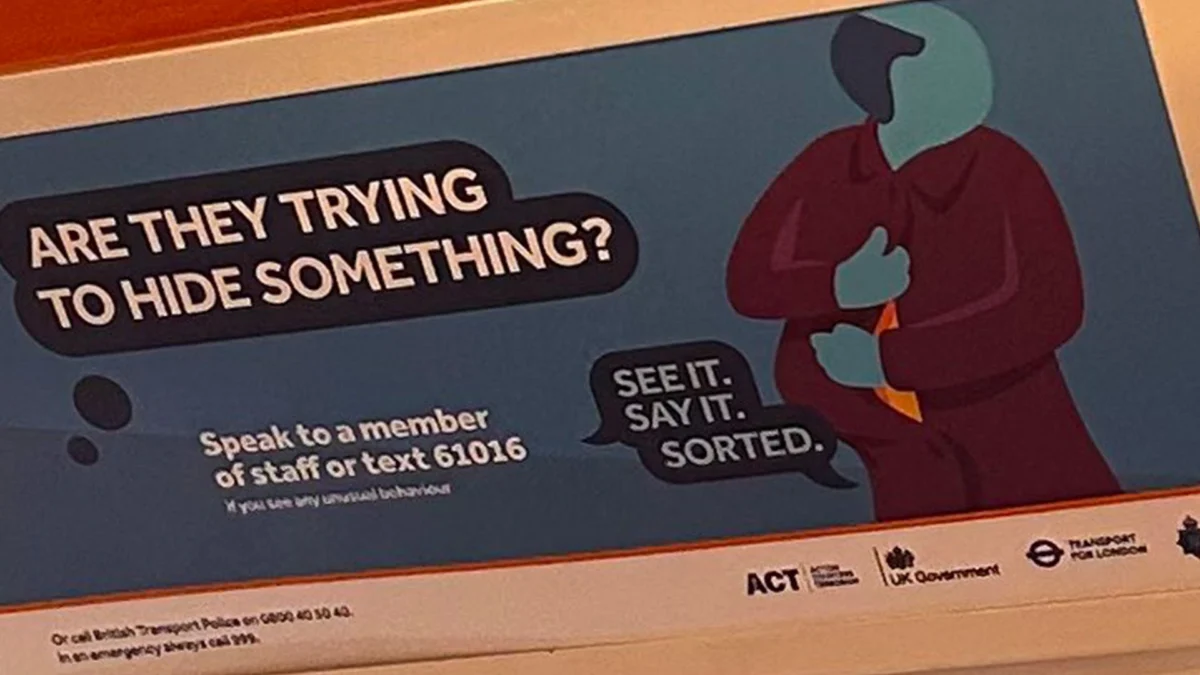
In the high-stakes world of public information campaigns, the margin for error is razor-thin. A design that intends to communicate vigilance can, if executed poorly, descend into a chaotic collision of misinterpretation and public outrage. This was the harsh reality facing Transport for London (TfL) this week, as a controversial poster—featuring a highly ambiguous illustration and an inflammatory tagline—swept across social media, triggering a wave of backlash that has left both transit authorities and design critics scrambling for answers.
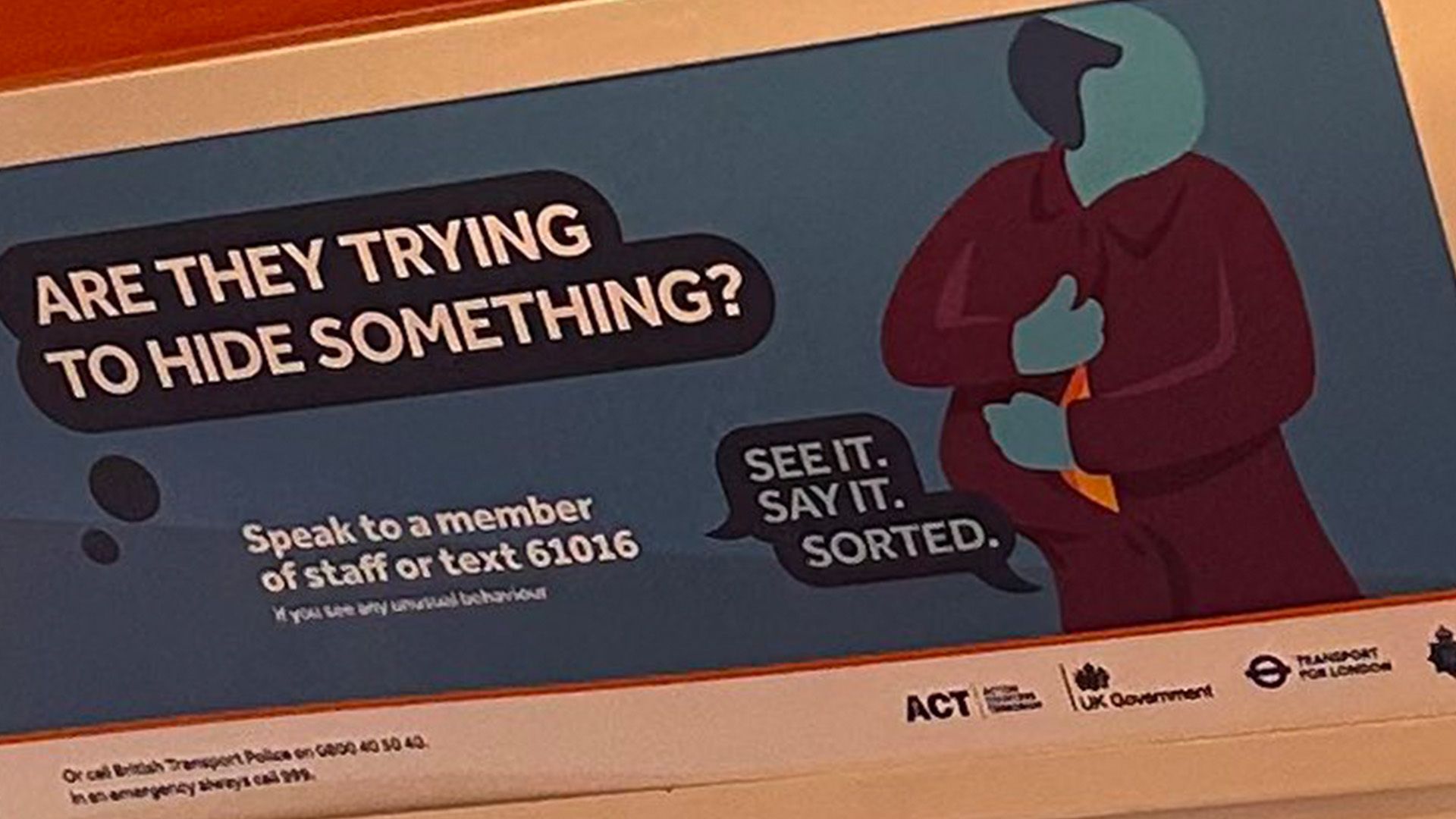
The poster, which appeared in various carriages across the London Underground network, featured an abstract, "Corporate Memphis"-style illustration of a figure. Due to the lack of clear facial features and the specific angle of the drawing, many commuters interpreted the figure as a woman wearing a hijab. Paired with the ominous, bold-lettered tagline, "Are they trying to hide something?", the image was immediately perceived as an act of xenophobic fear-mongering rather than a legitimate public safety message.
A Visual Rorschach Test: The Corporate Memphis Problem
At the heart of the controversy lies the widespread use of the "Corporate Memphis" art style—a flat, minimalist, and often featureless aesthetic popularized by big tech firms to convey a sense of inclusivity and neutrality. However, as this incident demonstrates, the very features that make the style "neutral" also render it dangerously prone to projection.
In the eyes of the public, the design became a "Rorschach test." While designers likely intended for the figure to represent a generic person looking over their shoulder in a state of suspicion, the lack of anatomical clarity allowed observers to fill in the blanks with their own biases or concerns.
"Suspicion, paranoia, and ethnically ambiguous abstract art—1984 is here in full force," one user noted on X (formerly Twitter). The ambiguity proved fatal to the ad’s intended message. By stripping away human detail, TfL—or whoever commissioned the work—unintentionally created a canvas upon which the public projected themes of racial profiling and state-sponsored paranoia.
Chronology of the Controversy
The timeline of the fallout highlights the rapid speed at which digital outrage can destabilize a public institution:
- October 24-25, 2026: Commuters begin noticing and photographing the posters across the London transit network. Photos circulate rapidly on X and Reddit, with users tagging the Mayor of London and TfL, demanding an explanation for the "disgusting insinuation."
- October 25, 2026 (Afternoon): TfL issues a preliminary response via social media, stating that the incident is under investigation.
- October 25, 2026 (Evening): TfL issues a formal statement claiming the posters were "unauthorised" and "flyposting," vowing to work with the British Transport Police (BTP) to remove the materials.
- October 26, 2026: Online sleuths and investigative accounts begin to question the "flyposting" narrative, noting that the aesthetic and branding of the posters align with official government campaigns, casting doubt on TfL’s claim that the ads were illicitly placed.
The "Unauthorized" Defense and the Credibility Gap
The most fascinating, and perhaps most damaging, element of this saga is the official response provided by TfL. In a move that observers have described as a classic "deflection tactic," the agency claimed the posters were part of a "flyposting" campaign—illegal, unauthorized advertisements pasted up by third parties.
"Our media partner, our teams and contractors have been instructed to inspect trains and remove any unauthorised posters that are found on our network," a spokesperson for TfL stated in a now-deleted social media post. "The incident has been reported to the British Transport Police as flyposting is an illegal activity."
However, this explanation has been met with significant skepticism. Critics point to the high-quality production value of the posters and the fact that similar variants of the campaign had been documented by news outlets and transit enthusiasts prior to the controversy. The implication that an illegal group could successfully infiltrate the London Underground’s highly regulated advertising spaces, install high-quality signage, and leave them in place for days without detection raises serious questions about TfL’s internal security and oversight.
Implications for Public Information Design
This incident serves as a cautionary tale for government agencies and public-facing organizations. The shift toward abstract, minimalist illustration in public safety messaging is intended to be accessible and non-threatening, but it can backfire when the subject matter touches on sensitive societal issues like security, surveillance, and identity.
1. The Death of Ambiguity in Sensitive Messaging
When a campaign deals with public security, there is no room for "artistic interpretation." The language must be precise, and the visuals must be unequivocal. By opting for a style that relies on vague shapes, the designers lost control of the narrative. When the audience cannot identify the subject, they will interpret the image based on their existing anxieties.
2. The Dangers of Corporate Minimalism
Corporate Memphis has long been criticized for its "blandness," but this incident elevates that criticism to a matter of social impact. When a style is used to make all people look the same, it risks erasing individual identity to the point of caricature. In a city as diverse as London, the use of such a style in a campaign that asks, "Are they hiding something?" is an egregious failure of cultural sensitivity.
3. Institutional Accountability
The "flyposting" defense is a high-risk strategy. If it turns out that the campaign was, in fact, sanctioned by a government body—or if the security failure was as significant as the posters suggest—the damage to public trust will be irreparable. In the era of social media, organizations cannot simply delete their way out of a PR disaster. The digital paper trail is permanent, and the public is increasingly adept at cross-referencing claims with archival evidence.
The Wider Context: A Year of Cancelled Ads
This incident is not an isolated event. 2026 has been widely dubbed "The Year of the Cancelled Ad." From global luxury brands misjudging the mood of a post-pandemic, inflation-weary public to transit authorities tripping over their own safety messaging, the advertising industry is in a period of profound instability.
The rise of "culture war" advertising—where brands and institutions take positions on social issues—has sensitized the public to the point where even neutral or unintentional design choices are now subjected to intense forensic scrutiny. Whether it is the backlash against Sydney Sweeney’s recent racy campaigns or the fallout from corporate attempts to engage with political movements, 2026 has shown that the public is no longer a passive consumer of messaging. They are active participants, ready to dissect, debate, and ultimately force the retraction of campaigns that do not align with their values.
Conclusion: Lessons for the Future
As TfL continues its investigation into the origin of these posters, the broader design community must take stock of the implications. The lesson here is not just about the dangers of flyposting or the limitations of Corporate Memphis; it is about the fundamental importance of empathy in design.
When a public institution designs a message, it is speaking to a population with a diverse range of lived experiences. To ignore that reality—or to hide behind the "neutrality" of minimalist art—is to ignore the very people that the institution is supposed to serve.
For now, the posters are being pulled from the network, and the "Are they trying to hide something?" campaign has become a case study in how not to communicate. For TfL, the challenge will be to regain public trust and demonstrate that their security protocols are as robust as their messaging should have been. As for the designers and agencies involved, the incident stands as a stark reminder: in public space, your work is never just art—it is a social contract. When that contract is breached through poor judgment or visual ambiguity, the cost is far higher than a cancelled campaign; it is the erosion of the trust that binds a city together.


 Evan Lee Salim
 Jia Lissa

 Lina Irawan

 Pevita Pearce
 Suro Senen

 Muslim

 Ammar Sabilarrohman
 Raul Delapena Setiawan
