
 Asro
The landscape of American industry is undergoing a significant transformation as major manufacturers aggressively pivot toward domestic production. In a series of high-stakes announcements that underscore the ongoing push for supply chain resilience and localized manufacturing, five prominent companies have unveiled plans for new or expanded production facilities across the United States. These projects, representing a combined investment of more than $1.6 billion, span a diverse range of sectors, from commercial transportation and heavy industrial cooling to consumer beverages and school bus production.
For the logistics and transportation sector, these developments represent more than just corporate growth; they signal a shift in freight patterns. As these massive industrial footprints materialize in states including Illinois, Texas, Georgia, Kentucky, and Arkansas, the demand for inbound raw material shipments and outbound distribution of finished goods is expected to spike, offering new opportunities for carriers and supply chain partners.
The Magnitude of the Investment: A Breakdown
The sheer scale of these projects highlights a sustained commitment to U.S.-based operations. The three largest announcements alone—from Hyundai Translead, Carrier Global, and Blue Bird Corp.—account for over $1.5 billion in capital expenditures and are projected to create 5,625 new full-time jobs.
These investments are not merely aspirational; they encompass a mix of recently opened factories and major developments currently in the pipeline. By regionalizing production, these companies are effectively hedging against global supply chain volatility, ensuring that their products—whether they be commercial trailers or energy-efficient cooling systems—are manufactured closer to their primary end-user markets.
Chronology of Expansion: From Illinois to Arkansas
Hyundai Translead: Doubling Down in the Midwest
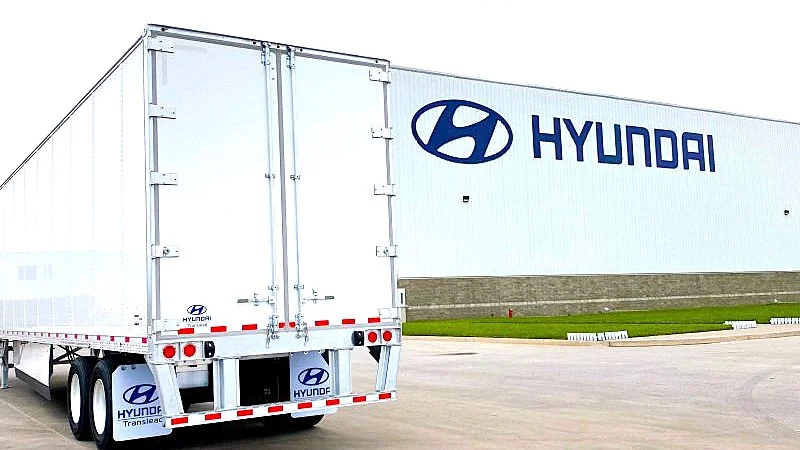
In a major vote of confidence for the Illinois industrial corridor, commercial trailer manufacturer Hyundai Translead announced on Thursday that it is significantly expanding its footprint in Will County. The company has boosted its planned investment from an initial $450 million to a staggering $600 million.
This revised strategy carries a substantial labor component: the company has increased its job creation commitment by 1,250, now aiming to hire 3,750 full-time employees. According to company leadership, this expansion is a direct response to a robust recovery in the transportation sector and growing customer demand for its diverse product line, which includes dry van trailers, refrigerated trailers, truck bodies, and flatbeds. The additional $150 million will facilitate a third production shift, signaling a move toward 24/7 manufacturing operations to meet market velocity.
Carrier Global: Scaling Thermal Management in Texas
In the Lone Star State, Carrier Global Corp. (NYSE: CARR) has staked its claim to the future of industrial climate control. The company announced a $600 million investment to establish an advanced manufacturing and engineering center at the prestigious AllianceTexas development in Fort Worth.
Spanning over 1 million square feet, the facility is slated to begin operations in 2027. This center will serve as a hub for the production of advanced thermal management systems, including air-cooled and water-cooled commercial chillers. As data centers, hospitals, and educational facilities face mounting pressure to modernize their infrastructure with energy-efficient systems, Carrier’s record backlog necessitated this massive increase in capacity. The project will bring 1,500 jobs to the region and integrate advanced engineering laboratories with workforce development programs to ensure a pipeline of skilled labor.
Blue Bird Corp.: Electrifying the Georgia Fleet
In Fort Valley, Georgia, school bus manufacturer Blue Bird Corp. (Nasdaq: BLBD) is embarking on a $300 million project to revitalize its production capabilities. By converting a former motorhome manufacturing site into a massive 1-million-square-foot production facility, Blue Bird is preparing to scale its output of Type C school buses.
Construction is set to commence in the first quarter of 2027, with the facility designed to accommodate a diverse powertrain portfolio, including diesel, gasoline, propane, and electric buses. With a legacy dating back to 1927, Blue Bird’s expansion solidifies its status as a cornerstone of the Georgia manufacturing economy, adding 375 jobs to a current workforce of over 1,900.
Niagara Bottling and Primo Brands: The Beverage Surge
The consumer goods sector is also seeing a localized boost. Niagara Bottling celebrated the grand opening of its $141 million facility in Elsmere, Kentucky. Located at the C5 Airport East Logistics Center, the 436,000-square-foot plant is already operational, producing bottled water and sports drinks. This project, which grew by $11 million during the development phase, underscores the intense competition in the retail beverage space.
Meanwhile, in Hot Springs, Arkansas, Primo Brands (NYSE: PRMB) has opened a new 200,000-square-foot facility dedicated to its Mountain Valley premium spring water brand. As a key strategic move following the company’s 2024 merger, this factory features high-speed production lines and dedicated logistics space. While the company did not disclose the total dollar value of the investment, the facility is clearly designed to handle nationwide distribution, signaling a push to capture more market share in the premium water category.
Supporting Data: A Snapshot of Industrial Growth
| Company | Location | Investment | Primary Output |
|---|---|---|---|
| Hyundai Translead | Will County, IL | $600M | Commercial Transportation Equipment |
| Carrier Global | Fort Worth, TX | >$600M | Thermal Management/Chillers |
| Blue Bird Corp. | Fort Valley, GA | $300M | Type C School Buses |
| Niagara Bottling | Elsmere, KY | $141M | Bottled Beverages |
| Primo Brands | Hot Springs, AR | Undisclosed | Premium Spring/Sparkling Water |
Source: Company disclosures and state economic development reports, October 2026.
Official Perspectives: Strategic Rationale
Company leadership across these sectors consistently points to a singular driver: the need to reduce lead times and improve proximity to the end consumer.
For Carrier Global, the expansion is less about growth for growth’s sake and more about clearing a "record backlog." Their choice of the Dallas-Fort Worth region—a logistics powerhouse—is strategic, placing them at the intersection of critical distribution lanes. Similarly, Hyundai Translead’s decision to increase its Illinois investment reflects a "growing customer interest" that suggests the freight recovery is gaining traction faster than many analysts anticipated.
In the case of Primo Brands, the new Arkansas facility serves as the backbone for a national supply chain, emphasizing the necessity of integrated warehouse and logistics space within the manufacturing plant itself. By merging production and distribution under one roof, these companies are minimizing the "middle mile" costs that have plagued logistics providers in recent years.
Implications for the Logistics and Freight Industry
For the broader logistics and freight sector, these announcements are a bellwether. The construction and subsequent operation of these facilities will trigger a "freight multiplier" effect:
- Inbound Raw Materials: Construction materials, machinery, and components (such as steel, aluminum, electronic sensors, and plastic resins) must be transported to these sites.
- Outbound Finished Goods: Once operational, these factories will generate steady, predictable freight lanes. For instance, the outbound movement of trailers from Illinois and school buses from Georgia represents high-value, specialized freight.
- Logistics Ecosystems: Companies like Niagara Bottling and Primo Brands are building dedicated warehouse capacity, which necessitates a permanent presence of logistics partners, cross-docking services, and last-mile delivery fleets.
For small to mid-sized carriers, these projects offer a chance to secure dedicated lanes. As these manufacturers look to stabilize their supply chains, they are increasingly seeking reliable, long-term partnerships with logistics providers who can handle the consistent volume these new factories will produce.
Looking Ahead
The $1.6 billion invested in these five projects is a testament to the resilience of the U.S. industrial sector. As the country navigates an evolving global trade environment, the trend toward "reshoring" or "near-shoring" is no longer just a boardroom topic—it is a physical reality taking shape across the American heartland.
Whether it is the electrification of school buses in Georgia or the high-tech cooling systems coming out of Texas, these developments serve as a critical infrastructure foundation. For the transportation and logistics industry, the message is clear: the factories are being built, the capacity is expanding, and the freight is coming. The question for logistics providers is not if the freight will move, but which partners are positioned to capture the growth.

 Reynand Wu

 Nila Kartika Wati

 Ammar Sabilarrohman

 Asep Darmawan


 Layla Zulfa


 Muslim
