
 Layla Zulfa
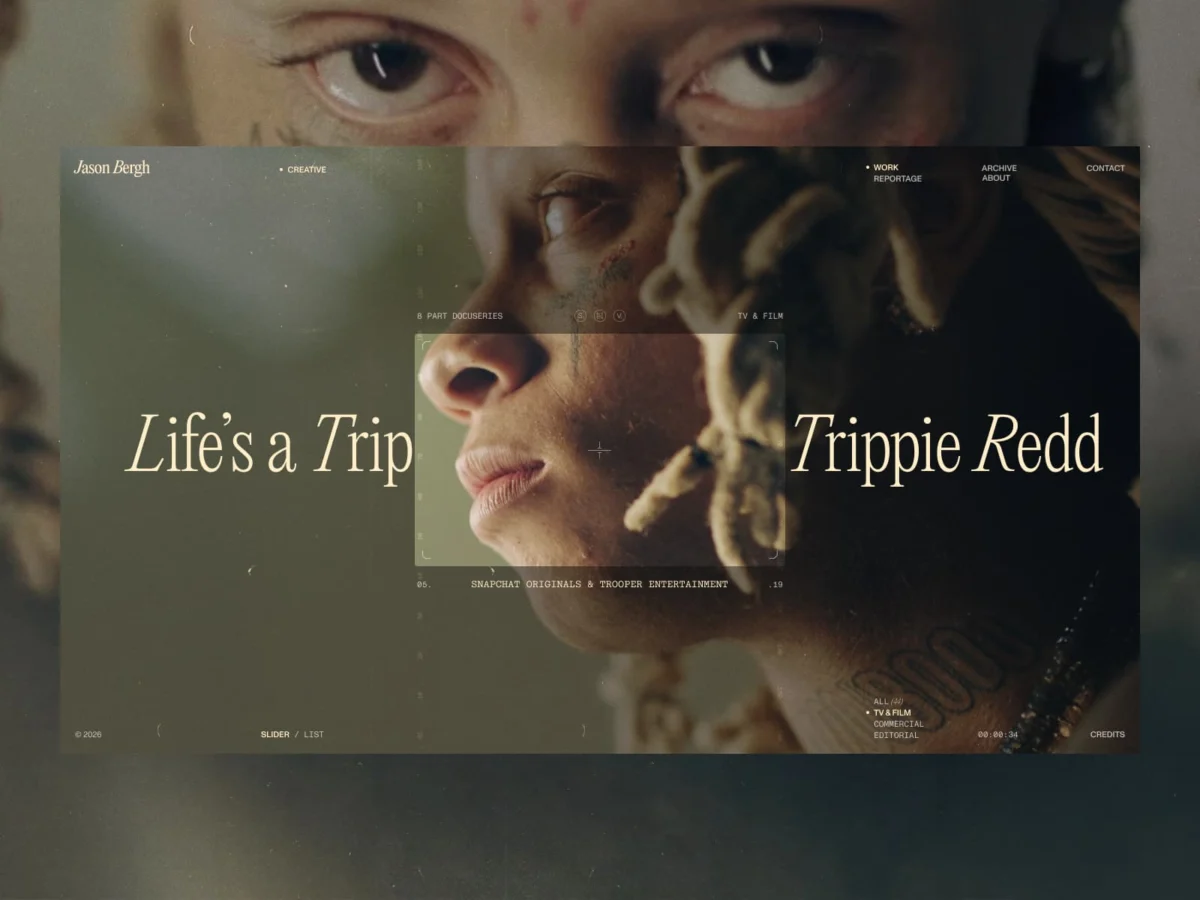
In the digital design landscape, the conventional portfolio has long been a prisoner of its own utility. For years, web developers and creative directors have relied on a standardized blueprint: a grid, a navigation bar, and a series of "hero" images designed to funnel the user toward a "Contact" button as efficiently as possible. But what happens when the subject matter isn’t a product to be sold, but a cinematic vision to be felt?
This was the central question posed by the collaboration between filmmaker Jason Bergh and the boutique creative studio BL/S®. The resulting digital platform is not merely a website; it is an exercise in restraint, a rejection of algorithmic efficiency in favor of atmospheric presence. By stripping away the architectural crutches of the modern web, the team has created a space where content doesn’t just sit—it breathes.
The Genesis: Translating Cinematic Language into Code
The project began with a fundamental recognition: Jason Bergh’s body of work—defined by tension, rhythm, and emotional narrative—was being stifled by his existing digital footprint. While his previous site performed its duty by presenting projects and providing context, it suffered from a "noise" problem. The more the team analyzed the interface, the more they realized that standard UI patterns were actively undermining the director’s cinematic voice.
"We had to step away from the idea of structure altogether and rethink what a digital presence for a director could feel like," the team noted. The goal shifted from "improving the website" to "engineering a presence." This was not a redesign; it was a conceptual deconstruction. The team treated the browser window not as a page to be filled, but as a lens to be focused.
Chronology of a Deconstruction
The development process was defined by a series of subtractive iterations. The chronology of the project followed a counter-intuitive path:
- Audit and Diagnosis: The team identified that traditional navigation elements—menus, labels, and instructional tooltips—were acting as barriers between the user and the filmmaker’s work.
- The Subtractive Phase: Designers began removing interface elements one by one. If an element was not essential to the emotional transmission of the work, it was discarded.
- Rhythm Mapping: Instead of creating a site map, the team created a "rhythm map." They analyzed the temporal flow of Bergh’s films and applied those pacing constraints to the scroll behavior and transition logic of the site.
- Motion as Narrative: The team pivoted from static UI to fluid animation, treating every scroll event like a film edit.
- Refinement and Performance Tuning: The final phase focused on technical precision, ensuring that the minimalist aesthetic was supported by a high-performance backend that maintained absolute fluidity.
Killing the Interface: The Philosophy of Absence
In modern web development, "User Experience" (UX) is often synonymous with "User Guidance." Designers are taught to never leave the user guessing. BL/S® challenged this dogma by introducing a degree of ambiguity.
By removing the "how-to" layer of the interface, the team transformed the experience from an active operation into a passive, immersive environment. When the menu becomes invisible and the navigation buttons vanish, the user is forced to engage with the content intuitively. This is not minimalism for the sake of aesthetic purity; it is a tactical decision to reduce the cognitive load. When there is less interface to process, the viewer has more space to feel the emotional weight of the work.
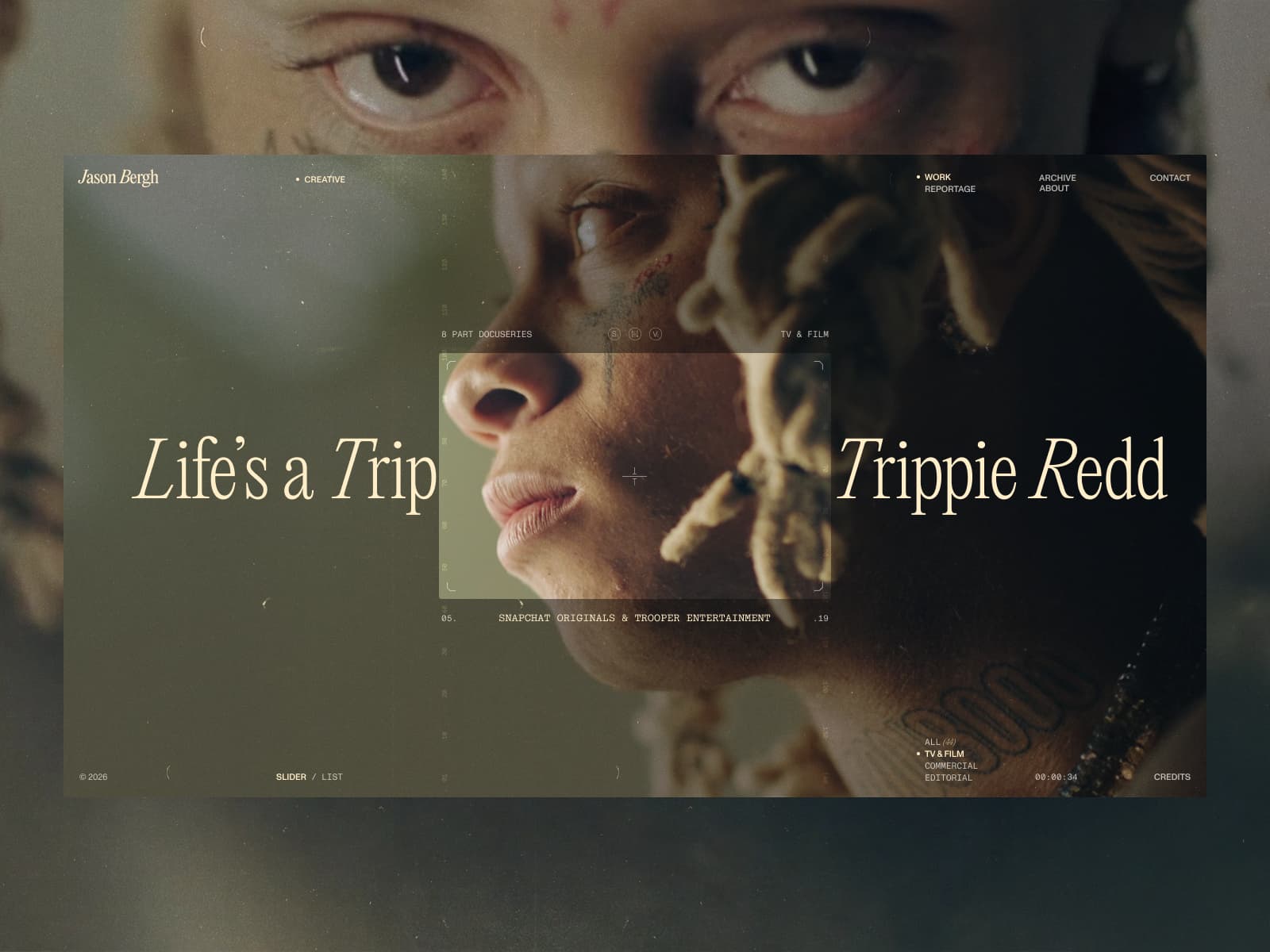
The result is a site that behaves less like a software application and more like a gallery space. The transition from one project to the next is no longer a click; it is a deliberate, cinematic cut.
Motion as the Primary Language
For a director, timing is the fundamental unit of communication. Recognizing this, BL/S® elevated animation from a decorative garnish to the structural backbone of the site.
In this project, animation is not used to dazzle the user with movement; it is used to maintain continuity. When a user scrolls, the movement feels like a sequence in a film. The pauses are intentional, the transitions are calibrated for impact, and the pacing is set to match the deliberate nature of Bergh’s cinematography.
"The result is a system where movement doesn’t explain the experience—it carries it," the studio stated. By treating GSAP (GreenSock Animation Platform) not just as a tool for interaction but as a narrative device, the developers ensured that the site’s "motion signature" aligned with the filmmaker’s personal style.
Supporting Technical Data: The Architecture of Restraint
Achieving a high-end, cinematic feel while maintaining performance requires a sophisticated technical stack. BL/S® focused on a "lightweight, high-precision" approach:
- Frontend Frameworks: The site relies on a lean JavaScript architecture, utilizing GSAP for granular control over sequencing and timing.
- Performance Optimization: Because the site relies heavily on video content and complex motion, the team implemented a bespoke streaming and loading pipeline to ensure that the "illusion" of the site is never broken by lag or stuttering.
- Server Logic: The backend is stripped of unnecessary dependencies, prioritizing ultra-fast content delivery.
- Tooling: The design phase was heavily reliant on motion studies in Figma and rigorous stress-testing to ensure that the "restrained" aesthetic didn’t sacrifice responsiveness on varying screen sizes.
Official Perspectives: Trusting the Audience
One of the most radical aspects of this project was the decision to forgo the "best practices" of user control. In a digital world obsessed with conversion rates and click-throughs, the designers opted to trust the audience.
The studio acknowledged that this approach carries inherent risk. "It meant accepting that the experience wouldn’t be for everyone," the designers noted. By removing explicit paths and navigational safety nets, they created an experience that rewards curiosity. It is an acknowledgment that in the digital age, the most valuable commodity is not the user’s attention span—it is the user’s willingness to engage with an atmosphere.

Implications for the Creative Industry
The collaboration between Jason Bergh and BL/S® signals a potential shift in how creative portfolios are conceived. As the web matures, the industry has become saturated with "standard" high-quality websites. When everyone uses the same templates and UI patterns, the work begins to look homogenized.
This project suggests a move toward "bespoke digital environments." For directors, artists, and luxury brands, the future may lie in websites that reflect the specific internal logic of their work rather than the external logic of UI frameworks.
Key Takeaways for the Future of Design:
- Precision over Complexity: The difficulty of a project is not measured by how many features are added, but by how much "noise" is successfully removed.
- Rhythm over Structure: Digital experiences should be designed with the timing of a film rather than the hierarchy of a filing cabinet.
- Atmosphere as Strategy: A website that establishes a consistent, evocative mood is often more effective than one that bombards the user with information.
Conclusion: A New Standard for Digital Presence
The final output is a testament to the power of creative rebellion. By ignoring the pressures of industry standards, BL/S® has delivered a platform that does not just display a portfolio—it hosts a conversation between the filmmaker and the viewer.
As we look toward the next generation of digital design, this project serves as a reminder that the most sophisticated technology is often the kind you don’t notice at all. When the interface disappears, the art finally takes center stage. In this case, that art is not just the films of Jason Bergh, but the act of viewing them in a space designed with equal parts technical rigor and artistic intuition.

 Dwi Wanna
 Suro Senen

 Asep Darmawan
 Nana Muazin
 Nila Kartika Wati
