
 Lina Irawan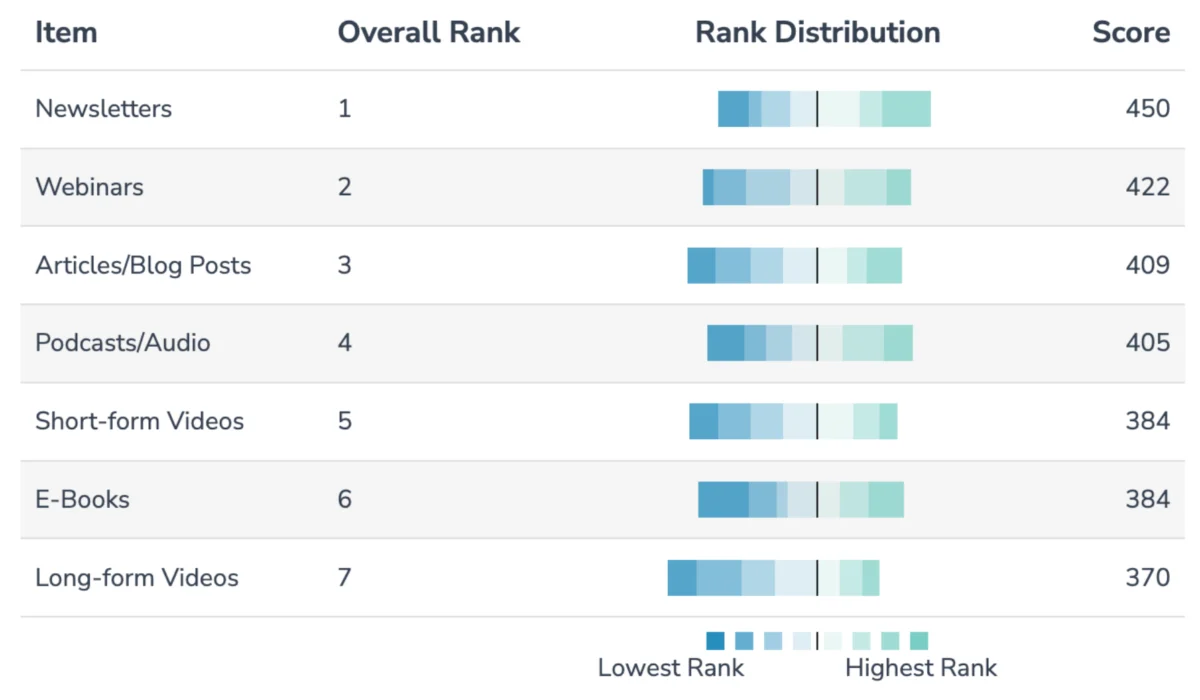
In an era defined by information saturation, the primary challenge facing marketing leaders is no longer the acquisition of content, but the mastery of the filter. Every day, the average executive’s digital ecosystem is inundated with a relentless deluge of reports, white papers, LinkedIn manifestos, and “must-read” industry newsletters. Yet, despite this abundance, there remains a persistent deficit in actionable, high-quality insight.
The team at Convince & Convert (C&C) has spent years observing this paradox: marketing leaders possess more data than ever before, yet they are increasingly starved for the context required to make high-stakes decisions. This realization has prompted a significant shift in how the organization approaches its own communications, moving away from traditional content aggregation toward a model of strategic curation. This transition is best exemplified by the rebranding of their flagship newsletter from ON to The Trendline—a move that reflects a broader, industry-wide evolution in email marketing strategy.
The Data-Driven Catalyst: Why Newsletters Still Rule
The decision to overhaul Convince & Convert’s editorial approach was not based on gut instinct, but on rigorous audience research. In an annual survey of their readership—comprising high-level marketing decision-makers—one finding stood out as a clear mandate: newsletters remain the preferred medium for professional development.
When asked to rank their preferred formats for consuming marketing trends and insights—including short-form video, webinars, blogs, and podcasts—respondents consistently placed newsletters at the top. In fact, newsletters were nearly twice as likely to be ranked as the primary source of information compared to any other medium.
This preference suggests that while flashy, short-form video and high-production-value webinars have their place, they often fail to deliver the depth and "digestibility" that time-strapped executives require. The data suggests that leaders are looking for a "thinking partner" rather than just a headline aggregator. They want content that synthesizes noise into intelligence, allowing them to understand not just what happened in the industry, but why it matters to their specific business objectives.

The Anatomy of the Pivot: From ‘ON’ to ‘The Trendline’
For years, the ON newsletter followed a standard industry playbook: a clean, professional list of recent blog posts, podcast episodes, and training modules. While this format provided utility, it operated on the assumption that the reader had the time—and the inclination—to click through to various external landing pages to extract value.
As the content landscape matured, the “quality bar” for engagement rose significantly. What served as a reliable distribution channel five or ten years ago has become increasingly easy to ignore. Recognizing this, the C&C team identified three critical opportunities for improvement:
- Removing Friction: The requirement to click a link to access the “meat” of an insight created unnecessary friction for busy professionals.
- Contextualizing Authority: Aggregation alone is no longer enough to build brand authority; the addition of a strategic, human-led "lens" is now mandatory.
- Respecting Time: A shift toward "debrief-style" content allows readers to grasp the core takeaway without committing to a fifteen-minute read or a forty-minute podcast.
The Trendline was born from this analysis. The new format is built around the philosophy that an email should be a self-contained resource. While readers can still choose to dive deeper via links, the primary insights, the "why it matters," and the strategic questions are delivered directly within the body of the email.
Rethinking the Format: The Four Pillars of Modern Email
The redesign of The Trendline is not merely cosmetic; it is a structural commitment to the way modern marketing leaders actually process information. The editorial team implemented four specific pillars to ensure maximum utility:
- The Strategic Debrief: Every item featured in the newsletter is accompanied by a brief, expert analysis. This turns a simple industry update into a leadership discussion.
- Hierarchical Curation: Content is no longer organized by "medium" (i.e., blog vs. podcast) but by "importance." This ensures that the most time-sensitive or impactful trends appear first.
- Clear Editorial Guidelines: To maintain consistency, the team adopted strict guidelines that force contributors to distill complex topics into concise, actionable takeaways.
- Interactive Engagement: By introducing "Sound Off"—a regular poll at the end of the email—the team has created a mechanism to track engagement metrics that are more qualitative and meaningful than simple click-through rates.
Implications for Marketing Strategy: The New Playbook
The move to The Trendline highlights a shift in the philosophy of owned media. In an environment where social media algorithms are increasingly volatile and opaque, the email newsletter remains one of the few channels where a brand can build a direct, reliable connection with its audience.

However, as the C&C team notes, this is not a "lateral move." Producing high-quality, curated newsletters requires significantly more labor than automated RSS-to-email blasts. It requires writers who are also strategists—people capable of synthesizing news through a specific professional lens.
Lessons for Marketing Leaders
For brands looking to replicate this success, the following lessons are critical:
- Deliver Value Upfront: Assume your audience is busy. Do not hide your best insights behind a click. Give them the "aha!" moment inside the email itself.
- Build a Relationship, Not a Pipeline: View the newsletter as an opportunity to build trust, not just to move readers through a sales funnel. If you become a reliable source of intelligence, the conversion will naturally follow.
- Embrace Qualitative Feedback: Metrics like open rates and clicks are often "muddy." Use polls, direct replies, and reader surveys to understand what your audience actually finds useful.
- Prioritize the "Why": In a world of AI-generated content and mass-produced summaries, human perspective is the ultimate differentiator. Your audience isn’t just looking for news; they are looking for your interpretation of it.
Conclusion: The Future of Curated Intelligence
The rebranding of Convince & Convert’s newsletter is a microcosm of a larger trend in B2B marketing. We are moving away from the era of "content shock"—where more is better—and into an era of "curated intelligence," where the quality of the filter defines the value of the brand.
By listening to their audience and acknowledging that the modern executive’s most precious resource is time, C&C has set a new standard for how professional newsletters should function. The Trendline is not just an email; it is a strategic asset designed to help marketing leaders cut through the noise, think more critically, and ultimately, make better decisions. As the marketing landscape continues to shift at an accelerating pace, the brands that win will be those that act not just as publishers, but as indispensable curators of the information their audience needs most.


 Reynand Wu
 Iffa Jayyana
 Raul Delapena Setiawan

 Sagoh
Sagoh

 Azzam Bilal Chamdy
 Ali Ikhwan