Layla Zulfa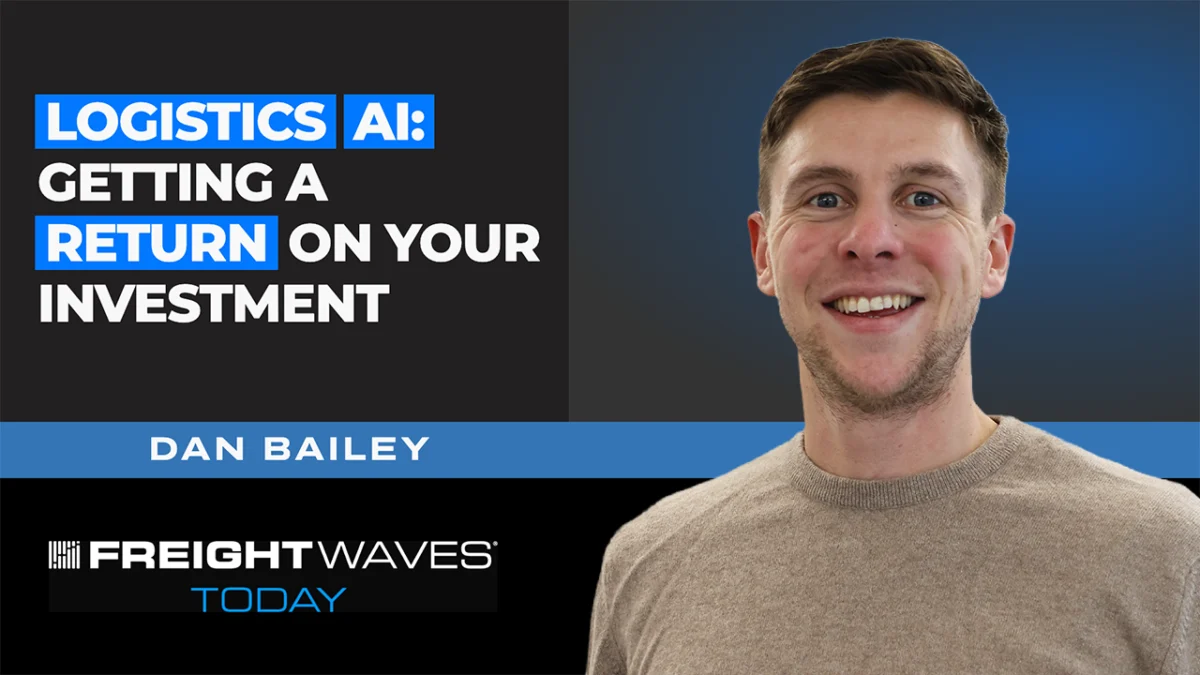
The logistics and freight forwarding industry is currently in the throes of an artificial intelligence gold rush. From massive enterprise acquisitions to the proliferation of niche software startups, the promise of automation is pervasive. Yet, according to Dan Bailey, Co-Founder and CEO of Nexcade, the industry is hitting a wall. While the headlines focus on multi-million dollar synergies and operational efficiency, the real challenge facing logistics firms isn’t just about adopting new tools—it is about the fundamental difficulty of digitizing institutional knowledge.
As the industry navigates this transformation, the gap between "AI hype" and "AI utility" has never been wider. For firms looking to move beyond pilot programs, the path forward requires a nuanced understanding of how to translate human experience into actionable machine intelligence.
The Core Challenge: The Context Gap
In the complex world of global freight, operational knowledge is rarely stored in clean, structured databases. It resides in the minds of veteran brokers, in years of email threads, and in the "tribal knowledge" built through decades of market fluctuations.
"Context is the biggest challenge in our space," Bailey explains. "Whether you’re talking about international freight or on the brokerage side, there is so much embedded knowledge built up through years of experience and through real market nuance. Turning that into insight that AI can actually use is an extremely, extremely tough challenge."
For many logistics companies, AI initiatives fail because they treat data as a commodity. They attempt to feed raw, unstructured information into large language models (LLMs) without providing the necessary context. Without this, the AI cannot distinguish between a standard spot market quote and a highly nuanced exception that requires human intervention.
Bailey warns that while companies hesitate, their workforces are not standing still. "If you’re not adopting it, I can guarantee you that your employees are in shadow capacity one way or another," he notes. "There was a ton of ‘shadow ChatGPT’ and ‘shadow Claude’ being used across this industry and many others right now." This unofficial adoption proves that the demand for efficiency is real, but the lack of an enterprise-level strategy creates security risks and fragmented workflows.
Chronology of an Industry Pivot
The integration of AI into logistics has accelerated at a breakneck pace over the last 18 months.
- Early 2023: The "Generative AI" boom hits the logistics sector. Companies begin experimenting with basic chatbots for customer service and internal document summarization.
- Late 2023: The focus shifts from simple automation to "Agentic AI." Companies begin seeking solutions that don’t just summarize data but take action—such as automatically responding to emails or booking loads.
- Mid-2024: The industry sees a wave of consolidation. High-profile mergers, such as C.H. Robinson’s acquisition of RXO, signal that AI-driven scale is now a prerequisite for competitiveness.
- Present Day: Logistics firms are moving into the "execution phase," where the objective is no longer just "using AI" but proving a return on investment (ROI) that justifies the high costs of data infrastructure and software implementation.
Nexcade, which monitors 40 to 50 leading global freight forwarders, has seen the volume of AI-related announcements become "overwhelming." However, the sheer quantity of press releases does not correlate to the quality of implementation. As Bailey observes, large-scale acquisitions like the RXO deal carry massive execution risks. While the $300 million in projected synergies is a compelling narrative, applying a lean operating model to a newly acquired business—with limited customer overlap and different operational cultures—remains a daunting task.
The Mechanics of Automation: Inside the Nexcade Approach
To understand how AI creates tangible value, one must look at the specific workflows that consume the most time. In the freight industry, approximately 90% of quote requests still arrive via email. This creates a massive bottleneck for logistics operators, who are forced to manually parse requests, check internal contracts, look up spot market rates, and coordinate with overseas agents.
Nexcade’s approach is to deploy AI "agents" that act as an extension of the workforce. These agents perform the following functions:
- Inbox Triage: Reading incoming emails to identify and classify freight types.
- Data Extraction: Automatically pulling shipment details from unstructured text.
- Procurement Execution: Interfacing with APIs and browser portals to pull contract and spot rates.
- Staging: Presenting the operator with 10 to 15 pre-staged quotes, ready for a final pricing decision.
The results are significant. Teams utilizing this platform have reported a doubling of their "files-per-head" throughput. Furthermore, the ability to automate responses to overseas agent requests—even during off-hours—allows firms to secure business before competitors are even awake to open their inboxes. Currently, 75% of this volume is concentrated in air and ocean, with the remainder in domestic road freight.
Measuring Success Beyond Time Savings
A common pitfall in AI adoption is the "efficiency trap"—measuring success solely by time saved. Bailey argues that if companies ignore revenue impact and risk reduction, they are missing the forest for the trees.
Risk Reduction and Exception Handling
AI-driven reconciliation tools are uniquely suited to manage the "hidden costs" of logistics, such as demurrage and detention fees. By automatically flagging potential issues and managing exceptions in real-time, firms can shave significant amounts off their annual overhead. Over a 12- to 18-month period, these incremental savings aggregate into substantial bottom-line improvements that are far more impactful than simple task automation.
Commercial Impact
On the revenue side, companies should be tracking "speed-to-quote" data. By correlating response times with win rates and margin-per-lane, companies can quantify exactly how much their AI initiatives are contributing to market share. When an AI can provide a competitive quote within minutes, the business impact is measurable in dollars, not just hours saved.
Drawing on his experience scaling the software firm Sedna—where he helped grow the customer base from 20 to over 250—Bailey emphasizes that technology is only half the battle. "Change management remains as critical in the AI era as it was when we were replacing Outlook for large shipping firms," he says. The technology must be socialized within the company, and the culture must adapt to embrace an "AI-assisted" workflow.
A Dual Strategy for Implementation
For logistics firms currently sitting on the sidelines or struggling with failed pilots, Bailey suggests a "dual strategy."
The Top-Down Foundation
Leadership must identify the core strategic workflows that drive the most value. This involves cleaning data foundations and ensuring that the digital infrastructure is ready for AI. Without a clear top-down mandate, AI initiatives often become "science projects" that die in the IT department.
The Bottom-Up Experimentation
Simultaneously, firms should empower individual managers and teams to run small, low-stakes pilots. This "grassroots" approach allows the organization to learn quickly. By the time the enterprise-wide rollout begins, the company will have already had "three or four bites at the apple," having learned from the failures and successes of its smaller, more agile teams.
Implications for the Future of Freight
The trajectory of the logistics industry is clear: the divide between those who can successfully integrate AI and those who cannot will widen. The $300 million synergy targets seen in major acquisitions are not just numbers; they are a warning. If a company cannot turn its embedded operational knowledge into a digital asset, it will eventually be outpaced by competitors who can.
As we look toward the future—exemplified by upcoming events like the Future of Freight Festival (F3) in Chattanooga—the focus is shifting toward practical, scalable technology. The industry is moving away from the "AI for AI’s sake" era and into an era of rigorous, ROI-focused implementation.
The lesson for leaders is simple: Start by solving the context gap. Build the systems that allow your best employees to offload their repetitive tasks to AI, but keep the human expertise at the center of the decision-making process. The goal is not to replace the broker or the forwarder, but to arm them with the data and speed they need to thrive in a digital-first market.
As Dan Bailey’s insights demonstrate, the winners of the next decade will be the firms that treat AI not as a magic wand, but as a sophisticated toolset that requires careful implementation, cultural alignment, and a relentless focus on the metrics that actually drive the bottom line.

 Lina Irawan
 Raul Delapena Setiawan
 Laily UPN
 Iffa Jayyana
 Rifan Muazin
 Suro Senen
 Lina Hope