
 Dwi Wanna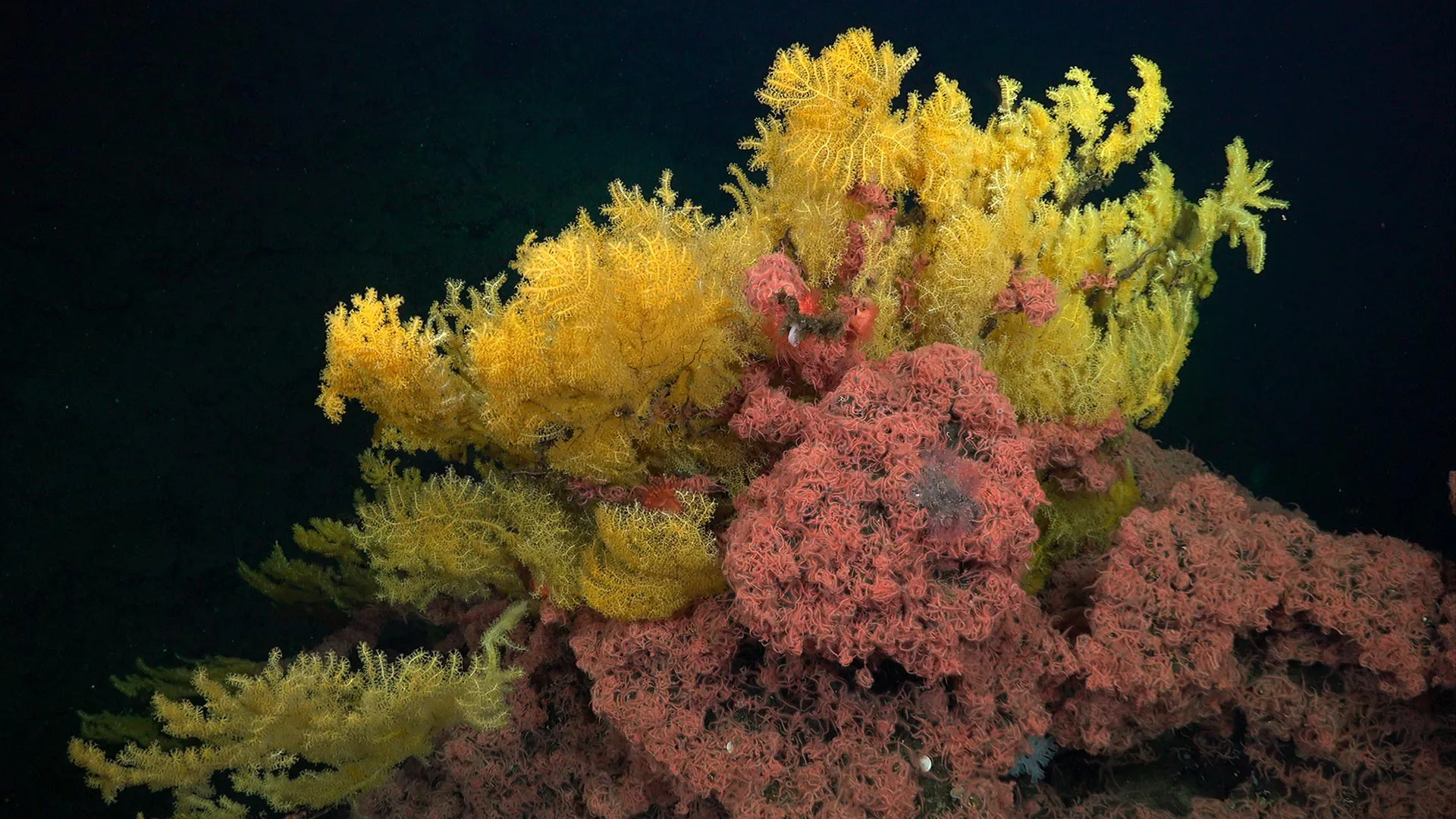
In the profound, crushing darkness of the Pacific Ocean, nearly 500 meters beneath the surface off the coast of Costa Rica, a team of marine biologists has stumbled upon a discovery that challenges our fundamental understanding of deep-sea evolution. During a series of expeditions targeting remote underwater mountains—or seamounts—researchers identified a vibrant, tree-like coral so genetically and physically distinct from its peers that it necessitated the creation of an entirely new taxonomic family.
The discovery, recently published in the open-access journal ZooKeys, describes the coral as a shimmering, golden organism that thrives in one of the planet’s most enigmatic environments. More than just a new species, the coral—named Laurinque elenya—serves as a reminder that the deep ocean remains one of the final, largely unmapped frontiers on Earth.
A Chronology of Discovery: From 2019 to the Present
The journey to identify this elusive organism began half a decade ago. In 2019, aboard the Schmidt Ocean Institute’s research vessel Falkor, scientists launched an ambitious mission to map and sample the biodiversity of seamounts near the Isla del Coco and along the continental margin of Costa Rica.
Using the remotely operated vehicle (ROV) SuBastian—a high-tech, tethered robot capable of enduring the immense pressures of the deep sea—the team captured the first images of what lead researcher Dr. Odalisca Breedy of the Universidad de Costa Rica described as an “octocoral garden.” At the time, the team suspected they were looking at a fascinating, perhaps rare, member of a known genus. However, the initial morphological analysis suggested something far more complex.
The research was put on hold as the global pandemic slowed expedition schedules, but the team returned to the site in 2023, this time aboard the vessel Falkor (too). With improved technology and a focused mandate to collect further specimens, the researchers were able to secure the samples necessary for the rigorous genetic testing that would eventually confirm their suspicions: they had discovered a creature that did not fit into any existing branch of the evolutionary tree.
The Golden Tree: An Aesthetic and Scientific Marvel
The name bestowed upon this coral is as whimsical as its appearance. The genus Laurinque is derived from the Quenya word "Laurinquë," meaning "golden tree," a term coined by J.R.R. Tolkien for his legendary high-fantasy works, The Lord of the Rings and The Silmarillion. The species name, elenya, translates to "stellar" or "of the stars."
This nomenclature is not merely an academic indulgence; it is a direct reflection of the coral’s habitat. The Laurinque elenya grows in colonies that can reach over a meter in height, standing like glowing, golden sentinels against the backdrop of the rocky seafloor. These outcrops are carpeted in dense populations of brittle stars, whose presence creates a celestial, star-dusted appearance. To the researchers observing the feed from the ROV, the scene resembled a mystical, elvish landscape—a hidden forest existing in a world where sunlight has never reached.
Genetic Anomalies: The Breakdown of Traditional Taxonomy
The process of classifying the Laurinque elenya was far from straightforward. In modern marine biology, scientists typically rely on a "barcoding" method, sequencing a few standard genes to determine where a specimen fits in the evolutionary hierarchy. When the team first sequenced these genes for Laurinque, the results were chaotic. Each gene pointed toward a different, unrelated coral family.
This inconsistency signaled that the specimen was an evolutionary outlier. To resolve the mystery, the team turned to phylogenomics, a sophisticated approach that analyzes hundreds of genes simultaneously. This broader analysis provided the clarity the researchers needed: the coral did not belong to any previously recognized family.
While it shares a distant ancestral link with the family Eunicellidae, its anatomy and DNA are sufficiently divergent to warrant the creation of a brand new taxonomic family: Laurinqueidae. This discovery effectively expands the map of life, adding a new branch to the octocoral evolutionary tree that had been hidden in plain sight for millions of years.
Official Perspectives: Voices from the Deep
Dr. Odalisca Breedy, who spearheaded the study, recalls the moment of realization with profound professional satisfaction. "I saw the octocoral garden for the first time in 2019 and I was impressed by the beauty of the landscape," she noted. "I thought the species could belong to a known family and genus, but after the preliminary morphological analysis, I realized that it was something very different that I could not match with known taxa."
The success of the identification process was a triumph of international collaboration. Dr. Breedy worked alongside experts Cathy McFadden, Catalina Murillo, and Andrea Quattrini. Their collective effort involved not just the physical collection of samples, but a meticulous, multi-year process of molecular analysis. "Thanks to the exhaustive molecular analyses made by my colleagues," Dr. Breedy stated, "we were able to determine the taxonomic placement of the stunning species, in one of the most enigmatic sites."
The expedition was supported by the Schmidt Ocean Institute, which provides the critical infrastructure required for deep-sea exploration, and the National Geographic Society, which provided essential research grants. These partnerships underscore the importance of funding basic science in the pursuit of understanding our planet’s biological heritage.
The Broader Implications: Biodiversity in Vulnerable Ecosystems
The discovery of Laurinque elenya is more than a taxonomic footnote; it carries significant implications for marine conservation. Seamounts are recognized as "biodiversity hotspots" that act as stepping stones for marine life across the ocean floor. However, they are also categorized as vulnerable marine ecosystems (VMEs).
The complex, tree-like structure of the Laurinque elenya provides a critical habitat for a variety of deep-sea organisms. In an environment defined by extreme pressure, near-freezing temperatures, and total darkness, these corals serve as the "forests" of the deep. They provide shelter, spawning grounds, and structural complexity that support a wider web of life.
Because these ecosystems are slow-growing and highly sensitive to physical disruption—such as deep-sea mining or bottom trawling—the identification of a new, endemic family highlights the urgent need for better protection of these underwater mountains. If a single expedition can uncover an entirely new family of life, it forces the question: what else are we losing before we even have the chance to discover it?
Conclusion: A Vast, Uncharted Frontier
The oceans cover roughly two-thirds of the Earth’s surface, yet we have mapped only a fraction of the deep-sea floor with high resolution. The story of Laurinque elenya serves as a humbling reminder of how little we truly know about the blue planet we inhabit.
As technology like the ROV SuBastian continues to advance, our ability to peer into the abyss improves, leading to an increasing number of documented species that have existed in total isolation for eons. The "Golden Tree" of the Pacific is a testament to the resilience and diversity of life. It stands as a beacon for future researchers, reminding the scientific community that the deep ocean is not a barren void, but a complex, vibrant, and still-to-be-understood frontier that holds the secrets to our evolutionary past and the keys to our biological future.


 Laily UPN
 Lina Hope
 Iffa Jayyana
 Rifan Muazin
 Suro Senen
 Lina Irawan