
 Rifan Muazin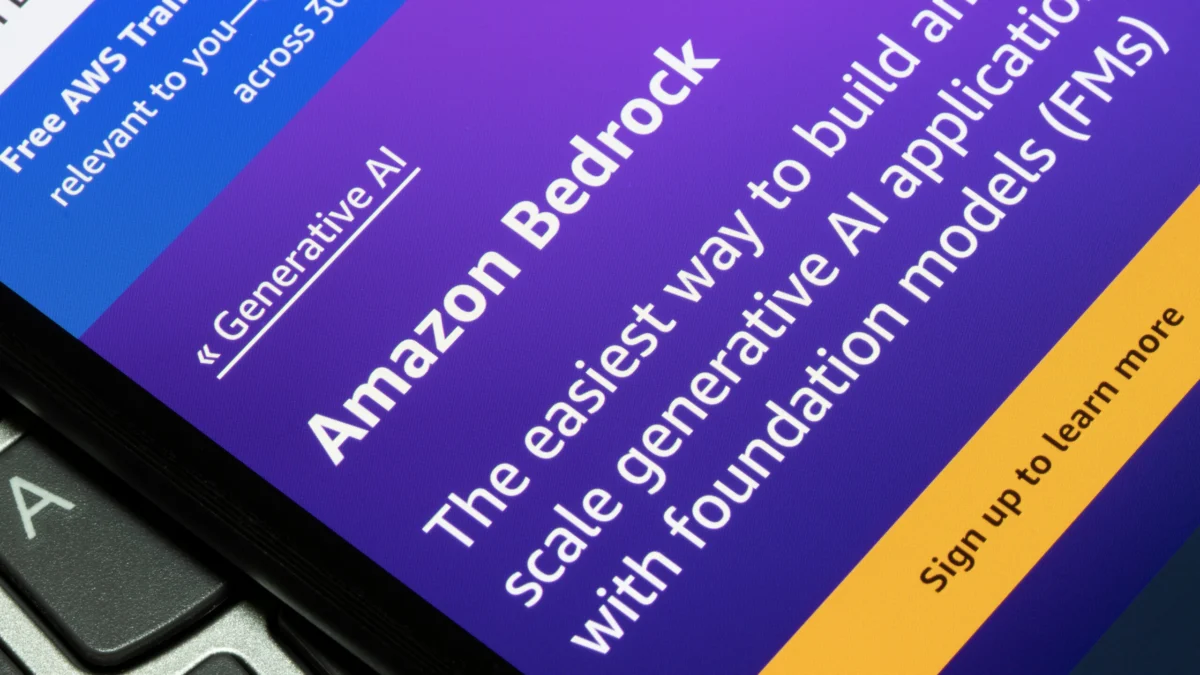
In a significant move to streamline the deployment of generative AI, Amazon Web Services (AWS) has unveiled its "Advanced Prompt Optimization" tool for Amazon Bedrock. The service, which rolled out late Thursday, is designed to automate the often-tedious process of refining prompts, promising enterprises a more cost-effective and efficient path to production-grade artificial intelligence. As businesses grapple with the complexities of scaling AI, this new capability marks a critical evolution in how developers manage the interplay between performance, cost, and model flexibility.
Main Facts: Automating the Art of the Prompt
The new tool, integrated directly into the Amazon Bedrock console, addresses a fundamental bottleneck in the generative AI lifecycle: prompt engineering. Historically, refining prompts for Large Language Models (LLMs) has been a manual, iterative process prone to human error and inconsistency.
Amazon Bedrock’s Advanced Prompt Optimization automates this by evaluating prompts against user-defined datasets and specific performance metrics. Once the tool identifies areas for improvement, it rewrites the prompts to optimize them for up to five different inference models simultaneously. The system then benchmarks these optimized versions against the original prompts across those models, providing developers with empirical data to determine which configurations yield the best accuracy and consistency for their specific workloads.
The tool is already generally available across a robust list of AWS regions, including US East, US West, Mumbai, Seoul, Singapore, Sydney, Tokyo, Canada (Central), Frankfurt, Ireland, London, Zurich, and São Paulo. Pricing is straightforward: users are billed based on the Bedrock model inference tokens consumed during the optimization process, adhering to the same per-token rates as standard inference.
Chronology: From Experimentation to Operationalization
The release of this tool represents the latest chapter in the rapid maturation of the generative AI market.
- The Early Phase (2022–2023): Initial adoption of LLMs was characterized by "proof of concept" projects. During this time, enterprises focused on the novelty of models, often accepting high costs and variable performance as the "cost of doing business."
- The Scaling Phase (2024): As organizations began moving from sandbox environments to production, the realities of high inference costs and "model drift" began to manifest. Enterprises realized that a prompt that worked perfectly in development often faltered under the load and variability of production environments.
- The Optimization Phase (Present): AWS’s release signals a shift toward the "industrialization" of AI. The focus has moved from merely having access to models to mastering the operational layer that sits between the data and the application. By providing automated benchmarking and optimization, AWS is attempting to minimize the "trial and error" phase that currently plagues many enterprise AI development teams.
Supporting Data: Why Prompt Efficiency Matters
The economic implications of prompt optimization are profound. According to Gaurav Dewan, research director at Avasant, the drive toward this tool is fueled by a "convergence of cost pressure and operational complexity."
For many firms, inference spending has transitioned from a negligible line item to a board-level financial concern. Even a modest 10% to 15% improvement in prompt efficiency can result in substantial savings when multiplied by millions of API calls in a production environment.
Furthermore, latency remains a critical performance metric. In customer-facing applications—such as chatbots, personalized recommendation engines, or real-time document analysis—every millisecond counts. Optimization tools like the one introduced by AWS provide a systematic way to reduce latency by streamlining prompt instructions, which in turn reduces the number of tokens the model must process, leading to faster response times and lower costs.
Official Responses and Strategic Implications
AWS has positioned this tool not just as a convenience feature, but as a core component of its enterprise AI strategy. By integrating this capability into Bedrock, the company is effectively building an "AI operational layer" that helps businesses navigate the multi-model landscape.
"Multi-model adoption is accelerating as enterprises seek the flexibility to shift workloads across models based on cost, performance, and governance requirements," says Sanchit Vir Gogia, Chief Analyst at Greyhound Research. He notes that the tool is critical for ensuring that applications can move between different LLMs—for instance, switching from a high-cost proprietary model to a more efficient, smaller model—without suffering from behavioral inconsistencies.
The Hyperscaler Arms Race
AWS is, however, not acting in a vacuum. The launch underscores a fierce, ongoing battle among the "Big Three" cloud providers to control the enterprise AI stack:
- Google Cloud: Their Gemini Enterprise Agent Platform offers a similar suite of automated prompt refinement and benchmarking tools, leveraging their deep integration with the Vertex AI ecosystem.
- Microsoft Azure: Through Azure AI Foundry, Microsoft is focusing on the "orchestration" of AI, offering advanced variant testing and workflow benchmarking that appeals to teams already embedded in the Microsoft ecosystem.
- The Niche Competitors: Outside the hyperscalers, platforms like Databricks and Snowflake are embedding observability tools directly into their data warehouses, while open-source projects like Promptfoo and LangSmith provide a model-agnostic approach that appeals to developers wary of vendor lock-in.
Implications for the Future of Enterprise AI
The introduction of Advanced Prompt Optimization by AWS highlights several long-term trends in the technology sector:
1. The Rise of "Model Agnosticism"
Enterprises are increasingly moving away from relying on a single model provider. They want the freedom to choose the best model for a specific task—be it code generation, sentiment analysis, or creative writing—without having to rewrite their entire prompt architecture. AWS’s focus on cross-model benchmarking directly supports this trend.
2. The Professionalization of AI Engineering
As these tools become more sophisticated, the role of the "Prompt Engineer" is likely to evolve. The focus is shifting from manual drafting to the management of "optimization pipelines." Developers are becoming architects who design systems that automatically test, evaluate, and deploy the most efficient versions of their AI instructions.
3. Governance as a Competitive Moat
The battle for the enterprise AI layer is as much about governance as it is about performance. By providing tools that track how prompts behave across models, AWS is offering enterprises a "trail of evidence." This is crucial for heavily regulated industries—such as banking, healthcare, and law—where explainability and predictable model behavior are mandatory requirements for production deployment.
4. Cost-Centric Innovation
We are seeing a departure from the "performance at all costs" mentality. The next phase of generative AI will be defined by "frugal AI." Tools that can demonstrate a clear reduction in per-token consumption will be the primary drivers of enterprise adoption in the coming year.
Conclusion
The release of Amazon Bedrock’s Advanced Prompt Optimization tool is more than just a software update; it is a tactical maneuver in the broader war for the enterprise AI market. By addressing the twin pillars of cost and operational consistency, AWS is attempting to lower the barrier to entry for large-scale AI deployment.
As enterprises continue to refine their generative AI strategies, the winners will not necessarily be those with the most powerful models, but those with the most robust operational layers. AWS, by embedding these optimization capabilities directly into its foundation services, is betting that the path to widespread AI adoption lies in making the complex process of prompt management simple, measurable, and economically sustainable. For the enterprise user, the message is clear: the era of "AI at any price" is over; the era of "optimized AI at scale" has begun.

 Neng Nana
 Evan Lee Salim
 Raul Delapena Setiawan
 Reynand Wu
 Sagoh
Sagoh

 Azzam Bilal Chamdy
 Ali Ikhwan