
 Lina Irawan
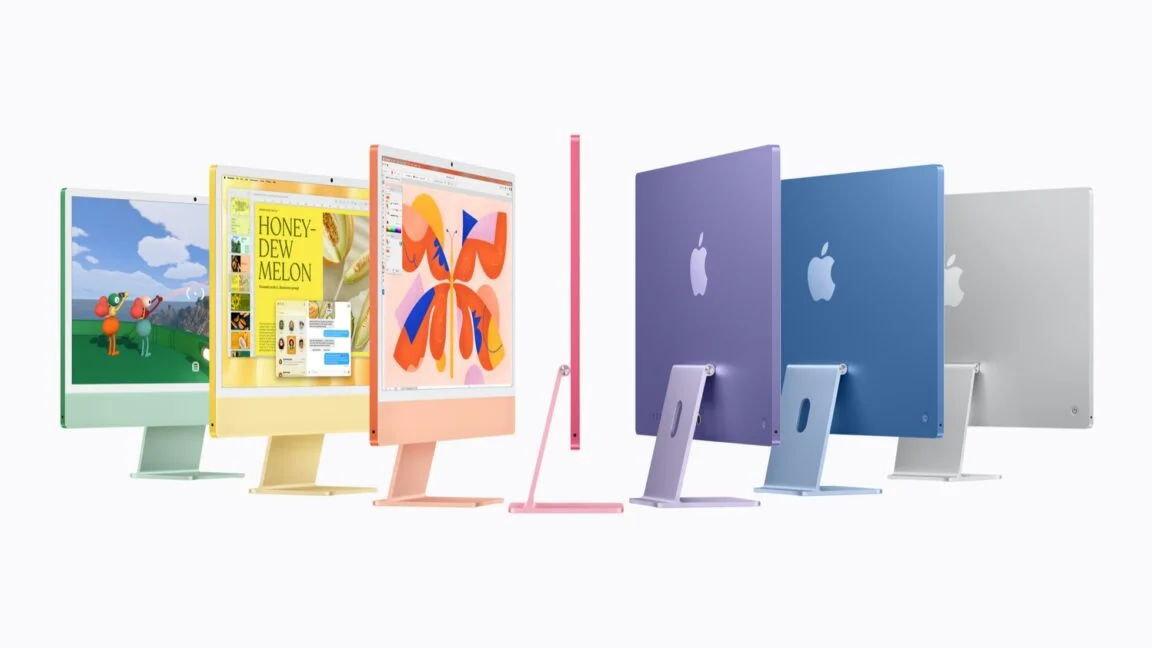
In a strategic move that reinforces its dominance in the desktop and portable computing markets, Apple has officially expanded its M6 silicon lineup. Following the debut of the M6-powered Mac mini several weeks ago, the tech giant has announced substantial refreshes for its iconic all-in-one desktop, the iMac, and the entry-level 14-inch MacBook Pro. This rollout marks a significant leap in processing power, graphics capability, and on-device artificial intelligence efficiency, effectively setting a new baseline for Apple’s professional and consumer-facing hardware.
Main Facts: The New M6 Hardware Landscape
The announcement centers on the transition of the iMac and the 14-inch MacBook Pro to the M6 architecture. This upgrade is not merely incremental; for the iMac, it represents a "generational skip," as the company has bypassed the M5 iteration entirely, moving directly from the M4.
The iMac Refresh
The iMac remains Apple’s primary aesthetic anchor for the home and office. With this update, Apple has bifurcated the M6 implementation to create two distinct tiers of performance:
- The Two-Thunderbolt Tier: This entry-level configuration features a 10-core CPU and a 10-core GPU. Designed for general productivity, it supports a maximum of 24GB of unified memory and 1TB of internal storage.
- The Four-Thunderbolt Tier: Aimed at power users and creative professionals, this model features an upgraded 12-core CPU and 12-core GPU. It allows for higher ceilings, supporting up to 32GB of RAM and 2TB of storage.
The 14-inch MacBook Pro
The 14-inch MacBook Pro receives a more streamlined update. Unlike the iMac, which offers two distinct chip variants, the MacBook Pro comes exclusively with the top-tier 12-core CPU/12-core GPU configuration. This machine supports up to 32GB of unified memory and offers significantly expanded storage options, reaching up to 4TB. This configuration suggests that Apple is positioning the entry-level MacBook Pro as a serious workstation for mobile creative professionals, rather than just a portable entry point.
Chronology: The Road to M6
To understand the weight of this announcement, one must look at the rapid cadence of Apple’s silicon development over the last eighteen months.
September 2026: The Mac mini Catalyst
The journey began with the high-profile launch of the M6-equipped Mac mini. Early reviews, including those from Ars Technica, highlighted a significant, albeit controversial, $300 price hike. Despite the cost, the performance metrics were undeniable, establishing the M6 as the new benchmark for efficiency and thermal management.
October 2026: The Expansion
Following the successful integration of the M6 into the desktop ecosystem, Apple moved quickly to consolidate its product line. By introducing the chip to the iMac and the 14-inch MacBook Pro, Apple has ensured that its most popular form factors are no longer tethered to the legacy M4 architecture.
The Skip of M5
Industry analysts have noted the deliberate decision to skip the M5 branding for these devices. While the company has not issued a formal "why," the technological leap provided by the M6—specifically in AI-processing headroom—suggests that Apple wanted to distance these new machines from the previous generation’s limitations, creating a clean break in the marketing narrative.
Supporting Data: Performance and Benchmarks
The M6 is not just a modest clock-speed bump; it is a fundamental shift in how Apple handles heavy computational tasks. According to internal data provided by Apple and corroborated by recent testing of the Mac mini, the M6 offers a compelling suite of improvements over the M4:
- CPU Gains: Users can expect up to 40 percent faster CPU performance. This improvement is primarily driven by architectural enhancements in branch prediction and cache efficiency, which drastically reduce the time taken for multi-threaded applications like video rendering or large-scale data analysis.
- Graphics Performance: The GPU gains are even more pronounced, with Apple reporting up to double the graphics performance compared to the previous generation. This is a vital upgrade for the iMac, which has historically been the preferred device for graphic designers and photographers who require color-accurate, high-resolution rendering.
- Neural Engine/AI: Perhaps the most critical metric is the five-fold increase in on-device AI performance. As Apple continues to lean into machine learning for macOS features—such as real-time transcription, image enhancement, and predictive text—the M6’s dedicated Neural Engine serves as the engine room for these tasks, ensuring that AI processes are handled locally rather than relying on cloud-based servers.
Official Responses and Strategic Positioning
In their official press releases, Apple executives emphasized the "cohesion" of the product ecosystem. By standardizing on the M6, Apple is reducing the fragmentation of its software development environment. Developers can now optimize applications for a single architecture across the Mac mini, iMac, and MacBook Pro, ensuring that software performance remains consistent regardless of the specific machine.
When asked about the storage and RAM limitations, an Apple spokesperson reiterated the company’s focus on "unified memory architecture." Because the M6 integrates memory directly onto the package, the efficiency gains mean that 32GB of RAM on an M6 machine often outperforms significantly higher amounts of RAM on traditional, modular PC architectures. This "less is more" philosophy remains a cornerstone of Apple’s silicon sales pitch.
Implications: The Future of Apple Silicon
The implications of this refresh extend far beyond the hardware specifications.
1. The Death of the "Slow" Desktop
For years, the entry-level iMac was criticized for being an "underpowered" machine that struggled under the weight of modern creative suites. By bumping the entry-level CPU/GPU count to 10 cores, Apple has essentially ended the era of the "slow" Mac. Even the base-model iMac is now a highly capable machine for 4K video editing, complex multitasking, and professional design work.
2. The AI War
The decision to market the "five times faster on-device AI" performance is not accidental. Apple is currently engaged in a high-stakes competition with Microsoft and Google to define the future of AI. By ensuring that its entire hardware stack is optimized for local AI processing, Apple is hedging against a future where user privacy and data security are the primary differentiators. By keeping AI processing on the silicon rather than in the cloud, Apple offers a value proposition that cloud-dependent competitors struggle to match.
3. Pricing and Accessibility
The move to the M6 is not without its economic consequences. The price hike seen in the Mac mini—which has now carried over to the discourse surrounding these new models—suggests that Apple is comfortable moving into a higher price bracket. As the cost of leading-edge lithography and memory increases, Apple is choosing to pass those costs onto the consumer rather than sacrifice the performance capabilities of the M-series chips.
4. The Unified Ecosystem
Finally, this refresh signals the end of the transition period that began with the M1 chip. We have moved from a period of "proving" Apple Silicon to a period of "refining" it. The M6 is not a revolutionary change from the M4; it is an evolutionary perfection of the design. With this update, the gap between a portable MacBook and a desktop iMac has never been smaller, allowing for a seamless transition for users who move between office and field environments.
Conclusion
The introduction of the M6 chip to the iMac and the 14-inch MacBook Pro is a masterclass in product lifecycle management. By skipping the M5 and delivering a 40 percent CPU boost alongside massive AI gains, Apple has successfully rejuvenated its most essential hardware lines. While the higher costs and memory caps may frustrate some power users, the overall package provides a level of performance that justifies the "Pro" moniker. As we look toward the remainder of 2026 and into 2027, the M6 standard is poised to become the bedrock upon which all future Apple software innovations are built.


 Asep Darmawan

 Jia Lissa

 Asro

 Nana Wu

 Evan Lee Salim
