
 Evan Lee Salim
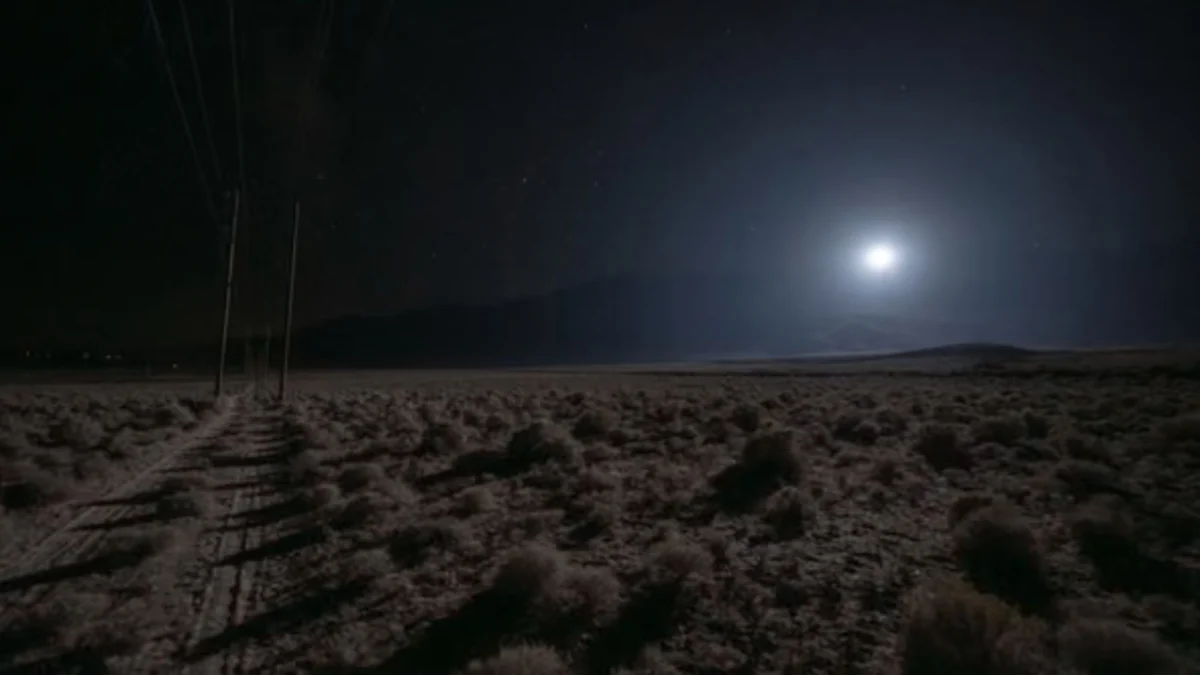
In the high deserts of California, near the rugged shadows of the Sierra Nevada, the natural order of the night was recently shattered. Residents in the vicinity of Lone Pine looked up to find not the familiar tapestry of the Milky Way, but a piercing, artificial radiance that bathed the desert floor in a surreal, daytime-like glow. This wasn’t a weather anomaly or an atmospheric phenomenon; it was a deliberate demonstration of "space-based illumination," a technology that promises to transform the night sky into a functional, on-demand utility.
The startup behind this blinding spectacle, Reflect Orbital, has set its sights on a goal that feels pulled from the pages of science fiction: the launch of 50,000 satellites equipped with giant mirrors. These orbital reflectors are designed to capture sunlight and beam it back to Earth’s surface, potentially ending the era of absolute darkness for vast swaths of the planet. While the company markets the technology as a breakthrough for emergency services and renewable energy, a growing coalition of scientists, environmentalists, and astronomers warn that we are on the verge of an ecological and cultural catastrophe.
The Genesis of the Light: Chronology of a High-Stakes Venture
The journey of Reflect Orbital from a conceptual startup to a regulatory lightning rod has been rapid. The company’s vision relies on a simple yet audacious premise: using 59-foot-diameter mirrors positioned in low Earth orbit to redirect sunlight onto specific geographic coordinates.
- Early 2026: Reflect Orbital begins publicizing its "orbital illumination" platform, claiming that users will soon be able to order sunlight via a mobile app.
- July 2026: The Federal Communications Commission (FCC) grants the company approval to launch its first demonstration satellite. The move is met with confusion by the scientific community, as the agency frames the project under existing satellite communications regulations.
- October 2026: The company conducts a real-world, ground-based test near Mount Whitney. By using high-powered mobile lighting rigs, they simulate the intended effect of their future orbital fleet, triggering public complaints about "blinding" light.
- Late October 2026: Earthjustice and other advocacy groups formally petition the FCC to reconsider the approval, citing a complete lack of environmental and atmospheric impact studies.
The company’s roadmap is aggressive. If the initial orbital demo succeeds in the coming year, they plan to scale to a constellation of 50,000 units by the mid-2030s.
Engineering the Night: How the Mirrors Work
At the core of the Reflect Orbital model is the deployment of deployable, lightweight reflective surfaces. Positioned at an altitude of approximately 400 miles (645 kilometers), these satellites are designed to tilt and orient themselves to capture the sun’s rays while the Earth is in shadow.
The company claims that the mirrors can produce beams of light ranging in intensity from the soft glow of a full moon to the harsh, direct brilliance of high-noon sunlight. By focusing these beams into three-mile-wide patches, Reflect Orbital envisions a future where cities could replace aging street lighting infrastructure, farmers could extend growing seasons through nighttime photosynthesis, and military operations could be conducted in perpetual daylight.
"Search-and-rescue teams are expected to be our first customers," a company spokesperson stated during the recent California test. "This demonstration was conducted alongside teams who would actually use our technology in the field. We want to show how this can save lives by providing visibility where there is currently only darkness."
The Scientific Backlash: A Threat to Evolutionary Rhythms
The opposition to this project is not merely aesthetic; it is deeply rooted in biological and ecological science. Critics argue that the "night" is not an empty space but a critical environmental resource that has dictated the evolution of life for billions of years.
Disruption of Circadian Rhythms
Human physiology, like that of almost every organism on Earth, is governed by circadian rhythms—internal clocks synced to the cycle of light and dark. Exposure to artificial, high-intensity light at night (ALAN) is known to suppress melatonin production, leading to sleep disorders, hormonal imbalances, and increased susceptibility to chronic diseases.
Ecological Cascades
The threat to wildlife is perhaps even more severe. Migratory birds, nocturnal insects, and predatory mammals rely on the darkness to navigate, hunt, and reproduce. A sudden, artificial pulse of sunlight could disorient migrating flocks, interrupt the mating cycles of insects—which are already in global decline—and expose nocturnal prey to predators that would otherwise be unable to see them.

Jan Hasselman, a senior attorney with Earthjustice, pulls no punches regarding the company’s plan. "This is an idiotic project," he says. "Literally all of life on Earth evolved based on the rhythm of day and night, and there is a ton of data showing that messing with this is not a good idea. The proposal for 50,000 of these satellite mirrors is crazy and would effectively end the night sky as we know it."
Astronomical Concerns and the "Space Junk" Crisis
Astronomers have long been fighting a losing battle against light pollution. As urban centers expand, the ability to observe the cosmos from the ground has diminished. The introduction of 50,000 reflective satellites would, according to the International Astronomical Union, make deep-space observation nearly impossible.
Moreover, the sheer volume of hardware required to maintain this constellation contributes to the growing problem of space debris. As companies like SpaceX push for massive satellite constellations for data services, the addition of massive, mirrored surfaces increases the risk of orbital collisions. Debris resulting from such collisions could eventually de-orbit, burning up in the atmosphere or, in some cases, surviving the descent to become a physical hazard on the ground.
Geopolitical and Climate Implications
The debate over Reflect Orbital is also being framed within the broader context of geoengineering. While the company claims it will help the environment by boosting solar energy production, climate scientists are wary of any initiative that tinkers with the planet’s radiative balance.
"Global warming is happening because the Earth has a radiative imbalance due to the massive amounts of greenhouse gases we’ve dumped into the atmosphere," explains David Ho, a climate scientist at the University of Hawaii. "Some people are promoting the already unhinged idea of installing space mirrors facing away from the Earth to reflect the sun’s energy in order to decrease global warming. Imagine wanting to turn those mirrors around so that the Earth gets hotter. We are playing with fire."
Critics argue that the company is essentially "weaponizing" sunlight, creating a precedent where private corporations can alter the global environment for profit, bypassing international treaties and public consent.
Official Responses and the Path Forward
Reflect Orbital has attempted to mitigate the backlash by claiming they are in "substantive discussions" with various stakeholders. They emphasize that their flight paths will be programmed to avoid "sensitive areas," such as protected national parks, international astronomical observation sites, and heavily forested regions prone to wildlife migration.
"We welcome oversight and want to play a role in shaping it," the spokesperson reiterated. "We believe it is our responsibility to work alongside governments, scientists, and regulators rather than ahead of them."
However, for many, the damage is already done. The FCC’s initial approval, granted with seemingly little public debate, has become a rallying point for those who believe the agency is ill-equipped to regulate the "privatization of the sky."
As the world watches the sky, the question is no longer just whether we can engineer the night, but whether we have the right to do so. The "midnight sun" promised by Reflect Orbital may bring utility to emergency responders, but at the potential cost of the star-filled silence that has been the birthright of every generation that has ever looked upward. Whether the regulators will choose to prioritize commercial innovation over the preservation of the natural night remains the most pressing question for the coming decade.


 Lina Irawan

 Raul Delapena Setiawan

 Nana Muazin
 Muslim

 Ali Ikhwan


 Dwi Wanna
