
 Asro
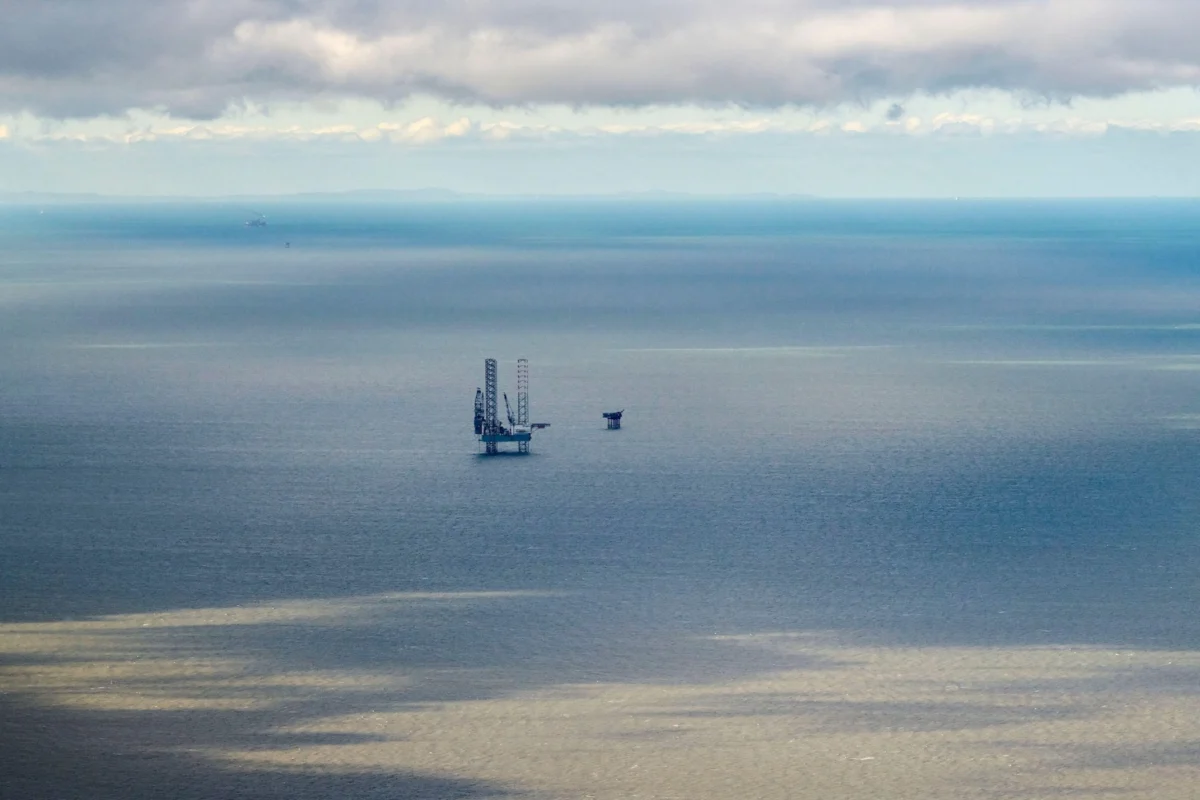
As 2026 draws to a close, British households and businesses are grappling with a renewed energy crisis that has reignited fierce national debate over the future of the UK’s power sector. With energy bills reaching levels not seen since the immediate aftermath of the Russian invasion of Ukraine, the narrative surrounding the "why" and "how" of this affordability crunch has become a battleground for political and economic strategy.
The reality, however, is far more complex than the headlines suggest. While public discourse often focuses on the costs of climate policy and the transition to Net Zero, rigorous analysis points to a more familiar, if uncomfortable, culprit: a persistent reliance on volatile international gas markets, exacerbated by the ongoing geopolitical instability of the Iran war.
Main Facts: The Anatomy of the Price Surge
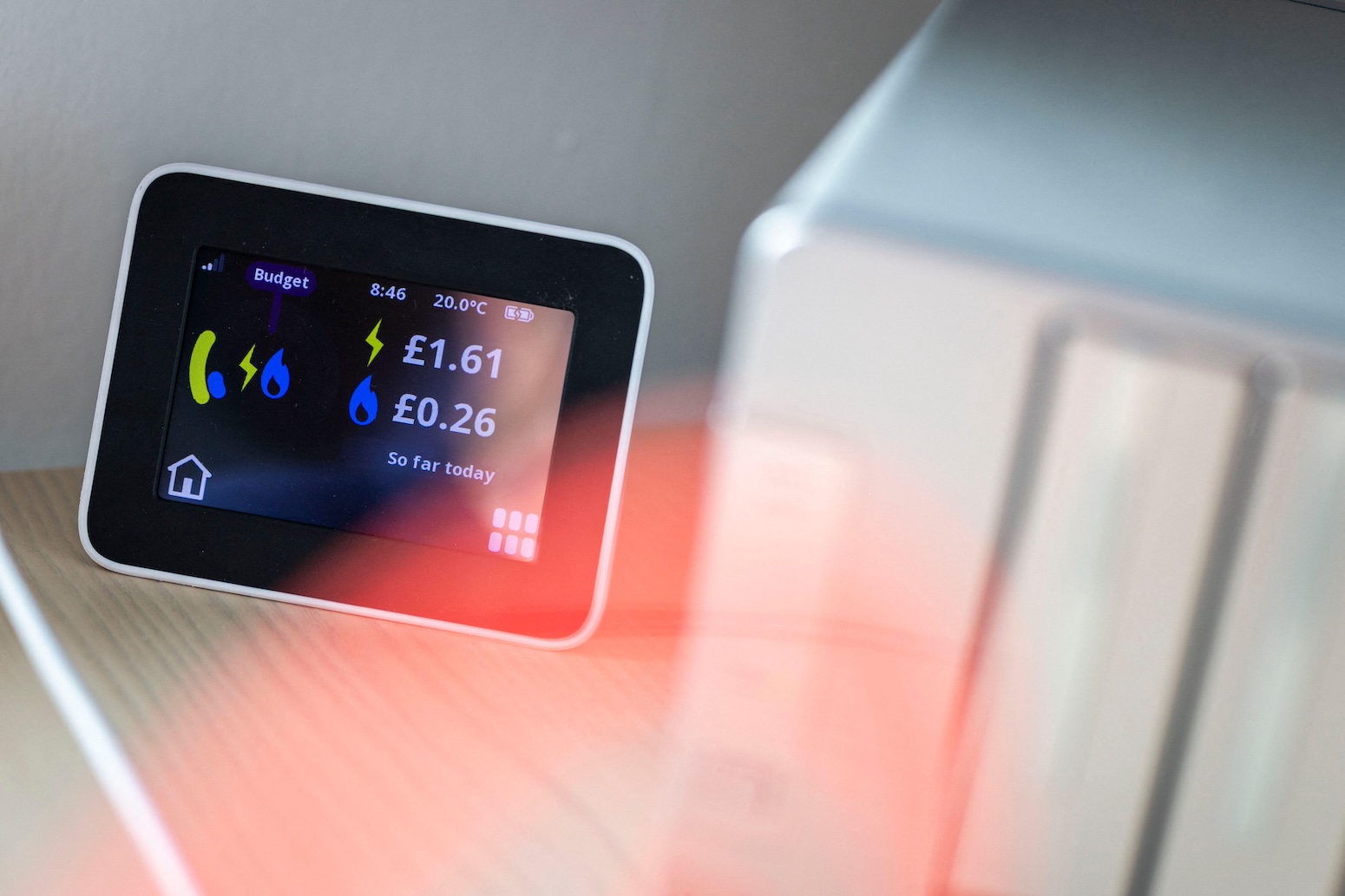
In October 2026, the UK energy price cap hit £1,723 per year for a typical household—a 47% increase in real terms since October 2020. The pain is not expected to be short-lived. Projections from energy market analysts suggest a further 25% jump in January 2027, which would push annual bills towards the £2,200 mark.
The fundamental driver of this misery is wholesale cost. According to data from the thinktank Nesta and Carbon Brief analysis, wholesale electricity and gas costs account for 44% of the current price cap. Because of the "marginal pricing" mechanism that dominates the UK power market, the price of electricity is inextricably linked to the price of gas. When gas prices spike, electricity prices follow suit, regardless of how much wind or solar power is being generated.
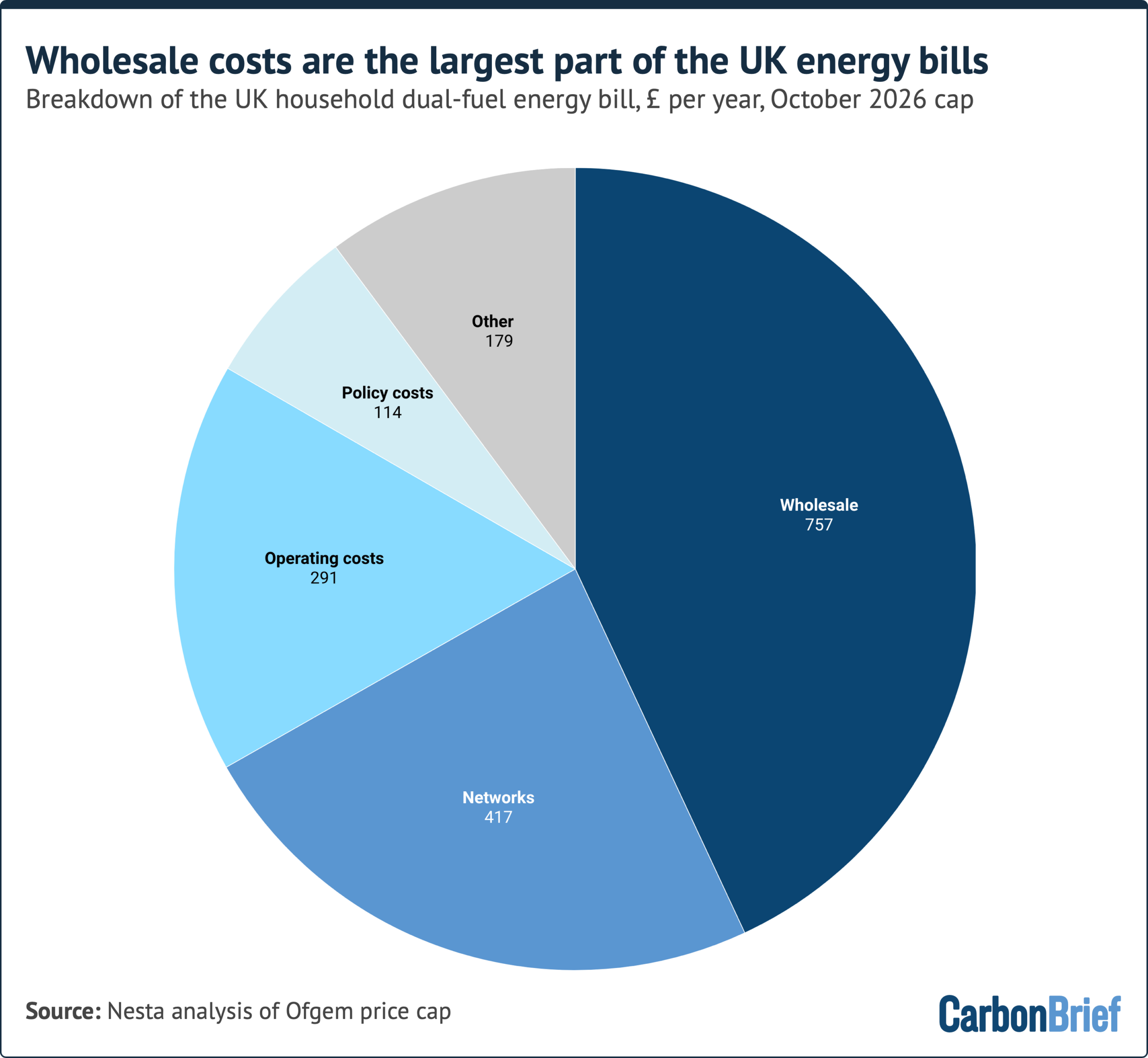
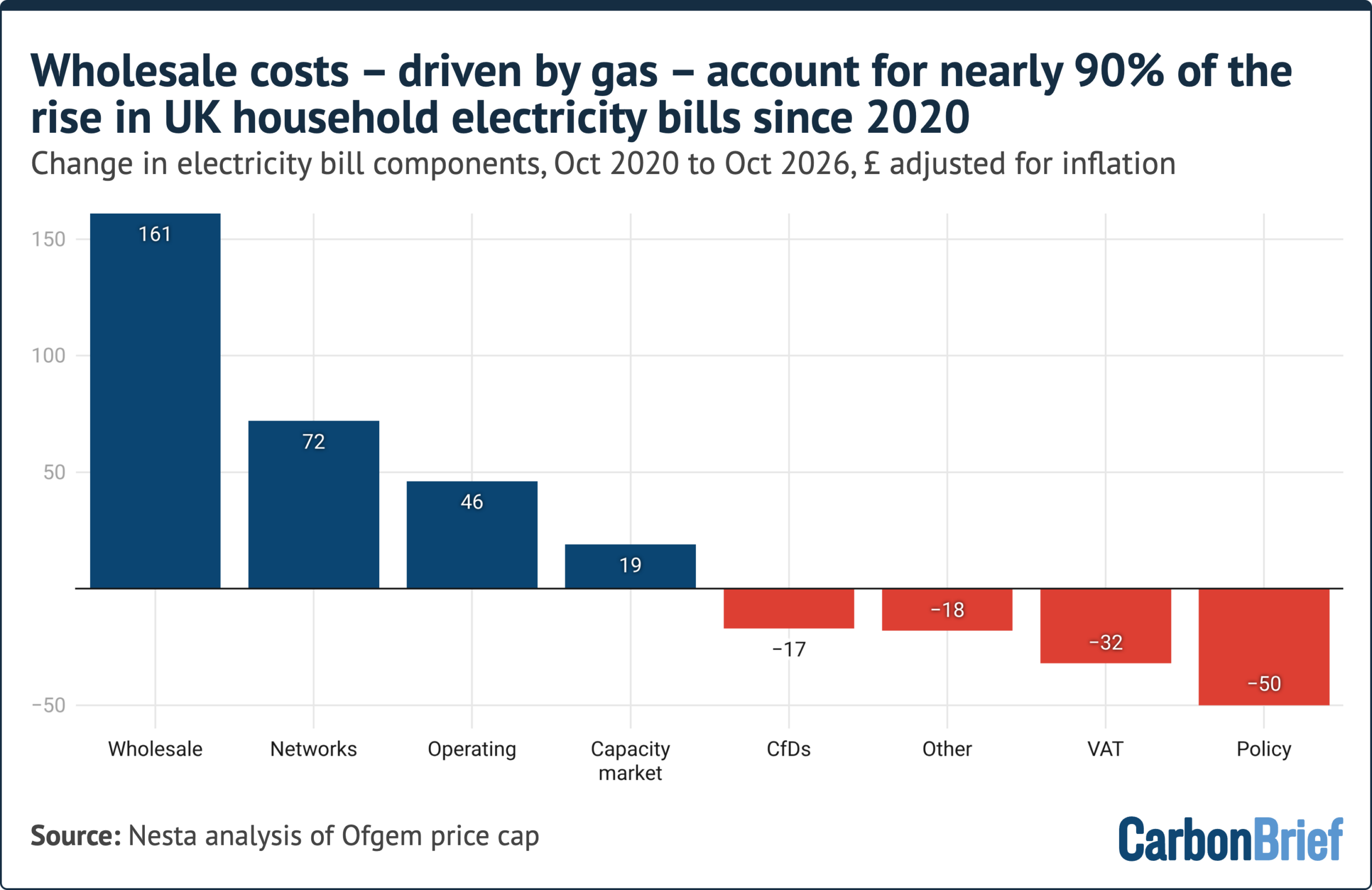
While policy costs—often the subject of intense media scrutiny—account for a mere 7% of the total bill, more than 80% of the increase in dual-fuel costs since 2020 is directly attributable to the surge in wholesale gas prices.
Chronology: A Decade of Volatility
To understand the current crisis, one must look at the timeline of the last decade:
- 2015-2019: Following the "cut the green crap" policy era, the UK maintained a high dependency on gas-fired generation. During this time, significant grid investment was deferred under the "connect and manage" policy, creating the infrastructure bottlenecks the country faces today.
- 2022: The Russian invasion of Ukraine sent global gas prices into a tailspin. The UK government was forced to intervene with over £60bn in support to prevent mass energy poverty.
- 2025: The government sought to mitigate rising costs by shifting 75% of "renewables obligation" costs from consumer bills to general taxation, aiming to provide immediate relief.
- 2026: The onset of the Iran war triggered the ninth gas-price spike of the decade, effectively erasing the relief provided by previous policy adjustments.
- October 2026-January 2027: The price cap reaches its highest level in three years, with a further forecasted hike in early 2027 signaling that the crisis is far from over.
Supporting Data: Debunking the "Green Levy" Myth
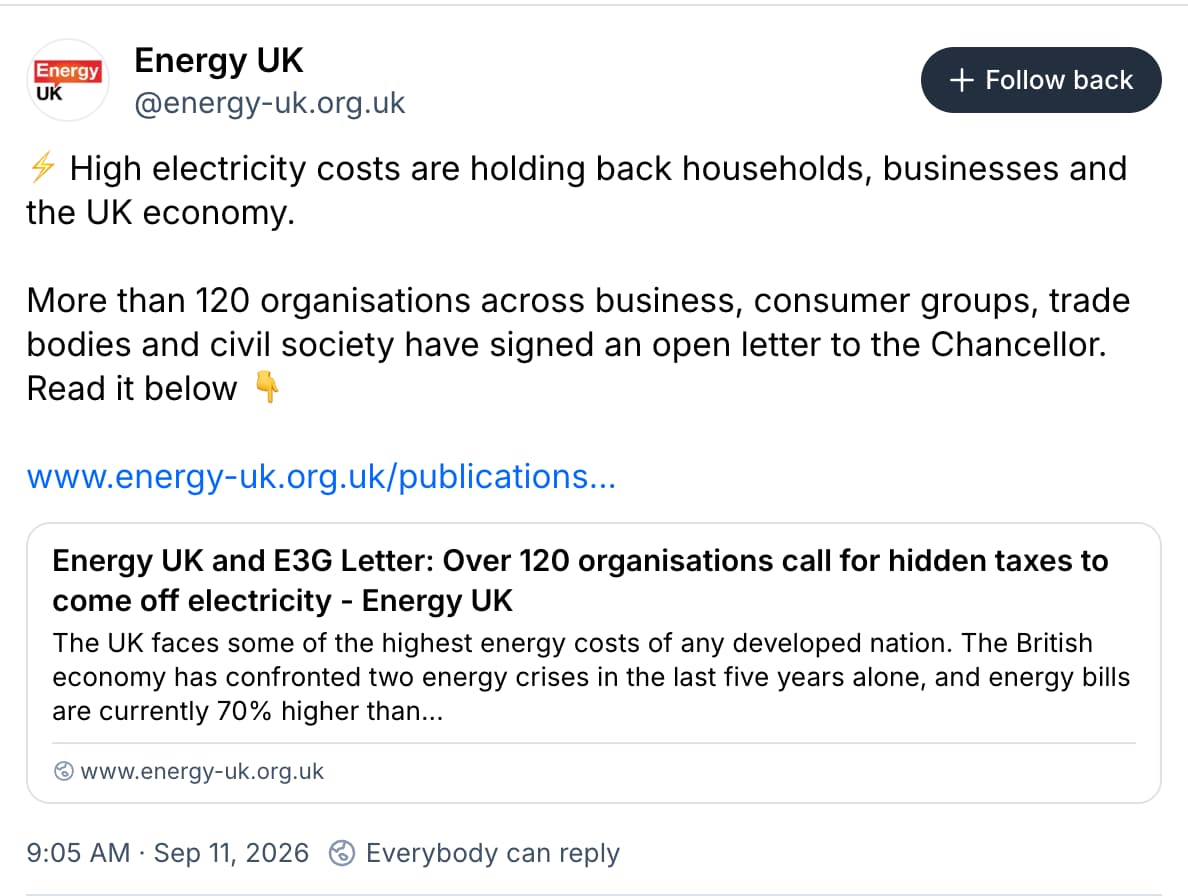
A common political narrative suggests that Net Zero commitments are the primary engine of high bills. However, the data paints a different picture. Network charges, which are rising to fund a "once-in-a-generation" renewal of aging energy infrastructure, are currently a larger burden than policy costs.
Ofgem has approved £29bn in upfront investment for the grid through 2031, with a total pipeline of £90bn. Of this, nearly three-fifths of the projected rise in network charges is attributed to "business-as-usual" maintenance of gas and electricity networks that have suffered from decades of under-investment. Only a fraction of the cost is tied to the expansion of renewables.
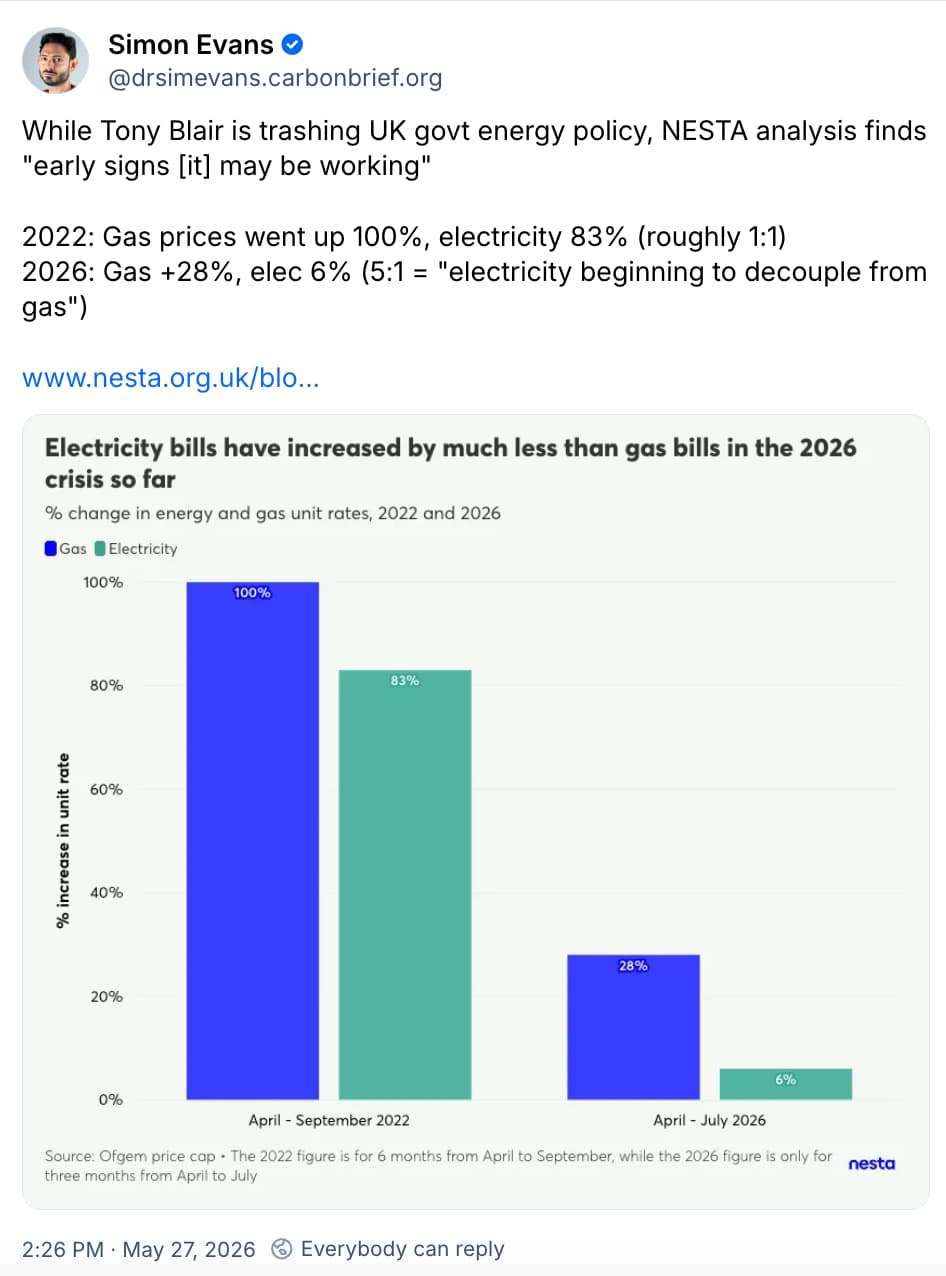
Furthermore, the "merit-order effect" of renewables is providing a critical buffer. Research from University College London indicates that UK wind energy saved consumers over £104bn between 2010 and 2023 by displacing expensive gas plants. Without the expansion of wind and solar, the current price spikes would have been significantly more severe.
Official Responses and Policy Interventions
The current government, elected in 2024, has struggled to balance its pledge to cut bills by £300 by 2030 with the realities of global markets. Prime Minister Andy Burnham’s administration has taken targeted action, including a six-month removal of VAT on electricity bills and the aforementioned shift of legacy policy costs to general taxation.
However, researchers like Dr. Richard Carmichael of the UK Energy Research Centre argue that these measures have been "masked" by the sheer scale of the wholesale price increases.
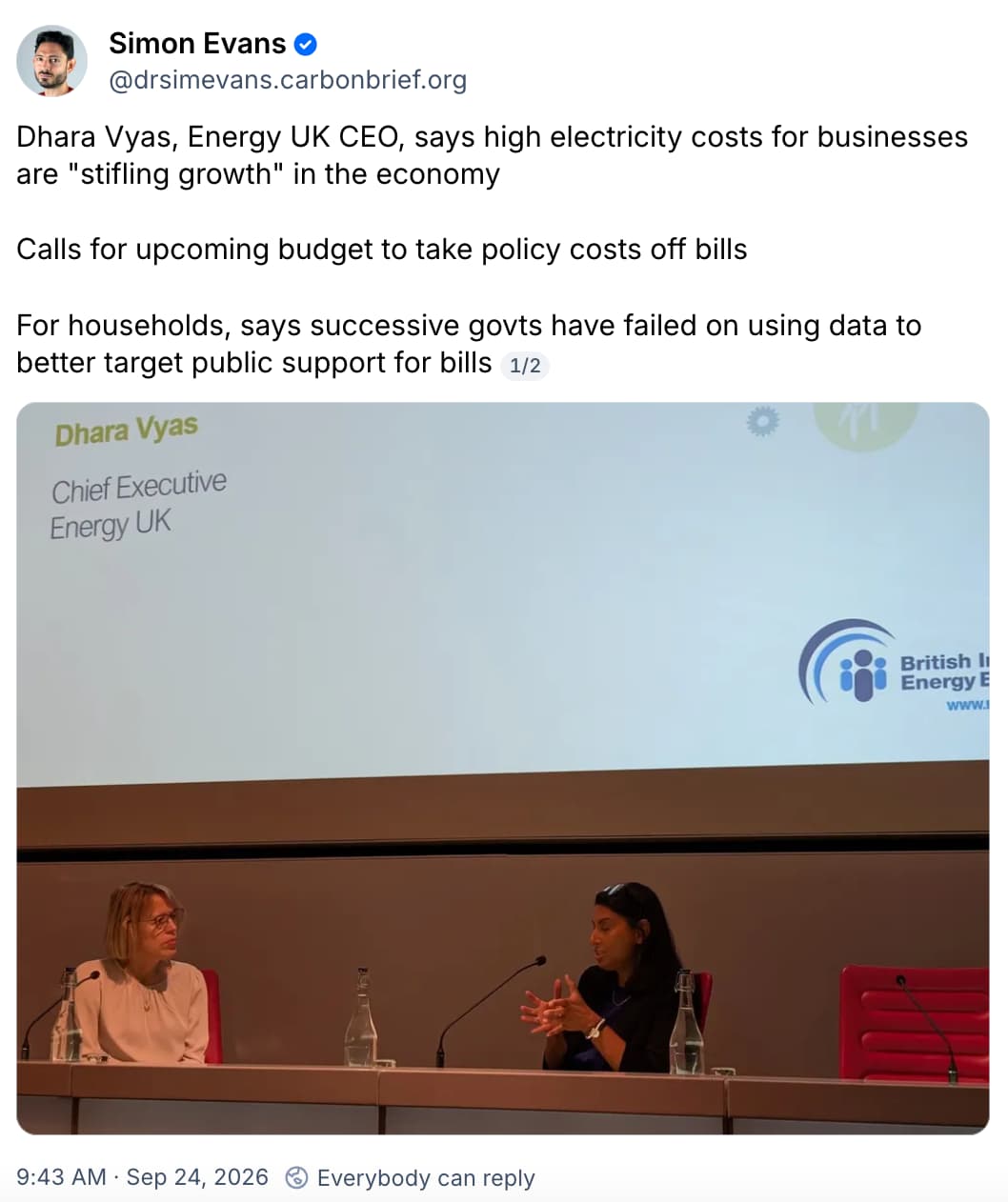
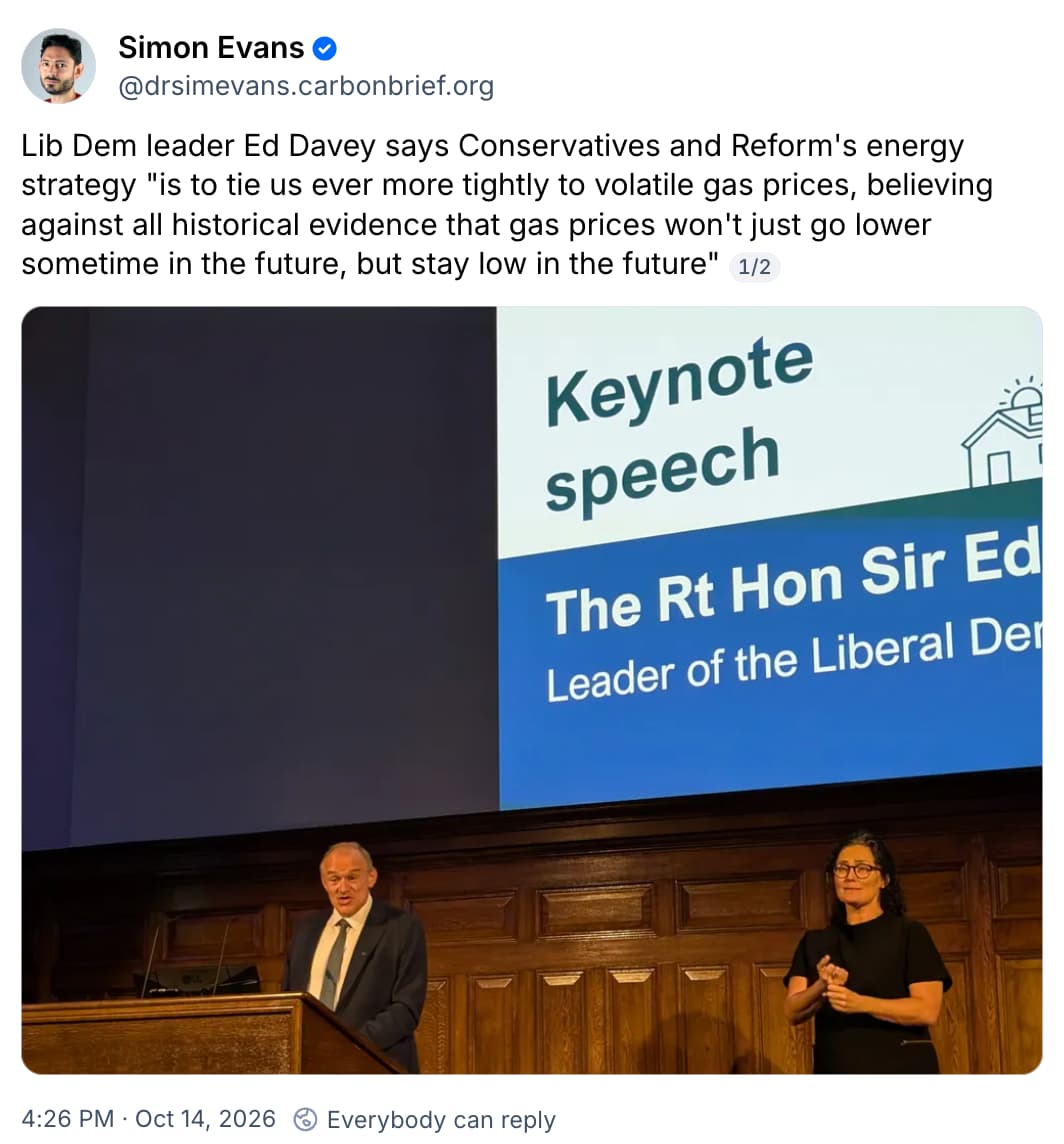
The opposition, led by the Conservative Party, has pivoted to arguing for a "cheap power" agenda, often advocating for a slowdown in decarbonization. Yet, industry leaders and independent analysts have questioned the viability of these proposals. RWE UK’s Tom Glover has publicly criticized reports suggesting a "cheap power" alternative as being built on "optimistic assumptions" about future gas prices, noting that reliance on gas leaves the UK uniquely exposed to the very volatility that is currently driving inflation.
The Path Forward: Electrification and System Reform
If the past is a lesson in the dangers of fossil-fuel dependence, the future is increasingly viewed through the lens of deep electrification.
The Case for Consolidation
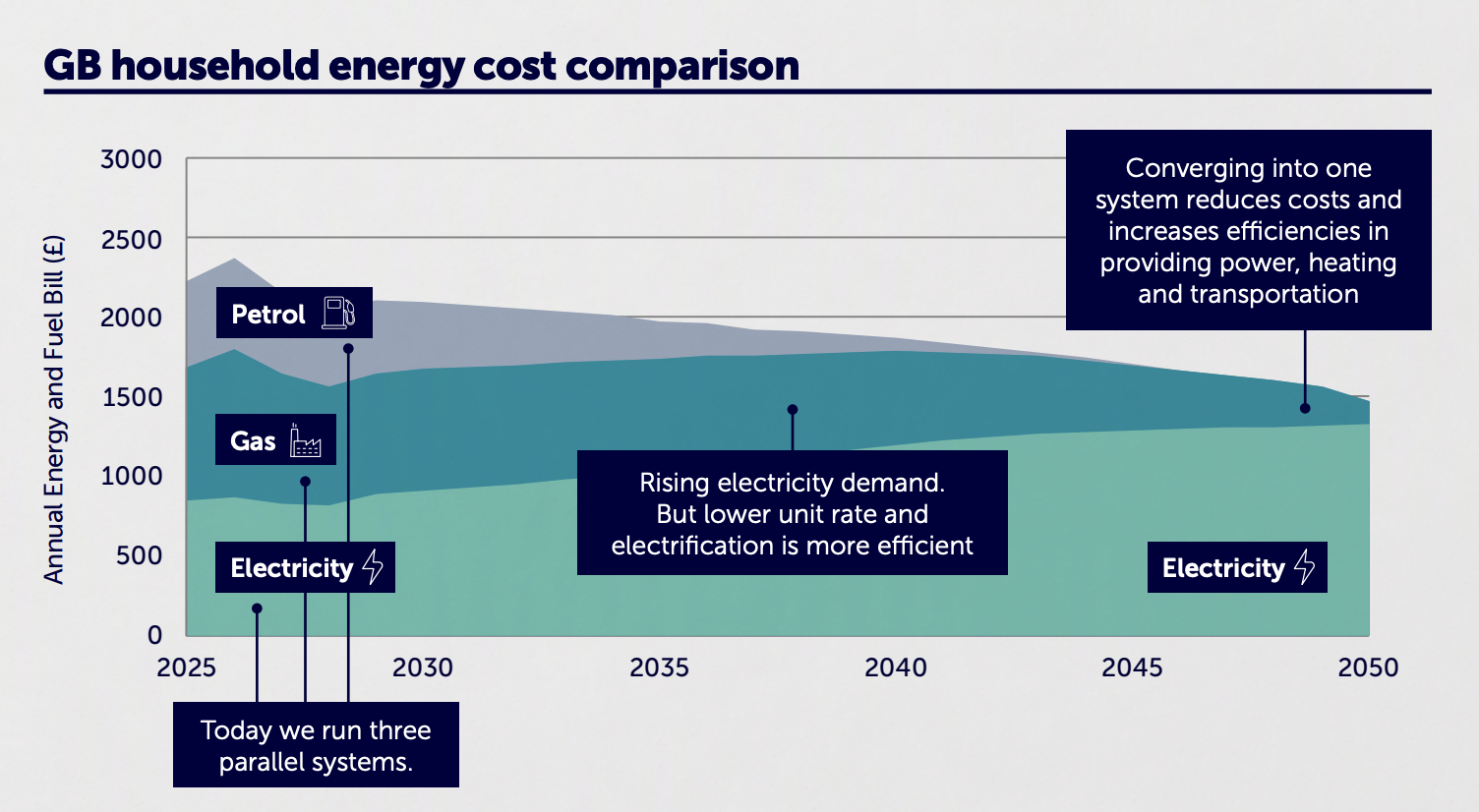
Currently, the UK operates three parallel energy systems: one for heating (gas), one for power (electricity), and one for transport (petrol/diesel). This fragmentation is inefficient. By transitioning to a single, electricity-based system, the fixed costs of the grid can be spread across a much larger base of demand.
Electric vehicles (EVs) are already nine times cheaper to run than combustion engine cars, and heat pumps—when paired with proper insulation—offer a path to significantly lower domestic energy use.
Flexibility as a Solution
A key strategy for the next five years is increasing "flexibility." By incentivizing consumers to shift their energy use—such as charging EVs during off-peak hours—the system can avoid the high cost of "constraint payments," where windfarms are paid to turn off because the grid cannot handle their output.
Structural Market Reform
There is growing momentum for more radical market reforms. Proposals from the Energy Security and Net Zero Committee include moving policy costs entirely onto gas bills to reduce the "spark gap"—the price ratio between electricity and gas. By making electricity more attractive compared to gas, the government hopes to accelerate the adoption of heat pumps and EVs, eventually de-linking the cost of electricity from the volatile gas market.
Implications: The High Cost of Inaction
The UK stands at a critical juncture. The "fossil-fuel rollercoaster" has proven to be a destructive force for both household budgets and national economic stability.
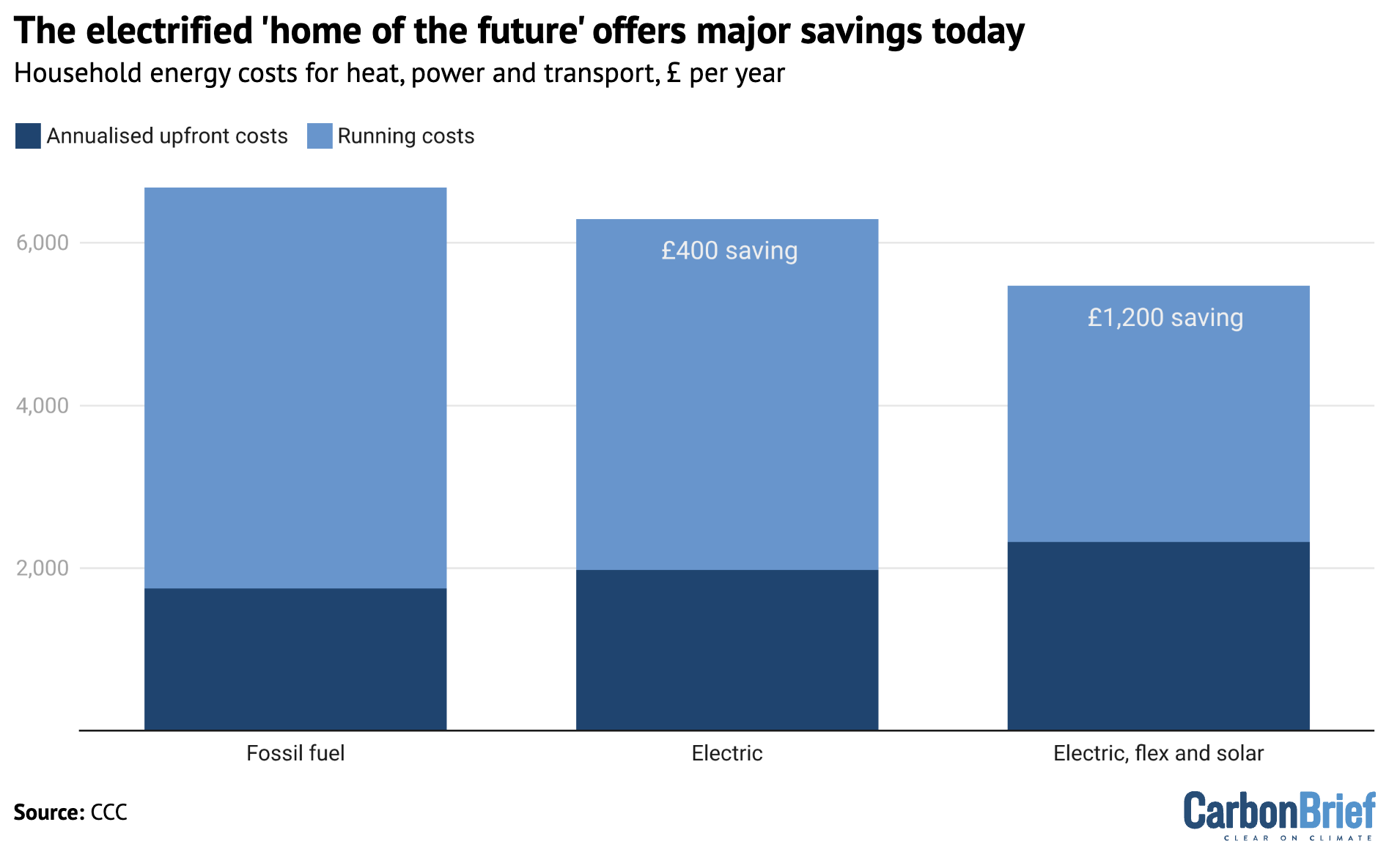
While the temptation to "slow down" the transition to clean power is politically attractive to some, the evidence suggests that this would merely lock the UK into a cycle of perpetual exposure to global resource wars. As Energy Secretary Miatta Fahnbulleh noted at a recent industry conference, the current crisis is not a temporary blip but a warning sign.
The path to lower bills, according to the consensus of energy experts, does not lie in abandoning climate targets, but in accelerating the modernization of the grid, aggressively pursuing energy efficiency, and completing the transition to a clean, electrified economy. The "hidden taxes" on bills are a significant annoyance, but they are a secondary concern compared to the fundamental vulnerability of an economy that is still, in the mid-2020s, tethered to the price of imported gas.
Ultimately, the goal for 2030 is no longer just about carbon reduction—it is about energy sovereignty. The decisions made by the Treasury in the upcoming budget will determine whether the UK continues to pay the price for past inaction or begins to build an energy system that is, at last, resilient, affordable, and secure.


 Evan Lee Salim

 Lina Irawan

 Asep Darmawan

 Nana Wu

 Jia Lissa

 Nana Muazin
