Nana
Nana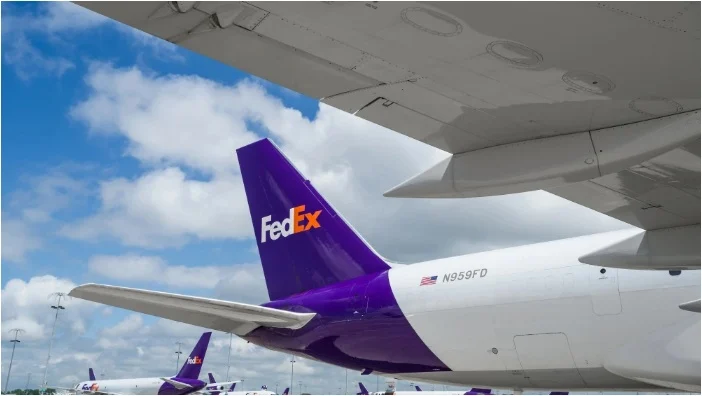
In a significant move to fortify its position within the global healthcare logistics sector, FedEx has announced that its regional hub for the Middle East, Indian Subcontinent, and Africa (MEISA), located at Dubai World Central (DWC) in the United Arab Emirates, has been awarded the prestigious Center of Excellence for Independent Validators (CEIV) Pharma certification by the International Air Transport Association (IATA).
This milestone marks a critical expansion of the express giant’s specialized capabilities, bringing the total number of FedEx facilities globally holding this rigorous certification to 30. As pharmaceutical supply chains face increasing scrutiny regarding temperature sensitivity and time-critical delivery, this accreditation serves as a global benchmark for operational excellence, regulatory compliance, and safety.
The Significance of CEIV Pharma Certification
The IATA CEIV Pharma certification is the industry’s gold standard for pharmaceutical logistics. It is not merely an accolade but a comprehensive validation of an organization’s ability to handle highly sensitive medical and pharmaceutical products. The certification process involves an exhaustive audit of operational processes, storage facilities, specialized equipment, quality management systems (QMS), and adherence to international regulatory frameworks.
By securing this certification for its DWC facility, FedEx has demonstrated that its Dubai operations meet the stringent requirements set forth by international bodies for the transport of life-saving medicines, vaccines, and medical devices. The audit scrutinized every aspect of the handling process, ensuring that the integrity of temperature-sensitive goods remains uncompromised from the moment of intake until final departure.
Facility Specifications: Precision Engineering in Dubai
The FedEx DWC hub is a purpose-built facility spanning 57,000 square meters. It was designed with the foresight that the Middle East would become a central nervous system for global pharmaceutical distribution. A key component of this facility is its dedicated 170-square-meter temperature-controlled storage area. This zone is specifically engineered to support sensitive healthcare shipments, providing stable thermal environments that protect the chemical and biological stability of pharmaceutical products.
Official Perspectives: Commitment to Global Healthcare Logistics
The attainment of the CEIV Pharma certification is viewed by FedEx leadership as a cornerstone of their broader strategy to dominate the high-value logistics market. Taarek Hinedi, Vice President of Operations and Planning & Engineering at FedEx MEISA, emphasized that this achievement aligns with the company’s long-term vision.
"Achieving the CEIV Pharma certification reflects our continued commitment to delivering healthcare logistics services that meet the highest international standards," Hinedi stated. He highlighted the growing complexity of global supply chains, noting that healthcare customers require logistics partners who can guarantee product integrity without sacrificing speed or reliability.
"Our hub at DWC is a critical gateway connecting businesses across the region to our global network," Hinedi added. "It combines specialized cold-chain expertise, advanced technology, and visibility to help move critical shipments with precision and care. As supply chains evolve, our focus remains on safeguarding the integrity of life-critical products."
Technological Integration: AI and Sensor Innovation
Beyond the physical infrastructure, FedEx is leveraging advanced digital solutions to ensure the transparency of the supply chain. The company utilizes a dual-pronged approach to monitoring sensitive cargo:
- FedEx Surround: An AI-powered monitoring and intervention platform that tracks shipments in near real-time. It uses predictive analytics to anticipate potential disruptions, allowing for proactive intervention before a shipment is compromised.
- FedEx SenseAware: A sensor-based technology that provides granular data on a package’s precise location, temperature, humidity, and exposure to light or shock.
By integrating these tools, FedEx offers its healthcare clients an unprecedented level of visibility. This "digital twin" of the physical shipment allows the company to intervene immediately—for instance, by adjusting cooling systems or re-routing shipments—should a environmental anomaly occur during transit.
Chronology of Recent Strategic Developments
The certification of the Dubai hub is the latest in a series of rapid developments for FedEx as it recalibrates its global operations for maximum efficiency and growth.
The CMA CGM Partnership
In October 2026, the logistics landscape saw a major consolidation as the Marseille-based CMA CGM Group finalized its $1.4 billion acquisition of FedEx Supply Chain. This transaction, first initiated in July, is transformative for both entities. The companies have entered into multi-year commercial agreements covering air and ocean freight, designed to unlock synergies across their respective networks. A key outcome of this partnership is the planned collaboration on air cargo capacity for high-demand routes, specifically connecting Asia and Europe, which are vital lanes for the pharmaceutical and electronics sectors.
Expansion in India
In August 2026, FedEx solidified its presence in South Asia by announcing the development of a fully automated air cargo hub at GMR Cargo City, located at Delhi’s Indira Gandhi International Airport. This project is aimed at streamlining the processing of imports and exports in one of the world’s fastest-growing economies, further integrating India into the global FedEx network.
Fleet Optimization
Operational efficiency has also seen a rebound in the fleet sector. Following a period of uncertainty last year that saw the temporary grounding of its MD-11F aircraft, FedEx has successfully returned the vast majority of this fleet to active service. The return of these heavy-lift freighters has been crucial in maintaining the capacity necessary to meet current global demand.
Implications for the Global Pharmaceutical Industry
The convergence of these events suggests a clear trajectory: FedEx is pivoting toward high-margin, high-complexity logistics segments where service quality and technical capability serve as competitive moats.
Resilience in the Face of Complexity
The global pharmaceutical industry is increasingly reliant on "just-in-time" delivery models. Any delay or temperature excursion can lead to the total loss of a shipment, which, in the case of specialized biopharmaceuticals, can represent millions of dollars and, more importantly, patient lives. By standardizing its Dubai hub with CEIV Pharma certification, FedEx is reducing the risk profile for its clients, making the DWC hub a preferred transit point for cold-chain traffic moving between the West and the rapidly developing markets of the Middle East and Africa.
The Strategic Value of the DWC Hub
Dubai’s geographic position—sitting at the crossroads of three continents—makes it an ideal location for a cold-chain "super-hub." As the UAE continues to invest in its status as a global logistics hub, FedEx’s heavy investment in DWC mirrors the broader national agenda to facilitate trade in high-value, specialized goods.
Future Outlook
As the partnership with CMA CGM matures and the Delhi hub reaches operational status, FedEx is positioning itself to handle the next generation of logistics challenges. The combination of physical assets, such as the DWC temperature-controlled storage, and digital assets, such as AI-powered monitoring, suggests that the future of logistics is not just in "moving" goods, but in "managing" the environment and status of those goods throughout the entire journey.
Conclusion
FedEx’s receipt of the IATA CEIV Pharma certification at its Dubai hub is a testament to the company’s ongoing transformation. By aligning its physical infrastructure with the world’s most stringent quality standards and supplementing these with cutting-edge sensor and AI technology, the company has effectively mitigated the risks inherent in pharmaceutical logistics. Coupled with its strategic acquisitions and fleet modernization, FedEx is setting the stage to maintain its leadership in a complex, post-pandemic global economy.
For the healthcare sector, this translates to a more reliable, visible, and compliant supply chain. For FedEx, it reinforces a commitment to operational excellence that is essential for long-term growth in the increasingly competitive global logistics market. As the company continues to integrate its new assets and expand its footprint in key regions, the emphasis on quality and precision will remain the defining characteristics of its operational strategy.

 Lina Irawan
 Raul Delapena Setiawan
 Laily UPN
 Iffa Jayyana
 Rifan Muazin
 Suro Senen
 Lina Hope