
 Iffa Jayyana
In the lexicon of modern enterprise software, few terms are as ubiquitous—or as hollow—as “end-to-end supply chain management.” It is the industry’s holy grail, a marketing mantra plastered across the websites of major vendors, promising a seamless, synchronized flow from raw material extraction to final consumer delivery. Yet, for those who have spent decades in the trenches of implementation, this promise is not just an exaggeration; it is a fundamental misrepresentation of reality.
The supply chain remains a fractured landscape of siloed systems, disconnected data models, and competing taxonomies. Despite the rapid ascent of Artificial Intelligence (AI) and the promise of digital transformation, the structural barriers that thwarted integration in the early 1990s persist today, disguised by sleek interfaces and the buzzy nomenclature of the modern tech era.
A Chronology of Disconnection: From Manugistics to Blue Yonder
To understand why the supply chain remains fragmented, one must look back to the early 1990s. In 1993, the industry was energized by the rise of companies like Manugistics, which aimed to revolutionize supply chain planning. At the time, the division between tactical supply planning and logistics—specifically Transportation Management Systems (TMS)—was stark.
The author, working alongside a colleague named Ellen, attempted to bridge this gap for a major client. The objective was simple: build an end-to-end planning architecture. They spent countless nights poring over technical manuals, surviving on takeout, only to arrive at a sobering conclusion: the systems were not designed to talk to one another. The only bridge available was the clunky, indirect conduit of order management. They were forced to map TMS to order management, and order management to forecasting.
The irony was not lost on them when, on the very day they struggled to force these disparate systems into alignment, the company issued a glowing press release touting their “end-to-end planning” capabilities. It was a moment of dark comedy that has repeated itself for over three decades.
When Manugistics was eventually absorbed by JDA in 2006, and subsequently evolved into today’s Blue Yonder, the marketing rhetoric regarding “frictionless outcomes” and “end-to-end management” scaled with the company. Yet, the underlying technical debt—the lack of a common data model and the inability to map planned orders directly into freight constraints—remains the industry’s quiet, persistent failure.
The Taxonomy of Failure: Why Silos Persist
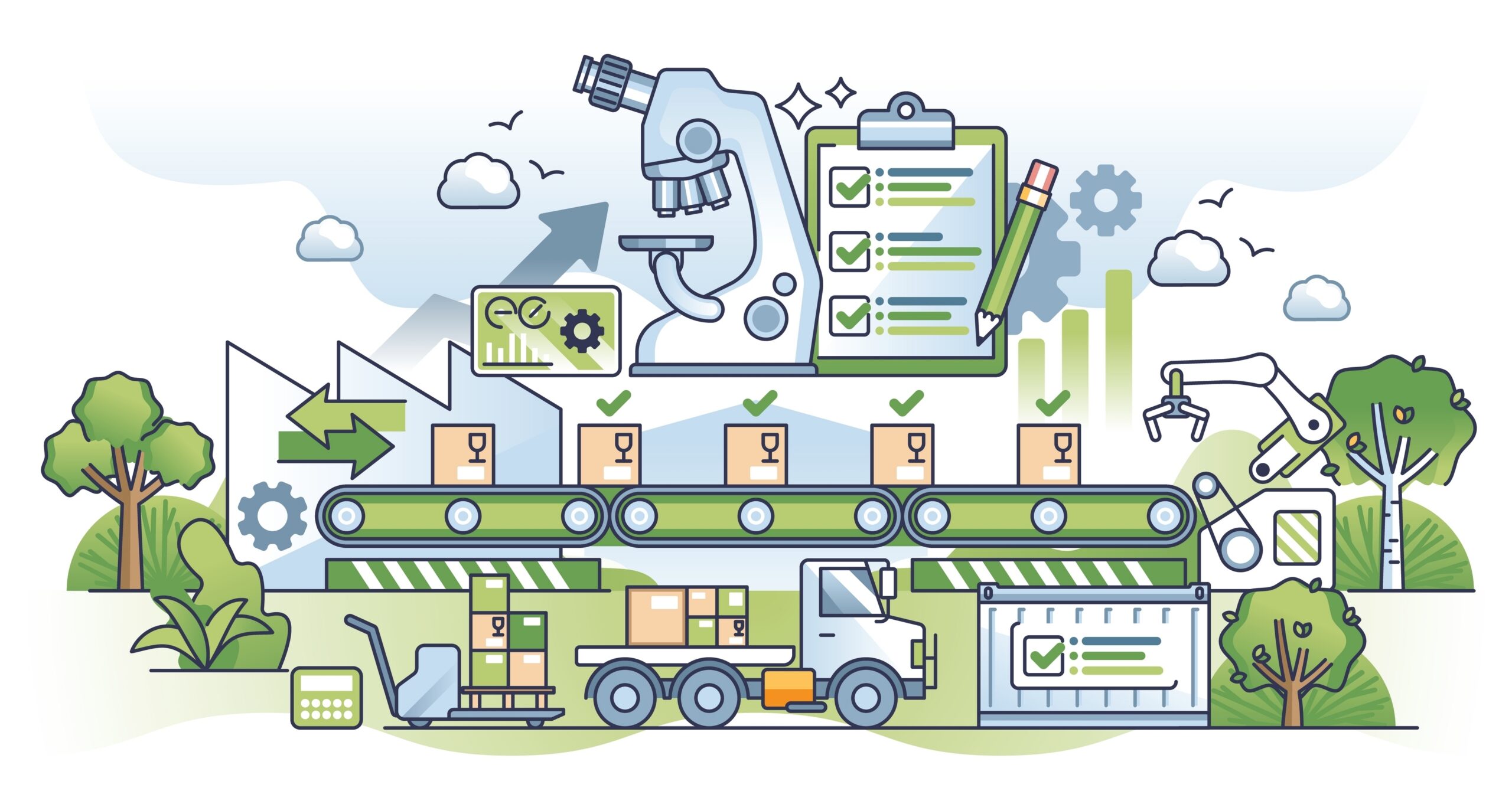
The structural problem lies in the way enterprise software is categorized and deployed. Today’s supply chain landscape is composed of five distinct pillars:
- Supply Chain Planning
- Supply Management (Procurement)
- Supply Chain Execution
- Network Design
- Transportation/Logistics Management
These pillars operate in hermetically sealed silos. While transactional systems like ERPs handle the “order-to-cash” and “procure-to-pay” cycles, they do not facilitate a true process flow. A planned order generated in an S&OP (Sales and Operations Planning) module rarely translates directly into an aggregate buying requirement for procurement, nor does it automatically inform transportation capacity planning.
The industry is currently suffering from what might be called “The AI Hype Trap.” Vendors are “hanging agents and agentics on old-fashioned architectures like icicles on a holiday tree.” By layering sophisticated AI atop brittle, legacy, and disconnected foundations, companies are not solving the underlying integration problem; they are merely masking it with faster, automated decision-making that is still based on siloed, incomplete data.
Supporting Data and The Emergence of Niche Disruption
The limitations of traditional software are most visible in the gap between “Systems of Insight” and “Systems of Record.” Visibility vendors like Four Kites, Project 44, and Shippeo provide high-value, real-time data, but there is no industry-standard method to ingest these insights into core planning processes. Risk management technologies can detect anomalies and issue alerts, but because there is no common data model, these alerts often live in a vacuum, divorced from the workflows that could actually mitigate the risk.
Furthermore, the traditional software market has been overwhelmingly skewed toward retail and make-to-stock (MTS) manufacturing. The discrete manufacturing sector—which relies on make-to-order (MTO) and configure-to-order (CTO) flows—remains underserved.
However, change is emerging at the fringes. Solutions like Pelico are making headway in automating “clear-to-build” processes for complex manufacturers, while Lean DNA provides critical visibility into supplier conformance. These tools do not fit into the traditional ERP-centric taxonomy, yet they provide the specific functional workflows that the “all-encompassing” suites have failed to deliver for decades.
Official Responses and Industry Rhetoric
When challenged on the lack of true end-to-end integration, major software vendors point to their cloud-native platforms and unified APIs as evidence of progress. The official narrative is one of evolution: move everything to the cloud, use a common interface, and the data will harmonize.
However, the reality remains that every module—whether it is inventory management, transportation planning, or demand forecasting—often utilizes a different definition of fundamental entities. What one module defines as a “location” may differ from the coordinate-based definition in another. An “event” in a visibility tool may not be reconcilable with a “purchase order” in the ERP. Without a canonical, rules-based ontological framework, the “unified cloud” is merely a collection of disparate apps hosted on the same server, not a unified supply chain ecosystem.
The Implications: A Call for Radical Transparency
The cost of this ongoing delusion is immense. Companies continue to invest billions in software that promises a single version of the truth, only to find themselves running complex, manual spreadsheets to bridge the gap between their systems.
The implication is clear: we must stop chasing the myth of “end-to-end” and start building for interoperability. This requires a three-pronged approach to change the status quo:
1. Speak in Plain Language
The industry is buried under jargon that obscures technical incompetence. Consultants and technologists must be forced to map their solutions onto a clear taxonomy. If a vendor claims to offer “end-to-end” support, they should be required to demonstrate exactly how their software maps from the System of Record to the System of Execution. If they cannot explain the flow in simple, non-technical language, they do not have a functional process.
2. Define the “So What” and “Who Cares”
Before implementing the latest AI-driven agent, organizations must strip away the hype. Every new tool must be evaluated by its ability to solve a specific, measurable problem. AI should not be the goal; it should be the tool used to improve a clearly defined, cross-functional workflow.
3. Establish a Unified Data Layer
This is the most difficult, yet most essential, step. Before companies can achieve visibility or leverage AI, they must build a common data model across their entire solution stack. This involves defining a canonical data layer that enforces consistent definitions of items, orders, and events across all functions. Without this, the “System of Insight” will always be disconnected from the “System of Execution.”
Conclusion: Redefining the Future of Work
The goal for the next decade should not be the pursuit of a monolithic, frictionless, end-to-end software suite, which history has shown to be an impossibility. Instead, the goal should be the creation of an orchestrated ecosystem of specialized tools that communicate through a shared, rigorous data language.
We must stop treating supply chain software as a “set it and forget it” investment. It is time to move beyond the marketing brochures and toward a disciplined, rules-based architecture that recognizes the reality of silos. Only when we have mapped these flows, established common data standards, and defined the specific workflows that AI can genuinely optimize, will we be able to move beyond the failures of 1993. Until then, the supply chain will remain a collection of disjointed parts—and those of us who have seen this cycle repeat for thirty-five years will keep laughing, waiting for the day that the reality finally matches the press releases.

 Lina Irawan
 Raul Delapena Setiawan
 Laily UPN

 Rifan Muazin
 Suro Senen
 Lina Hope
