
 Azzam Bilal Chamdy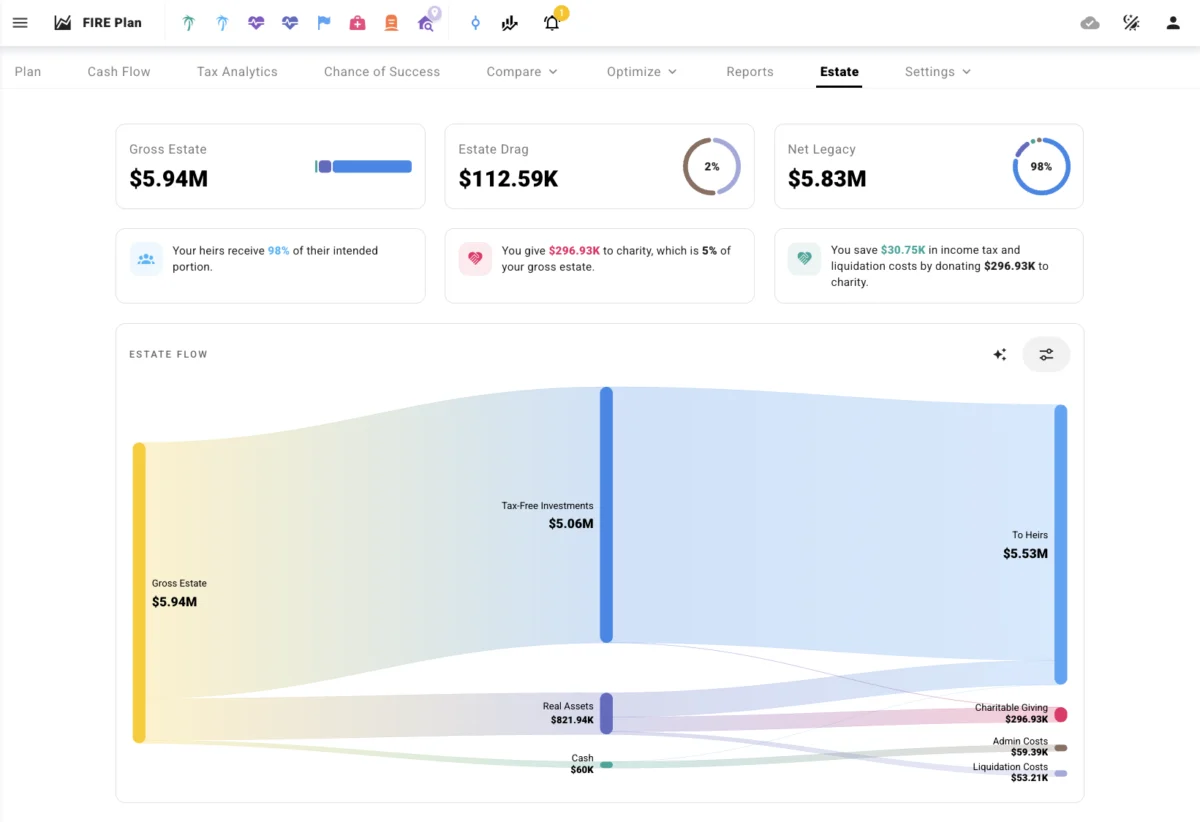
Three years ago, I introduced the world to ProjectionLab, labeling it the most powerful financial planning tool I had ever encountered. At the time, it was a specialized solution built by a solo developer, Kyle, specifically for the Financial Independence, Retire Early (FIRE) community. Today, it has evolved into something far more sophisticated—a comprehensive financial engine that has fundamentally altered the long-term planning strategies of thousands, myself included.
In my most recent analysis using the platform’s updated features, the software revealed a path to increasing my potential legacy to my children by over $1.5 million. This was achieved simply by optimizing my tax strategy based on the platform’s new, data-driven recommendations. When a piece of software can trigger such a significant shift in financial trajectory, it warrants a deeper look at its development, its capabilities, and the implications for the future of personal finance.

The Chronology of a Financial Disruptor
The story of ProjectionLab is a classic tale of developer-driven innovation born from personal necessity. When I first featured the project, Kyle was balancing the platform as a side project, coding late into the night and through weekends while holding down a demanding corporate day job.
The feedback loop between the platform and the FIRE community proved to be the catalyst for its rapid expansion. Users began stress-testing the tool with complex scenarios involving tax-gain harvesting, Roth conversions, and nuanced withdrawal strategies. This influx of high-level user data allowed Kyle to iterate with unprecedented speed.

Within two months of our initial collaboration, Kyle transitioned to part-time employment. Six months later, he exited the corporate world entirely to dedicate his full focus to the project. Today, that side project has grown into a fully independent, profitable company serving over 200,000 households. Remarkably, the company has achieved this growth without the influence of venture capital, avoiding the typical industry traps of data monetization or heavy-handed advisory upsells.
Core Advancements: Beyond Traditional Planning
Traditional retirement calculators often rely on static assumptions—a fixed annual withdrawal rate or a flat rate of return. However, life is rarely linear. The latest iteration of ProjectionLab introduces an "Optimizer" that functions as a high-level algorithmic strategist.

The Power of the Optimizer
The core challenge for anyone pursuing financial independence is not just reaching the finish line, but managing the "decumulation" phase—the process of spending down assets without triggering unnecessary tax events. The new Optimizer searches through hundreds of permutations of tax strategies, timing windows, and withdrawal orders to find the most efficient route. It allows users to prioritize specific outcomes, such as minimizing lifetime tax liability, maximizing net worth, or ensuring compliance with complex regulations like IRMAA (Income-Related Monthly Adjustment Amount) and ACA subsidy thresholds.
Tax Strategy and Roth Conversions
One of the most complex hurdles in retirement planning is the timing of Roth conversions. The new platform handles this automatically, filling target tax brackets annually while remaining aware of future Medicare surcharges. By effectively managing income across ordinary sources and capital gains, the system prevents the "tax cliffs" that often plague retirees who fail to plan their withdrawals with foresight.

Dynamic Flexibility in Spending
One of the most innovative features is "Flex Spending." Recognizing that market volatility is a reality, the tool allows users to build conditional rules into their plans. For instance, a user can program a logic gate that automatically reduces discretionary spending by a specific percentage if the market drops by 30% from its all-time high. This allows for a much more realistic simulation of a retirement lifespan, proving that adaptability is often more valuable than simply increasing the savings rate.
Comparative Modeling: The "What If" Revolution
Perhaps the most significant upgrade in the current version is the "Compare Mode." In financial planning, the ability to visualize the "opportunity cost" of a decision is invaluable.

Users can now overlay "What If" scenarios in real-time. For example, a user can model the impact of retiring two years earlier, accepting a higher-paying job in a high-tax jurisdiction, or shifting to part-time work at age 45. The platform calculates the "yearly delta" for income, expenses, and net worth, allowing users to move beyond guesswork and into data-driven decision-making. This feature transforms the tool from a calculator into a laboratory for life design.
International Expansion and Global Utility
While the FIRE movement has deep roots in the United States, the need for sophisticated planning is universal. ProjectionLab has significantly expanded its footprint, now offering dedicated support for Canadian tax structures, including TFSA and RRSP account types, as well as complex inputs for CPP, OAS, and GIS.

Furthermore, the platform has rolled out support for users in the UK, Australia, the Netherlands, and Germany. This expansion is critical for the growing demographic of "digital nomads" and international professionals who require a tool capable of navigating multi-jurisdictional tax law.
The Implications for Financial Literacy
The rise of a tool like ProjectionLab signals a broader shift in how the average person manages their wealth. For decades, the financial planning industry has relied on a "black box" model, where individual investors pay high fees for advice that is often opaque. By democratizing access to high-level optimization—the kind of analysis that would typically cost thousands of dollars in consulting fees—ProjectionLab is effectively raising the floor of financial literacy.

The "Independent Company" Mandate
Kyle’s decision to keep the company independent is a key pillar of its success. By avoiding the venture capital model, the team maintains a singular focus on the user experience rather than shareholder exit strategies. This commitment to transparency and data privacy is increasingly rare in the fintech sector. The platform’s business model—a free tier for basic planning and a paid tier for advanced optimization—ensures that the product remains sustainable while keeping the most critical tools accessible to the community that built it.
Conclusion: A New Standard for Wealth Management
Looking back at the trajectory of the last three years, it is clear that ProjectionLab has outgrown its origins as a mere calculator. It is now a comprehensive decision-support system. As the financial landscape becomes increasingly complex—with shifting tax codes, fluctuating healthcare costs, and the evolving nature of global work—the need for a robust, flexible planning engine is more pressing than ever.

The fact that I have adjusted my own long-term financial plans twice based on the insights provided by this software is a testament to its efficacy. Whether you are in the early stages of building your nest egg or are already navigating the complexities of retirement, the ability to run these simulations with precision is a game-changer.
For those who have yet to stress-test their assumptions, the path forward is clear: data-driven planning is no longer a luxury; it is the fundamental requirement for securing financial freedom. The team behind ProjectionLab has provided the infrastructure; it is now up to the individual to use it to build the life they want.


 Ali Ikhwan
 Layla Zulfa
 Laily UPN
 Iffa Jayyana
 Rifan Muazin
 Suro Senen
 Lina Hope
 Lina Irawan