
 Nana Muazin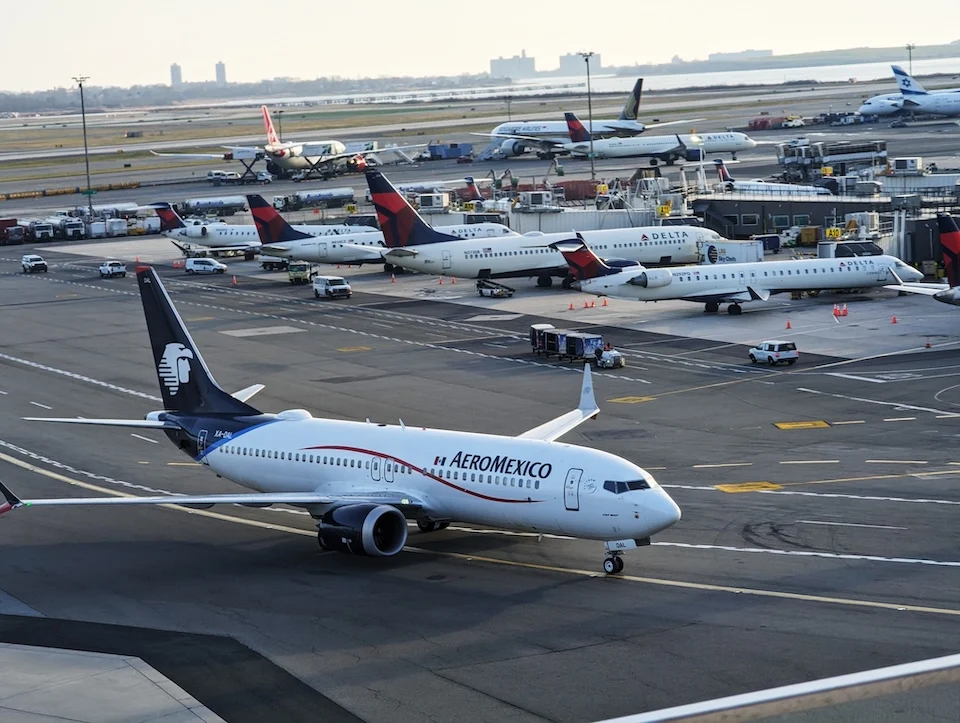
In a significant legal development that preserves one of the most consequential partnerships in North American aviation, the 11th Circuit Court of Appeals has overturned a Department of Transportation (DOT) order that sought to dissolve the long-standing joint venture (JV) between Delta Air Lines and Aeromexico. The ruling brings a reprieve to both carriers, which had been facing a mandated shutdown of their integrated operations by the start of 2025.
The court’s decision serves as a pivotal resolution to a high-stakes geopolitical standoff between Washington and Mexico City, centered on the interpretation and enforcement of the 2015 U.S.–Mexico Air Transport Agreement. For Delta and Aeromexico, the victory is more than a legal milestone; it is the preservation of a business model that has fundamentally reshaped air travel connectivity between the two nations for nearly a decade.
The Chronology of a Regulatory Standoff
The conflict did not emerge in a vacuum. It is the culmination of years of friction regarding Mexico’s domestic aviation policy and its impact on the open-skies framework established nearly ten years ago.
The Foundation: The 2015 Agreement
The U.S.–Mexico Air Transport Agreement was designed to liberalize aviation markets, allowing for unprecedented cooperation between carriers. Under this framework, Delta and Aeromexico formed a comprehensive JV, coordinating schedules, pricing, and sales. The arrangement was celebrated as a gold standard for cross-border cooperation, providing consumers with seamless connectivity and boosting tourism and business travel.
The Catalyst: The Shift to Felipe Angeles
The friction began in earnest in early 2023, when the Mexican government—under the administration of then-President Andrés Manuel López Obrador—mandated that all dedicated cargo operations move from the heavily congested Benito Juárez International Airport (MEX) to the newly constructed Felipe Ángeles International Airport (AIFA).
The U.S. government, lobbied by domestic air freight carriers, argued that this forced relocation was not only operationally inefficient but a violation of the spirit and letter of the 2015 agreement. Washington claimed the move created an uneven playing field, hindering the competitive parity that the agreement was intended to foster.
The September 2024 Ultimatum
By September 2024, the DOT had lost patience. In a formal order, the Department demanded that Delta and Aeromexico dissolve their alliance by January 1, 2025, unless Mexico took "meaningful action" to rectify its perceived non-compliance. The DOT categorized Mexico’s actions as "anti-competitive," alleging that the regulatory hurdles placed in front of U.S. carriers effectively acted as a barrier to trade, thereby granting the Delta-Aeromexico JV an unfair, state-sanctioned advantage.
The Judicial Intervention
Faced with the prospect of dismantling a decade of operational integration, the carriers sought legal redress. The 11th Circuit Court of Appeals conducted an exhaustive review of the DOT’s authority to unilaterally terminate an existing antitrust immunity grant based on external diplomatic disputes. Last week, the court ruled in favor of the airlines, finding that the DOT’s order lacked the necessary legal grounding to justify the immediate dissolution of the partnership.
Supporting Data and Economic Impact
To understand why this JV is so fiercely defended by its participants, one must look at the data. The Delta-Aeromexico partnership is not merely a commercial alliance; it is a critical piece of the North American supply chain.
Consumer Benefits and Connectivity
Since its inception, the JV has facilitated an expansion of routes that would have been commercially unviable for either carrier operating in isolation.
- Route Expansion: The partnership covers hundreds of flights weekly, connecting secondary markets in Mexico to major U.S. hubs like Atlanta, Los Angeles, and New York.
- Seamless Travel: The integration of IT systems and loyalty programs has allowed millions of passengers to experience single-ticket journeys across the border, reducing transit times and simplifying customs processes.
Economic Stakes
The economic footprint of the alliance is substantial. By coordinating capacity, the airlines have managed to maintain higher load factors, which contributes to more stable pricing for consumers. Furthermore, the partnership supports thousands of U.S.-based jobs—ranging from ground handling and maintenance to corporate management in Atlanta and across the U.S. network.
Critics of the DOT’s original order argued that dissolving the JV would have led to a "de-integration" of the market, causing a spike in airfares for cross-border travelers and potentially reducing the total volume of air traffic between the two countries, thereby harming the broader North American economy.
Official Responses: A Strategic Sigh of Relief
The reaction to the court’s ruling has been predictably polarized. The airlines view the decision as a vindication of their business model, while the DOT remains cautious about the precedent this sets for international aviation diplomacy.
Delta’s Stance
In a statement following the ruling, Delta Air Lines underscored the value of the partnership. "For nearly a decade, Delta’s joint cooperation agreement with Aeromexico has provided greater choice, more seamless travel, and increased connectivity for consumers while supporting U.S. jobs and economic growth," the company noted.
Delta’s leadership expressed appreciation for the 11th Circuit’s "careful review," emphasizing that their primary focus remains on the "customers, employees, and communities" that rely on the partnership. By focusing on the consumer benefit, Delta is attempting to pivot the conversation away from the regulatory dispute and back toward the tangible advantages of their collaboration.
The DOT’s Position
The Department of Transportation maintains that its oversight is essential to ensure that foreign governments adhere to international agreements. Even though the court overturned the order, the DOT has signaled that it will continue to monitor Mexico’s aviation policies closely. The Department’s original stance—that Mexico has engaged in "abuse" of the agreement—remains a point of contention that will likely continue to manifest in future bilateral negotiations, even if the JV itself is now safe from immediate termination.
Implications: The Future of Cross-Border Aviation
The court’s decision provides immediate stability, but it leaves several long-term questions unanswered regarding the future of the U.S.-Mexico aviation relationship.
Precedent for Regulatory Overreach
Legal analysts suggest this case serves as a significant check on the DOT’s power. By overturning the order, the 11th Circuit has essentially ruled that the DOT cannot use the threat of business dissolution as a blunt instrument to solve broader diplomatic or trade disputes with foreign nations. This may limit the government’s ability to leverage aviation JVs in future international negotiations.
The "Felipe Ángeles" Problem
The underlying issue—the shift of cargo operations to AIFA—remains unresolved. While the JV is secure, the operational challenges at Mexico City’s airports have not vanished. Carriers operating in the region must still navigate the logistical difficulties created by the split in operations between the older, centralized airport and the newer, more distant AIFA. The industry will be watching to see if the Mexican government eventually offers concessions or if the U.S. government seeks alternative methods to address the competitive disadvantage it perceives.
Long-Term Stability for Passengers
For the average traveler, the immediate implication is one of continuity. The risk of sudden service disruptions, codeshare cancellations, and loyalty program volatility has been neutralized. However, the aviation sector remains sensitive to the changing political winds in both Washington and Mexico City. As the two nations continue to navigate their complex trade relationship, the airline industry will remain a key focal point for government scrutiny.
Conclusion: A Fragile Equilibrium
The Delta-Aeromexico saga is a microcosm of the complexities inherent in global aviation. As airlines move toward deeper integration to remain competitive, they become increasingly vulnerable to the shifting priorities of national governments. The 11th Circuit’s ruling is a victory for corporate stability and the current model of international aviation cooperation, but it also highlights the persistent tension between global commercial interests and the nationalistic policies of individual states.
As the industry moves forward, the success of this JV will continue to serve as a bellwether for the health of the U.S.-Mexico aviation corridor. For now, the flights will continue, the codeshares will remain in effect, and the passengers will continue to benefit from the integrated network—a testament to the enduring power of the original 2015 agreement, despite the heavy turbulence it has encountered along the way.

 Sagoh
Sagoh
 Ali Ikhwan
 Raul Delapena Setiawan
 Reynand Wu


 Azzam Bilal Chamdy
