
 Reynand Wu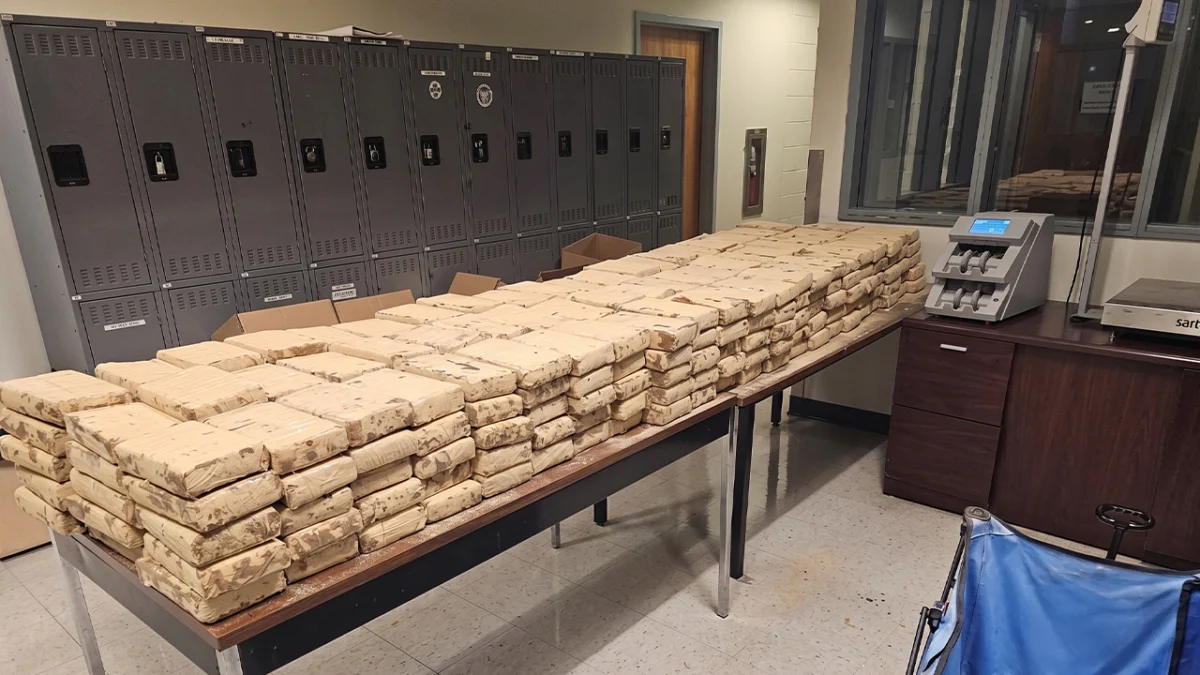
CALEXICO, Calif. — In a sophisticated smuggling operation that underscores the persistent challenges facing border security, federal authorities at the Calexico Port of Entry recently intercepted more than 1,000 pounds of cocaine hidden deep within the structural floorboards of a commercial flatbed trailer. The seizure, which federal prosecutors described as a massive volume of contraband even by the rigorous standards of the Southern District of California, represents a significant blow to narcotics trafficking networks operating through regional commercial transit channels.
The Discovery: A Routine Inspection Turns High-Stakes
The interception occurred when a lone driver, identified as 44-year-old Jose Manuel Lopez Lopez, arrived at the Calexico Port of Entry hauling a shipment originating from Mexicali, Mexico. While the truck appeared to be carrying a standard load of 269 bundles of rebar—a common construction material frequently transported across the border—Customs and Border Protection (CBP) officers flagged the vehicle for a secondary examination.
Utilizing advanced non-intrusive inspection technology, officers subjected the flatbed trailer to an X-ray scan. The images revealed clear anomalies within the trailer’s wooden flooring, suggesting that the structure had been modified to accommodate a hidden compartment. The suspicion was confirmed when a CBP drug-sniffing canine alerted officers to the presence of narcotics.
Upon manual inspection, agents unloaded the cargo of rebar and dismantled the wooden planks, revealing a meticulously constructed stash site. Hidden beneath the floorboards were 366 packages of cocaine, totaling 1,002.13 pounds (454.56 kilograms). The U.S. Attorney’s Office estimates the street value of the haul to be upwards of $20 million.
Chronology of the Investigation and Arraignment
The incident has triggered a complex federal prosecution led by the U.S. Attorney’s Office for the Southern District of California. Following the discovery of the illicit cargo, Lopez was taken into custody by federal agents.
The legal proceedings moved rapidly through the federal court system. On July 28, 2026, Lopez appeared before U.S. Magistrate Judge Lupe Rodriguez Jr. for his arraignment, where he entered a formal plea of not guilty to charges of importing cocaine into the United States. The court has scheduled a detention hearing for August 3 at 10 a.m. to determine whether the defendant will remain in custody pending trial.
The case, documented under number 26-mj-08705, is being prosecuted by Assistant U.S. Attorneys Paul Benjamin and Lawrence Casper. The investigation itself was a collaborative effort involving the California Homeland Security Task Force, U.S. Customs and Border Protection, Homeland Security Investigations (HSI), and the Drug Enforcement Administration (DEA). While the charges represent a serious legal threshold, officials have emphasized that Lopez is presumed innocent until proven guilty in a court of law.
Supporting Data: A Year of High-Volume Interdictions
This $20 million bust stands as the second-largest cocaine seizure within the Southern District of California for 2026, highlighting an alarming trend in the scale of smuggling attempts. The district has faced a particularly intense year of enforcement, marked by the discovery of high-tech, multi-million-dollar infrastructure used by cartels to bypass traditional border security.
Earlier this year, in May, authorities uncovered a massive cross-border tunnel that had been operating with startling sophistication. That investigation, which began as a months-long task force inquiry into a retail storefront near Otay Mesa, led to the discovery of a 1,933-foot tunnel connecting Tijuana, Mexico, to the United States.
The engineering behind the May tunnel was unprecedented. Extending 55 feet deep, the structure included reinforced walls, electrical lighting, a sophisticated ventilation system, and even rail lines to transport goods. The exit was concealed beneath a storage-room floor at a business known as "Buy 4 Less," accessible only via a hidden hydraulic lift. That operation resulted in the seizure of 1,029.60 kilograms (2,269.87 pounds) of cocaine, with an estimated market value exceeding $45 million. The contrast between the two methods—the use of modified commercial transport versus subterranean tunnels—demonstrates the "cat-and-mouse" nature of modern border enforcement.

Official Responses and Legal Implications
The scale of these seizures has prompted a stern response from the federal government. The charges filed against Lopez fall under Title 21 of the U.S. Code, Sections 952 and 960, which govern the importation of controlled substances. Given the weight of the narcotics, the charges carry a mandatory minimum sentence of 10 years in federal prison, with a maximum penalty of life imprisonment.
"This is a tremendous amount of drugs, even by the standards of this district," noted representatives from the U.S. Attorney’s Office. The message from law enforcement is clear: the integration of advanced technology, such as X-ray scanning and specialized canine units, is becoming the primary barrier against the movement of high-value contraband.
The involvement of the California Homeland Security Task Force in this case, specifically through the "Operation Take Back America" initiative, reflects a broader strategic pivot toward cross-agency collaboration. By pooling resources from the DEA, HSI, and CBP, federal authorities are attempting to disrupt the supply chains of transnational criminal organizations that leverage legitimate trade infrastructure for illegal gain.
Implications for the Freight Industry
For the logistics and freight industry, this incident serves as a stark reminder of the risks associated with cross-border supply chains. Criminal organizations have increasingly turned toward "chameleon" tactics, utilizing legitimate commercial equipment and routine shipments to mask high-value illicit cargo.
The use of flatbed trailers with modified flooring is a recurring tactic that places the burden of security on transport professionals. For carriers, the implications are profound: a single load of construction material can become a life-altering legal liability if that equipment has been compromised by traffickers.
Why Vigilance is Paramount
Freight professionals and fleet managers are being encouraged to exercise extreme caution when accepting cargo from high-risk zones or utilizing trailers that have been left unattended. Key takeaways for the industry include:
- Structural Integrity Checks: Drivers and dispatchers should be mindful of "anomalies" in equipment weight or structural appearance. Modifications to flooring or hidden compartments are often identifiable if the equipment is regularly audited.
- Chain of Custody: The use of tamper-evident seals and strict documentation is essential to ensure that no unauthorized modifications are made to a vehicle after it has been cleared for transit.
- Risk Mitigation: Understanding the regulatory landscape—including FMCSA rules and insurance gaps—is vital. Organizations like those hosting the upcoming Brokerage Compliance Symposium are working to provide best practices to navigate these dangers, emphasizing that the "routine" nature of a shipment is no longer a guarantee of its safety.
As the industry looks toward future innovations in supply chain visibility, the fight against narcotics trafficking remains a central component of freight security. The Calexico seizure is not merely a legal case; it is a signal to the entire transportation sector that the integrity of the supply chain is under constant pressure. As federal agencies continue to refine their detection capabilities, the responsibility of the private sector to maintain rigorous compliance and security standards has never been more critical.
Looking Ahead
The upcoming months will likely see increased scrutiny at ports of entry as federal task forces continue to analyze the methods used in both the Calexico flatbed seizure and the earlier tunnel discovery. For those in the freight sector, attending industry events—such as the upcoming Future of Freight Festival in Chattanooga—will provide opportunities to discuss these evolving threats with legal experts and industry leaders.
As the legal proceedings against Jose Manuel Lopez Lopez unfold, the industry remains focused on the intersection of security and efficiency, striving to ensure that the global movement of goods is not hampered by the criminal elements attempting to exploit it. With the mandatory minimums and the heavy weight of the evidence, this case is expected to remain a significant point of discussion regarding the vulnerabilities of cross-border freight for the foreseeable future.


 Iffa Jayyana

 Ammar Sabilarrohman
 Suro Senen
 Jia Lissa
 Evan Lee Salim

 Ali Ikhwan