
 Nana Wu
In the modern corporate landscape, supply chain management has become a playground for "experts" who are perpetually captivated by the next great technological breakthrough. From the buzz surrounding autonomous supply chains to the high-stakes promises of agentic AI, the industry is currently fixated on a digital horizon. However, there is a sobering reality that contradicts this optimism: despite massive investments in new technology, global multinationals are failing to scale performance and are consistently missing out on the promise of economies of scale.
The culprit is not a lack of sophisticated algorithms; it is a fundamental neglect of the core mechanics that govern movement, inventory, and predictability. Before businesses can hope to leverage the power of Artificial Intelligence, they must first master the art of fundamental supply chain discipline.
The Dance With Shiny Objects: A Distraction from Reality
The current industry trend is to "AI-enable" existing, flawed architectures. This approach—what some call "AI Stupid"—involves layering autonomous agents on top of outdated, legacy systems, naively believing that speed and automation will solve deeper systemic issues. In truth, this is "fools’ play." Automating a broken process only succeeds in breaking things faster.
The industry would do well to remember the wisdom often attributed to Henry Ford, though better articulated by modern design thinkers: users rarely articulate the specific technical solution they need, but they are intimately aware of the problem. Innovation does not stem from asking users what to build; it comes from deeply empathizing with their day-to-day struggle. If your supply chain is riddled with "black holes"—those areas where data goes to die or where systems fail to communicate—adding AI to the mix is merely masking the symptoms rather than curing the disease.

The Three Pillars of Supply Chain Recovery
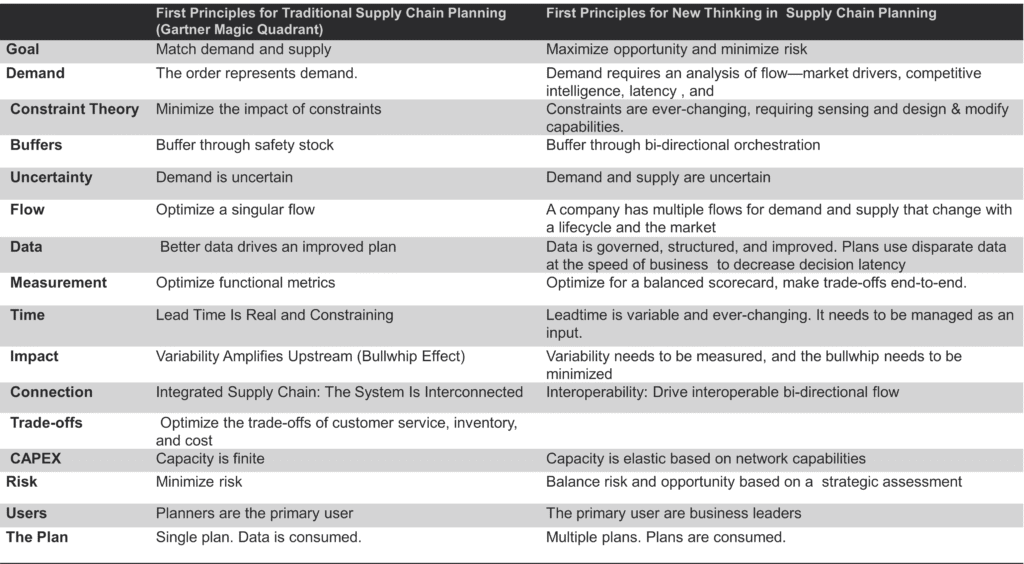
To move beyond the cycle of hype and start driving genuine value, supply chain leaders must refocus on three foundational pillars: first-principle thinking, data structural integrity, and the rigorous management of lead time.
1. Aligning on First-Principle Thinking
First-principle thinking requires leaders to strip away the industry jargon and ask: What are we actually trying to do? Often, organizations find that their internal processes are a patchwork of legacy habits that no longer serve the business model. By comparing what the organization needs to achieve (the objective) against how it is currently achieving it (the process), leaders can identify the "delta of inefficiency." Only once this clarity is achieved should a discussion with technologists begin. This ensures that IT investments are directed toward solving business problems, not just chasing the latest vendor trends.
2. Redefining the Relationship with Data
Traditional supply chain processes suffer from inherent data latency—the gap between when an event occurs and when that event is reflected in the planning system. This latency is a silent killer of efficiency. To reach a "market-driven" state, companies must move away from static, siloed spreadsheets and toward a unified data model. This involves taking a cold, hard inventory of current data structures and identifying where they can be restructured to provide real-time relevance. Without a clean, master data layer, even the most advanced AI models will suffer from "garbage in, garbage out" syndrome.
3. Embracing the Discipline of Lead Time
Lead time is the "gossamer thread" of the supply chain—the fine, often invisible connection that links procurement, manufacturing, inventory management, and customer delivery. When this thread breaks, the result is "supply chain entropy": the accumulation of uncertainty and disorder.
Unlike the well-known "Bullwhip Effect," which describes how demand distortion amplifies through the chain, entropy is a broader measure of systemic disorder. It is the natural tendency of an unmanaged supply chain to descend into chaos. By failing to maintain accurate, dynamic lead times, organizations invite this entropy into their systems, leading to bloated inventory and unreliable customer service.
Chronology of the Decline: Why Traditional Metrics Failed
For fifty years, supply chain management operated under a set of assumptions that worked in a stable, predictable, and linear global economy. The chronology of the current crisis can be traced back to the mid-2000s, when supply chains began to expand in complexity while simultaneously relying on increasingly fragile "average-based" planning systems.
- 1990s-2000s: The rise of Lean and Just-in-Time (JIT) manufacturing optimized supply chains for cost, but at the expense of buffer capacity.
- 2010s: Increased outsourcing and globalization created "black holes" in visibility. During this time, firms relied on static lead times, assuming suppliers would always perform according to contract.
- 2020-Present: Post-pandemic volatility exposed the fragility of these systems. The reliance on "average" lead times has been rendered obsolete by systemic variability, yet most organizations continue to use these outdated parameters in their planning software.
Supporting Data: The Entropy Problem
To quantify the impact of this disorder, one must look at the math. Aggregate lead time is a composite metric representing the sum of all cycles: order, replenishment, manufacturing, procurement, and logistics. When this value is treated as a "set-it-and-forget-it" figure, the business is operating on a fantasy.
The Mathematics of Disorder
Supply chain professionals often ignore the variance in their lead times, focusing only on the mean. However, in a volatile environment, the variance is more important than the average. The formula for calculating safety stock, while varied in its implementation, requires factoring in both demand and supplier performance variability:

Safety Stock = Z × √[(LT × σd²) + (D² × σLT²)]
Where LT is the lead time, σd is demand variability, and σLT is the variability of lead time. If the variables are not updated based on actual performance data, the safety stock calculation becomes meaningless, leading to either excessive inventory costs or frequent stockouts.
Official Industry Response: The Pivot to Resilience
In recent high-level forums and industry summits, the consensus has shifted toward "resilience" and "risk management." However, these are often just marketing terms for "let’s buy more inventory." True resilience is not about hoarding stock; it is about reducing entropy.
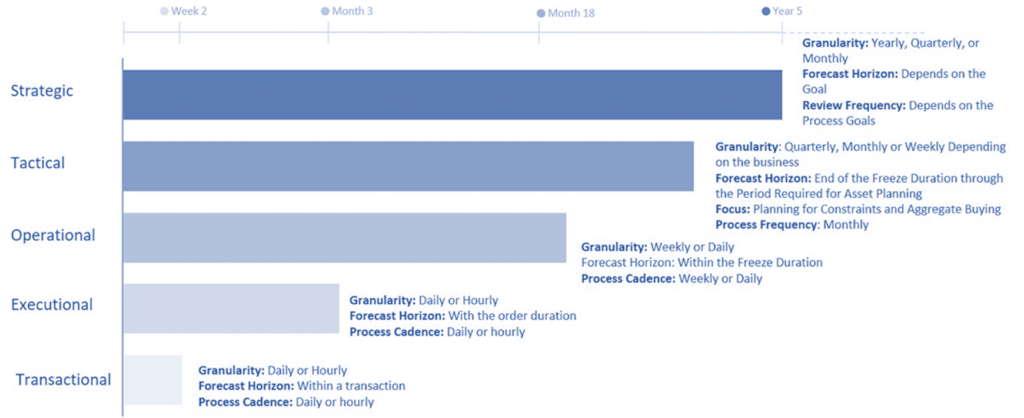
Leading organizations that are successfully scaling are doing so by replacing static averages with probabilistic engines. By using mathematical models to calculate the probability of lead times rather than relying on a single, fixed number, these firms can navigate variability with greater accuracy. This requires a shift in culture—moving away from the comfort of "constant" planning to the agility of "probabilistic" planning.
Implications: A Call to Action for the C-Suite
The implications of ignoring these fundamentals are severe. Companies that continue to "AI-enable" their entropy will find that they have simply accelerated their own inefficiency. The financial cost is measurable in lost margin, excess working capital, and damaged customer trust.
Moving Forward
To rectify this, leadership teams must:
- Conduct an Aggregate Lead Time Discovery: Map the current "system value" of your lead times against the "actuals" seen on the shop floor or in logistics records. The discrepancy will likely be shocking.
- Monetize Entropy: Use the formulas provided for Supply Chain Entropy (SE) and the Coefficient of Variation (CV) to calculate the cost of disorder. When this is presented to a CFO or COO as a dollar-value impact on the P&L, it shifts the conversation from "tech investment" to "profit protection."
- Invest in Data Architecture: Before purchasing the latest "agentic" software, ensure your underlying data model supports real-time, cross-functional visibility.
Conclusion
The allure of the "shiny object" is powerful. It is much easier to pontificate on the future of autonomous systems than it is to do the hard work of cleaning up master data and aligning lead time parameters with reality. Yet, the history of supply chain management is clear: technology only amplifies the underlying logic of the system it serves.
If your system is built on flawed foundations and high entropy, more technology will only increase your complexity. If you want to scale, if you want to drive value, and if you want to truly leverage the power of AI, start by fixing the basics. Stop dancing with the shiny objects, leave your assumptions at the door, and embrace the discipline of first principles. Your supply chain, and your bottom line, will thank you.


 Iffa Jayyana

 Ammar Sabilarrohman
 Suro Senen
 Jia Lissa
 Evan Lee Salim

 Ali Ikhwan