
 Basiran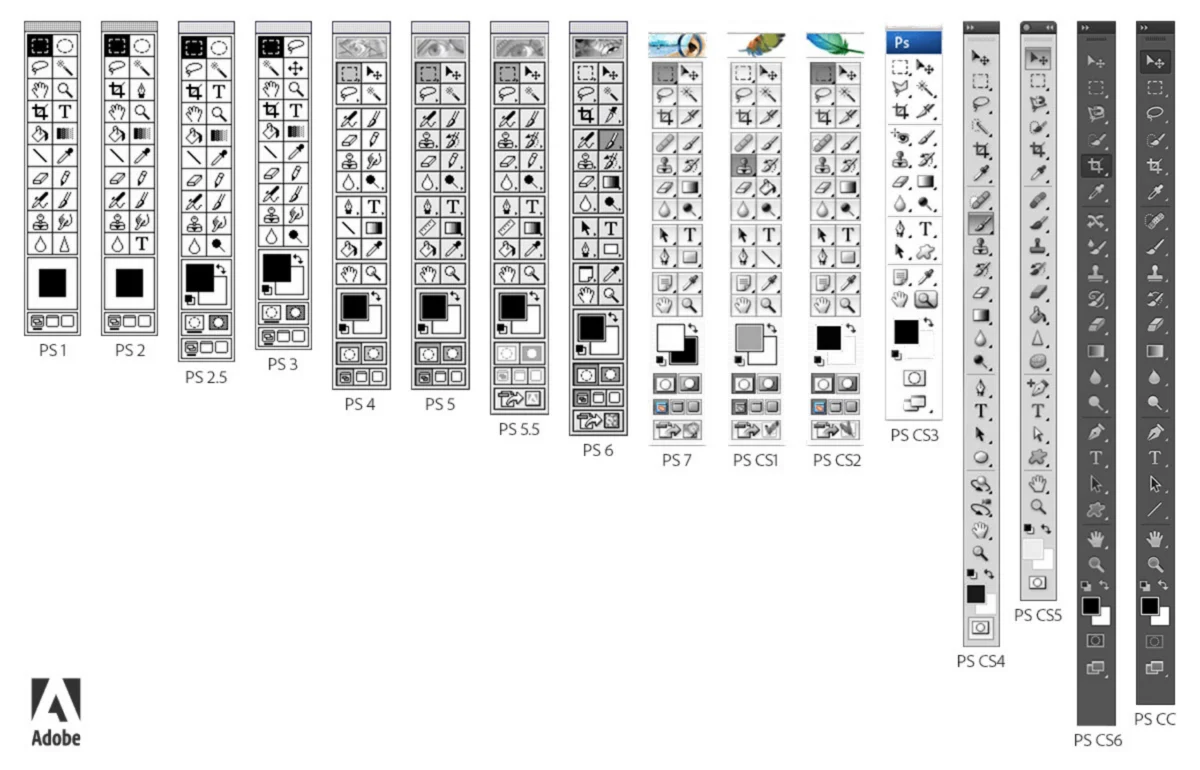
For over three decades, the digital creative landscape has been defined by a singular, rigid paradigm: the pixel. From the earliest iterations of Adobe Photoshop to the sophisticated layer-based workflows of modern creative suites, digital art has been a process of manipulating raw, unsemantic color data on a flat canvas. However, a tectonic shift is underway. The transition from "canvas-centric" editing to "object-centric" architecture is no longer a theoretical exercise confined to research labs; with the emergence of new layout-based models, such as those pioneered by Reve, the industry is witnessing the most significant evolution in image creation since the invention of the bitmap.
The Tyranny of the Pixel: A Historical Context
To understand the magnitude of this shift, one must first recognize the inherent limitations of the legacy tools that currently dominate the creative industry. Photoshop, utilized by an estimated 90% of creative professionals, was born in an era where computational power and semantic AI were non-existent. In this environment, an image is nothing more than a grid of colored dots.
When a user opens a JPEG in a traditional editor, the software has no intrinsic understanding of what the image contains. It does not "see" a cat, a car, or a sunset; it sees a collection of hexadecimal values. Consequently, the tools provided to the user—the lasso, the brush, the clone stamp—are designed to manipulate these raw pixels. If a designer wants to change the color of a car, they must manually select the pixels, mask the edges, and adjust the hue, often risking the destruction of shadows and reflections in the process.
This "canvas-centric" approach is inherently destructive. It requires the human to act as the interpreter of the image’s meaning, while the software acts as a dumb engine for pixel displacement. This paradigm has reached its limit, and the creative community is increasingly frustrated by the lack of nuance and the high labor intensity required for simple modifications.
Chronology of the Shift: From Research to Reality
The journey toward object-centric editing began in the early 2010s, initially manifesting as rudimentary object-detection algorithms.
- 2015–2018 (The Emergence of Semantic Segmentation): Research projects began demonstrating that neural networks could classify objects within images. While these tools were initially used for metadata tagging, they laid the foundation for "addressable" objects.
- 2020–2022 (The Diffusion Explosion): The arrival of text-to-image models like DALL-E and Midjourney brought the power of generative AI to the masses. However, these models were "black boxes"—users provided text, and the model spat out a finished image. Users had zero control over individual elements within the composition.
- 2022–2023 (The Theoretical Pivot): Industry thinkers, including Luke Wroblewski, began articulating the necessity of a shift toward object-centric interfaces. The argument was clear: generative AI would only become a professional tool when it stopped treating images as prose and started treating them as data structures.
- 2024–Present (The Layout Model Era): The launch of Reve’s layout-based architecture marks the maturation of this theory. By moving away from raw pixel generation, the industry is finally creating models that understand the "DNA" of an image.
Supporting Data: Why Layouts Outperform Prose
The primary failure of modern generative models is their reliance on language as an internal representation. These models use Large Language Models (LLMs) to expand a user’s prompt into a lengthy, descriptive paragraph, which a diffusion model then renders into pixels.
The Problem with Prose
Language is inherently ambiguous. If you prompt an AI to "create a living room with a blue chair," the model might place the chair in the corner, the center, or hidden behind a table. If you decide you want the chair moved two feet to the left, the diffusion model often regenerates the entire scene, fundamentally changing the lighting, the texture of the carpet, and the perspective of the room. This lack of consistency makes prose-based models unsuitable for professional workflows.
The Power of the Layout Model
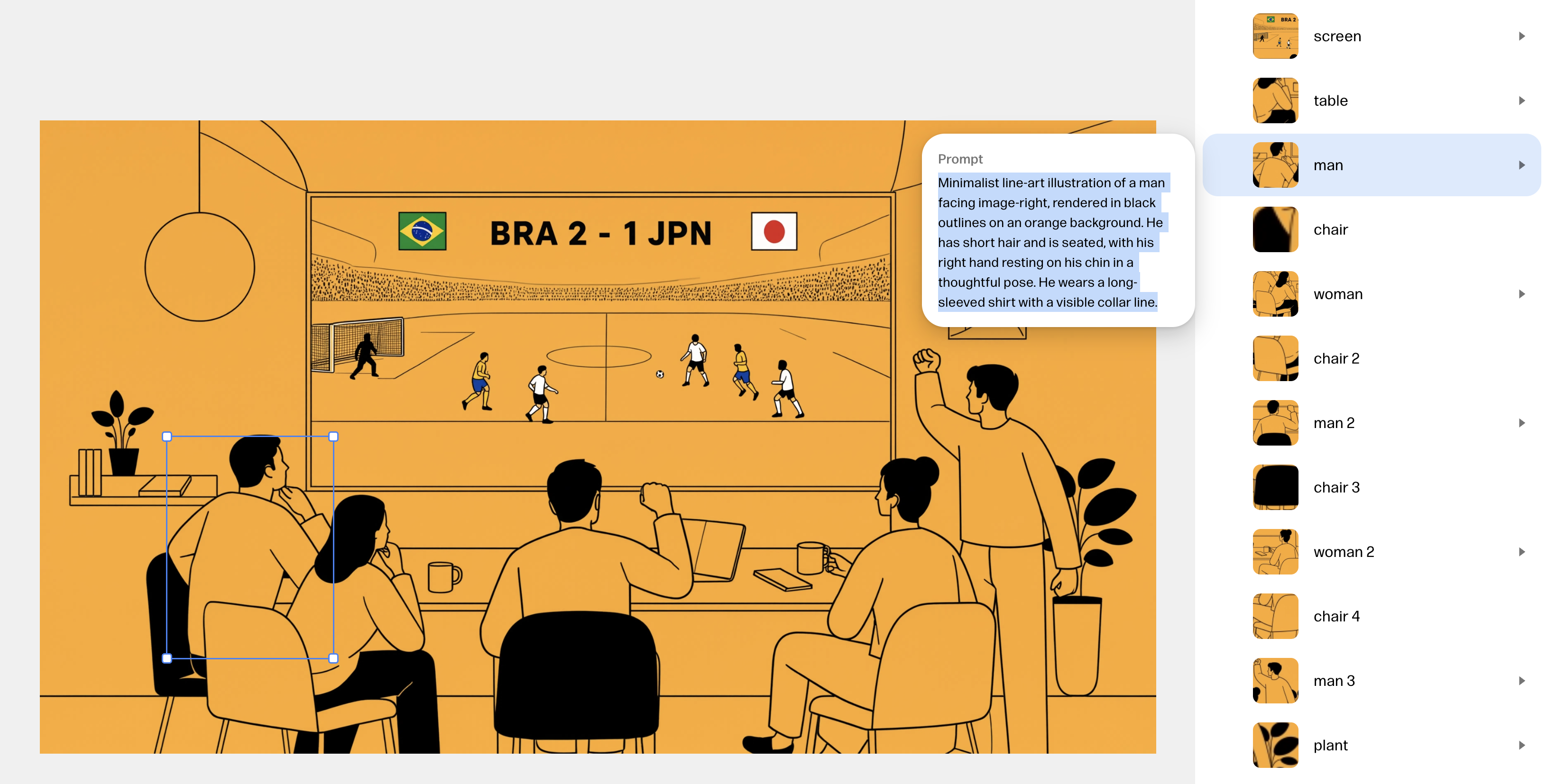
Reve’s approach is fundamentally different. Instead of treating an image as a translation of text, it treats an image as a layout. A layout is a structured, hierarchical data format—similar to HTML for a webpage—that defines every element in the frame. Each object has:
- Coordinate data: Precise X, Y, and Z positioning.
- Attribute data: Color, scale, rotation, and texture.
- Semantic tags: "Chair," "Window," "Cat," "Reflection."
By grounding the model in a layout, the system creates a "source of truth." If a designer wants to move the cat in an image, they aren’t asking the AI to re-imagine the world; they are simply updating a coordinate in a JSON-like structure. The model then re-renders the pixels based on this fixed, logical blueprint.
Official Responses and Industry Implications
The implications for professional creative workflows are profound. We are moving toward a future where "editing" a photo will look more like coding a website than painting on a canvas.
The "Coherence" Advantage
One of the most significant hurdles in AI-generated imagery has been the loss of physical coherence. When elements are generated separately, shadows often fall in the wrong direction, and reflections don’t match the source object. Because layout models understand the relational hierarchy of the scene, they can maintain physical consistency. If you change the position of a light source in the layout, the model automatically updates the shadows and reflections of every object in the frame, maintaining perspective and logical integrity.
Human-Machine Collaboration
Because the layout format is readable and structured, it becomes a shared interface between the human designer and the AI agent. This creates a "symbiotic design" environment. An agent can "read" the layout to suggest composition improvements, while the designer can "write" to the layout to enforce specific aesthetic choices.
"This is not about replacing the designer," says a lead architect at Reve. "It is about shifting the designer’s role from a pixel-pusher to an architect of compositions. You are no longer worrying about where a shadow lands; you are defining the intent of the space, and the model handles the physics."
Future Implications: The End of Static Media
As we look toward the next five years, the transition to object-centric models suggests that the very definition of an "image" is about to change.
From Image to "Scene"
In the near future, we will likely stop saving files as flat bitmaps (PNGs or JPEGs). Instead, we will save them as "Scene Files." A scene file contains the layout and the assets, allowing a viewer—or another AI—to manipulate the perspective, lighting, or content of the image long after it has been created.
Impact on the Creative Economy
For industries like interior design, advertising, and e-commerce, this is transformative. An interior designer can generate a room, share it with a client, and the client can drag and drop furniture in real-time, with the AI instantly updating the lighting to match the new arrangement. In advertising, a single "master" layout could be rendered into thousands of variations for different geographic markets, simply by swapping the background or the product placement while keeping the structural layout intact.
The Democratization of Professionalism
The technical barrier to high-quality design is collapsing. By removing the need for mastery over complex pixel-manipulation tools, layout models lower the floor for entry while raising the ceiling for complexity. A novice can now achieve results that previously required hours of professional training, provided they understand the logic of the layout.
Conclusion
The transition to object-centric editing is not merely a software update; it is a fundamental shift in how we interact with digital space. For decades, we have been constrained by the limitations of the pixel, forcing us to work in a way that is disconnected from the reality of the objects we are depicting.
By adopting layout models, the creative industry is finally aligning its tools with its intent. We are entering an era where the image is no longer a static relic of a moment in time, but a dynamic, intelligent, and addressable entity. The canvas is dead; long live the layout.

 Lina Irawan
 Pevita Pearce
 Ammar Sabilarrohman
 Suro Senen
 Jia Lissa
 Evan Lee Salim

 Ali Ikhwan