
 Evan Lee Salim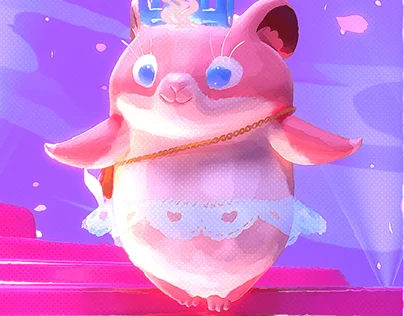
In the rapidly evolving landscape of digital art, where the boundaries between hyper-realism and stylized whimsy continue to blur, a new creative landmark has emerged. Titled Gacha Explorers!, this ambitious 3D animation project by the artist known as "King ._. goo" has captured the attention of the global design community. Debuting on the Adobe-owned platform Behance on May 12, 2026, the project serves as a masterclass in world-building, character design, and the technical application of modern animation software.
By merging the tactile, nostalgic charm of Japanese capsule toy culture with advanced 3D motion techniques, Gacha Explorers! does more than tell a simple story—it provides a window into the potential for independent creators to produce cinematic-quality content that rivals traditional studio outputs.
The Genesis of the Capsule Maze: Main Facts
At its core, Gacha Explorers! is a narrative-driven 3D animation centered on two protagonists: a diminutive mouse and a pink, princess-like hamster. These characters find themselves navigating a gargantuan gacha shop—a labyrinthine retail space defined by towering, color-saturated capsule machines.
The project is the brainchild of King ._. goo, who utilized a robust suite of industry-standard tools to bring this miniature universe to life. The production utilized Blender 3D for the primary modeling and environment architecture, Adobe After Effects for motion graphics and post-production compositing, and Adobe Photoshop and Illustrator for the meticulous texture work that gives the capsule toys their signature "plastic" sheen.
The narrative arc—while concise—is high-stakes for its tiny inhabitants. The explorers lose themselves in the endless, vibrant maze of vending machines, only to stumble upon a mysterious, ominous red machine sequestered in the very center of the shop. This discovery serves as the inciting incident, promising an expanded universe that speaks to the "collectible creature culture" currently dominating the toy and digital art markets.

A Chronological Breakdown: From Concept to Release
The development of Gacha Explorers! was a calculated exercise in digital production management. While the project officially dropped in mid-May 2026, its development cycle spanned several months of iterative design.
- Pre-Production (Q4 2025 – Q1 2026): The artist focused on character silhouettes. The juxtaposition between the humble, neutral-toned mouse and the regal, vibrant hamster was designed to create an immediate visual contrast. During this time, the "miniature world" aesthetic was finalized, ensuring the scale of the environments felt oppressive and vast compared to the characters.
- Modeling and Rigging (February 2026 – March 2026): Utilizing Blender, the artist developed the assets for the gacha machines. To create the "endless" effect, modular assets were created, allowing for procedural layout adjustments within the scene.
- Animation and Lighting (April 2026): The focus shifted to character performance. To ensure the "cute" aesthetic was maintained, the movement was heavily stylized with expressive squash-and-stretch techniques. Lighting was kept high-key, mimicking the bright, inviting, and somewhat artificial environment of a retail toy store.
- Launch (May 12, 2026): The project was uploaded to Behance, accompanied by a comprehensive breakdown of the creative process and technical specifications. It quickly gained traction, securing a "Best of Behance" recognition, a testament to its technical polish and thematic appeal.
Technical Specifications and Supporting Data
For aspiring animators and 3D generalists, the technical backbone of Gacha Explorers! is as compelling as the final visual output. The project relies on a multi-software workflow that highlights the interoperability of the modern Adobe-centric design ecosystem.
The Toolset
- Blender 3D: Used for the foundational geometry. The "towering" look of the machines was achieved through deliberate camera angles (low-angle shots) and a sophisticated use of depth-of-field, which reinforces the diminutive scale of the characters.
- Adobe After Effects: Crucial for the final "pop." The integration of lens flares, color grading, and motion blur helps bridge the gap between the 3D rendering and the final cinematic look.
- Asset Density: The scene features hundreds of individual capsule toys, each rendered with unique specular highlights. This level of detail is a significant undertaking, requiring optimized render settings to balance visual density with frame-rate performance.
Design Philosophy
The aesthetic choice to pursue "cute" character design is not merely a stylistic preference; it is a strategic decision. Research into contemporary digital art trends shows that audiences are currently gravitating toward "cozy" and "collectible" aesthetics. By tapping into the "Gacha" culture—where the thrill of the unknown is central—the project bridges the gap between digital animation and the physical hobby of toy collecting.
Official Perspectives and Industry Reception
While the artist, King ._. goo, maintains a focus on the creative journey, the industry reaction has been overwhelmingly positive. Within the Behance community, the project has been lauded for its "miniature worldbuilding."
Critics and fellow designers have highlighted the project’s effective use of cinematic storytelling. Rather than relying on dialogue, the animation conveys the characters’ curiosity and eventual apprehension through body language and environmental interaction. This "show, don’t tell" approach is considered the gold standard for independent, short-form 3D animation.

"The way the light interacts with the plastic surfaces of the gacha machines creates a sense of nostalgia that is almost tactile," remarked one design observer on the Behance platform. "It’s a perfect synthesis of technical skill and emotional resonance."
Implications: The Future of Independent 3D Animation
The success of Gacha Explorers! carries significant implications for the future of the medium.
The Rise of the Solo Studio
Projects like this illustrate that the barrier to entry for high-quality 3D animation has lowered significantly. The availability of powerful, open-source tools like Blender, combined with the integration power of the Adobe Creative Cloud, allows a single creator to perform roles that once required an entire studio department—modeling, rigging, lighting, and compositing.
Narrative Expansion and Intellectual Property
The "mysterious red machine" at the heart of the story suggests that this project is not a standalone piece but a pilot for a larger narrative universe. In the digital age, this is a common strategy: build a world, test the aesthetic with an audience, and then expand the IP. The "Gacha" theme is particularly lucrative, as it allows for the introduction of new "collectible" characters, which could potentially be expanded into merchandising or serialized web content.
The Evolution of Stylized Animation
Gacha Explorers! contributes to the ongoing shift away from the "uncanny valley" of hyper-realism. By leaning into a stylized, cartoonish aesthetic, the project avoids the technical pitfalls of attempting to replicate human realism, instead opting for a design language that is timeless, expressive, and highly brandable.

Conclusion: A New Standard for Digital Storytelling
As we look toward the latter half of the 2020s, the digital landscape will likely be populated by more projects that mirror the ambition of Gacha Explorers!. It serves as a reminder that animation is not just about the technical prowess of the software, but about the ability to create a world that invites the viewer to step inside—even if that world is the size of a capsule toy.
For King ._. goo, the journey has only just begun. The mystery of the red machine remains unresolved, and the audience, having been introduced to this vibrant, miniature world, is left waiting for the next installment. In the meantime, Gacha Explorers! stands as a beacon for what is possible when creative vision, technical discipline, and a deep understanding of contemporary culture converge in a single, perfectly rendered frame.
Whether or not the project expands into a full series, its impact on the Behance community and the wider digital art sphere is clear: it has elevated the standard for independent animation, proving that with enough imagination, even the smallest characters can embark on the grandest of adventures.

 Sagoh
Sagoh
 Asep Darmawan
 Raul Delapena Setiawan
 Reynand Wu


 Azzam Bilal Chamdy
 Ali Ikhwan