
 Ammar Sabilarrohman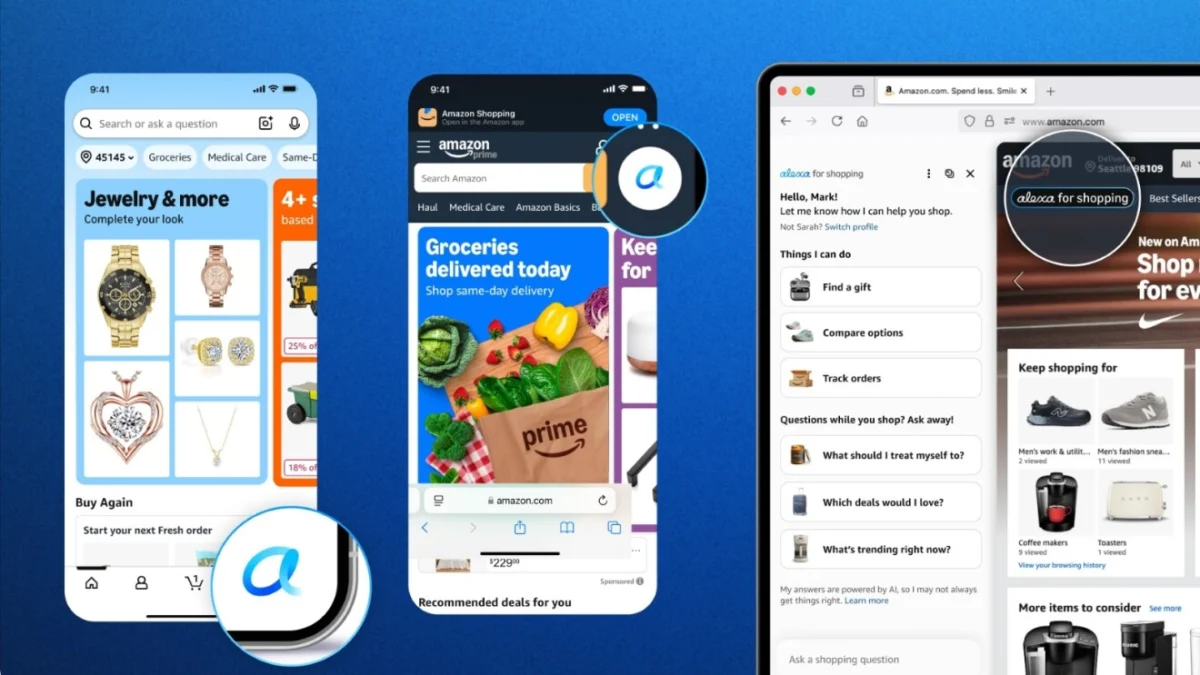
In a significant pivot of its artificial intelligence strategy, Amazon has announced that it is sunsetting "Rufus," its experimental, standalone generative AI shopping assistant. In its place, the e-commerce giant is rolling out "Alexa for Shopping," a sophisticated, agentic AI experience that embeds the capabilities of Rufus directly into the foundational infrastructure of Amazon’s digital storefront.
This transition marks a departure from the "chatbot-in-a-corner" approach that characterized the early generative AI boom, moving instead toward a more integrated, seamless user experience. By leveraging the brand recognition and technical architecture of Alexa, Amazon aims to transform its platform from a passive search engine into an active, intelligent shopping concierge.
The Evolution of Amazon’s AI: A Chronology
To understand the current shift, one must look at the rapid evolution of Amazon’s generative AI initiatives over the past two years.
The Rise of Rufus (Early 2024)
In February 2024, Amazon introduced Rufus, a generative AI-powered shopping assistant trained on the company’s extensive product catalog, customer reviews, and broader web information. Rufus was designed to answer complex queries, such as "What is the best hiking gear for a beginner?" or "Compare these two coffee makers." At the time, it was positioned as a standalone chatbot, typically accessed via a small icon in the corner of the Amazon mobile app.
The Integration Phase (Late 2024)
Throughout the latter half of 2024, Amazon began testing how generative AI could move beyond simple Q&A. The focus shifted toward "agentic" capabilities—the ability for an AI to take action on behalf of a user rather than just providing information. During this period, the internal teams working on Rufus and the teams managing the legacy Alexa voice assistant began to merge their technological roadmaps.
The Transition (Current)
With the launch of "Alexa for Shopping," Amazon is officially retiring the Rufus brand. The functionality is no longer confined to a sidebar or a pop-up window; it is now woven directly into the search bar, which serves as the primary gateway for millions of shoppers daily. This represents a strategic consolidation of Amazon’s AI identity under the Alexa banner.
Functionality and User Experience: What’s Changing?
The integration of Alexa for Shopping into the search bar changes the fundamental nature of the Amazon shopping journey.
From Search to Conversation
Historically, an Amazon search was a keyword-based exercise. If a customer searched for "running shoes," they were presented with a list of products. With Alexa for Shopping, the search bar now understands intent. A user can type, "I need shoes for a marathon in the rain," and the AI will analyze the query, consult product specifications, cross-reference customer reviews, and suggest specific models that meet those criteria.
Agentic Capabilities
The shift to an "agentic" model is the most critical technical advancement. Alexa for Shopping does not merely suggest products; it can:
- Automate Routine Purchases: By analyzing historical order data, the assistant can proactively suggest reorders for consumable goods before a customer runs out.
- Create Shopping Guides: The AI can generate comparative guides based on current inventory, helping users filter by price, rating, or specific features.
- Price Tracking: Alexa for Shopping provides access to a product’s price history for up to a year, empowering users to make informed decisions about whether to buy now or wait for a price drop.
Accessibility
Notably, Amazon has removed the barrier to entry for this service. Users do not need an Amazon Prime membership to access Alexa for Shopping. By democratizing this high-end AI experience, Amazon is betting that the utility of the assistant will drive higher conversion rates and increased time-on-site for all customers, not just the premium subscriber base.
Supporting Data and Market Context
Amazon’s move comes at a time of intense competition in the retail AI space. According to recent industry data, e-commerce giants are spending billions to ensure their platforms don’t become obsolete in the era of ChatGPT and Perplexity.
- Conversion Optimization: Internal tests by retail analysts suggest that conversational commerce can increase conversion rates by as much as 15% compared to traditional search. By shortening the path from product discovery to checkout, Amazon is directly addressing the "decision fatigue" that often leads to abandoned carts.
- Search Bar Dominance: The search bar remains the most valuable real estate on any e-commerce site. Moving the AI intelligence from a secondary chatbot to the primary search interface increases the "exposure rate" of the tool from roughly 5% of users (those who click on a chatbot) to nearly 100% of search traffic.
- Customer Retention: By utilizing personalized shopping histories, Alexa for Shopping creates a "sticky" ecosystem. When an AI assistant knows that a customer prefers sustainable products or has a specific budget constraint, the switching cost to move to a competitor like Walmart or Target increases significantly.
Official Responses and Strategic Rationale
Amazon’s leadership has emphasized that this move is about clarity and utility rather than a failure of the Rufus experiment.
"We are constantly iterating on how we deliver value to our customers," an Amazon spokesperson noted in a recent briefing. "By integrating the intelligence of our generative AI efforts into the existing Alexa infrastructure, we are creating a more cohesive and intuitive experience. Alexa for Shopping isn’t just a chatbot; it is a personalized shopping partner that understands the context of your lifestyle and your history with our platform."
Industry observers note that "Rufus" was always viewed as a codename or a project-based identity. By pivoting to "Alexa," Amazon is leaning on a brand that has been a household name for over a decade. This reduces the cognitive load on the consumer, who already understands what "Alexa" represents: help, convenience, and automation.
Strategic Implications for the Future of Retail
The implications of this shift are profound for both the retail industry and digital marketing professionals.
The Death of the Traditional SEO Funnel?
If AI assistants are increasingly providing the "correct" answer directly in the search bar, the traditional model of SEO—where brands compete for top-of-page rankings through keywords—may be facing a crisis. Brands will need to optimize their product content not just for search algorithms, but for the large language models (LLMs) that power Alexa for Shopping. This means high-quality, descriptive data and a strong brand reputation in customer reviews will become the primary drivers of visibility.
The Rise of Conversational Loyalty
The ability of Alexa for Shopping to suggest reorders and track price history suggests that Amazon is moving toward a "zero-click" future. If the AI becomes sufficiently trusted, the consumer may stop searching altogether, instead relying on the AI to manage their household replenishment. This shifts the power dynamic from the consumer searching for a product to the AI curating the consumer’s lifestyle.
Competitive Pressure
Amazon’s move places immediate pressure on other retailers. Platforms that rely on traditional search and filter interfaces will look increasingly dated compared to the conversational, agentic nature of Amazon’s new offering. We can expect a wave of investment in proprietary AI assistants across the retail sector as companies scramble to keep pace with the "Alexa-fication" of the shopping experience.
Conclusion: A New Chapter for Amazon
The retirement of Rufus is not an admission of defeat; it is the natural maturation of Amazon’s AI strategy. By folding the specialized knowledge of Rufus into the ubiquitous Alexa brand, Amazon is signaling that it is ready to move beyond the experimental phase of generative AI.
As the retail landscape continues to be reshaped by AI, the winners will be those who can provide the most helpful, accurate, and frictionless shopping experiences. With the launch of Alexa for Shopping, Amazon has clearly set its sights on becoming the ultimate, automated interface for global consumption. The era of the chatbot is fading; the era of the shopping agent has arrived.


 Sagoh
Sagoh
 Raul Delapena Setiawan
 Reynand Wu


 Azzam Bilal Chamdy
 Ali Ikhwan