
 Asro
Asro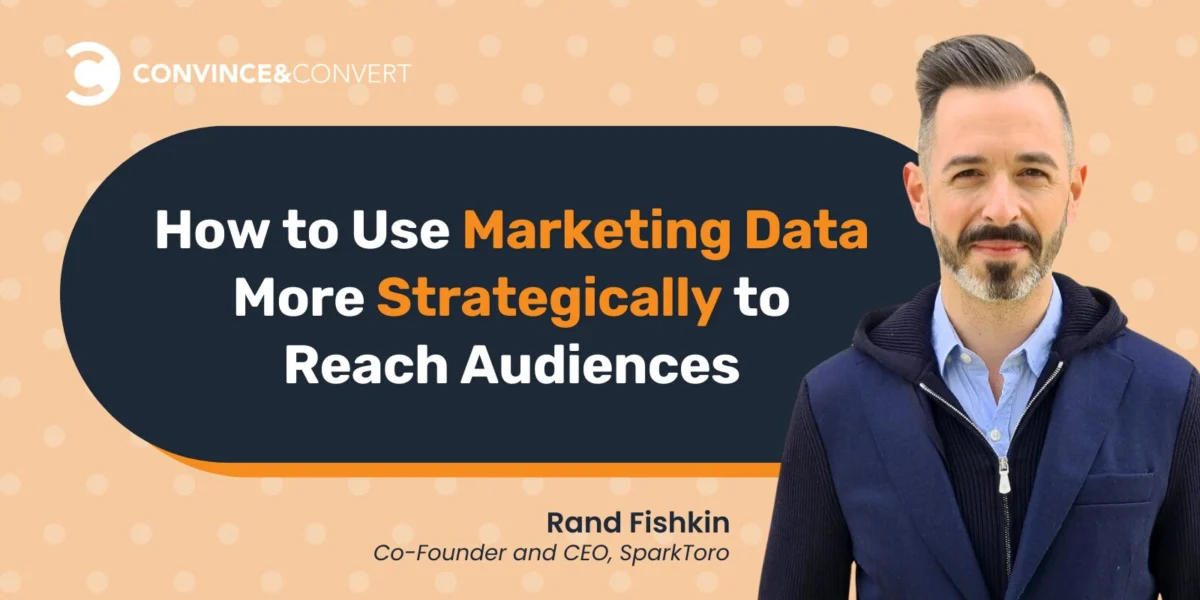
In the high-stakes world of digital marketing, the default playbook has become remarkably uniform. Spend on Google Ads, launch a retargeting campaign on Meta, and ensure your LinkedIn content is optimized for the latest algorithm changes. These platforms offer a seductive promise: they are reliable, scalable, and—most importantly—they provide clear, quantifiable return on investment (ROI) metrics that satisfy stakeholders and CMOs alike.
But as the digital landscape grows increasingly fragmented and the cost of customer acquisition (CAC) continues to climb, many marketers are beginning to question the status quo. Is it possible that by tethering our strategies to platforms that prioritize "easy-to-measure" data, we are ignoring the places where our customers actually live, learn, and form opinions?
Rand Fishkin, the co-founder of SparkToro and a veteran of the digital marketing industry, argues that the industry’s obsession with direct attribution has created a massive blind spot. In a recent appearance on the Data-Driven Decisions podcast, hosted by Zontee Hou, Fishkin challenged the prevailing narrative, suggesting that the most effective marketing isn’t found in the ad platforms that "prove" their own value, but in the niche, organic communities where your target audience already spends their time.
The Myth of the "First Touch" Attribution
To understand why so many brands are overspending on traditional paid search and social, one must first address the "attribution trap." Marketers are conditioned to believe that if a customer clicks on a Google Ad and converts, the credit for that sale belongs to Google.
Fishkin posits that this is a fundamental misunderstanding of the modern customer journey. "A ton of what happens in Google is actually a response to something else," Fishkin explains. "People who performed a search query in Google, very rarely was that a spontaneous first-touch thing. It was like, ‘Oh, I heard about this software, so I went to Google and searched for it and clicked on it.’ And of course, the attribution looks like Google drove all the value. No, Google was just the middleman."
This reality creates a distorted view of marketing effectiveness. When companies rely exclusively on these "safe bets," they stop investing in the awareness-building activities—podcasts, conferences, industry publications, and community forums—that actually generate the demand that eventually flows through search engines. By optimizing only for the bottom of the funnel, brands are effectively paying a premium for traffic that they might have captured organically if they had established a presence in the spaces where their audience first learned about the problem they are trying to solve.
Shifting Focus: From Paid Reach to Audience Relevance
The core mission of SparkToro, as described by Fishkin, is to help marketers move away from broad, demographic-based targeting toward a more precise understanding of behavioral intent. Instead of asking, "What are the demographics of my buyer?" smart marketers should be asking, "What websites do they visit? Which podcasts do they listen to? Which influencers do they trust?"
Case Studies in Strategic Alignment
The efficacy of this redirected approach is best demonstrated through tactical success stories. Fishkin highlighted two specific examples of companies that bypassed the "ad-spend treadmill" in favor of deep audience integration:
- The Podcaster’s Growth Strategy: A podcaster seeking to increase sponsorship revenue identified that their primary challenge was not content creation, but audience reach. Rather than pouring money into paid social ads, they used audience data to identify influential guests who already held the attention of their target demographic. By inviting these influencers onto the show, the podcaster effectively "borrowed" their audience, creating a virtuous cycle that attracted high-quality sponsors and, consequently, increased revenue.
- The Event Organizer’s Value Proposition: In the technology sector, an event organizer leveraged similar data to curate a speaker lineup that naturally appealed to the sponsors they wanted to attract. By ensuring the speakers had high resonance with their target audience, the organizer created an environment that was inherently valuable to sponsors, allowing them to lead with value rather than relying on cold-outreach ad campaigns.
In both instances, the data was used to target leads at the very beginning of the customer journey, establishing a relationship long before the competition even entered the conversation.
The Rise of "Zero-Click" Marketing
Perhaps the most provocative shift in modern marketing strategy is the emergence of "Zero-Click Marketing," a concept championed by Amanda Natividad, VP of Marketing at SparkToro.
For years, the mandate has been "drive traffic to the website." However, as social media platforms have increasingly throttled outbound links, marketers have struggled to maintain engagement. Zero-click marketing flips the script: it prioritizes delivering value directly on the platform where the audience lives, with no immediate call-to-action to leave the site.
A prime example cited by Fishkin is the data storytelling company Chartr. The company began posting data-rich visualizations directly to the "r/dataisbeautiful" subreddit. They didn’t spam the community with links to their site or intrusive branding; they simply contributed high-value, relevant content. By doing so, they built massive brand recognition and trust within a community of millions. When those users eventually needed data services, Chartr was already the top-of-mind authority.
This approach is fundamentally more efficient than paid advertising. It builds long-term brand equity rather than renting attention for a few cents per click.
The Limits of Data: A Balanced Approach
While advocating for a data-driven approach, Fishkin is careful to offer a caveat: data is not a panacea. He emphasizes that while tools like SparkToro can illuminate where an audience spends time, they cannot explain why they behave the way they do.
"I’m not saying don’t be data-informed, but I think it pays to be responsible in your recognition of what problems data can solve and what it can’t solve," Fishkin notes.
Marketing teams often fall into the trap of over-relying on quantitative data—click rates, impressions, and conversion metrics—while neglecting qualitative insights. For instance, data might show you where a user clicks within an app, but it cannot tell you why a potential customer finds the app frustrating or why they choose to use a competitor instead.
To bridge this gap, organizations must supplement their automated data collection with:
- Direct Customer Interviews: Engaging in conversations with real people to understand their pain points, vocabulary, and emotional triggers.
- Surveys and Feedback Loops: Actively asking for input rather than just observing behavioral patterns.
- Creative Intuition: Using the "what" (data) to inform the "how" (strategy), while leaving room for human creativity and brand voice.
Implications for the Future of Marketing Teams
The implications of this shift are significant for both CMOs and marketing practitioners. Organizations must reconsider how they define success. If a team is measured purely by the ROI of their Google Ads, they will never feel empowered to experiment with long-term brand-building strategies like podcast guesting or community engagement.
1. Realigning KPIs
Companies need to move toward a more holistic measurement framework. This includes tracking "Assisted Conversions"—recognizing the influence of podcasts, newsletters, and social engagement on the final sale—and rewarding teams that focus on community-building, even when the immediate attribution isn’t perfectly linear.
2. Investing in Audience Research
Instead of investing the entirety of a budget into platforms, a portion of the marketing budget should be redirected toward research. Understanding your audience’s media habits is a strategic asset that provides a competitive advantage that paid ads cannot buy.
3. Fostering Cross-Functional Collaboration
As Zontee Hou explores in her book Data-Driven Personalization, the power of data isn’t limited to the marketing department. When audience insights are shared across the company—from product development to customer success—the entire organization becomes more "customer-centric."
Conclusion: A Call for Strategic Intent
The path forward for marketers is not to abandon the platforms that work, but to stop letting those platforms dictate their strategy. If your Google and Meta campaigns are profitable, by all means, continue them. However, as Fishkin suggests, if the top 10% of your spend is yielding zero incremental value, it is time to redirect that capital into more creative, thoughtful, and audience-first initiatives.
Marketing is ultimately the art of finding where your potential customers are and earning their trust. In an era of infinite noise, the brands that win will not be the ones with the largest ad budgets; they will be the ones that best understand where their audience is, what they care about, and how to contribute value before they ever ask for a sale.
For those looking to refine their own data strategy, the conversation between Rand Fishkin and Zontee Hou on the "Data-Driven Decisions" podcast offers a masterclass in modern audience intelligence. You can listen to the full episode and explore the rest of the eight-part series on the Convince & Convert website. To learn more about implementing these insights, visit Data-Driven Personalization for strategies on connecting data to human-centric business outcomes.


 Ammar Sabilarrohman
 Sagoh
Sagoh
 Raul Delapena Setiawan
 Reynand Wu


 Azzam Bilal Chamdy
 Ali Ikhwan