
 Layla Zulfa
In the rapidly shifting landscape of social media, TikTok remains the undisputed titan of short-form video. Yet, for creators and small business owners, the platform often feels like a digital enigma. You spend hours storyboarding, filming, and editing a video only to hit "publish" and watch it drift into the ether with minimal views. While content quality is undeniably the foundation of success, timing is the catalyst that determines whether your video finds its audience or gets buried in the noise.
To demystify this process, we at Buffer conducted an exhaustive analysis of over 7.1 million posts—ranging from standard videos to carousels and text updates. By crunching this massive dataset, we have identified the specific windows that maximize engagement and the pitfalls that creators should avoid.
The Mechanics of Momentum: Why Timing Matters
To understand why posting time matters, one must first understand the "For You Page" (FYP) algorithm. Unlike legacy platforms that prioritize chronological feeds, TikTok’s algorithm is a cold, calculated meritocracy. When you upload a video, the system tests it against a small initial cohort. It monitors key performance indicators (KPIs) such as completion rates, shares, saves, and likes.
If these metrics are strong, the algorithm "rewards" the video by pushing it to a wider audience. If your video lands when your target audience is offline, the initial engagement signal is weak, and the video loses its momentum before it ever gets a chance to shine. Posting when your followers are active isn’t just about convenience—it is a strategic necessity to ensure your content gains the early traction required to trigger the algorithm’s distribution cycle.
Chronology of Engagement: When to Hit Publish
Our data reveals that there is no "magic" hour that works for every account, but there are distinct, statistically significant patterns. Based on our 7.1 million-post study, we have mapped out a weekly rhythm of engagement.
The Weekly Schedule
The following times represent the primary windows where engagement is statistically highest:
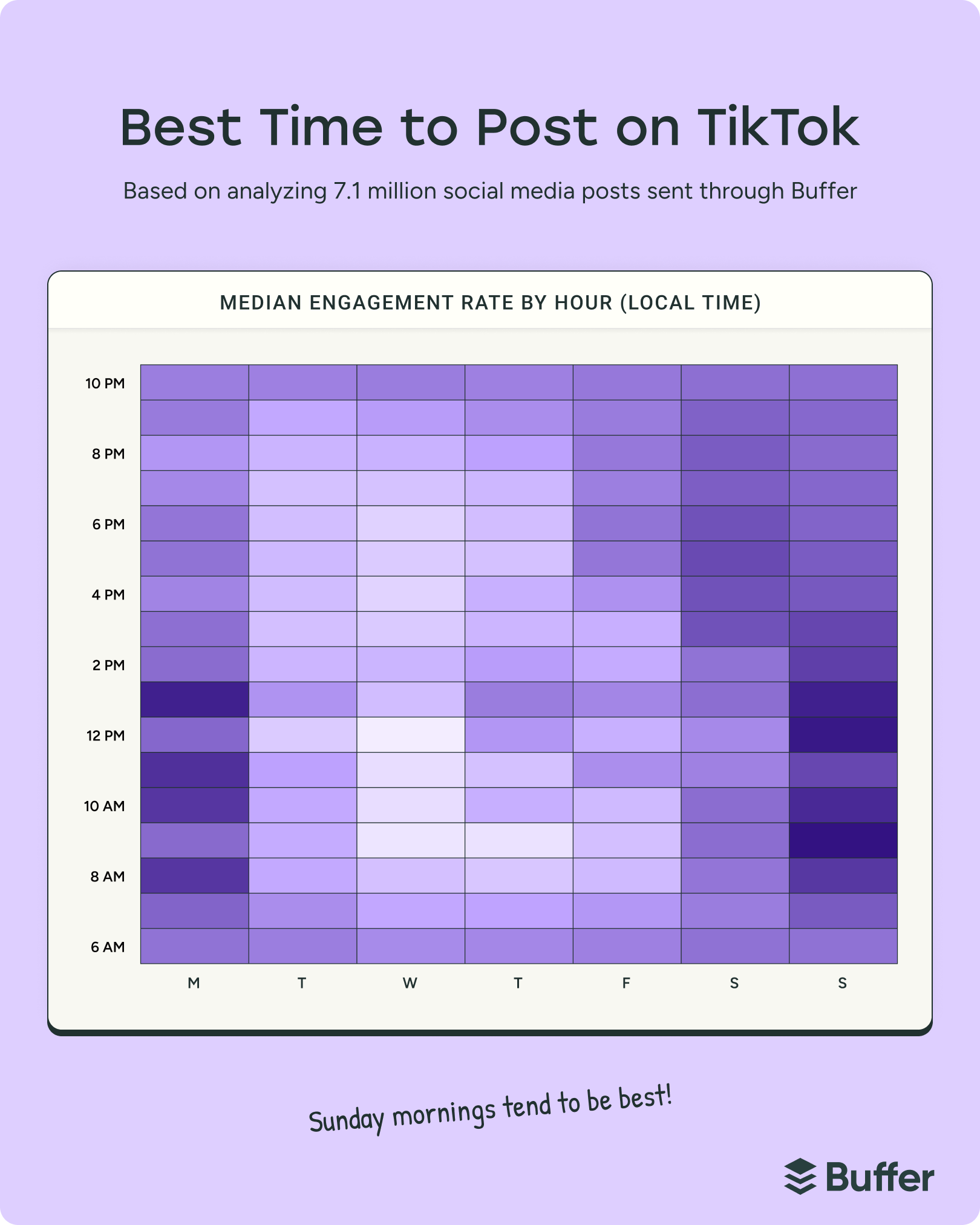
- Monday: 1 p.m. (Secondary: 11 a.m., 8 a.m.)
- Tuesday: 6 a.m. (Secondary: 10 p.m., 7 a.m.)
- Wednesday: 10 p.m. (Secondary: 6 a.m., 9 p.m.)
- Thursday: 1 p.m. (Secondary: 10 p.m., 6 a.m.)
- Friday: 6 p.m. (Secondary: 10 p.m., 8 p.m.)
- Saturday: 5 p.m. (Secondary: 4 p.m., 3 p.m.)
- Sunday: 9 a.m. (Secondary: 1 p.m., 12 p.m.)
Sunday mornings at 9 a.m. currently stand as the single most effective time to post across our entire dataset. This suggests that as users enjoy a slower start to their weekend, they are highly receptive to consuming and interacting with fresh content. Conversely, the mid-afternoon hours (12 p.m. to 5 p.m.) often see a dip in engagement, likely because users are occupied with work or school responsibilities during these periods.
Data-Driven Insights: A Deep Dive
The shift toward evening engagement (6 p.m. to 11 p.m.) is a trend that cannot be ignored. Unlike platforms such as X (formerly Twitter) or LinkedIn, where users might scroll during a quick break in a meeting, TikTok requires active, sound-on attention. This "lean-in" experience is most compatible with the downtime people experience after their commute or while winding down in the evening.
The Saturday Surge
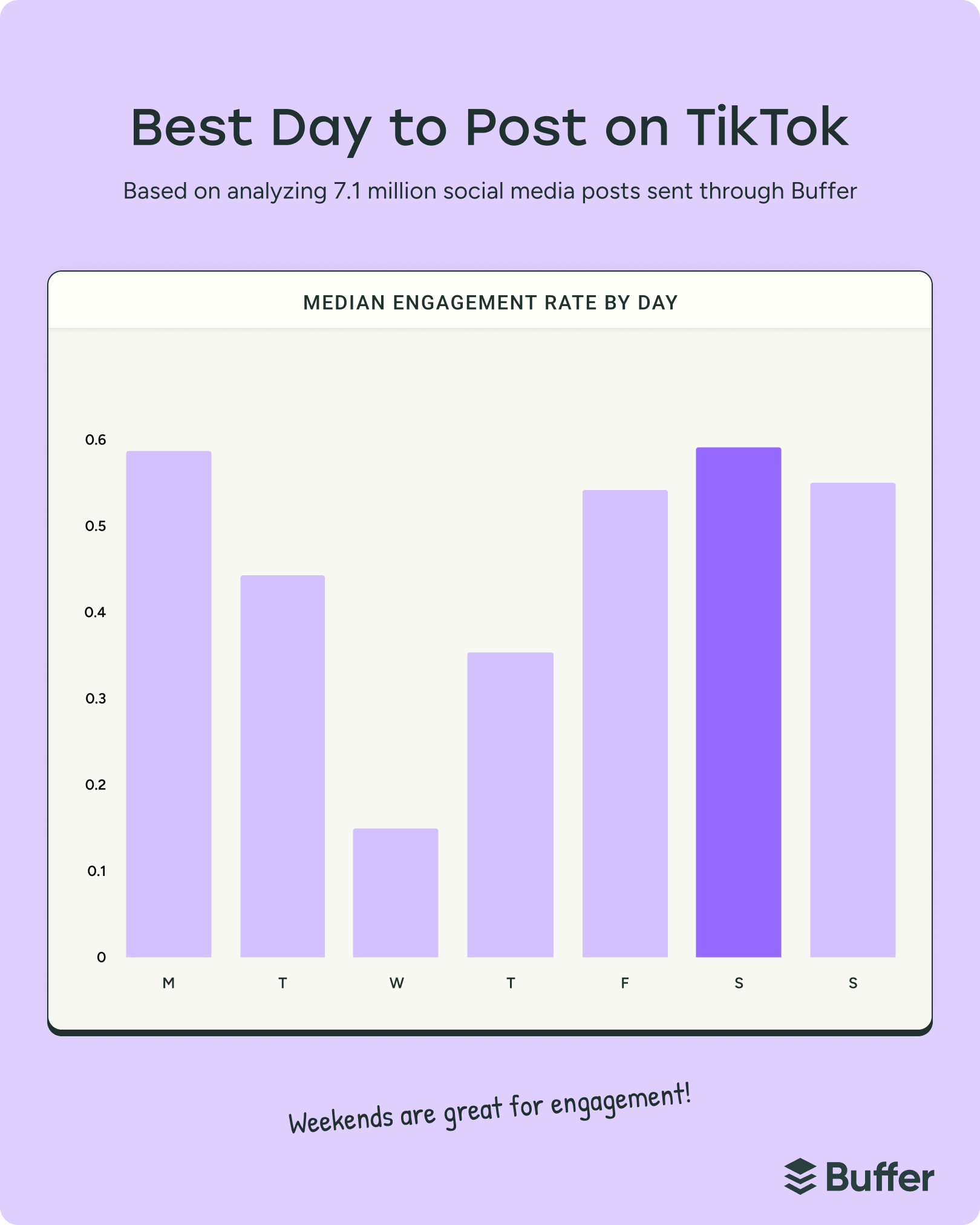
Perhaps the most surprising finding in our 2026 data is that Saturday has emerged as the strongest day of the week for overall engagement. While many creators focus on the "work week" for brand visibility, the data suggests that the weekend provides a more captive, relaxed audience. If you are struggling to find a consistent slot for your content, Saturday afternoon between 3 p.m. and 5 p.m. is a prime window for experimentation.
Understanding the "Universal" vs. "Individual" Approach
While the data above offers a robust starting point, it is vital to acknowledge the nuance of your specific audience. If your target demographic consists of night-shift workers, stay-at-home parents, or international audiences, a "universal" best time might lead you astray.
Our data scientist team has processed these figures to be as broadly applicable as possible, but we emphasize that your analytics are the final word. If your TikTok Analytics show that your followers are active at 2 a.m., that is your "best" time, regardless of what global averages suggest.
The Role of Consistent Calibration
Finding your optimal time is not a "set-it-and-forget-it" process; it is an iterative cycle of testing and refinement. We recommend the following framework for creators:
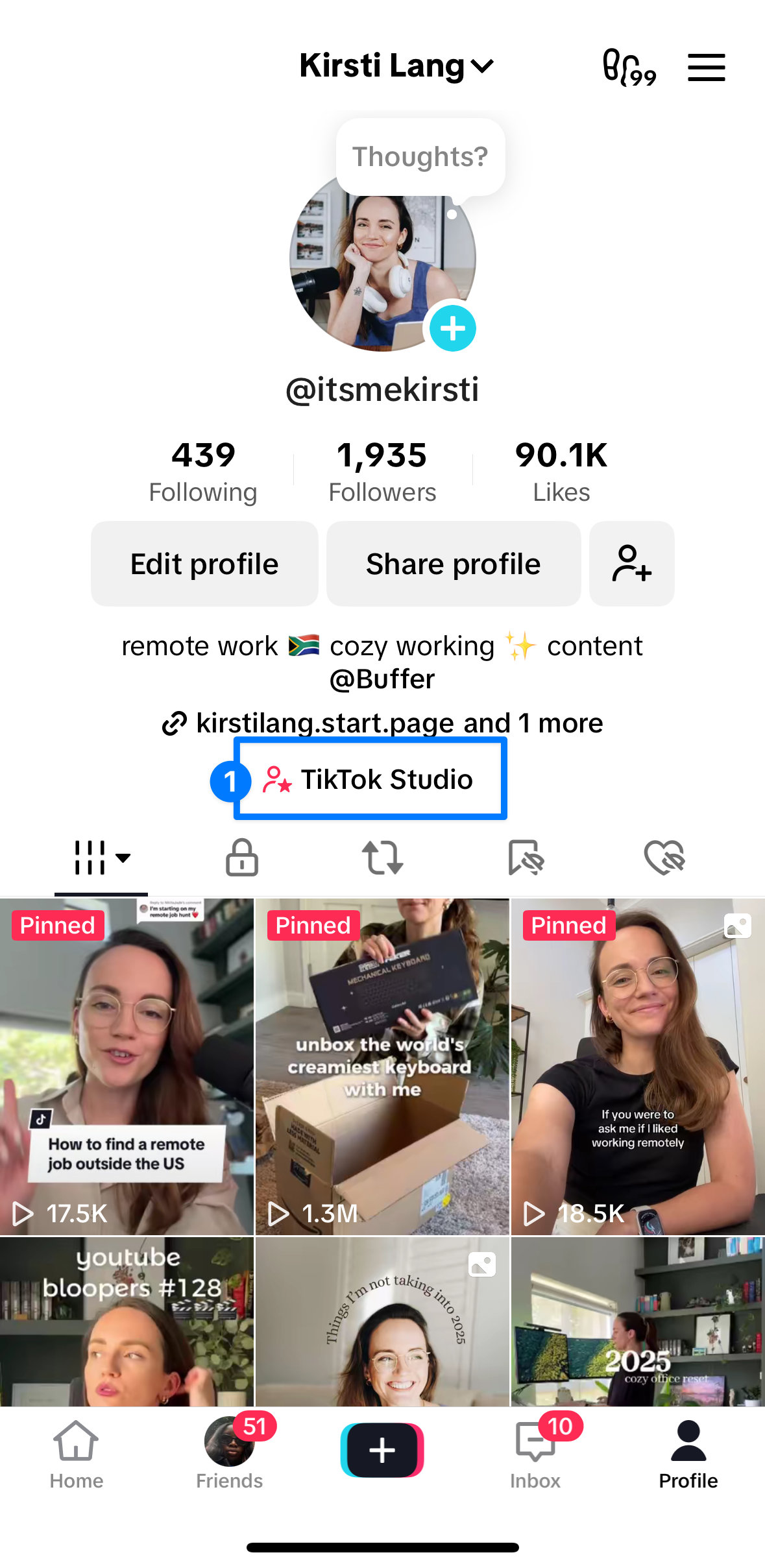
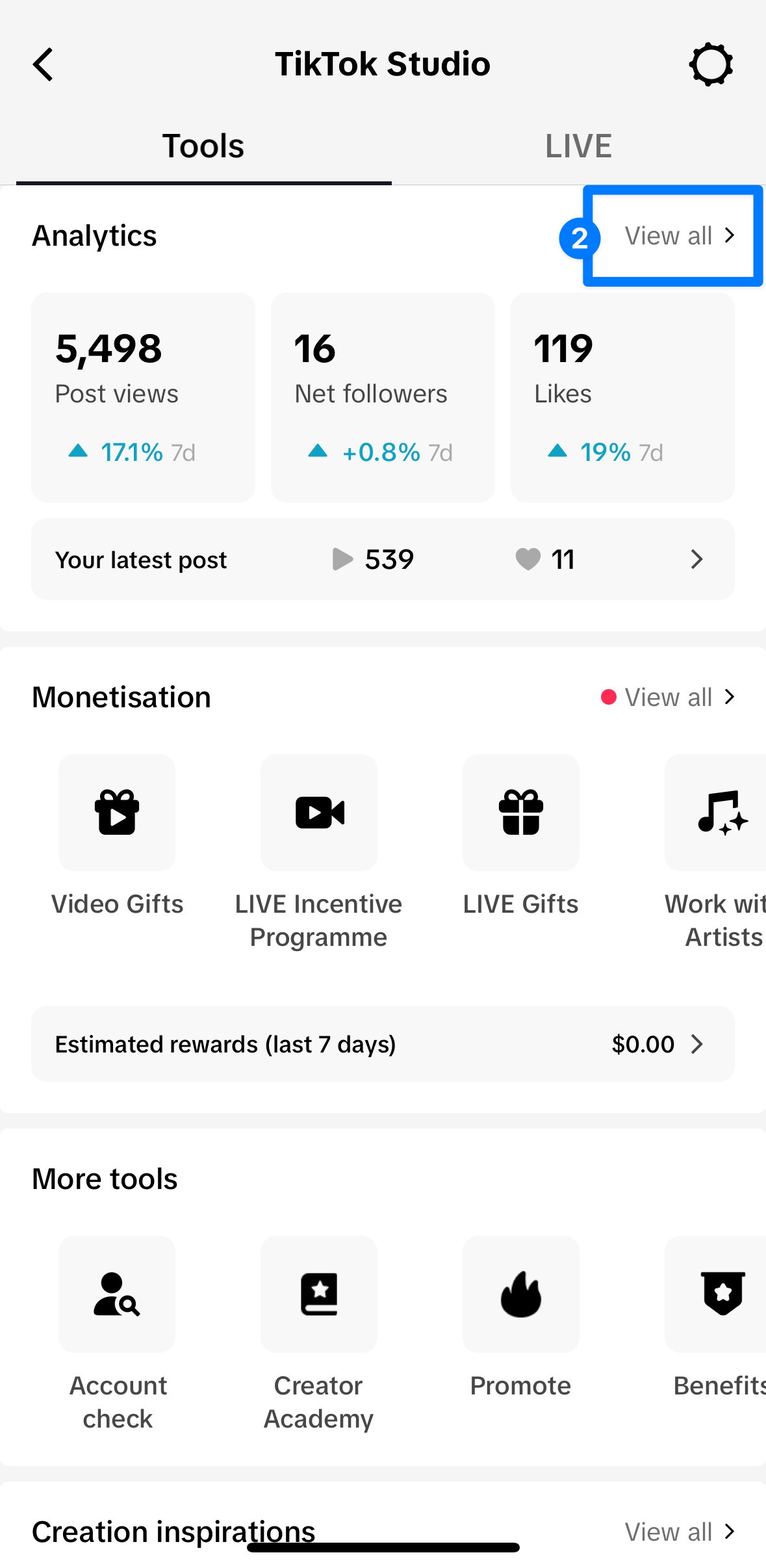
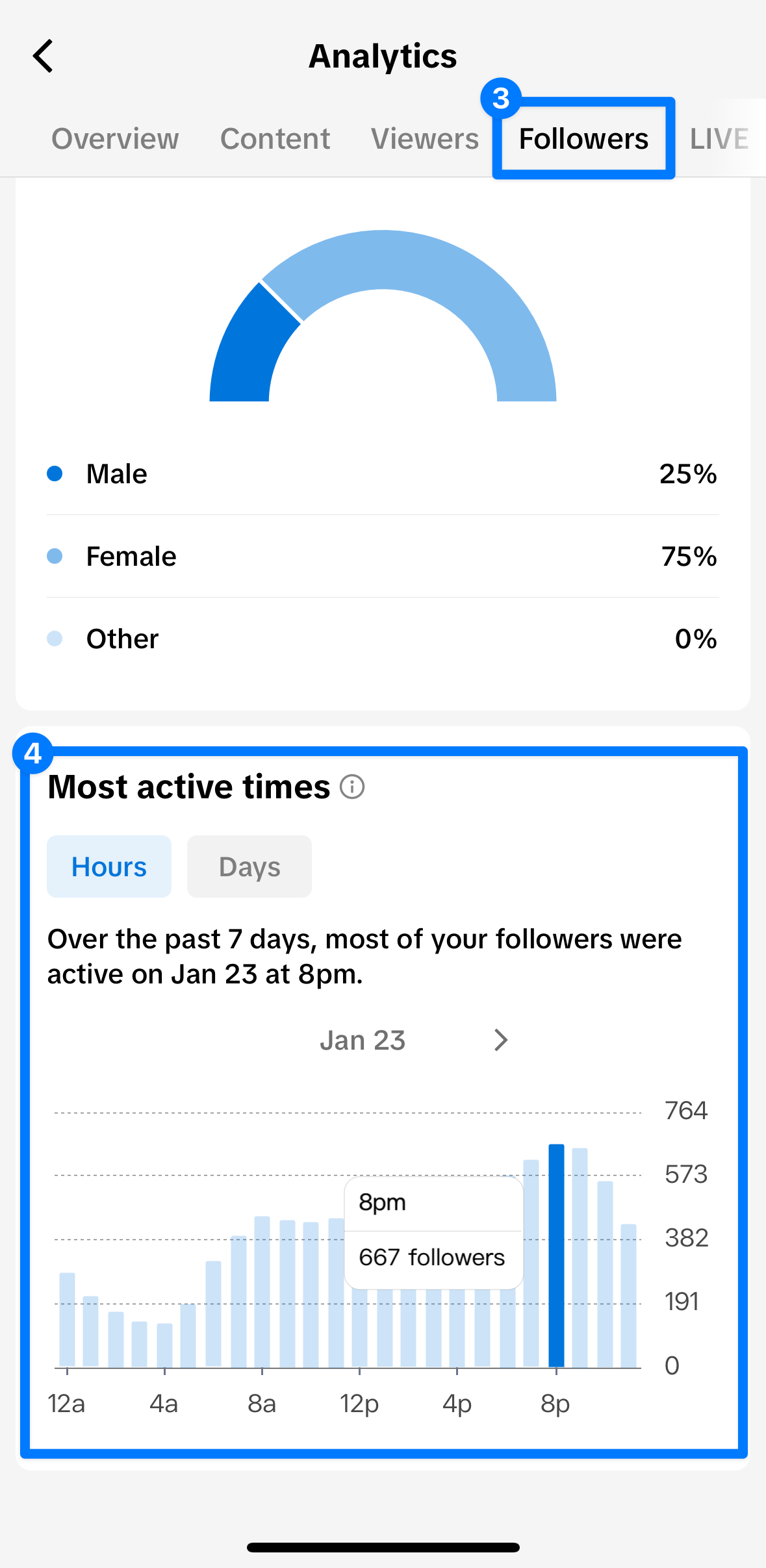
- Audit Your Analytics: Navigate to your TikTok Creator Tools and select the "Followers" tab. This provides a historical look at when your specific audience is online.
- Hypothesize and Test: Choose three of the recommended time slots from our data and test them for at least two weeks.
- Measure Results: Compare the "Views" and "Average Watch Time" of posts published at these different times.
- Refine: If a specific time consistently yields higher engagement, lock it into your content calendar.
Implications for Small Businesses and Creators
For the solo entrepreneur or the small business owner, time is a finite resource. The mental load of wondering "is now the right time to post?" can lead to burnout. This is where automation becomes a professional necessity. By utilizing scheduling tools like Buffer, you can remove the friction from the posting process.
Scheduling allows you to batch-create content during your most productive hours and set them to deploy during your audience’s peak engagement times. This ensures that you are maintaining a consistent presence on the platform without having to be tethered to your smartphone at 9 a.m. on a Sunday.
Expert FAQ: Addressing Common Misconceptions
"Is there a secret time to go viral?"
There is no "viral button" triggered by time alone. Virality is the product of a compelling hook, high watch time, and shareability. Timing is merely the vehicle that gets your high-quality content in front of enough eyes to start the process. If your content is weak, the perfect timing will not save it.
"How much should I prioritize my timezone?"
Your audience’s timezone is significantly more important than your own. If you are based in New York but your primary market is in London, you must adjust your posting schedule to align with GMT. Most scheduling platforms allow you to set your output according to the timezone of your target audience, effectively solving this problem.
"Does posting time matter for low-performing content?"
If your videos are consistently failing to gain traction, timing is rarely the primary culprit. Instead, focus on the "First Three Seconds." If your watch time is low, the algorithm will stop pushing your content regardless of when it was posted. Use timing as a "booster" only after you have optimized your content for retention.
"What is the minimum test period?"
We recommend testing a new time slot for a minimum of 14 days. TikTok performance can be volatile; a single viral post can skew your data if you only test for a few days. A two-week window provides enough data points to distinguish between a fluke and a genuine trend.
Conclusion: Turning Data into Growth
The search for the "best" time to post on TikTok is a journey of understanding human behavior. While the data provided in this guide gives you a distinct competitive advantage—a map, so to speak—the terrain is always shifting.
Use these findings to build your foundation. Respect the rhythm of your audience, experiment with the windows that align with their lifestyle, and leverage tools that allow you to maintain consistency without sacrificing your personal time. By balancing data-backed strategy with high-quality, authentic content, you will not only improve your engagement rates but also build a sustainable and thriving community on TikTok.
As we look toward the remainder of 2026, remember that the most successful creators are those who treat their data as a tool for constant improvement. Keep testing, keep posting, and let the numbers guide you to your next breakthrough.


 Ammar Sabilarrohman
 Sagoh
Sagoh
 Raul Delapena Setiawan
 Reynand Wu


 Azzam Bilal Chamdy
 Ali Ikhwan