
 Muslim
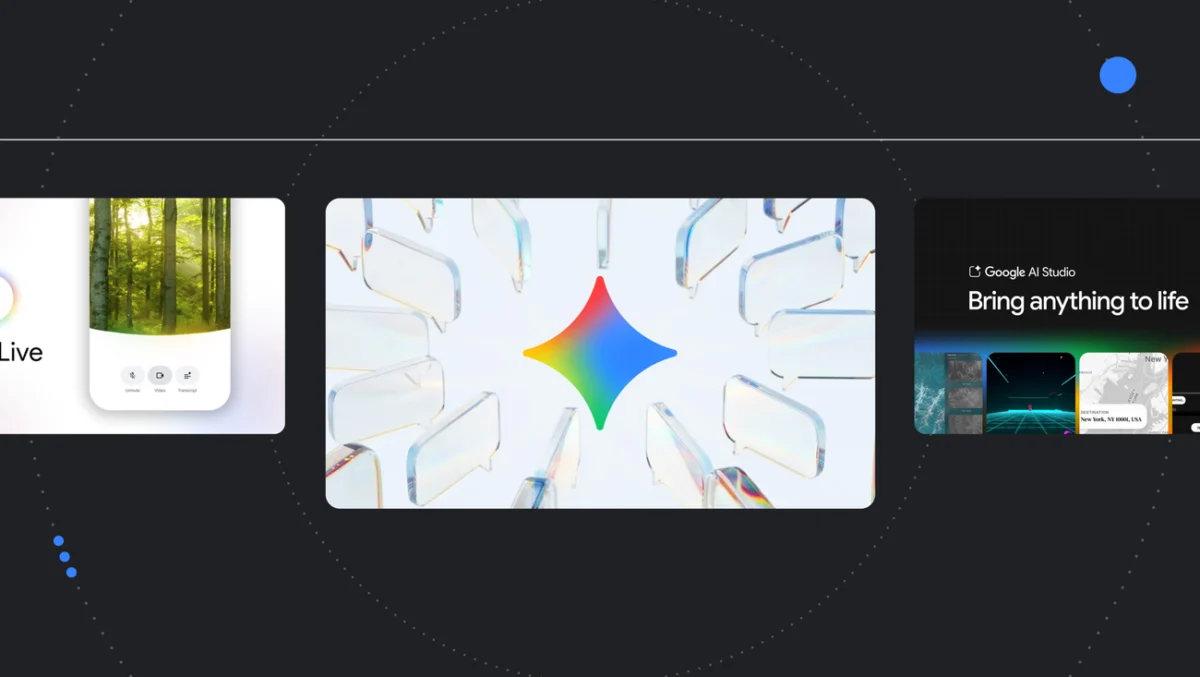
For over two decades, Google has been at the forefront of machine learning and artificial intelligence, treating these technologies not merely as experimental features but as foundational pillars for improving global infrastructure, healthcare, education, and daily productivity. As we move through 2026, the pace of innovation has accelerated from theoretical research to proactive, real-world utility. March 2026 proved to be a watershed month, marking a shift where AI moved from being a tool we "consult" to a partner that "anticipates."
This report breaks down the significant advancements announced by Google in March 2026, detailing the technical breakthroughs, the expansion of user-centric features, and the long-term implications of these developments for developers and consumers alike.

The Strategic Shift: Proactive Intelligence
The central theme of Google’s March announcements was the transition toward "proactive helpfulness." By enabling Gemini to understand specific user context—ranging from complex travel itineraries to granular shopping preferences—Google is effectively transforming its suite of devices into anticipatory agents. Whether through "vibe coding" in development environments or personalized health coaching on wearables, the goal is to reduce the cognitive load of everyday tasks.
Key Highlights at a Glance
- Search Live Expansion: Global availability in over 200 countries.
- Gemini 3.1 Model Series: Introduction of high-efficiency Flash-Lite and high-performance Flash Live.
- Creative Autonomy: Upgraded "vibe coding" and the launch of Lyria 3 Pro for advanced music generation.
- Health Initiatives: $10 million in funding for clinician education and enhanced Fitbit integration.
Chronology of Innovation: March 2026
Early March: The Global Reach of Search Live
The month began with the massive global scaling of Search Live. By bringing the "Live" icon to the Google app in over 200 countries, the company effectively democratized hands-free, real-time troubleshooting and visual search. This feature allows users to use their camera feed or voice to engage in fluid, back-and-forth dialogue, turning the smartphone into a sophisticated field assistant.

Mid-March: Workspace and Productivity
By mid-month, the focus shifted to the enterprise and creative sectors. Google announced deeper integration of Gemini within the Workspace suite (Docs, Sheets, Slides, and Drive). The integration of AI Ultra and Pro capabilities allows users to synthesize information across disparate file types securely. Most notably, Gemini in Sheets achieved state-of-the-art performance, setting a new benchmark for automated data analysis and complex collaborative modeling.
Late March: Developers and Hardware
The final week of March focused on the ecosystem. The March Pixel Drop introduced "Circle to Search" upgrades, allowing users to deconstruct entire outfits from a single image. Simultaneously, the launch of Gemini 3.1 Flash-Lite addressed the growing demand for low-latency, cost-effective models, while the updated Google AI Studio provided developers with the tools to build full-stack applications through natural language prompts.

Technical Deep Dive: The Gemini 3.1 Series
The release of the Gemini 3.1 models represents a significant engineering achievement.
- Gemini 3.1 Flash-Lite: Engineered for heavy workloads, this model provides an optimal balance between speed and budget. It is designed for businesses that require high-throughput processing without the overhead of massive, generalized models.
- Gemini 3.1 Flash Live: This is currently Google’s most advanced audio-processing model. By minimizing latency, it enables the kind of conversational fluidity previously limited by server-side lag. Its integration into Search Live and Gemini Live allows for near-instantaneous interaction, which is critical for real-time translation and navigation tasks.
The New Frontier: "Vibe Coding" and Creative AI
Google has leaned heavily into the concept of "vibe coding"—the ability to build functional, production-ready software through conversational intent rather than manual syntax. With the introduction of the Google Antigravity coding agent in AI Studio, the barrier to entry for software development has been lowered significantly.

Users can now build multiplayer experiences, integrate databases, and connect to real-world APIs with the AI managing the heavy lifting. The agent maintains a deep understanding of the user’s project state, allowing for rapid iterations and precise edits that preserve the integrity of the codebase.
Furthermore, the launch of Lyria 3 Pro marks a maturation in generative audio. Users can now generate three-minute musical compositions with granular control over musical structure—intros, verses, and bridges—signaling a shift toward AI as a legitimate collaborative instrument for musicians.

Health and Well-being: The Check Up 2026
At the annual The Check Up event, Google emphasized that the "AI era" must be defined by medical equity. The company announced a $10 million grant dedicated to reimagining clinician education.
On the consumer side, Fitbit has integrated advanced AI into its Public Preview, offering users more personalized insights regarding sleep patterns, mental health, and physical exertion. The ability to securely link medical records to the Fitbit app creates a more holistic view of health, allowing the AI to provide context-aware recommendations rather than generic fitness advice.

Implications: The Decade of AlphaGo
March 2026 also provided a moment for reflection as Google celebrated 10 years since AlphaGo’s historic victory. The implications of that win—which proved that AI could master complex, unstructured environments—have come to fruition in 2026.
The transition from AlphaGo to AlphaFold is perhaps the most significant scientific outcome of the last decade. By solving the 50-year-old protein folding problem, Google has provided the scientific community with a map that is currently accelerating drug discovery and our understanding of rare diseases. This retrospective served as a reminder that current consumer-facing AI features are built upon a decade of rigorous, foundational research into how machines can perceive the physical world.

Looking Ahead: The Future of Personal Intelligence
As we move past the March 2026 announcements, the clear trajectory is the integration of "Personal Intelligence." This is the concept that an AI is only as useful as its ability to understand you.
By allowing users to connect their Gemini experiences to their personal data in Gmail, Photos, and Drive—while maintaining strict privacy controls—Google is attempting to solve the "context gap." The introduction of migration tools, which allow users to import their chat history and personal preferences from other AI platforms into Gemini, suggests that the competitive landscape is shifting from "who has the best model" to "who provides the most seamless user journey."

Conclusion
March 2026 will be remembered as the month Google solidified its ecosystem. By balancing massive model efficiency (Flash-Lite), creative empowerment (Vibe Coding/Lyria 3), and practical life-management (Personal Intelligence/Search Live), the company has successfully bridged the gap between raw compute power and daily human utility.
As these tools continue to roll out globally, the challenge for the industry will remain the same: ensuring that as AI becomes more proactive, it remains transparent, secure, and under the user’s total control. For now, the integration of these technologies into the bedrock of Google’s products suggests that the "AI-first" vision is no longer a future promise—it is the present reality.


 Laily UPN
 Pevita Pearce
 Layla Zulfa


 Nila Kartika Wati

 Rifan Muazin

 Lina Irawan
