
 Dwi Wanna
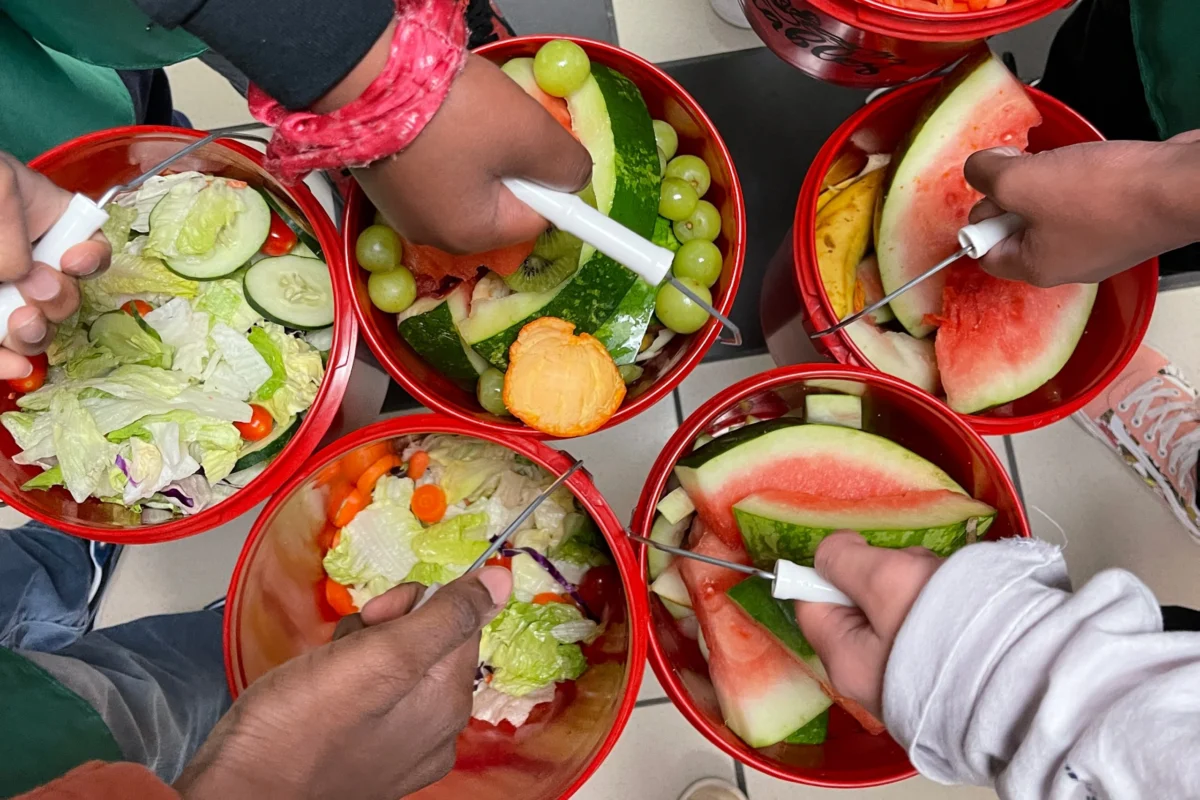
In the bustling cafeterias of American K-12 schools, a quiet crisis unfolds daily. As students scrape their trays into trash cans, they are discarding more than just unwanted carrots or soggy greens; they are throwing away a massive environmental and economic resource. According to a landmark report from the World Wildlife Fund (WWF), up to 40 percent of food served in schools ends up in the bin—amounting to approximately 530,000 tons of food waste annually.
This is not merely a logistical oversight; it is a significant environmental burden. That half-million tons of discarded food generates an estimated 1.9 million metric tons of greenhouse gas emissions each year. However, a growing movement of educators, environmentalists, and students is proving that this tide can be turned. By treating the cafeteria as an extension of the classroom, schools are successfully diverting waste from landfills while simultaneously fostering a new generation of climate-conscious problem solvers.
A Growing Ecological Footprint
The scale of school-based food waste is staggering. When food rots in a landfill, it releases methane, a potent greenhouse gas that traps significantly more heat in the atmosphere than carbon dioxide. Beyond the climate impact, the waste represents a squandering of the water, energy, and labor used to produce, process, and transport that food.
For years, the status quo in many districts was simply to accept high waste volumes as a byproduct of tight budgets, picky eating habits, and overworked cafeteria staff. But the WWF’s "Ending Food Waste in K-12 Schools" initiative is challenging that narrative. Since 2018, the nonprofit has been partnering with schools to implement data-driven strategies, such as "share tables"—where students can leave unopened, unconsumed items for others to take—and robust composting programs.
The Lovin Elementary Blueprint: A Case Study in Change
One of the most successful examples of this transformation can be found at Lovin Elementary in Gwinnett County, Georgia. Under the guidance of STEM content specialist Gerin Hennebaul, the school has achieved a remarkable 70 percent reduction in food waste. The journey was not an overnight success but a methodical, data-backed evolution.
The Initial Audit: Facing the Reality
In late 2018, the school’s efforts began with a "food audit" facilitated by the local Green & Healthy Schools partnership. The goal was to quantify exactly how much food was being tossed. Students were organized into an assembly line, meticulously sorting and weighing waste from lunch trays.
"We collected 589 pounds of waste in one day," Hennebaul recalls. "Of that, 120 pounds were ‘recoverables’—sealed cartons of milk, bags of carrots, and apples." The sheer volume of unopened food was a wake-up call for the students, who were immediately invited to brainstorm solutions.
Iteration and Innovation
The students’ initial responses were hands-on and creative. They designed posters, launched announcements, and, crucially, helped establish a share table—a dedicated space where students can place unopened food items for classmates to take, effectively keeping perfectly good nutrition out of the trash.
By March 2019, just a few months after the first audit, a follow-up assessment showed a significant drop in waste. The school also began diverting fruit and vegetable scraps to feed chickens kept in their school garden, demonstrating to students that their waste had a secondary, productive life cycle.
Scaling Up: Composting and Curriculum Integration
The momentum at Lovin Elementary didn’t stop at recycling and share tables. In 2021, the school secured a composting grant from the Food Well Alliance, allowing them to install a professional-grade composting bin.
"I didn’t know anything about composting, and neither did the kids," Hennebaul admits. "My favorite part of everything we’ve done has been learning to do it with the kids. When they realize the teacher doesn’t have all the answers, they go research it themselves."
By the 2023-2024 school year, the program had expanded to include nearly every grade level. The school collected over 5,400 pounds of food waste that year alone, eventually outgrowing its own bins and partnering with a local church to manage the overflow. The project has evolved into a sophisticated operation where students manage the logistics, take the temperature of the compost, and apply the resulting soil to school garden projects.
The Cafeteria as a Laboratory
One of the most innovative aspects of the Lovin Elementary model is the integration of these activities into the core academic curriculum. The cafeteria has become a "living laboratory" where students apply math, science, and communication skills in real-time.
- Mathematics: Fourth graders rotate weekly to weigh waste, record data in binders, and perform calculations involving decimals to track the school’s progress.
- Environmental Science: Students track the temperature of compost piles and study the impact of landfills on climate change, aligning their hands-on work with state educational standards.
- Peer-to-Peer Education: Third graders act as "Eco-Heroes," writing original songs and creating PowerPoint presentations to teach younger students about the importance of reducing waste. This peer-led model ensures that knowledge is passed down and reinforced year after year.
Leveraging Technology: The AI Frontier
In early 2025, Lovin Elementary took an even more futuristic approach by piloting "Raccoon Eyes AI." Developed by a Georgia Tech student, this system uses computer vision to analyze trays as they pass through the disposal station. It tracks what is being thrown away—such as 81 pounds of boneless wings—and provides detailed reports on which grade levels are discarding the most food.
This granular data allows for targeted interventions. If the school notices that students are consistently throwing away a specific type of roll, they can adjust the recipe or the order. While the school currently faces a hurdle regarding the proprietary nature of this software, the experiment underscores a broader truth: when you measure what you waste, you find the leverage to change it.
Addressing Barriers to Widespread Adoption
Despite the successes at schools like Lovin, significant barriers remain to scaling these programs nationwide.
Administrative and Logistical Challenges
Hennebaul notes that the primary hurdle is consistency. "One of the biggest things is my position," she explains. As a "fully released" teacher—one without a specific homeroom—she has the flexibility to monitor the share tables and manage the compost bins. Many schools lack the staffing to provide this level of oversight.
Furthermore, district-level food procurement contracts often limit a school’s ability to change menu items based on student feedback. While an individual school might have the autonomy to add more sauce to a roll to improve palatability, they are often locked into specific contracts with large-scale food vendors that prevent them from switching to more popular or less wasteful alternatives.
The Human Factor
Finally, there is the issue of buy-in. Success in this arena requires the alignment of the school administration, the cafeteria management staff, and the custodial team. When these stakeholders see the administrative support for a project, the barrier to implementation significantly lowers.
The Path Forward: Implications for Policy and Practice
The model established at Lovin Elementary offers a roadmap for other districts. By shifting the focus from "disposal" to "resource management," schools can:
- Reduce Operating Costs: Less food thrown away means more efficient use of the food budget.
- Improve Student Outcomes: Hands-on learning in the garden and cafeteria correlates with improved performance in STEM subjects and increased student engagement.
- Drive Climate Action: By tackling food waste, schools demonstrate a tangible, local commitment to reducing greenhouse gas emissions.
The WWF report suggests that the most successful programs are those that start small, collect data, and empower students to be the architects of their own solutions. As Hennebaul suggests, "Start by collecting data, and go slow."
For the thousands of other schools across the United States, the message is clear: the waste in our cafeterias is not an inevitable reality. It is a classroom in disguise, waiting to be unlocked. With the right tools, a bit of patience, and a commitment to data-driven decision-making, schools can move beyond the waste cycle and cultivate a more sustainable, and educational, lunch experience.

 Asro
 Layla Zulfa

 Lina Irawan

 Pevita Pearce
 Suro Senen
 Muslim

 Ammar Sabilarrohman
 Raul Delapena Setiawan
