Azzam Bilal Chamdy
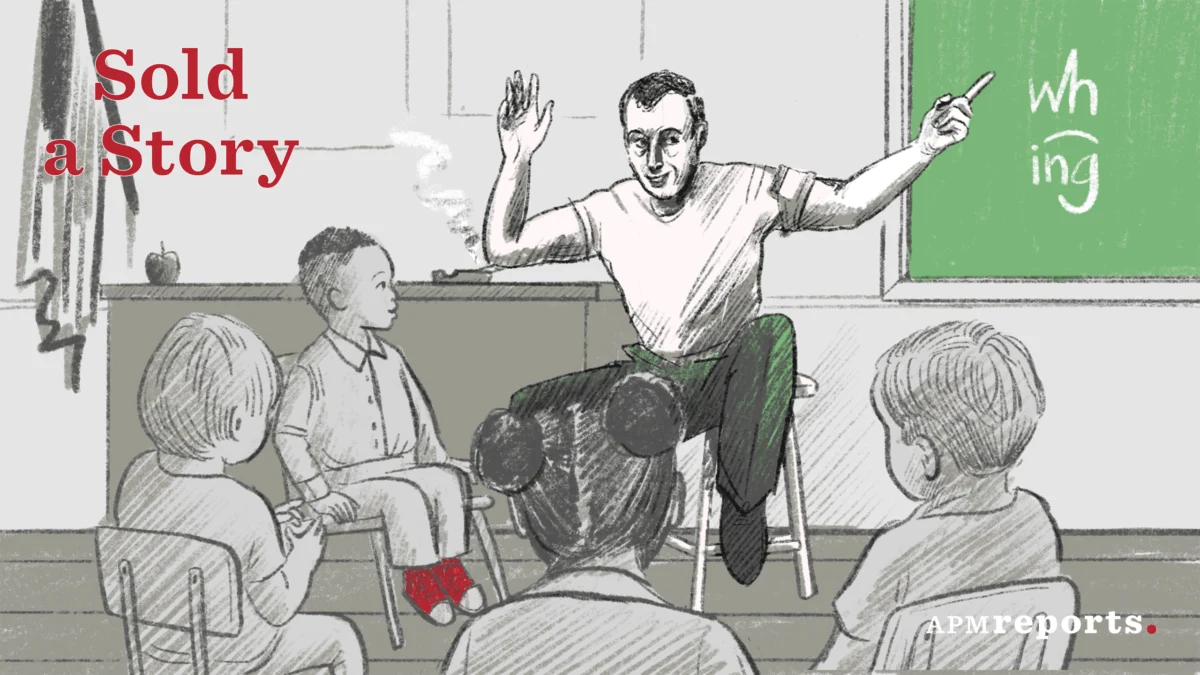
This article is based on Season 2, Episode 2 of the "Sold a Story" podcast, an investigative production by APM Reports that challenges the foundations of modern American education.
In the landscape of American education, few questions remain as contentious as the fundamental "how" of teaching. For decades, the pendulum has swung between child-centered discovery and structured direct instruction. Yet, as the investigative series Sold a Story continues to illuminate, the disconnect between cognitive science and classroom practice has left generations of students behind. Following a transformative first season that exposed the failures of reading instruction, Season 2 shifts its focus to the very architecture of teaching itself. At the heart of this inquiry is the legacy of Zig Engelmann and a deceptively simple, yet revolutionary mantra: "If the student hasn’t learned, the teacher hasn’t taught."
The Genesis of a Methodology: The Illinois Experiment
The story of modern instructional reform often traces back to a modest, experimental preschool in Illinois. It was here that Zig Engelmann, a pioneer whose work would eventually polarize the educational establishment, began to formalize a rigorous approach to instruction.
In an era defined by romanticized notions of "natural" learning, Engelmann took a mechanistic, data-driven approach. He argued that teaching was not an abstract art form, but a precise science. Working alongside his colleagues, Engelmann sought to deconstruct the learning process into its smallest, most digestible components. They hypothesized that if a curriculum was designed with enough precision—eliminating ambiguity and ensuring that every step built upon the last—any student, regardless of their background, could achieve mastery.
This was the birth of Direct Instruction (DI). Unlike the "whole language" approaches that would later dominate reading pedagogy, DI was uncompromising. It required scripted lessons, rapid-fire questioning, and immediate corrective feedback. For Engelmann, the classroom was a laboratory, and the student’s performance was the only metric that mattered.
Chronology of a Teaching Revolution
To understand the current state of education, one must trace the evolution of these instructional theories:
- The Early Years (1960s): Engelmann and his team begin their work at the University of Illinois. They focus on preschool programs for disadvantaged children, proving that high-structure environments could produce dramatic academic gains.
- The Project Follow Through Era (1968–1977): The U.S. government launches the largest and most expensive educational experiment in history. The goal is to determine which teaching methods work best for low-income students. Direct Instruction emerges as a top performer, yet the findings are largely ignored by mainstream academia, which favors less structured, "open classroom" models.
- The Literacy Crisis (1990s–2010s): As the nation shifts toward "balanced literacy" and other non-systematic approaches, reading scores stagnate. This period culminates in the findings explored in Sold a Story Season 1, revealing the systemic failure to teach foundational phonics.
- The Current Pivot (2020s–Present): With the "Science of Reading" movement gaining momentum, policymakers and districts are finally returning to the lessons Engelmann began to codify decades ago: that explicit, systematic teaching is not just an option—it is a moral imperative.
The Mantra: Accountability as a Pedagogical Tool
The phrase "If the student hasn’t learned, the teacher hasn’t taught" is perhaps the most provocative element of Engelmann’s legacy. In many modern educational circles, this sentiment is often met with resistance. It is viewed as an indictment of the teacher, shifting the burden of failure away from the student’s environment or internal capacity and placing it squarely on the instructor’s delivery.
However, from a pedagogical standpoint, this mantra acts as a diagnostic tool. By removing the blame from the student, it forces the teacher to become an investigator. If a child fails to grasp a concept, the teacher is tasked with analyzing the instruction: Was the prerequisite knowledge missing? Was the pace too fast? Was the feedback loop insufficient?
This shift moves teaching from a passive delivery of information to an active management of learning outcomes. It requires a level of professional humility that is rarely incentivized in current teacher-preparation programs, which often prioritize the "facilitator" role over the "instructor" role.
Supporting Data: Why Structure Matters
The empirical evidence supporting structured instruction is extensive, though often marginalized. During the Project Follow Through study, data indicated that students in Direct Instruction programs outperformed their peers in basic skills, cognitive conceptual skills, and affective measures (such as self-esteem).
Yet, the adoption of these methods remains slow. A primary reason is the "professional identity" of teachers. Education schools have long socialized educators to believe that "direct instruction" is synonymous with "rote memorization" or "drilling and killing." This is a fundamental misunderstanding of the methodology. Effective direct instruction, as Engelmann designed it, involves high engagement, constant verbal interaction, and a deep understanding of the logical structure of knowledge.

Furthermore, current assessments suggest that the achievement gap—often attributed to socioeconomic status—is significantly narrowed when high-quality, structured instruction is implemented. Data from districts that have moved toward evidence-based reading curricula show that when teachers are provided with high-quality materials and training, the performance of students in the lowest quartiles rises most dramatically.
Official Responses and the Academic Pushback
The educational establishment, particularly the "progressive" wing of pedagogy, has historically resisted the rigid structures proposed by Engelmann. Critics often argue that scripted curricula strip teachers of their professional autonomy and creativity. They suggest that education should be about the "whole child" and that strict adherence to a program limits a teacher’s ability to respond to the unique needs of their students.
However, advocates for the Science of Reading argue that "autonomy" has become a euphemism for inconsistency. When every teacher decides how to teach, the quality of instruction becomes a lottery. Official responses from state departments of education, such as those in Mississippi and Tennessee, have begun to reflect a change in policy. These states have mandated evidence-based training for teachers, essentially validating the idea that there is a "right way" to teach the fundamental building blocks of learning.
The disconnect persists, however, in teacher preparation programs. Many university departments of education continue to teach constructivist theories—the idea that students should "discover" knowledge—despite the mounting evidence that novice learners require explicit guidance to build the mental models necessary for complex thought.
Implications for the Future of Schooling
The implications of the Sold a Story investigation are profound. If we accept that teaching is a science, then the way we certify, train, and support teachers must undergo a radical transformation.
1. Reforming Teacher Preparation
We must move away from theory-heavy, abstract coursework and toward apprenticeship models. Teachers should be trained in the mechanics of instruction—how to model a task, how to provide feedback, and how to assess student understanding in real-time.
2. Curriculum as a Tool for Equity
High-quality, evidence-based curricula should be viewed as a civil rights issue. Every child, regardless of their zip code, deserves access to instruction that is proven to work. When we allow curriculum to be a matter of personal preference, we institutionalize inequality.
3. The Professionalization of Teaching
Teaching should be treated with the same rigorous standard as medicine or engineering. Doctors do not "discover" how to perform surgery based on their own feelings; they rely on established, evidence-based protocols. While teaching has nuances, the fundamental mechanics of cognitive load and knowledge acquisition are well-understood. Embracing this is not a loss of professional identity; it is the ultimate professionalization of the craft.
Conclusion: A Return to Purpose
The legacy of Zig Engelmann serves as a mirror for the modern American classroom. We have spent decades prioritizing the feeling of education—the environment, the student’s comfort, the teacher’s autonomy—at the expense of the results of education.
As Sold a Story continues its investigation, the message is clear: the remedy for our failing schools is not more technology, more funding, or more standardized testing. The remedy is better teaching. It is a return to the realization that education is a deliberate, structured, and profoundly human endeavor. If we are to truly serve our students, we must be willing to do the hard work of instruction, ensuring that every lesson is built to ensure success, and that we never lose sight of the responsibility we hold: to teach, so that every child can learn.

 Nana Muazin

 Layla Zulfa
 Raul Delapena Setiawan

 Ali Ikhwan
 Pevita Pearce

 Sagoh