
 Nana Muazin
In the high-stakes environment of global supply chain management, the role of the Chief Procurement Officer (CPO) has evolved from a back-office administrative function to a strategic linchpin of corporate survival. Yet, despite the increasing complexity of the global business landscape, a startling trend has emerged: senior procurement executives are neglecting their most vital asset—themselves.
A recent pulse survey from Procurement Leaders’ Ovation has unveiled a sobering reality. According to the data, a staggering 75% of C-level procurement executives at the world’s largest and most complex organizations are spending less than 20 minutes a day on their personal growth and development. This professional stagnation is not just a personal oversight; it is a systemic risk to the organizations they lead.
The Data: A Crisis of Capacity
The Procurement Leaders survey provides a stark quantitative look at the state of executive development. The findings indicate that approximately one-third of group-level CPOs dedicate less than one hour per week to formal or informal personal development. Another 45% report that they spend less than two hours per week in such pursuits.
When aggregated, these figures paint a picture of an executive class running on fumes, relying entirely on the "sunk cost" of their previous experience rather than investing in future-proof capabilities. In an era defined by rapid technological disruption, geopolitical volatility, and shifting trade paradigms, allocating less than 20 minutes a day to learning is equivalent to professional coasting—a luxury few modern leaders can afford.
Understanding the Pressure Cooker
To dismiss this lack of development as mere laziness would be a gross mischaracterization. The modern CPO’s working week is, by all accounts, demanding, draining, and relentless. The volume of disruptions—from pandemic-era logistics collapses to inflationary pressures and the integration of artificial intelligence—means that the CPO is in a constant state of reactive crisis management.
After a grueling week of navigating supplier defaults, board meetings, and budget negotiations, the allure of intellectual rest is powerful. It is entirely understandable why an executive might reach for a glass of wine or a mindless distraction rather than engaging in a complex online course or a deep-dive reading session. The psychological weight of the "always-on" global economy creates a barrier to entry for personal development that many feel they simply cannot overcome. However, as the research suggests, this trade-off between current performance and future readiness is a false economy.
The Philosophy of "Learning to Learn"
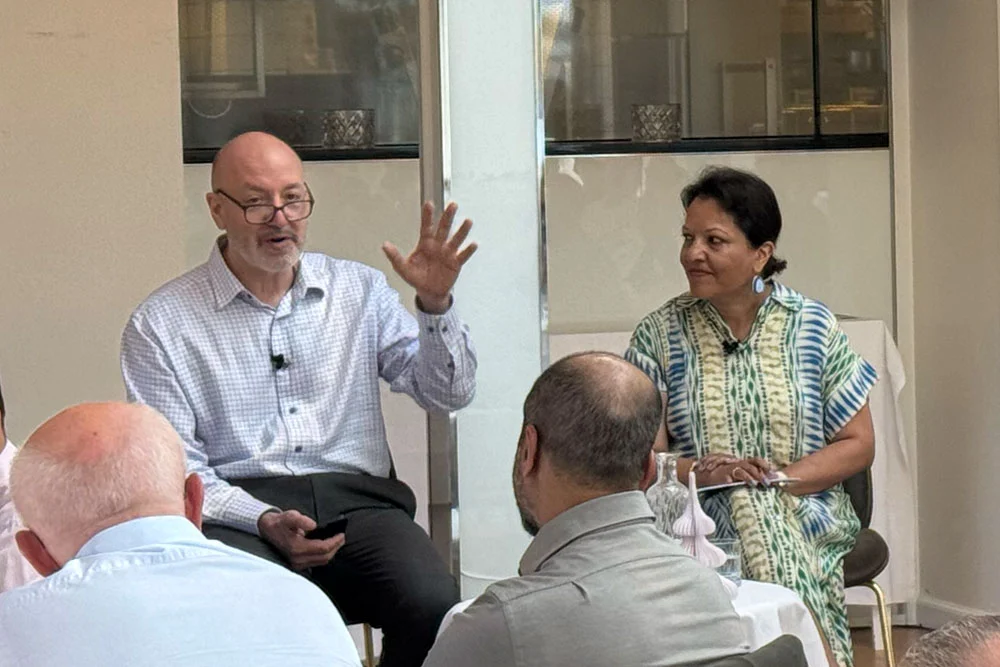
At the recent Ovation event, Larry Kramer, president and vice-chancellor of the London School of Economics, addressed this phenomenon directly. Kramer argued that the single most important habit a leader can cultivate in the 21st century is "learning to learn."
This concept of mental elasticity—the ability to pivot, absorb new methodologies, and dismantle outdated frameworks—is becoming the defining characteristic of the high-performing CPO. For executives who have spent decades climbing the corporate ladder, the assumption that they have already mastered the necessary skills is a dangerous psychological trap. As markets evolve, the knowledge that once made an executive successful can rapidly become obsolete.
"Procurement chiefs must avoid the assumption that they know everything they need to know," the Procurement Leaders report notes. "Instead, they must build and maintain a constant habit of acquiring new knowledge and continuously identify, adapt to, and master new domains."
Chronology of the Shift: From Transactional to Transformational
To understand why this neglect of self-development is so critical, one must look at the evolution of the procurement function over the last two decades:
- Pre-2010 (The Transactional Era): Procurement was largely viewed as a cost-cutting function. Leaders focused on contract negotiation, basic supplier management, and administrative efficiency. Development was largely limited to technical certification in finance or supply chain logistics.
- 2010–2019 (The Strategic Era): As supply chains became globalized and complex, CPOs were tasked with risk mitigation and long-term partnership development. The role required broader soft skills, including stakeholder management and influence.
- 2020–Present (The Disruption Era): The modern CPO is now a technology architect, a geopolitical strategist, and a sustainability leader. The role requires fluency in AI, data analytics, ESG (Environmental, Social, and Governance) compliance, and crisis management.
The jump in required competencies over the last five years has been exponential. A CPO who has not fundamentally updated their toolkit since 2019 is, by definition, operating with a legacy skill set in an agile environment.
Leveraging Technology: AI as a Learning Partner
While time remains the most cited barrier to development, innovative leaders are finding ways to hack their schedules. One respondent to the survey shared a modern approach to overcoming time poverty: leveraging artificial intelligence as a personal tutor.
"My preferred method is short bursts of learning—usually listening to podcasts or reading—and I increasingly lean on AI itself to go deeper, ask follow-up questions, and research new areas quickly," the executive noted.
This approach highlights a shift from traditional "classroom" learning to "just-in-time" learning. By utilizing AI to summarize reports, explain complex geopolitical trends, or provide rapid analysis of new procurement technologies, leaders can integrate professional development into their daily workflow rather than segregating it into a separate, time-consuming block.
Alternative Paths to Growth
There is no "right" way to develop as a senior leader. The Procurement Leaders report highlights several successful models currently being used by top-tier executives:
- Peer-to-Peer Coaching: Engaging in mentorship programs where the CPO acts as both a mentor to junior talent and a mentee to a peer or a cross-functional executive.
- Formalized Skill-Building: Targeted short-form courses focused on "soft" skills, such as emotional intelligence, adaptive leadership, or high-stakes negotiation.
- Reverse Mentoring: Establishing relationships with younger team members to gain insight into digital trends, AI implementation, and shifting corporate culture.
Each of these methods shares a common thread: they are collaborative, high-impact, and require minimal disruption to the standard working day.
The Implications of Stagnation
The cost of failing to invest in oneself is not immediately visible on a balance sheet. It manifests as a slow erosion of influence. A CPO who cannot speak the language of digital transformation, for instance, will eventually lose the ability to secure budget for technological upgrades. A leader who fails to understand the nuance of modern sustainability regulations will eventually lead their company into a compliance crisis.
The worst thing a CPO can do is to treat their calendar as an insurmountable barrier. When a leader stops learning, they stop leading. They begin to manage by precedent, relying on "the way we’ve always done it" rather than "the way we need to do it now."
Conclusion: A Mandate for the Future
The pressures of the modern C-suite are not going to diminish. The global economy will remain volatile, and the demands placed on procurement will only grow more complex. However, the solution is not to double down on outdated ways of working, but to fundamentally alter the executive relationship with time.
By shifting the mindset from "I am too busy to learn" to "I am too busy not to learn," CPOs can reclaim their trajectory. Whether through 15 minutes of AI-assisted research, a podcast during a commute, or a structured mentorship conversation, the investment in self-development is the only way to ensure that the leader remains as dynamic as the supply chain they manage.
The data from Procurement Leaders serves as both a warning and a call to action. The 75% of CPOs currently stagnating have a choice: they can continue to let the pressure of the job consume their capacity for growth, or they can recognize that the most significant procurement contract they will ever manage is the one they have with their own potential.


 Evan Lee Salim
 Jia Lissa

 Lina Irawan

 Pevita Pearce

 Suro Senen

 Muslim

 Ammar Sabilarrohman
 Raul Delapena Setiawan
