
 Siti Muinah
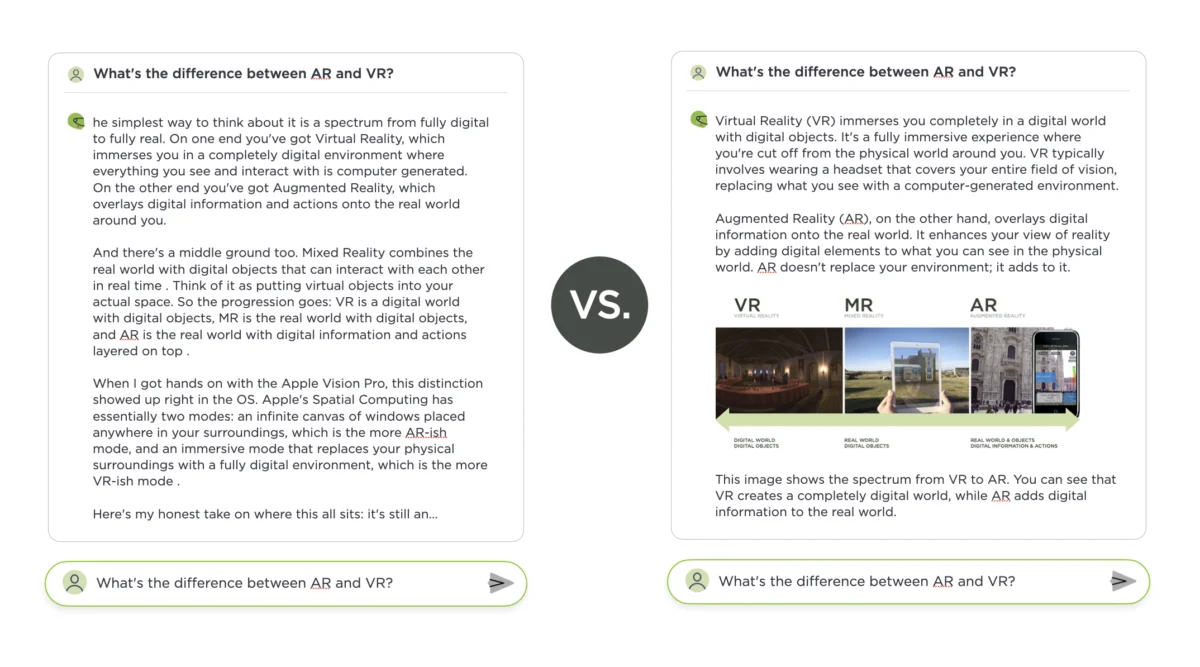
In the rapidly evolving landscape of generative artificial intelligence, one persistent critique remains: the medium is dominated by a relentless, monotonous deluge of text. For users seeking synthesis and strategy, the experience of interacting with AI often devolves into scrolling through dense, academic-style blocks of information. Digital product strategist Luke Wroblewski, the creator of the AI-powered assistant "Ask LukeW," has identified this friction point as a primary obstacle to user engagement.
To bridge the gap between information density and visual clarity, Wroblewski has implemented a significant architectural overhaul to his personal AI tool. By integrating decades of archival data with a sophisticated, multimodal ingestion pipeline, he has successfully transitioned his AI from a text-only oracle into a context-aware visual storyteller.
The Chronology of an AI Evolution
The journey toward visual fluency began with a simple necessity: making the vast, multi-decade corpus of Wroblewski’s work—comprising thousands of articles, hundreds of presentations, and an exhaustive library of images—truly accessible.
Phase 1: The Foundation of Search
Initially, Ask LukeW relied on a standard ingestion pipeline. When a new image was uploaded to the site, an AI model would analyze the pixels, generating a title and description. These were then converted into vector embeddings, allowing the system to perform semantic searches. If a user asked a question, the retrieval system would scan both text-based keywords and semantic image embeddings to serve up relevant visuals.
Phase 2: Identifying the "Green Block" Problem
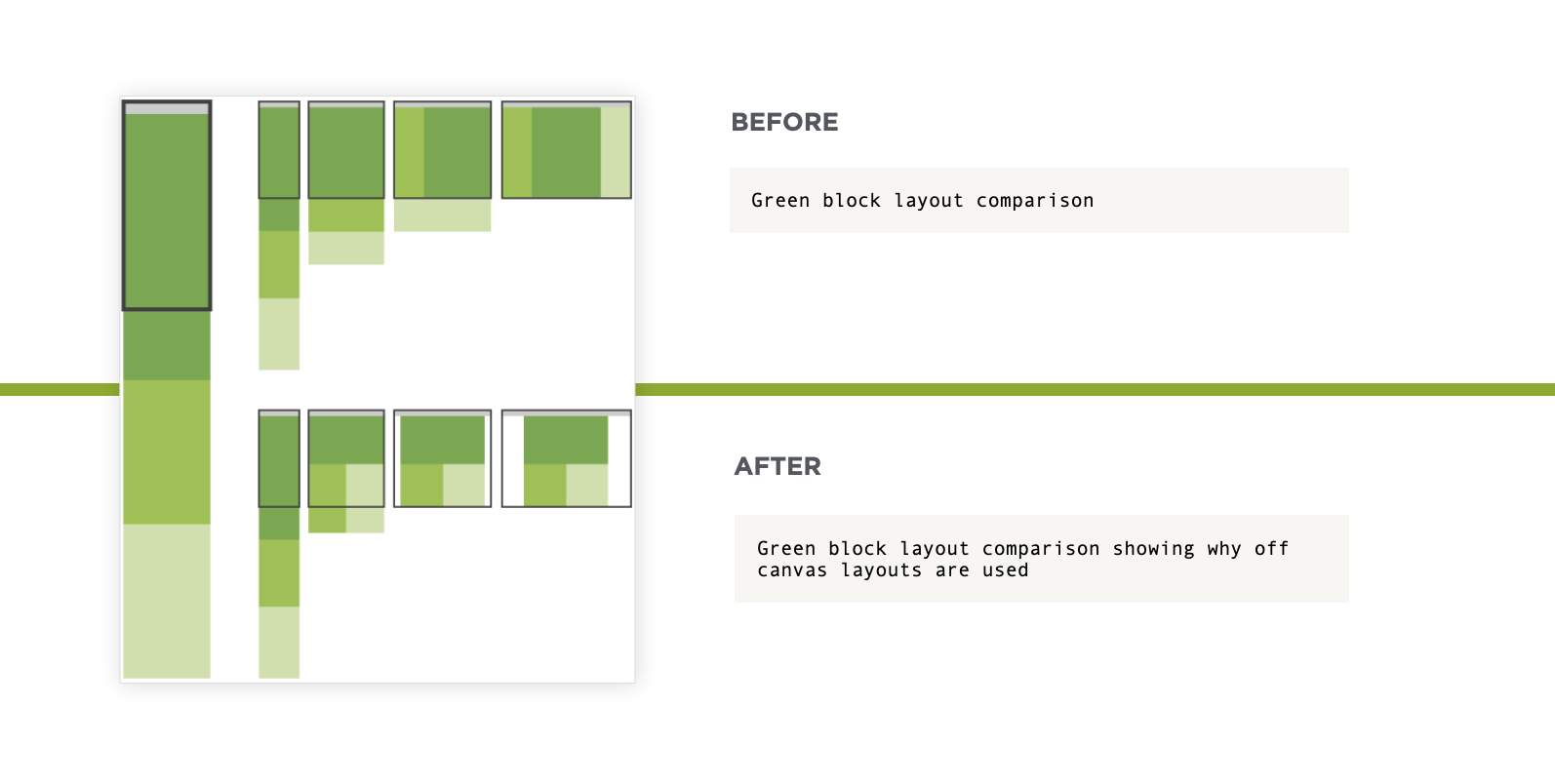
Despite a robust retrieval system, Wroblewski noted a recurring failure: images were rarely included in replies, even when highly relevant options existed. Upon investigation, he discovered a metadata quality issue. For example, an image depicting an "off-canvas responsive layout" was automatically titled by the AI as "Green block layout comparison." While technically accurate, the title failed to capture the strategic intent of the graphic. Users searching for design advice were unlikely to query "green blocks," rendering the system’s best visual assets invisible.
Phase 3: The Synergy of Human Intent and Machine Intelligence
Recognizing that AI is often a "black box" that lacks contextual nuance, Wroblewski pivoted toward a hybrid approach. He realized that the missing link was his own historical data: the ALT tags he had diligently attached to every image over the past 30 years for accessibility purposes. By instructing a new, faster AI model to synthesize existing ALT tags with AI-generated descriptions, the system began producing titles that were both contextually rich and strategically relevant.

Supporting Data: Why Context Matters
The impact of this metadata refinement is not merely anecdotal; it represents a fundamental shift in how large language models (LLMs) connect disparate data points.
The Power of Augmentation
When the AI combined the generic "Green block layout" title with the human-authored ALT tag "Why Off Canvas Layouts?", the resulting metadata became: "Green block layout comparison showing why off canvas layouts are used." This level of specificity is what allows the retrieval system to accurately map a user’s intent—such as a query about layout strategies—to the exact visual that explains it.
Empirical Evidence
Wroblewski’s internal testing demonstrated that users overwhelmingly prefer responses that integrate visual media. In A/B comparisons, replies featuring inline images consistently outperformed text-only blocks in readability, information retention, and user satisfaction.
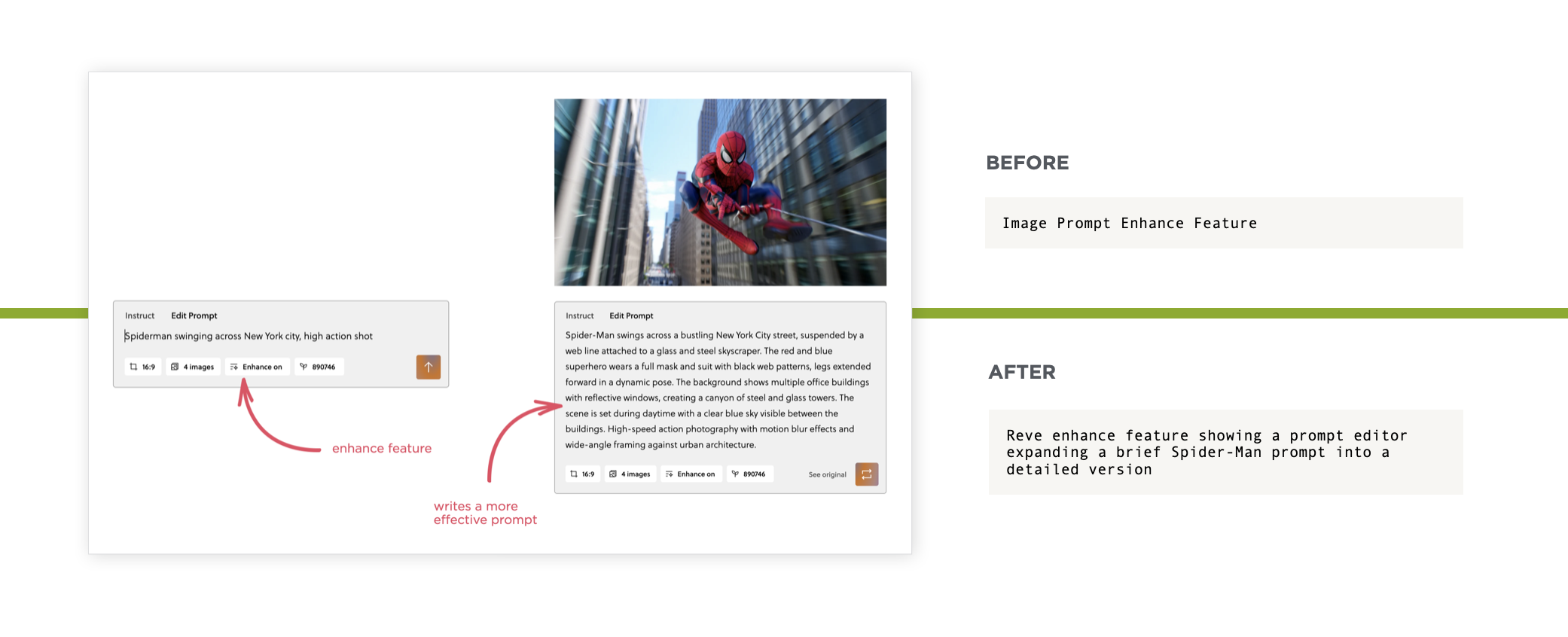
Consider the case of the "Reve" feature:
- Original AI "Image Prompt Enhance Feature"
- ALT Tag Metadata: "Reve enhance feature"
- Combined/Optimized "Reve enhance feature showing a prompt editor expanding a brief Spider-Man prompt into a detailed version"
The optimized title provides enough descriptive surface area for the retrieval system to understand not just what the image is, but what it demonstrates. This allows the AI to select the image as a pedagogical aid rather than a decorative element.
Implications for the Future of AI Interaction
The implications of this development extend far beyond a single developer’s website. It highlights a paradigm shift in how we might handle the "wall of text" issue that plagues current chatbot implementations.
1. The Death of the "Wall of Text"
As LLMs become more integrated into professional workflows, the demand for "visual literacy" in AI will grow. By breaking up long-form answers with relevant, high-fidelity images, systems can reduce cognitive load. Wroblewski’s work proves that images should not be treated as distinct from the text, but as an extension of it—a core component of the answer itself.
2. Human-in-the-Loop Architecture
Wroblewski’s system emphasizes a vital principle: AI should defer to human intent. His pipeline is built to respect human-authored metadata; if a user manually renames an image, the AI will not overwrite it. This "human-first" philosophy ensures that the system maintains a level of expertise and editorial integrity that pure, unguided machine learning often lacks.
3. Dynamic Updating
The architecture is designed to be self-healing. If an image is updated or re-contextualized in a new article, the pipeline automatically re-evaluates the image’s metadata. This creates a living index where the AI’s understanding of a visual asset evolves alongside the author’s changing body of work.
Official Perspective: The "AI Begets AI" Philosophy
Wroblewski characterizes his approach as "AI begets more AI," a philosophy that acknowledges the limitations of machine intelligence while leveraging its speed.
"The ingestion pipeline watches for new image uploads," Wroblewski notes. "When an image is added to my site, an AI model examines its contents and produces a title and description. We aren’t just using AI to answer questions; we are using AI to build a better map of the information we already have."
He further argues that the integration of accessibility best practices (ALT tags) into AI retrieval systems is a win-win for both searchability and inclusivity. By prioritizing descriptions that were originally intended for screen readers, the system becomes more accessible to all users, while simultaneously providing the high-quality metadata necessary for advanced retrieval algorithms.
Looking Ahead: The Synthesis of Knowledge
As LLMs continue to integrate into our daily digital lives, the focus must shift from simply generating more text to generating better experiences. The "Ask LukeW" update serves as a blueprint for developers looking to inject human-centric design into their AI pipelines.
By treating historical archives not as dead data, but as a dynamic, searchable library, creators can ensure that their AI assistants are not just spitting out generic summaries, but providing context-rich, visually grounded responses. In the ongoing battle against the "wall of text," the marriage of human-authored intent and machine-led indexing may well be the most effective weapon available to developers today.
As Wroblewski continues to iterate on his system, the goal remains clear: to build an interface that feels less like a chat window and more like a conversation with an expert—one who knows exactly when to stop talking and show you the picture instead.

 Rifan Muazin

 Ali Ikhwan

 Muslim

 Evan Lee Salim

 Basiran

 Reynand Wu

 Layla Zulfa

 Nana
