
 Ammar Sabilarrohman
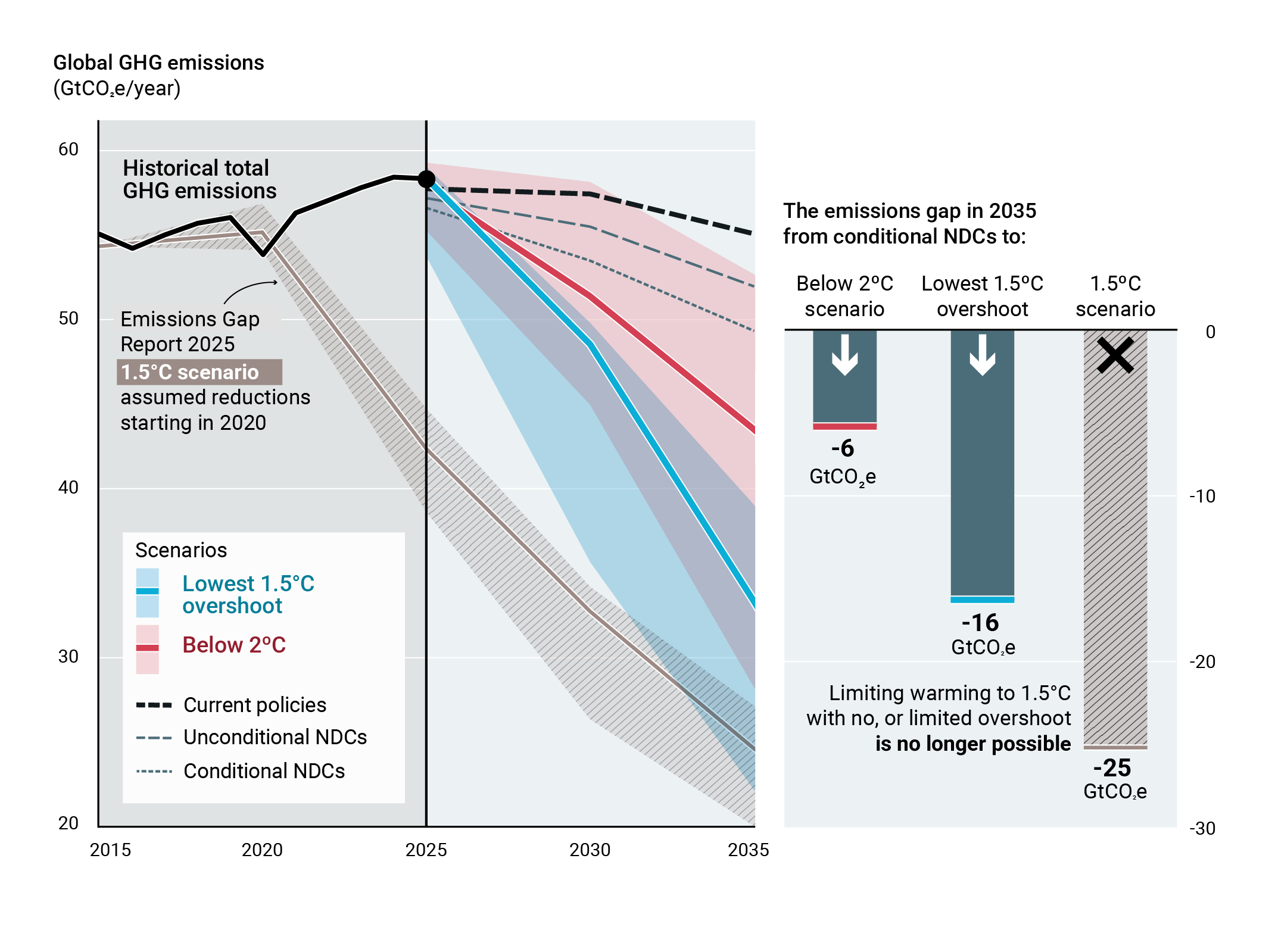
In a sobering assessment that marks a definitive shift in the global climate narrative, the United Nations Environment Programme (UNEP) has declared that a temporary breach of the 1.5C global warming limit is now "inevitable." The organization’s 2026 Emissions Gap Report, titled The Point of Return, explicitly states that despite decades of international dialogue, the window to prevent an overshoot of the Paris Agreement’s most ambitious temperature target has closed.
The report serves as a stark reality check for policymakers worldwide. Rather than focusing solely on preventing the breach, the UNEP argues that the global priority must now shift to minimizing the magnitude and duration of this temperature "overshoot," while establishing a credible path to return global temperatures to 1.5C by the end of the century.
Main Facts: A Decade of Insufficient Action
The core finding of the 2026 report is that human-driven climate change has reached a threshold where the original pathways to holding warming at 1.5C—those relying on immediate, massive cuts starting years ago—are no longer physically viable.
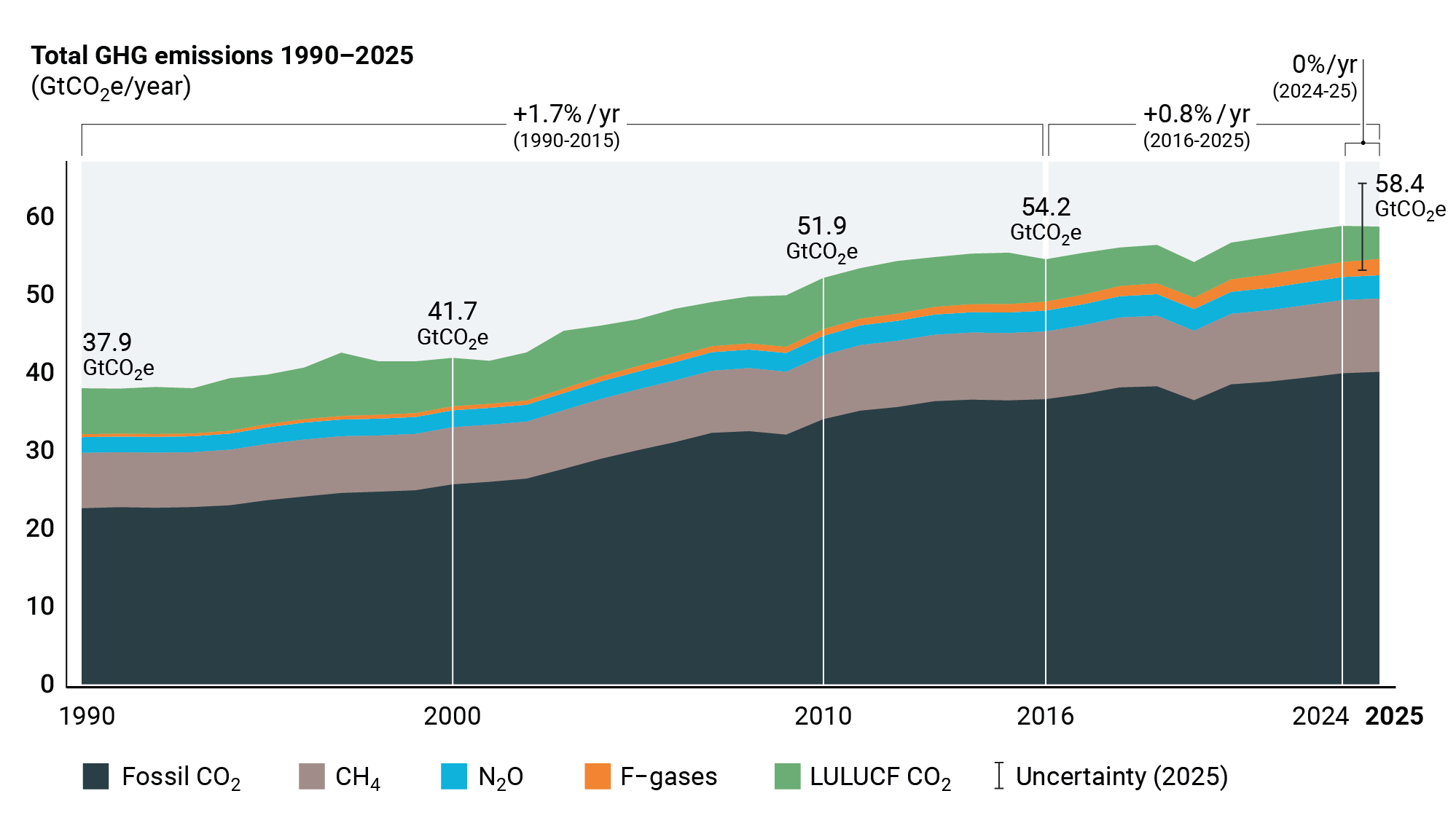
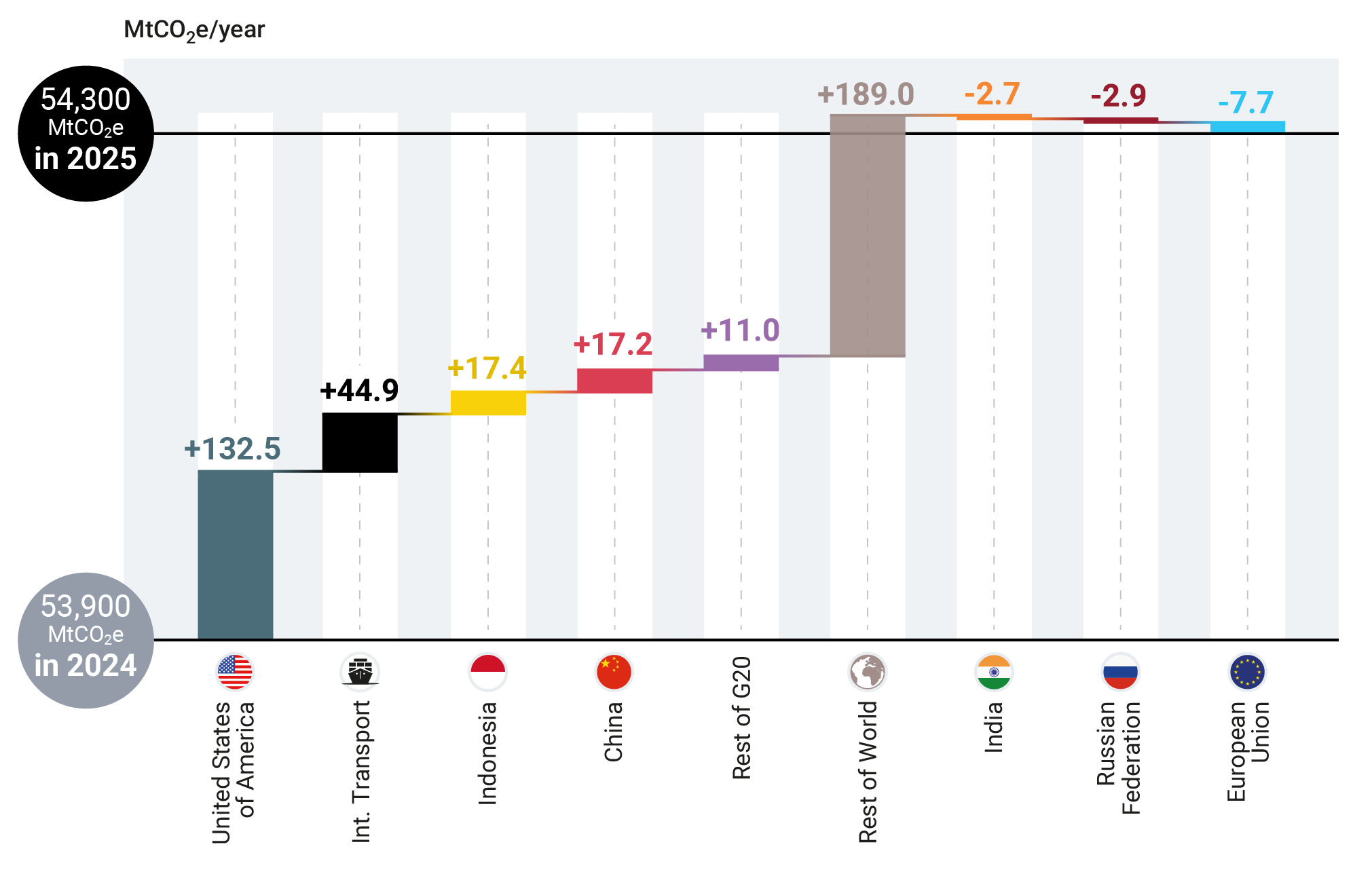
The report highlights that global greenhouse gas (GHG) emissions in 2025 totaled approximately 58.4 billion tonnes of CO2 equivalent (GtCO2e). While this figure represents a marginal dip of 0.16 GtCO2e from 2024, the report stresses that the data is provisional and reflects a flattening rather than a definitive downward trend.
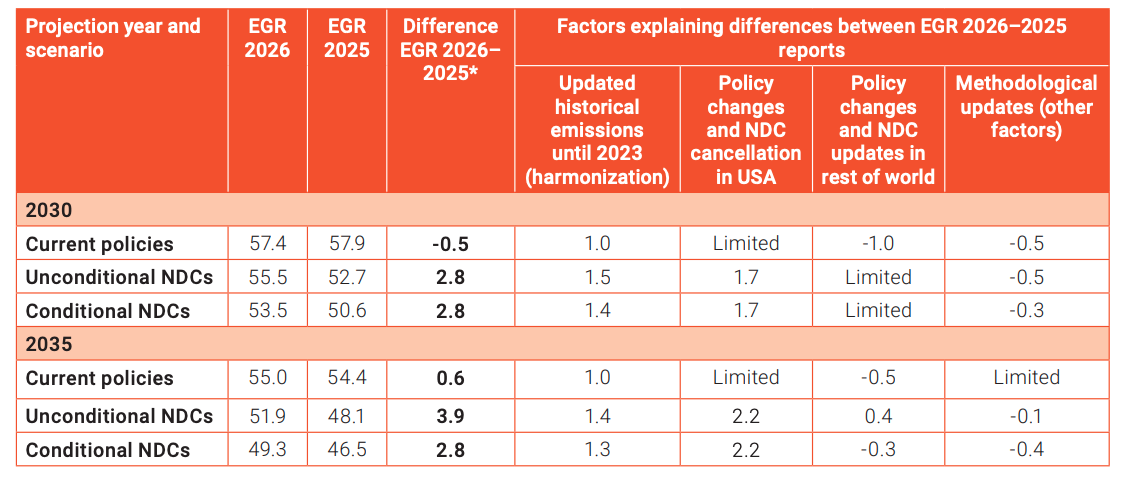
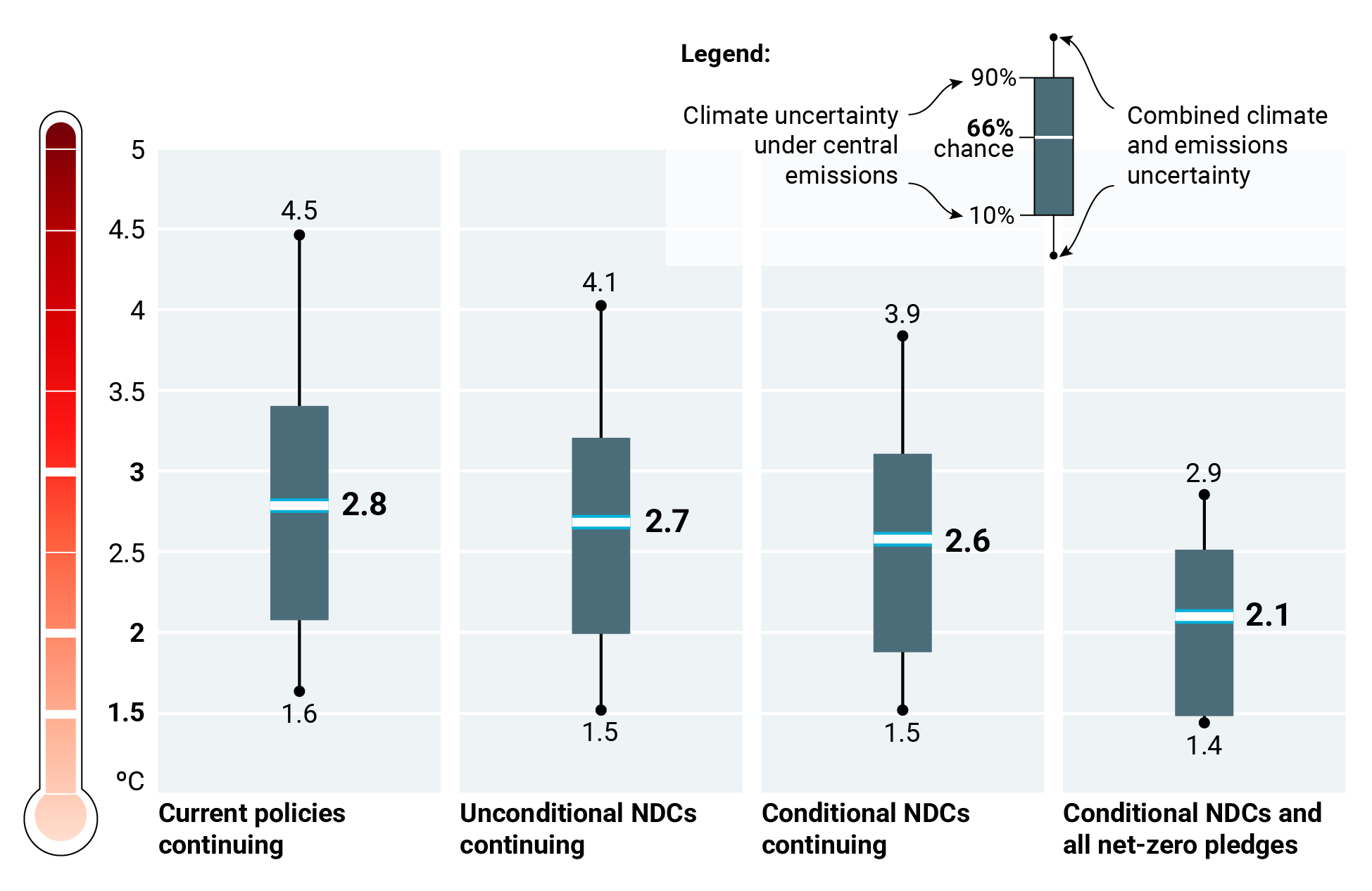
The "Emissions Gap"—the chasm between what countries have pledged to do and what is scientifically necessary to stabilize the climate—remains cavernous. Even if all nations fully implemented their current Nationally Determined Contributions (NDCs), the world would remain on track for approximately 2.6C of warming by 2100. The UNEP identifies this as a failure of policy, noting that the narrowing of the gap in recent assessments is often due to geopolitical shifts, such as the US withdrawal from the Paris Agreement, rather than genuine, robust climate progress.
Chronology of a Slow-Motion Crisis
To understand how we arrived at this "point of return," one must look at the trajectory of global emissions over the last 35 years. From 1990 to 2015, global emissions grew by an average of 1.7% annually. While the growth rate has slowed to 0.8% per year since 2016, this deceleration is insufficient to offset the cumulative buildup of GHGs in the atmosphere.
- 1990–2015: A period of unchecked growth in global emissions, primarily driven by rapid industrialization in emerging economies and persistent fossil fuel reliance in the Global North.
- 2015–2020: The signing of the Paris Agreement created a framework for action, but implementation lagged significantly behind rhetoric.
- 2023–2025: The first "Global Stocktake" at COP28 and the subsequent COP30 summit in Brazil attempted to catalyze a "quantum leap" in ambition. However, 95% of nations missed the February 2025 deadline to submit their third round of NDCs.
- 2026: The UNEP declares the 1.5C threshold breached, effectively rendering the "no-overshoot" pathways of the IPCC’s Sixth Assessment Report (AR6) obsolete.
Supporting Data: The Anatomy of the Overshoot
The 2026 report introduces a new generation of climate pathways that acknowledge the failure to cut emissions to date. These pathways are built on the assumption that aggressive mitigation must begin in 2025 to keep the overshoot within "feasibility and sustainability guardrails."
The 1.5C Overshoot Scenario
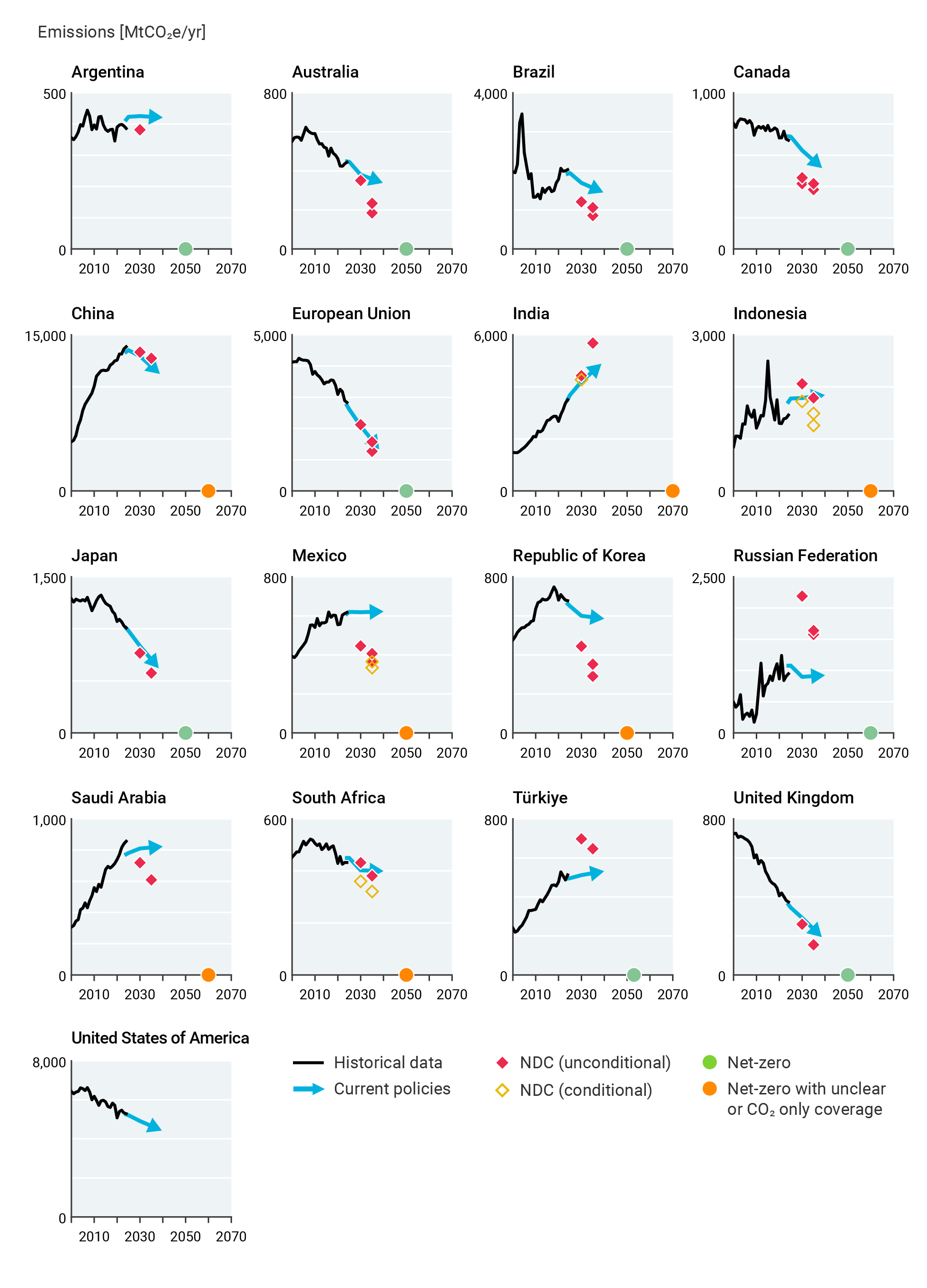
To return to 1.5C by 2100, the report outlines a daunting requirement: global emissions must drop by 18% by 2030, 45% by 2035, and 69% by 2040, relative to 2025 levels. This would require an annual reduction rate of 5.7% over the next decade—a pace significantly faster than the 5% required in scenarios developed just a few years ago.
Sectoral Disparity
While the power and transport sectors show signs of progress—thanks largely to the surge in solar energy and the electrification of light-duty vehicles—these advancements are being cancelled out by rising demand for international aviation, shipping, and the burgeoning energy needs of data centers.
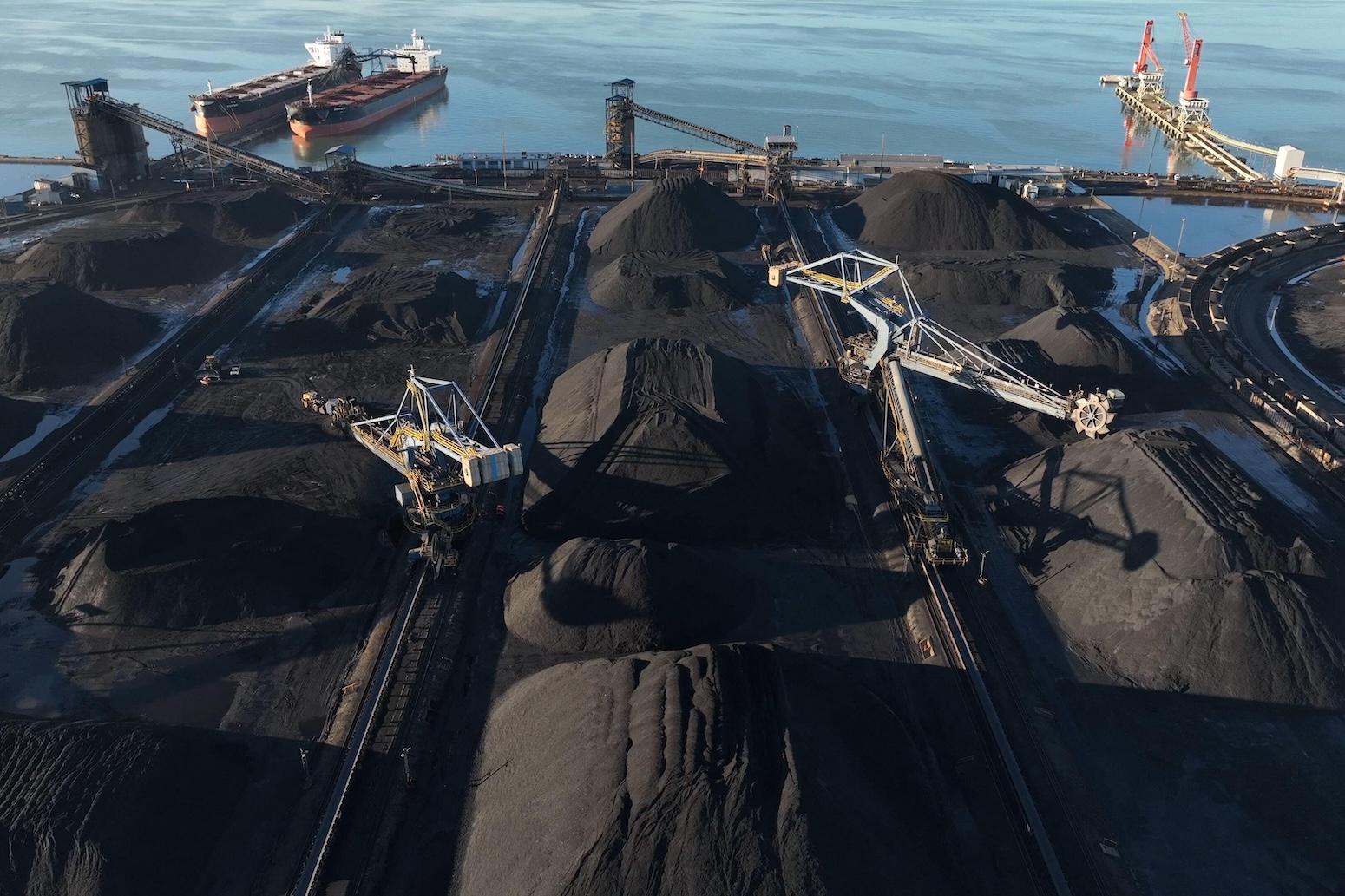
- Fossil Fuel Usage: Despite the growth of renewables, coal usage is projected to peak only by 2030, while oil and gas consumption continues to climb.
- Land-Use Change: Emissions from deforestation remain a major hurdle. To meet end-of-decade goals, the report notes that the rate of forest loss must be slowed by a factor of ten.
- Carbon Removal: The report emphasizes that achieving the return path to 1.5C is impossible without a massive, sustainable scale-up of carbon dioxide removal (CDR) technologies.
Official Responses and Political Realities
The international response to the emissions gap remains, in the words of the UNEP, "uneven and insufficient." The withdrawal of the United States from the Paris Agreement has created a vacuum in global leadership, complicating the collective effort to harmonize targets.
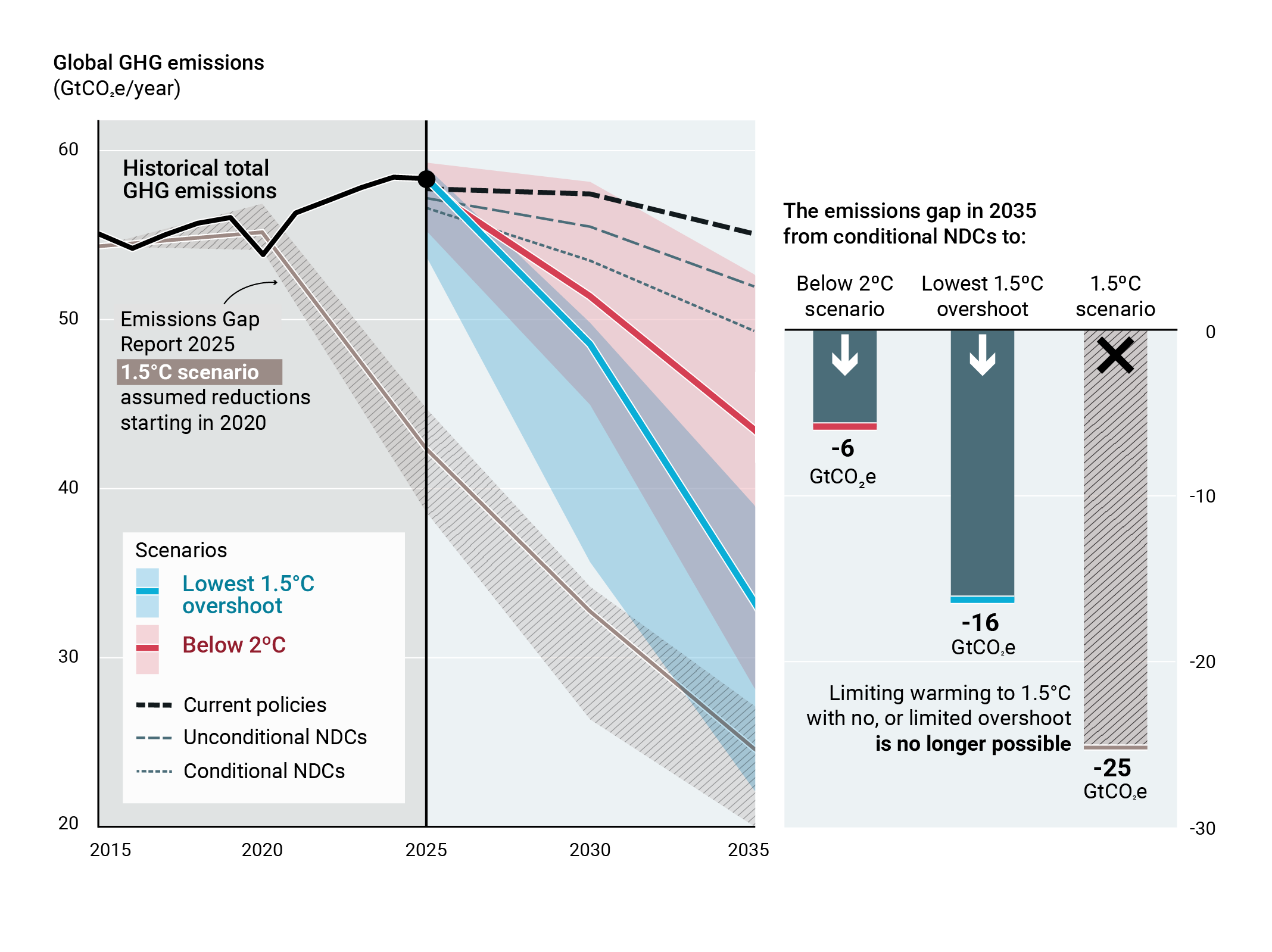
G20 nations, which account for the vast majority of global emissions, are largely misaligned with their own stated net-zero targets. While 124 countries have submitted their third-round NDCs, these pledges lack the scope and sectoral coverage required to bridge the gap. There is a palpable disconnect between the climate-positive language used in COP summit declarations—such as the "Global Mutirão" package from COP30—and the domestic policies that drive real-world energy consumption.
The UNEP warns that for every five years of delay, the world "locks in" an additional 0.1C of warming. The political hesitation to implement structural economic shifts is now costing the planet in direct, measurable temperature increases.
Implications: The High Cost of Delay
The implications of the 2026 report are both physical and existential.
The Physical Impact
If current policies continue, the world is on a trajectory toward 2.8C of warming by the end of the century. This brings with it a 10% chance that warming could exceed 3.4C, a level of change that would fundamentally alter global weather patterns, sea levels, and agricultural viability.
The Economic and Social Necessity
The report argues that the "lowest overshoot" scenario is the only responsible way forward. This requires balancing bioenergy and carbon removal with food security and biodiversity. There is no longer a "business-as-usual" option; the transition must now be rapid, sustained, and deep.
The report concludes that while the "no-overshoot" target has been lost, the window to avoid the most catastrophic outcomes remains open—but only just. The "point of return" is not an end, but a pivot point. The task for the international community is to move from the phase of setting promises to a phase of radical, quantifiable implementation.
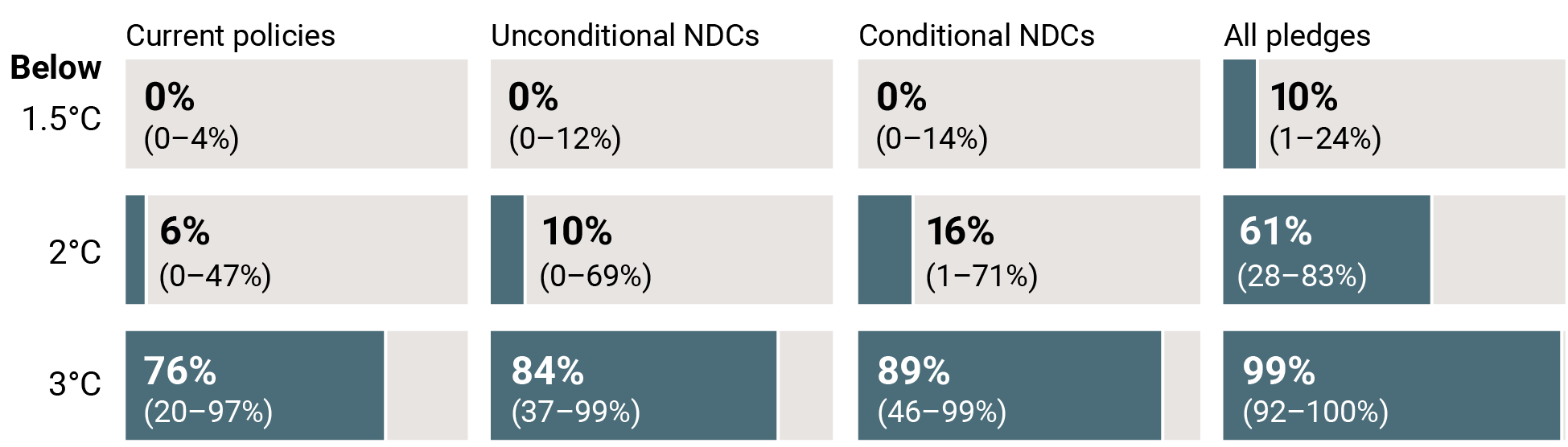
If the global community fails to meet the updated 2035 benchmarks, the report warns that even the 2C limit may become unattainable. The era of debating the necessity of climate action has concluded; the era of managing the consequences of our past inaction has begun. The challenge now is to ensure that the "overshoot" is a brief, managed detour rather than a permanent descent into a hotter, more unstable world.
The 2026 report stands as a final, urgent warning: the atmosphere does not negotiate. It only responds to the accumulation of emissions, and currently, those emissions are dictating a future that the world is woefully unprepared to navigate.


 Laily UPN

 Nana Muazin

 Basiran

 Nana Wu

 Nana

 Siti Muinah


 Reynand Wu
