
 Nana Muazin

This story was originally published by Capital B and is reproduced here as part of the Climate Desk collaboration.
For 18-year-old Elijah Lee, the concept of "the environment" has never been an abstract or global issue. It is, quite literally, the air he breathes and the landscape he navigates. Growing up in a predominantly Black, low-income community in Roanoke Rapids, North Carolina, Lee spent his formative years in the shadow of a local paper mill. That facility, while framed by local officials as a vital economic engine, served as a constant source of air pollution. For Lee, the facility was a daily, visceral reminder of a recurring narrative: that his community was expected to shoulder the environmental burdens of the modern economy while receiving few of its promised rewards.
Now, as he prepares to cast his first-ever ballot in a midterm election, Lee is eyeing the massive proliferation of data centers across Virginia—a state he moved to as a teenager. He watches the massive, windowless warehouses sprout up, consuming vast amounts of electricity and water, and he finds himself skeptical. He fears that the political rhetoric surrounding "economic development" via the tech sector is a repeat of the same old story: promises that never quite reach the people who live in the facility’s shadow.
Lee’s perspective highlights a critical, often overlooked reality in American politics. While climate change might not appear at the top of traditional political polls for Black voters, it is not because they are indifferent to the planet’s future. Instead, it is because they are deeply skeptical of a political system that has consistently prioritized corporate expansion over the health and economic stability of their neighborhoods.
A Disconnect Between Messaging and Reality
Recent data from a seven-state survey conducted by HIT Strategies for the Climate Equity Action Fund and the League of Conservation Voters (LCV) provides a striking illustration of this dynamic. When asked to rank their top three issues, only 9 percent of Black registered voters cited climate change. Conversely, a staggering 74 percent identified the cost of living as a primary concern.
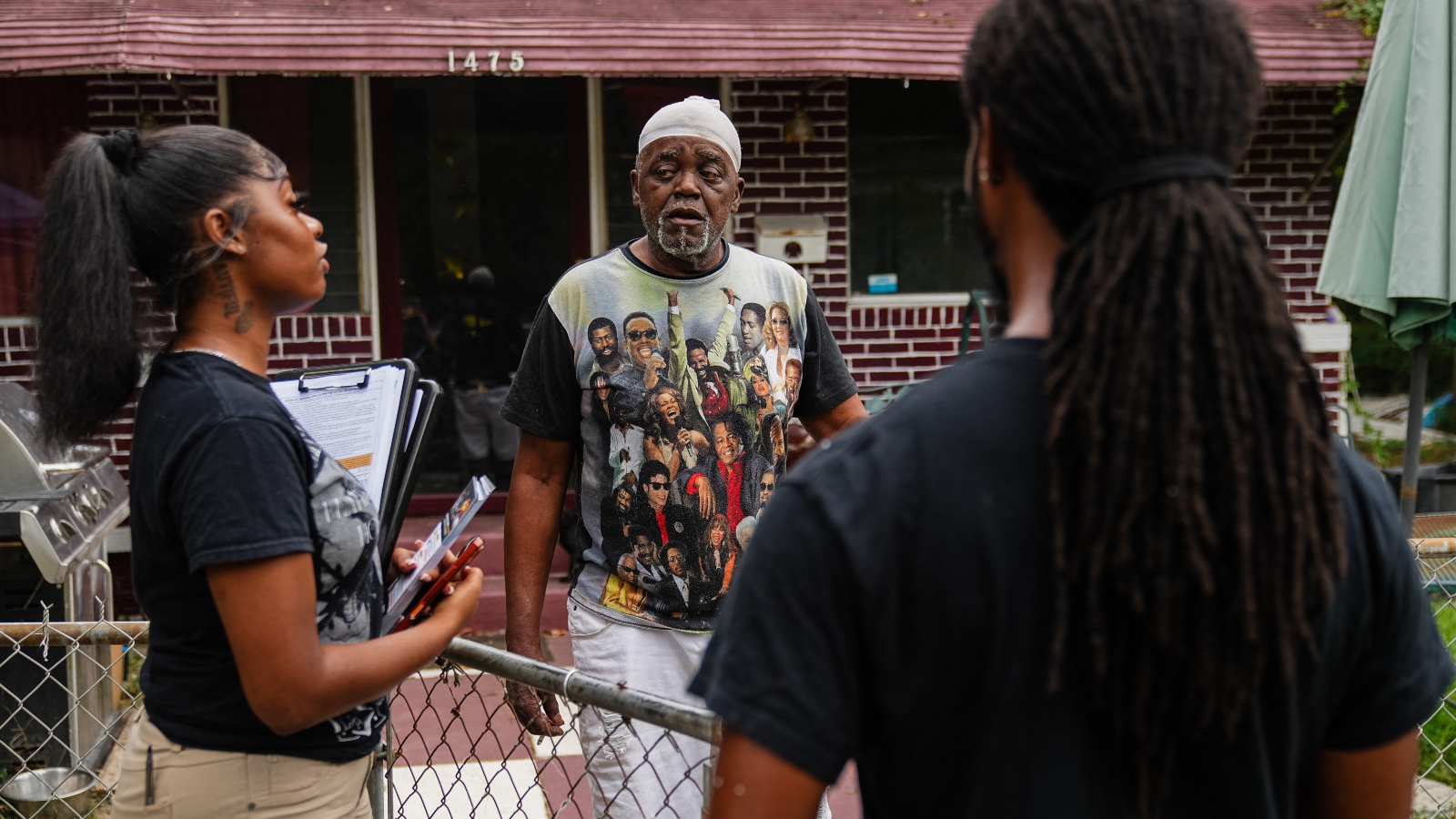
At first glance, this could be interpreted as a lack of interest in environmental issues. However, closer analysis reveals that the "low ranking" is a symptom of a deeper, more profound concern: the feeling that climate policy is being disconnected from the kitchen-table issues of affordability and survival.
"It’s hard to care about the quality of your air or the food that you eat, and whether or not that food is actually clean, when you can’t even afford the food in the first place," Lee says.
This sentiment is echoed by Erica Tebbs, a senior analyst at HIT Strategies. According to Tebbs, the issue isn’t that Black voters lack awareness of environmental threats; it is that they lack faith that their votes will result in tangible improvements. "The proof that is needed is that their concerns will be addressed and responded to by elected officials and that a vote will result in a real impact in their community," she notes. "That’s where the doubts lie."
Chronology of a Growing Crisis: The Rise of Data Centers
The expansion of data centers has become a flashpoint for this debate. In recent years, Virginia has solidified its reputation as the "data center capital of the world." While these facilities are the backbone of the digital economy—powering everything from social media to artificial intelligence—they are also massive energy hogs.
- Pre-2020: Data centers were generally welcomed by local governments as clean, high-tax-revenue generators that didn’t require the traditional services of industrial plants.
- 2021–2023: As the scale of these facilities increased, communities began to notice the impact on local power grids. Simultaneously, reports of increased noise pollution and the displacement of residential areas began to surface.
- 2024–2025: A series of legislative battles erupted in swing states like Georgia, Michigan, and North Carolina regarding who should pay for the massive energy infrastructure required to keep these servers running.
- Late 2026: Congress began debating the first federal bills intended to address the economic and environmental impacts of the data center boom, specifically regarding the "cost-shift" of energy bills from corporations to residential consumers.
Despite these legislative efforts, skepticism remains high. The same HIT Strategies survey found that 52 percent of Black voters expected data centers to increase their personal electricity costs, regardless of federal protections.
The Data: What Voters Want
The survey, which polled 2,000 Black and Latino registered voters across seven key swing states (Arizona, Georgia, Michigan, Nevada, North Carolina, Ohio, and Pennsylvania), paints a clear picture of what these voters actually prioritize:
- 89 percent of respondents said it was important for candidates to prioritize lowering energy costs.
- 86 percent said the same about reducing air and water pollution.
- 82 percent wanted candidates to prioritize addressing climate change.
These figures indicate that when climate policy is framed through the lens of "environmental justice"—addressing clean water, air quality, and the cost of utilities—it is not an afterthought; it is a priority. The problem, as many organizers point out, is that the term "climate change" feels abstract, whereas the "cost of electricity" is a concrete, monthly anxiety.
Bill Hairston, the national field director for the LCV, grew up in Charleston, West Virginia. He remembers the soot-covered grass around his grandmother’s home, a direct byproduct of the coal trucks that rumbled through their neighborhood daily. "I never saw my grandmother’s grass green," he says. Hairston argues that what is happening today with data centers is simply a modern variation of the same extractive industrial pattern. "I think it’s actually just putting the two and two together," he says. "We need to connect the dots between an industry’s presence and the health, affordability, and government oversight of a community."
Official Responses and Political Implications
The political establishment is beginning to take note, though the response has been uneven. Proponents of data centers argue that the tax revenue generated by these facilities funds schools and public infrastructure, ultimately benefiting the entire community. However, critics argue that these benefits are often offset by the environmental costs and the strain placed on the public power grid.
The skepticism toward government promises is cross-partisan. Perhaps most surprisingly, the survey found that 79 percent of Black Republicans expressed that it was important for candidates to prioritize addressing climate change. This suggests that the impact of environmental degradation is a "lived experience" that transcends party labels. When the water isn’t safe to drink or the air is thick with particulates, the political affiliation of the voter matters far less than the necessity of survival.

The Path Forward: Can Accountability Be Restored?
The current state of affairs has left nearly half of the surveyed voters feeling pessimistic, with many believing that powerful corporate interests will always block meaningful change. Yet, there is a resilient core of hope. Forty-five percent of Black voters indicated that they still believe collective action—through voting, petitions, and community organizing—can force government and corporations to be accountable.
This hope is clearly visible in younger generations. Elijah Lee points to student organizers in Spartanburg, South Carolina, who are actively challenging the construction of new data centers in their community. These young people are not just fighting against a project; they are fighting for a voice in the design of their own future.
As the political cycle continues, the message to candidates is clear: Black voters are not waiting for a lecture on the global nuances of carbon footprints. They are waiting for someone to address the local reality of the environment they live in. They want to know who is paying for the infrastructure, why their bills are rising, and why the "green" future being promised seems to arrive with the same old pollution and inequality attached to it.
For leaders who want to earn the trust of this constituency, the strategy is simple but challenging: stop treating the climate as a separate, future-focused issue. Start treating it as the present-day, kitchen-table struggle that it has always been. As Lee puts it, "We know that this is the future that we’re inheriting, the markets that we’re inheriting, the housing that we’re inheriting, the food prices that we’re inheriting. I’m being driven by deep concerns, but also by a deep hope that we can turn this around."


 Raul Delapena Setiawan

 Laily UPN

 Reynand Wu

 Sagoh


 Azzam Bilal Chamdy

 Ali Ikhwan
