
 Rifan Muazin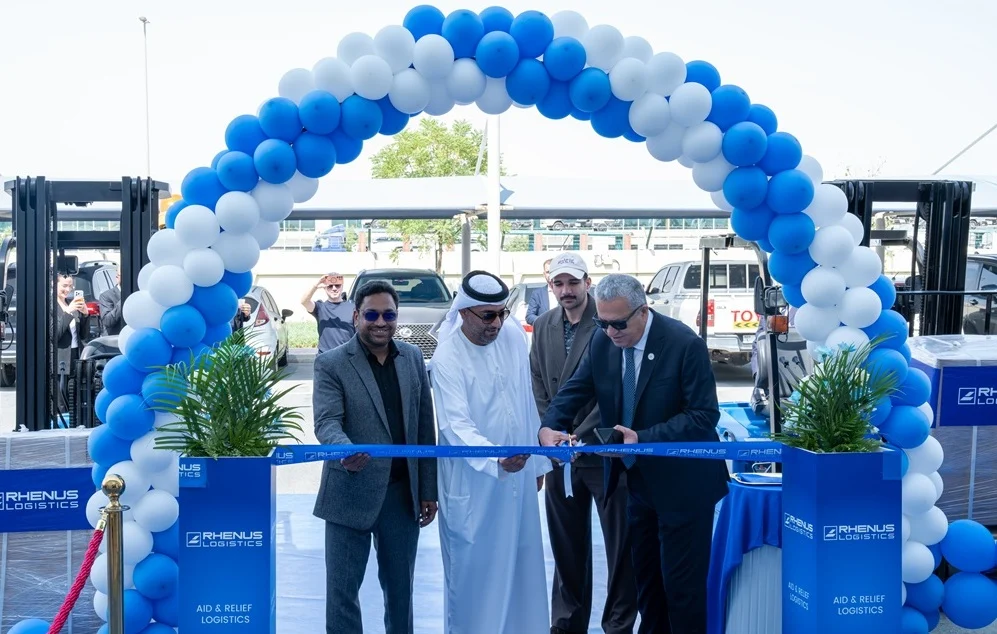
Introduction: A Strategic Milestone in Relief Logistics
In a significant expansion of its global logistics footprint, Rhenus has officially inaugurated a specialized emergency aid and relief logistics office within the Dubai Humanitarian hub. This move, finalized on October 14, represents a pivotal development in the company’s mission to optimize the movement of life-saving supplies in some of the world’s most challenging environments. By embedding itself directly within the heart of the world’s premier humanitarian free zone, Rhenus is signaling a long-term commitment to enhancing the efficiency, speed, and reliability of global relief efforts.
This initiative follows a year of rapid growth for Rhenus’s humanitarian arm in the United Arab Emirates. Having secured its free zone license earlier this year, the company has spent the intervening months building the necessary transport infrastructure—both regional and cross-border—and solidifying its network of humanitarian partners. Now fully operational, the Dubai Humanitarian office will serve as a central command for orchestrating complex air, ocean, and road freight operations, ensuring that essential aid reaches those in need with unprecedented precision.
The Core Mandate: Managing Critical Supply Chains
The primary function of the new Rhenus office is to navigate the logistical bottlenecks that often impede disaster response and long-term humanitarian aid. The team stationed at the Dubai Humanitarian hub is tasked with the end-to-end management of supply chains for a diverse array of essential goods. These include:
- Medical and Pharmaceutical Supplies: High-value, temperature-sensitive, and time-critical items that require specialized cold-chain management and rapid customs clearance.
- Food Aid: Large-scale, volume-heavy shipments that require robust planning and coordination to prevent spoilage and ensure timely delivery.
- Shelter Materials: Bulk supplies such as tents, temporary housing kits, and building materials that are vital in the immediate aftermath of natural disasters.
- Emergency Response Equipment: Technical gear and machinery required by NGOs and UN agencies to establish operational bases in crisis zones.
By consolidating these functions within the Dubai Humanitarian hub, Rhenus is positioning itself as a vital link between the global supply of aid and the frontlines of humanitarian crises.
Chronology: From Strategy to Execution
The establishment of this office is the culmination of a deliberate, multi-stage strategy. The trajectory of Rhenus’s expansion in the Middle East over the past year highlights the company’s methodical approach to entering the specialized humanitarian sector:
- Q1–Q2 2026: Strategic Assessment and Market Entry: Rhenus began evaluating the logistical gaps within the regional aid sector. Recognizing that proximity to humanitarian actors was key, the company initiated the process of entering the Dubai Humanitarian ecosystem.
- Mid-2026: Securing Licensing and Infrastructure: The company successfully obtained its Dubai Humanitarian free zone license. This milestone allowed Rhenus to operate within the specific regulatory framework designed for non-profit and humanitarian organizations, providing them with the agility required for rapid response.
- Q3 2026: Network Development: During this period, the Rhenus team focused on building relationships with regional stakeholders, refining cross-border transport protocols, and ensuring that their air and sea freight capabilities were aligned with the specific requirements of aid organizations.
- October 14, 2026: Formal Inauguration: The office officially opened its doors, marking the transition from a planning phase to full operational readiness.
The Dubai Humanitarian Ecosystem: A Unique Collaborative Model
To understand the significance of this move, one must first understand the unique nature of Dubai Humanitarian. As the world’s only non-profit, independent humanitarian free zone authority, it serves as an unparalleled incubator for relief efforts.
The hub currently hosts a diverse community of approximately 80 members, including high-level UN agencies, international non-governmental organizations (NGOs), and commercial logistics entities. This "ecosystem approach" is designed to strip away the administrative and geographic barriers that often slow down relief operations. By housing logistics providers like Rhenus alongside the very organizations that need to deploy supplies, the hub creates a "one-stop-shop" for global emergency preparedness.
This proximity allows for what experts describe as "operational necessity." When a crisis occurs, time is the scarcest resource. The ability to coordinate with partners in person, share data in real-time, and leverage pre-existing logistics corridors within the hub can shave days, or even weeks, off a deployment timeline.
Official Responses: Aligning Objectives
The inauguration has been met with broad support from leadership on both sides of the partnership.
Hassan Alzeer, Managing Director of Rhenus Middle East, emphasized the importance of community-based logistics:
"Dubai Humanitarian brings together many of the organizations that play a vital role in humanitarian response. Being part of this community allows us to work more closely with our partners and better support their logistics requirements when and where they are needed."
This sentiment was echoed by Giuseppe Saba, Chief Executive and Board Member of Dubai Humanitarian, who spoke to the strategic advantages of the new office:
"In humanitarian preparedness and response, proximity is more than a logistical advantage as it can be an operational necessity. Rhenus Logistics’ presence within Dubai Humanitarian reinforces the value of our ecosystem where humanitarian actors and logistics partners work side by side, strengthening coordination, efficiency, and the capacity to respond when it matters most."
Sayid Kunhipurayil, Logistics Development Manager for Aid & Relief at Rhenus Middle East, highlighted the technical challenges of the sector:
"Humanitarian shipments often move under intense time pressure and through complex operating environments. Our role is to bring structure, reliability, and practical logistics expertise to those moments, helping organizations plan the right route, secure capacity, and move essential supplies as efficiently as possible."
Implications: The Future of Humanitarian Logistics
The entry of a major player like Rhenus into the Dubai Humanitarian hub carries significant implications for the broader humanitarian logistics industry.
1. Professionalization of Aid Logistics
There is an increasing trend toward the professionalization of relief supply chains. As crises become more frequent and more complex, the informal or "ad-hoc" logistics models of the past are no longer sufficient. Rhenus brings a level of corporate-grade rigor, compliance, and technological integration that helps ensure aid reaches its destination without being diverted or delayed by poor planning.
2. Resilience and Scalability
The ability to scale quickly is the hallmark of effective humanitarian logistics. By maintaining a permanent presence in Dubai—a global transit hub with world-class air and sea connectivity—Rhenus can scale its operations up or down depending on the severity of a crisis. This flexibility is critical for organizations that must respond to unpredictable events, such as natural disasters or sudden regional conflicts.
3. Strengthening the "Last-Mile" Capability
While the "first-mile" and "middle-mile" are often well-managed by major carriers, the "last-mile"—getting supplies from a regional hub to the specific disaster site—is notoriously difficult. By working within the Dubai Humanitarian hub, Rhenus is better positioned to integrate its services with the specialized, local-level distribution networks used by NGOs. This alignment helps bridge the gap between global shipping and local distribution.
4. Setting a New Standard for Partnerships
The Rhenus-Dubai Humanitarian collaboration represents a model for future Public-Private Partnerships (PPPs). In an era of limited funding for international aid, the efficiency gained through private-sector expertise can be seen as a form of "force multiplication." Every dollar saved on logistical inefficiency is a dollar that can be redirected toward the purchase of more food, medicine, or shelter materials.
Conclusion: A New Chapter in Relief Operations
As Rhenus begins its operations from the Dubai Humanitarian hub, the broader global community will be watching to see how this strategic move influences the speed and efficacy of international relief efforts. By combining the global logistics prowess of a multinational firm with the specialized, high-intensity environment of a dedicated humanitarian free zone, Rhenus is setting a new standard for how the world prepares for and responds to emergencies.
The challenges of modern humanitarian work are immense, ranging from geopolitical volatility to the logistical nightmare of climate-related disasters. However, with the establishment of this new office, Rhenus has equipped itself—and its partners—with a powerful new tool to navigate these complexities. As the company continues to refine its processes and expand its reach, the primary beneficiary will be the vulnerable populations worldwide who depend on the timely arrival of essential supplies to survive and recover from crisis.
This initiative is more than just a new office; it is a testament to the idea that, in the face of human tragedy, the most effective response is one built on professional expertise, strategic collaboration, and an unwavering commitment to the humanitarian cause.

 Nana Muazin
 Lina Irawan
 Layla Zulfa
 Nana
Nana
 Pevita Pearce


 Iffa Jayyana