
 Laily UPN
The landscape of supply chain management is undergoing a tectonic shift. For decades, Advanced Planning Systems (APS)—the sophisticated software engines designed to optimize procurement, manufacturing, and distribution—have been the backbone of the enterprise. However, a growing chorus of industry experts, consultants, and practitioners are beginning to question whether these monolithic platforms have reached a dead end.
The central critique is sharp: as modern supply chains become increasingly non-linear and globalized, the rigid, function-centric architectures of traditional APS providers are proving ill-equipped to handle the volatility of the 21st century.
The Core Inquiry: Are APS Vendors Obsolete?
The debate was recently crystallized in an exchange between a high-level consultant and industry analyst Lora Cecere. The consultant, who works for a major global firm, posed a provocative question: Are APS companies, such as o9, Kinaxis, and Blue Yonder, destined for extinction?
The consultant’s thesis is rooted in the "untidy application overhead" required to make these systems work. According to this view, the cost and complexity of implementing these platforms no longer justify their inclusion in the enterprise stack. The consultant argues that for these vendors to survive, they must evolve into either "headless" solvers—specialized, background computational engines—or truly integrated enterprise platforms.
Yet, the critique suggests that most current vendors lack the foundational knowledge of enterprise ontology, master data management, and the scalability required to make that leap. Furthermore, the industry’s current pivot toward "Agentic AI" is, according to this view, largely performative, lacking a deep, functional understanding of how real-world decisions are made across complex, cross-functional organizational silos.

Chronology of a Failed Evolution: From 1980s Logic to Modern Chaos
To understand why APS platforms are struggling, one must look at their origins. Most of the process flows used in today’s planning systems were codified in the 1980s. These systems were built to drive "functional excellence"—the idea that if you optimize a single silo (e.g., procurement), the entire business benefits.
The Era of Siloed Optimization (1990–2010)
During this period, businesses were organized as hierarchies. APS solutions were implemented to streamline these hierarchies, providing each department with an optimization engine. While this improved efficiency within specific functions, it inadvertently birthed a systemic problem: the "Bullwhip Effect." By optimizing for one function without regard for the downstream impact on another, companies unknowingly created massive inefficiencies, leading to bloated inventory and reactive, "knee-jerk" management styles.
The Rise of Control Towers (2010–2020)
As the flaws of siloed planning became evident, vendors introduced "Control Towers" and risk management modules. These were intended to provide visibility across the enterprise. However, industry analysis suggests these tools merely addressed the symptoms rather than the root cause. They provided dashboards, but they did not bridge the fundamental gap between misaligned metrics and conflicting organizational goals.
The Current Impasse: The Agentic AI Mirage (2020–Present)
Today, we are witnessing a rush toward Agentic AI. Vendors promise that autonomous agents will solve supply chain problems in real-time. Yet, this push ignores a fundamental reality: data latency. The dream of "real-time" supply chain management remains elusive, as roughly 60% to 70% of vital warehouse and contract manufacturing data is not available within the same day. Implementing automated AI agents on top of delayed, inaccurate data is, according to critics, a recipe for automated chaos.
Supporting Data: Why Alignment is the Missing Link
The primary reason for the failure of APS to evolve into true enterprise platforms is not technical—it is organizational.

The Metric Misalignment
CFOs frequently view the supply chain as a cost center to be squeezed, rather than a growth engine to be optimized for reliability and capital efficiency. Because employees are incentivized based on functional performance (e.g., procurement savings), they are often rewarded for behaviors that are detrimental to the overall enterprise. Without a fundamental realignment of metrics, an APS platform that attempts to span revenue management, manufacturing, and transportation is essentially trying to manage a house divided against itself.
The Latency Gap
Data availability remains the "elephant in the room." As manufacturing and warehousing have been increasingly outsourced, the "brand owner" (the company) has become further removed from the actual data.
- Data Availability: Only 30–40% of contract manufacturing and warehouse data is accessible on a same-day basis.
- Decision Velocity: Companies often attempt to apply tactical, long-term planning processes to operational, short-term windows. This mismatch leads to the "hero culture," where teams spend their days putting out fires that were caused by systemic planning failures.
Official Perspectives and Expert Rebuttal
In response to the growing skepticism, Lora Cecere posits that the future of APS must be built on "First Principles" rather than legacy architecture.
"The APS as an enterprise platform is a pipe dream," Cecere notes. "Within an organization, functions aren’t aligned, and without goal alignment, employees are happier not working together."
Cecere advocates for a move away from the "planner-centric" model, which she believes is inherently limiting. Instead, she proposes a framework that treats the enterprise as an "outside-in value network." This requires a shift from:
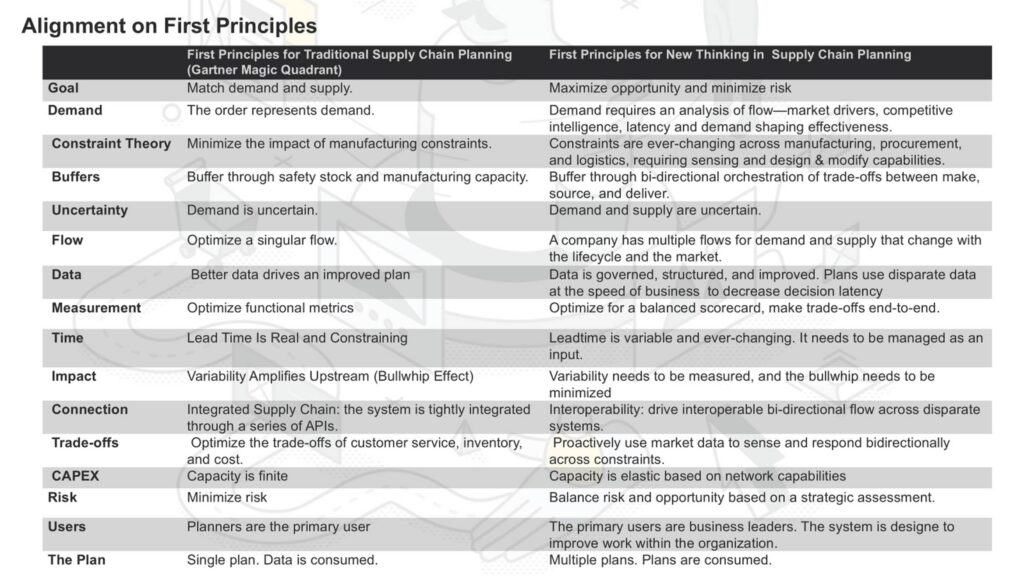
- Project-based deployments to Outcome-based governance.
- Functional optimization to Balance sheet outcome optimization.
- Planner-centric interfaces to Design-thinking-led organizational frameworks.
She warns that companies should avoid the temptation to "roll their own" custom solutions. Building custom code creates long-term technical debt and assumes that a company has the internal expertise to solve complex supply chain optimization problems—a capability that most organizations simply do not possess.
Implications: The Path Forward
The implications for the supply chain software market are significant. If current APS vendors cannot pivot from being "lipstick on an old pig" to being truly intelligent, adaptable layers, they will eventually be replaced by leaner, more modular architectures.
1. The Death of the "One-Size-Fits-All" Platform
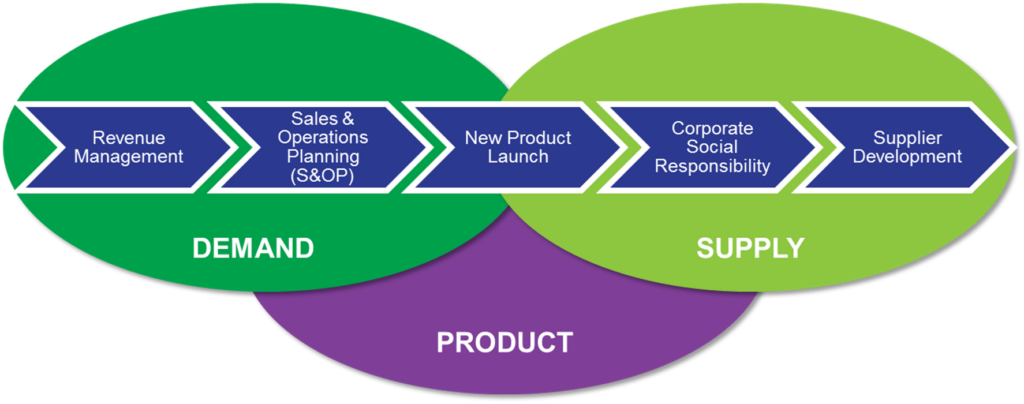
The era of the all-encompassing APS suite is likely drawing to a close. The future belongs to modular, interoperable systems that can handle specific constraints without requiring a massive, multi-year, and often unsuccessful implementation cycle.
2. A Renewed Focus on Data Semantics
Before companies invest in Agentic AI, they must invest in their data layer. This means focusing on:
- Unified Data Models: Creating a single source of truth that transcends functional silos.
- Semantic Reconciliation: Ensuring that data from disparate sources (contract manufacturers, logistics providers, retail partners) speaks the same language.
- Ontological Frameworks: Mapping how work is actually performed, rather than how it is documented in outdated process manuals.
3. Redefining the Role of the Planner
The goal of future systems should not be to make planners faster at chasing issues; it should be to eliminate the need for such reactivity entirely. By focusing on the "Forecast Value Added" (FVA) and right-sizing inventory buffers, the next generation of planning must prioritize system stability over individual heroics.
Conclusion: A Call for Experimentation
While the pressure to slow down the pace of AI innovation is mounting, the reality is that the pace of technological change is accelerating. Companies cannot afford to stand still. However, they must stop treating supply chain planning as a technology project and start treating it as a business philosophy.
The survival of the APS vendor depends on their ability to stop selling tactical tools and start selling systemic alignment. For the enterprises that use these tools, the message is clear: stop chasing the latest AI buzzwords and start addressing the fundamental misalignment of your processes and data. Only by redefining the "first principles" of planning can we hope to build supply chains that are resilient, efficient, and truly capable of driving value in a volatile, non-linear world.


 Nana Muazin
 Lina Irawan
 Layla Zulfa
 Nana
Nana
 Pevita Pearce
 Rifan Muazin

 Iffa Jayyana