
 Lina Irawan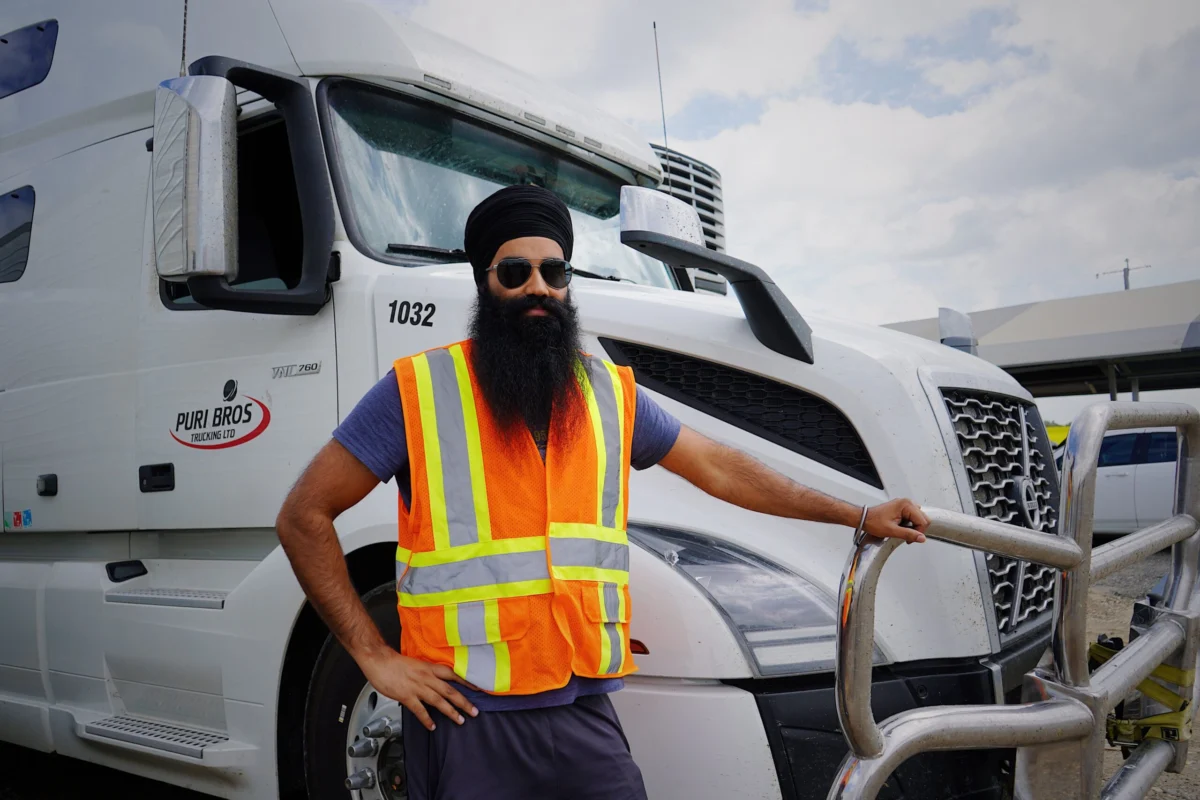
As the Federal Motor Carrier Safety Administration (FMCSA) moves closer to finalizing a Notice of Proposed Rulemaking (NPRM) regarding English Language Proficiency (ELP), the trucking industry finds itself at a crossroads. The proposed regulation seeks to formalize the consequences for commercial drivers who fail to meet federal communication standards, essentially codifying that non-compliance will lead to an "out-of-service" (OOS) designation. While safety remains the stated objective, the initiative has sparked a heated debate involving civil rights advocates, major industry trade groups, and grassroots lobbying campaigns.
The Core of the Proposed Rule
The FMCSA’s latest regulatory push is designed to close perceived loopholes in how ELP is enforced on American highways. Under current federal law, commercial drivers are already required to possess a sufficient grasp of the English language to communicate with enforcement officers, understand road signs, and complete necessary documentation. However, the proposed rule aims to provide teeth to these requirements by ensuring that any failure to meet these standards results in an immediate out-of-service order.
The proposal includes one significant carve-out: commercial traffic localized to the U.S.-Mexico border that does not transit further inland will be exempt. For the rest of the nation’s freight network, however, the FMCSA intends to standardize the repercussions for language barriers, a move the agency argues is essential for public safety and the efficient flow of commerce.
A Chronology of Conflict and Legislative Stagnation
The urgency surrounding the ELP debate has been fueled in part by high-profile traffic accidents that have captured public and political attention. Most notably, the 2024 collision in California involving a driver in the U.S. illegally—which resulted in severe injuries to five-year-old Dalilah Coleman—has become a rallying cry for proponents of stricter oversight.
Following that tragedy, "Dalilah’s Law" was introduced in both chambers of Congress. The bill seeks to tighten Commercial Driver’s License (CDL) issuance processes and mandate stricter ELP adherence. While the House Committee on Transportation & Infrastructure advanced the legislation, it failed to gain traction on the floor, and its Senate companion stalled in committee. With the current congressional calendar drawing to a close, political analysts suggest that the legislation is effectively dead for the current session, leaving the burden of action squarely on the shoulders of the FMCSA’s rulemaking process.
Grassroots Pressure and the "Dalilah’s Law" Campaign
The public comment period for the FMCSA’s NPRM, which concluded last Friday, saw an unprecedented volume of submissions. A significant portion of these comments originated from an orchestrated email campaign that utilized verbatim language calling for an end to the "saga" of crashes involving unqualified drivers. The campaign explicitly invoked Dalilah Coleman’s name, arguing that the driver involved in her accident should never have been permitted behind the wheel.
This lobbying effort highlights the visceral nature of the debate. Supporters of the rule argue that language proficiency is not merely a bureaucratic hurdle but a fundamental safety requirement. They contend that in emergency situations, the ability to communicate with first responders, law enforcement, and fellow motorists is the difference between a minor incident and a fatal catastrophe.
The Sikh Coalition’s Stance: Safety vs. Discrimination
Amidst the calls for stricter enforcement, the Sikh Coalition has emerged as a prominent voice of caution. Representing a significant portion of the U.S. trucking workforce, the organization describes itself as a nonpartisan nonprofit dedicated to defending the civil rights of Sikh Americans.
In its formal comments to the FMCSA, the Coalition stated that it does not oppose the concept of English proficiency as a safety standard. However, it expressed profound concern regarding the potential for the rule to be weaponized as a tool for racial or religious profiling.
Key Concerns Raised by the Sikh Coalition:
- Subjectivity in Enforcement: The Coalition argues that without clear, objective criteria, roadside inspectors may use the ELP rule as a pretext to subject Sikh drivers—who are often identifiable by their turbans and beards—to disproportionate scrutiny.
- Lack of Recourse: There is currently no transparent framework for drivers who are placed out-of-service for alleged language violations to appeal the decision or seek immediate review.
- Historical Precedent: The Coalition points to a 2016 FMCSA decision that removed the OOS requirement for language violations because the Commercial Vehicle Safety Alliance (CVSA) could not substantiate that such a measure yielded a quantifiable safety benefit.
- Data Discrepancies: The Coalition’s own analysis of FMCSA inspection data from 2021 to 2025 indicates that only 0.19% of inspections involved issues with language proficiency. They argue that this statistic suggests the current "problem" is being overstated to justify more aggressive, and potentially discriminatory, enforcement.
The Coalition also cited a recent, widely publicized social media post by the Department of Homeland Security—which was later removed—that targeted "Mr. Singh" and contained derogatory language regarding Sikh drivers. The Coalition argued this incident serves as proof that bias within federal agencies is a genuine threat, stating, "FMCSA has consistently provided reason to believe that it is less interested in improving safety outcomes and more interested in removing certain drivers from the road because of where they come from."
Industry Perspectives: ATA and OOIDA
Major trucking organizations have largely supported the spirit of the FMCSA’s proposal, though they differ in their strategic recommendations for implementation.
The ATA’s "Front Door" Approach
The American Trucking Associations (ATA) expressed concerns that mirror some of the civil rights anxieties regarding subjective enforcement. The ATA noted that current assessment processes are rife with potential for "subjective interpretation." If one officer deems a driver’s English sufficient and another does not, the industry faces an inconsistency that complicates operations and undermines fairness.
To remedy this, the ATA has urged the FMCSA to collaborate with states to establish a standardized ELP assessment during the CDL issuance and renewal process. By catching deficiencies at "the front door"—before a driver is licensed—the industry could ensure a consistent, national standard rather than relying on inconsistent, stressful, and potentially biased roadside evaluations.
OOIDA’s Focus on Historical Enforcement
The Owner-Operator Independent Drivers Association (OOIDA) took a more aggressive stance, emphasizing the decline in ELP enforcement over the last decade. OOIDA pointed to the 2015 removal of the ELP requirement by the CVSA as a turning point that led to a "decade of non-enforcement."
Citing data that showed a drop from over 100,000 ELP violations at the roadside in 2014 to roughly 9,700 in 2024, OOIDA argued that the lack of oversight has permitted hundreds of thousands of unqualified drivers into the industry. They maintain that the surge in foreign-issued, non-domiciled CDLs has further exacerbated the safety crisis on U.S. roads.
Implications for the Future
The spike in ELP-related OOS orders during this year’s "Roadcheck Week," where such violations accounted for 9.1% of all OOS orders, suggests that enforcement is already intensifying even before the new rule is finalized. This trend signals a shift toward more rigid, inspection-based gatekeeping.
The dilemma facing the FMCSA is clear: how to draft a rule that satisfies the public demand for increased highway safety while ensuring that the enforcement mechanism does not devolve into discriminatory profiling. The agency is now tasked with synthesizing thousands of comments, including the calls for objective, standardized metrics from the ATA and the urgent pleas for civil rights protections from the Sikh Coalition.
As the industry waits for the final rule, one thing is certain: the debate over English language proficiency has moved beyond a simple discussion of vocabulary and grammar. It has become a complex intersection of national security, road safety, and the fundamental promise of equitable treatment for all Americans working in the transport sector. Whether the FMCSA opts for a "front door" licensing reform or a more aggressive roadside enforcement policy will define the regulatory landscape for years to come.

 Nana Muazin
 Ali Ikhwan
 Layla Zulfa
 Nana
Nana
 Pevita Pearce
 Rifan Muazin

 Iffa Jayyana