
 Siti Muinah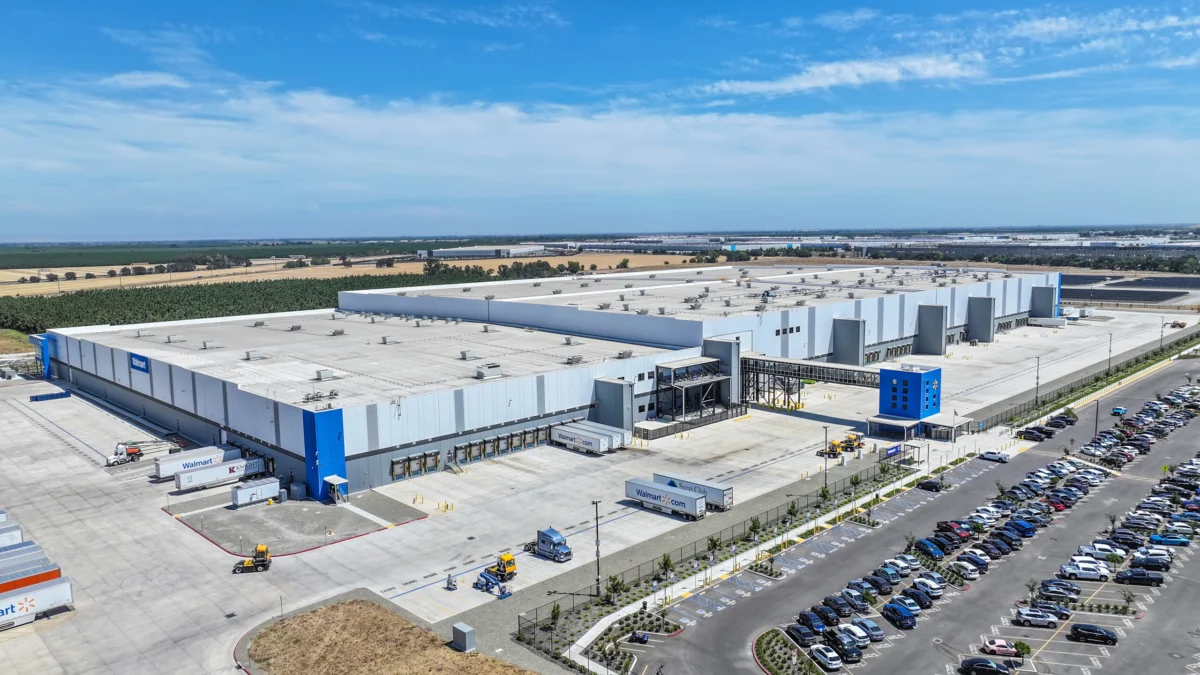
Walmart has officially inaugurated its fifth next-generation fulfillment center in Stockton, California, marking a pivotal moment in the retail giant’s ongoing transformation of its supply chain. The massive 900,000-square-foot facility is designed to bolster the company’s storage capacity and significantly improve order fulfillment efficiency across California and the broader West Coast. As Walmart continues to solidify its position as the No. 2 retailer in North America by e-commerce sales—according to the Digital Commerce 360 Top 1000 Database—this investment represents a strategic maneuver to maintain a competitive edge in an increasingly delivery-obsessed marketplace.
Main Facts: A New Benchmark in Logistics
The Stockton facility is not merely a warehouse; it is a sophisticated technological ecosystem. At its core lies an automated, high-density storage and retrieval system that fundamentally changes the physical movement of inventory. Traditionally, warehouse workers were required to traverse vast facility floors to pick items manually. In the new Stockton model, the technology brings the products directly to the associates.
This innovation has successfully condensed a standard 12-step fulfillment process into just five steps. By eliminating the need for extensive travel time within the facility, Walmart allows its human workforce to focus on higher-value tasks, such as quality control, complex sorting, and inventory management. This shift is part of a broader corporate strategy to integrate advanced automation with human expertise to create a safer and more streamlined working environment.
Chronology: The Evolution of Walmart’s Fulfillment Strategy
To understand the significance of the Stockton facility, one must look at the trajectory of Walmart’s logistics investments over the last several years.
- The Pre-Automation Era: Historically, Walmart’s fulfillment network relied on massive, labor-intensive regional distribution centers. While effective for bulk inventory, these facilities were not optimized for the rapid, high-frequency demands of modern e-commerce.
- The Pivot to Next-Gen: Over the past three years, Walmart has pivoted aggressively toward "next-generation" fulfillment centers. These sites prioritize robotics and AI-driven inventory systems. The Stockton facility is the fifth of its kind, following the successful implementation of similar models in strategic logistics hubs across the United States.
- Fiscal Q2 2026/2027 Milestones: In recent earnings calls, the company revealed that more than half of its e-commerce fulfillment volume is now processed through these automated facilities. Furthermore, the company has integrated automated freight systems into over 3,100 of its U.S. stores, proving that the Stockton model is part of a larger, systemic upgrade of the entire retail footprint.
- Present Day: The opening of the Stockton site serves as the latest pillar in a network that now allows Walmart to reach 95% of the U.S. population with either next-day or two-day shipping.
Supporting Data: Quantifying the Competitive Edge
The data behind Walmart’s recent performance underscores why such massive capital expenditures are necessary. In fiscal Q1, Walmart U.S. online sales saw a robust growth of 26%. Company leadership, including Chief Financial Officer John David Rainey, has repeatedly identified delivery speed as a "key catalyst for growth."
The metrics are compelling:
- Speed to Door: Walmart can now reach approximately 60% of the U.S. population with delivery in 30 minutes or less—a service level that has been expanded to 38 major U.S. markets.
- Store-Fulfilled Delivery: Over the last two years, the volume of deliveries fulfilled directly from local stores has more than doubled. Notably, 36% of these store-fulfilled orders are delivered in under three hours.
- WFS Growth: The impact of this infrastructure is felt most acutely by the company’s marketplace sellers. Units shipped via Walmart Fulfillment Services (WFS)—the company’s third-party logistics solution—grew by nearly 150% in fiscal Q1.
These figures illustrate a company that is no longer just a brick-and-mortar retailer with a website, but a sophisticated logistics provider that can compete with the likes of Amazon on the metrics that matter most: precision, speed, and volume.
Official Responses: The Strategic Vision
Karisa Sprague, senior vice president in fulfillment operations at Walmart U.S., emphasized that the Stockton facility is a crucial component of the company’s long-term vision. In a recent statement, Sprague noted, "We’re bringing together associates with advanced technology and automation to create a safer, more efficient operation that can fulfill more orders and get products to customers faster. This facility is an important investment in the Central Valley and a critical part of how we’re building the next generation of Walmart’s fulfillment network across the West Coast."
This sentiment was echoed by Walmart CEO and President John Furner during an August investor briefing. "Speed matters, and we have a significant competitive advantage," Furner stated. By leveraging its existing footprint of thousands of stores, Walmart is transforming its physical presence into a distributed network of micro-fulfillment centers, a strategy that the Stockton facility supports by providing the high-speed inventory replenishment needed to feed those local nodes.
Implications for the Retail Landscape
The opening of the Stockton facility has three major implications for the broader e-commerce ecosystem:
1. The Rise of the "Marketplace" Powerhouse
The Stockton facility is not exclusive to Walmart’s first-party inventory. It is a key asset for Walmart Fulfillment Services. As more brands and distributors flock to the Walmart Marketplace, the availability of high-tech, high-speed fulfillment options for third-party sellers becomes a massive differentiator. By offering sellers access to the same logistics infrastructure that Walmart uses for its own goods, the company is effectively lowering the barrier to entry for small-to-mid-sized businesses to offer fast, reliable shipping.
2. Setting a New Industry Standard for Labor
The automation of the 12-step process to a 5-step process is a clear signal that the future of warehousing lies in "cobotics"—collaborative robots working alongside humans. While critics often worry about the displacement of labor, Walmart’s narrative focuses on the transition of workers to "higher-value tasks." This creates a long-term implication for the logistics industry: as physical labor requirements decrease, the demand for tech-literate, process-oriented warehouse staff will rise, forcing a shift in how retailers recruit and train their workforce.
3. A Challenge to Competitors
For competitors, Walmart’s ability to achieve 95% next-day or two-day shipping coverage is a formidable defensive moat. The sheer scale of the Stockton facility, combined with the 3,100 stores already utilizing automated freight, means that the cost-per-package for Walmart will likely continue to drop. This creates a cycle where Walmart can either increase its profit margins or undercut competitors on shipping costs—or both.
Conclusion: The Future of Retail Logistics
As the retail industry moves toward a future where "instant gratification" is the baseline expectation, the importance of backend logistics cannot be overstated. Walmart’s Stockton fulfillment center is a microcosm of the company’s broader ambitions: to use technology to shrink the distance between the product and the customer.
By integrating AI, robotics, and a vast physical store network, Walmart has transitioned from a traditional retailer to a logistics-first company. The Stockton facility is not merely a sign of expansion; it is a declaration that in the battle for the American consumer’s wallet, the victory will be won by those who can deliver the fastest, the most reliably, and with the highest level of technological efficiency. As Walmart continues to integrate its AI commerce capabilities—currently ranked 37th in industry-specific AI benchmarks—the gap between it and its competitors is only expected to widen. The Stockton hub is not just a building; it is the blueprint for the next decade of retail.


 Rifan Muazin
 Azzam Bilal Chamdy
 Laily UPN
 Iffa Jayyana

 Suro Senen
 Lina Hope
 Lina Irawan