
 Nila Kartika Wati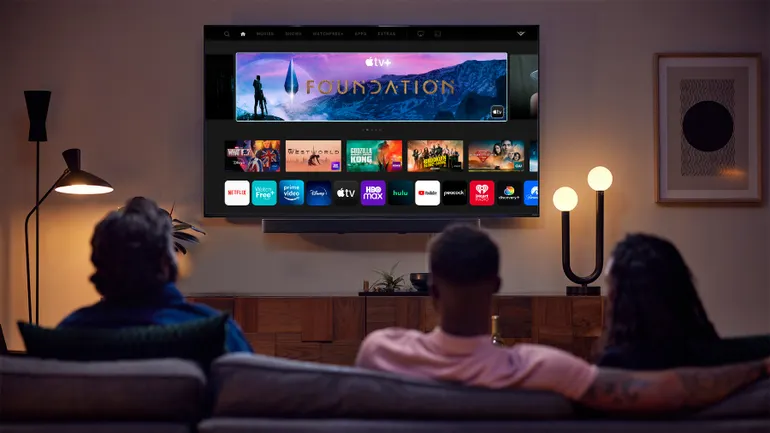
In the rapidly shifting landscape of modern media, the line between social media influence and traditional television is blurring. Vizio, the smart TV hardware giant acquired by retail behemoth Walmart in 2024 for $2.3 billion, is spearheading this convergence. By integrating a massive catalog of creator-led content into its WatchFree+ streaming service, Vizio is not just attempting to capture eyeballs; it is building a sophisticated, full-funnel advertising ecosystem designed to marry the reach of broadcast television with the precision of retail data.
The Strategic Vision: A New Era for Vizio
Since the acquisition, Vizio has transitioned from being primarily a hardware manufacturer into the cornerstone of Walmart’s retail media ambitions. The latest strategic move involves a massive infusion of creator-led programming onto WatchFree+, the company’s Free Ad-Supported Streaming Television (FAST) service.
By prioritizing creators—ranging from YouTube titans like MrBeast to culinary stars like Amaury Guichon—Vizio is acknowledging a fundamental shift in consumer behavior. Modern audiences, particularly younger demographics, prioritize authenticity and community-driven content. By bringing these creators to the "big screen," Vizio is positioning itself as a vital component in the advertising strategies of brands desperate to remain relevant in a fragmented media environment.
Chronology: Building the Vizio-Walmart Ecosystem
The journey toward this current iteration of Vizio’s platform has been marked by rapid expansion and integration efforts:
- 2024: Walmart completes its $2.3 billion acquisition of Vizio, setting the stage for a cross-platform retail media play that connects viewing habits directly to purchase intent.
- Early 2026: Vizio OS experiences explosive growth, reaching 32 million yearly active devices, marking a 20% increase over the previous year.
- Q2 2027 (Fiscal Year): WatchFree+ reports a 58% year-over-year increase in total viewing hours, signaling that the platform’s content strategy is successfully driving retention.
- Mid-2027: Vizio announces the rollout of over 40 new creator-led channels, effectively bridging the gap between social media content and the traditional living room television experience.
- Current Phase: Walmart Connect expands its advertising reach through strategic partnerships with heavyweights like Warner Bros. Discovery and Spotify, moving Vizio’s inventory integration with Magnite from a proof-of-concept to active alpha testing.
Supporting Data: The Metrics of Success
The numbers underlying Vizio’s recent announcements provide a compelling narrative for investors and advertisers alike. The Interactive Advertising Bureau (IAB) projects that U.S. Connected TV (CTV) ad spend will climb 11% in 2026, reaching a staggering $29.3 billion. Vizio is clearly positioned to capture a significant portion of this growth.
The growth of Vizio OS—now serving 32 million active devices—is not merely a hardware statistic; it represents a captive audience for advertisers. When paired with the 58% growth in WatchFree+ engagement, the value proposition for brands becomes clear: consumers are not just buying the screens; they are spending increasingly large blocks of time interacting with the software and content ecosystems hosted upon them.
Furthermore, the financial health of the broader Walmart advertising arm provides a tailwind. Walmart Connect, excluding Vizio, reported a 43% year-over-year revenue increase in the second quarter of fiscal year 2027. This fiscal strength provides the capital and the mandate necessary to continue innovating in the CTV space, ensuring that Vizio remains at the cutting edge of ad-tech developments.
The Content Strategy: From MrBeast to Holiday Specials
Vizio’s content strategy is designed to be as broad as it is deep. By securing channels from creators like Celine Dept, The Royalty Family, Ben Azelart, Ryan Trahan, and Nick DiGiovanni, Vizio is effectively importing the most engaged segments of YouTube into the living room.
Beyond simply aggregating existing content, Vizio is investing in original production. The upcoming Holiday Chocolate Workshop, featuring world-renowned chocolatier Amaury Guichon, is a blueprint for the future of branded entertainment. By offering this series exclusively on WatchFree+, Vizio is creating a "walled garden" that provides exclusive brand integration opportunities—something that is increasingly difficult to achieve in the open-web social media environment.
Additionally, the partnership with First We Feast’s Hot Ones underscores the platform’s commitment to high-production-value, culturally relevant programming that drives social buzz and sustained viewership.
Official Responses and Industry Sentiment
The industry response to this integration has been largely positive, particularly from brands looking for more reliable ways to measure the efficacy of their ad spend.
"Where people spend their time watching entertainment matters, and we want GEICO to be part of those moments," stated Arianna Orpello, CMO of GEICO, regarding the insurer’s presenting sponsorship of the exclusive film Jingle Bells Wedding Bells. Her statement highlights the central theme of Vizio’s current strategy: it is no longer about just buying a 30-second spot; it is about embedding brands into the "moments" that audiences genuinely enjoy.
This sentiment is echoed by the broader advertising community, which has increasingly identified creator marketing as a core media channel. As brands grow weary of the lack of transparency in some CTV inventory, Vizio’s ability to leverage Walmart’s first-party retail data offers a level of attribution that is becoming the gold standard in the industry.
Implications: The Future of Retail Media
The implications of Vizio’s current trajectory are significant for both the entertainment and retail industries.
1. The Death of the "Passive" TV Experience
By integrating social creators and interactive content, the television set is evolving into an active, social, and commercial hub. The days of the television as a purely passive "lean-back" experience are ending. Vizio is transforming it into a "lean-forward" experience where shopping, watching, and interacting are tightly coupled.
2. Retail Data Meets Premium Content
The partnership between Walmart Connect and major media players like Warner Bros. Discovery—allowing for private marketplace deals via the Walmart DSP—is a game changer. For the first time, Walmart’s immense retail audience data is being applied to live, premium television advertising. This means an advertiser can potentially see if a viewer purchased a product after seeing a commercial for it during a live sports broadcast, a level of insight that was previously the domain of digital display ads.
3. The Creator Economy’s "Big Screen" Graduation
Creators have long sought the legitimacy and scale of traditional television. By providing these creators with dedicated channels and original series, Vizio is accelerating the transition of the creator economy into the mainstream media hierarchy. For brands, this means they can leverage the high engagement of a creator’s audience while maintaining the brand safety and high-definition quality of the Vizio ecosystem.
4. Competitive Pressure on Streaming Giants
While platforms like Netflix and Disney+ have introduced ad-supported tiers, they lack the retail-first DNA of the Walmart-Vizio combination. By controlling both the hardware (the screen) and the retail infrastructure (the store), Vizio creates a frictionless loop from the advertisement to the shopping cart. This creates a formidable competitive hurdle for pure-play streaming services that must rely on third-party data or retail partnerships to achieve similar conversion results.
Conclusion: A New Paradigm
Vizio’s strategic shift is a masterclass in platform evolution. By recognizing that the future of advertising lies in the intersection of creator-led content and retail-linked data, Vizio is ensuring its place as a critical pillar of the modern marketing mix. As it continues to scale its WatchFree+ service and deepen its integration with Walmart Connect, Vizio is not just selling televisions; it is selling the future of the American living room.
For advertisers, the message is clear: the path to the consumer is no longer just through a demographic slice, but through the specific, content-rich experiences that define their daily lives. Vizio is providing the map, and with the backing of Walmart’s retail powerhouse, it is well-positioned to lead the way.

 Ammar Sabilarrohman
 Layla Zulfa
 Dwi Wanna
 Muslim
 Nana Wu

 Rifan Muazin
 Asro
Asro