
 Evan Lee Salim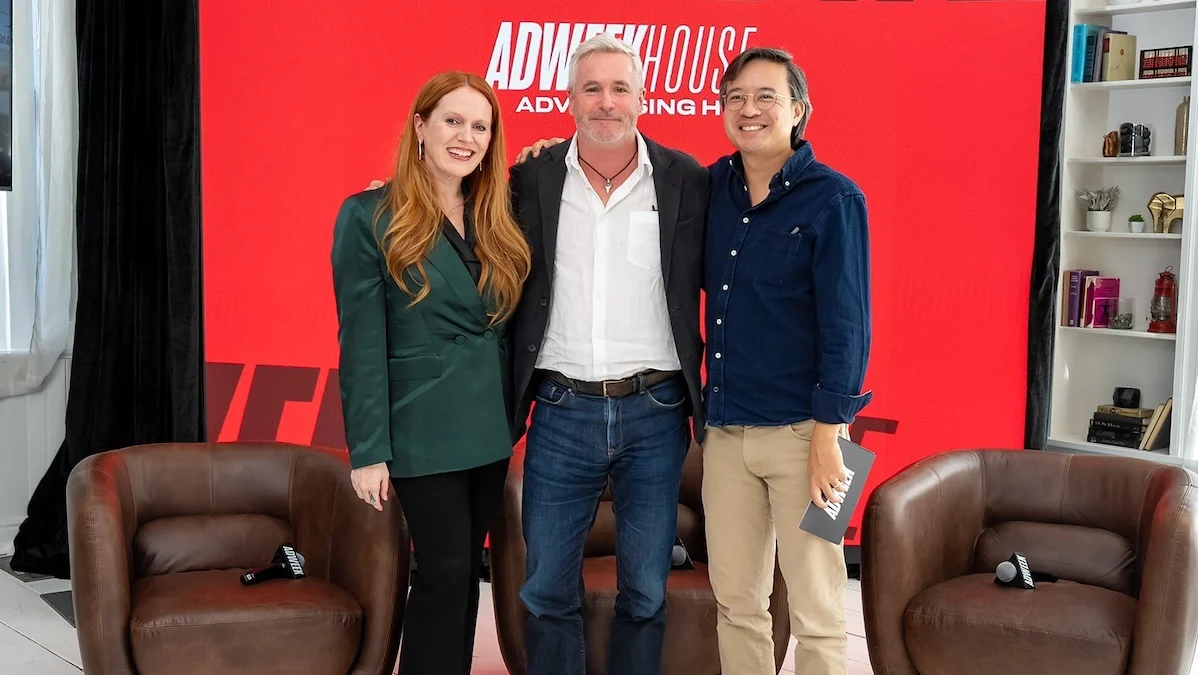
This article was created in partnership with Zappi.
In the contemporary digital landscape, the "attention economy" is no longer a static arena; it is a fragmented, hyper-competitive ecosystem where consumer focus is the most precious commodity. As digital noise reaches an all-time high, marketers find themselves locked in an escalating arms race to not only capture a fleeting glance from a scrolling user but to hold it long enough to drive meaningful business outcomes.
During a recent fireside chat at the ADWEEK House Advertising HQ, Ryan Joe, editor-in-chief of ADWEEK, moderated a deep-dive conversation with the leadership team from Zappi—Steve Phillips, chief innovation officer, founder, and chair, and Nataly Kelly, CMO. The discussion centered on a critical industry pivot: moving away from the vanity metrics of "borrowed attention" toward a strategy rooted in creative effectiveness and authentic brand connection.
The Illusion of Engagement: When Attention Fails to Convert
The conversation began with a sobering reality check based on Zappi’s latest annual industry report, The State of Creative Effectiveness. The report, which analyzed a vast array of social media advertisements to quantify viewer engagement, suggests that while marketers are increasingly proficient at grabbing eyeballs, they are failing to translate that exposure into lasting brand loyalty or sales.
The Celebrity Trap
Nataly Kelly highlighted a recurring blind spot in modern advertising: the over-reliance on external signals of popularity. "Advertisers are undeniably good at getting attention, but they are struggling to build a connection with consumers," Kelly noted.
The data suggests that the "easy win"—partnering with a trending influencer or a high-profile celebrity—is often an empty gesture. Without a strategic throughline connecting the talent to the brand’s core identity, these campaigns frequently fall flat. "What the highest-performing ads do," Kelly explained, "is draw a clear, intentional throughline to distinctive brand assets and make sure those assets are front and center."
Redefining Brand Assets
For many marketers, "brand assets" are relegated to a static brand guidelines document: the logo, the specific hex codes for corporate colors, and the approved font families. However, Steve Phillips argued that this limited view is a barrier to effectiveness.
"Every client thinks they know what their distinctive brand assets are, but it’s not just the logo, it’s not just the colors," Phillips argued. "It might be the type of story arc in your advertising or the type of humor related to you. That storytelling can be a much more distinctive brand asset than a visual badge."
In an era where consumers are inundated with thousands of messages daily, the "how" of communication—the cadence of a story, the specific emotional resonance of the humor, or the unique perspective of the brand—serves as a stronger anchor for recognition than a logo ever could.
Chronology of the Crisis: From TV to the Infinite Scroll
To understand the current malaise in marketing effectiveness, one must look at the evolution of media consumption. For decades, the television commercial provided a captive audience. The creative process was deliberate, high-budget, and linear.
The Rise of "Struggling with Scroll"
As the center of gravity shifted to mobile and social platforms, the industry faced a rude awakening. Phillips coined the term "struggling with scroll" to describe the phenomenon where brands attempt to force TV-style creative into environments where consumers are conditioned to bypass content at lightning speed.
- The Formulaic Trap: To manage the sheer volume of content required for social media, marketing teams often implement rigid creative guidelines. Over time, these guidelines become the master rather than the servant, stifling the very creative energy needed to break through the noise.
- The Indifference Epidemic: When the process dictates the output, the creative becomes "formulaic." Phillips warns that the greatest threat to a brand today isn’t necessarily negative feedback—it is consumer indifference.
- The Cost of Inaction: If an ad is ignored, the brand hasn’t just failed to convert; it has effectively burned its budget. "Marketers need to think creatively about making a story and making it authentic for the consumer, the creator, and the brand," Phillips emphasized.
Supporting Data: The Disconnect Between Reach and Impact
The State of Creative Effectiveness report underscores a significant gap between creative intent and market reception. Key insights from the study indicate:
- The "Celebrity Halo" Fallacy: Ads featuring high-profile influencers often show high initial view rates but fail to drive significant lift in purchase intent compared to ads that focus on distinctive brand storytelling.
- Creative Uniformity: The study found that nearly 65% of social media assets tested across a variety of global brands relied on nearly identical structural formats, leading to "creative fatigue" among audiences.
- The Power of Story Arcs: Ads that established a recognizable brand story arc within the first three seconds showed a 22% higher retention rate than those that led with product shots or logo reveals.
These metrics suggest that the industry has spent the last five years optimizing for the algorithm at the expense of the human, creating a landscape where brands are "loud" but ultimately "unheard."
Official Responses: The Zappi Vision for AI-Augmented Creativity
A pivotal portion of the discussion addressed the role of artificial intelligence in restoring human-centric creative strategy. The challenge, according to Phillips, is not that marketers lack ideas, but that they lack the bandwidth to test the sheer volume of assets required for modern omnichannel campaigns.
The Rise of the "Synthetic Consumer"
Zappi has pioneered the use of "synthetic audiences"—AI-generated, data-driven simulations of real customer segments. This technology allows brands to stress-test thousands of creative iterations at a scale that was previously impossible.
"Testing all of them with humans is too time-consuming and too expensive," Phillips explained. "However, you do want feedback on every piece of creative. You want to know whether it’s good, whether you can improve it, but also—critically—you want to understand: does it fit with the rest of the campaign?"
A Hybrid Future
Crucially, Zappi does not advocate for the total removal of human feedback. Instead, the strategy involves a sophisticated hybrid model:
- Human Testing: Reserved for high-stakes core campaign assets, brand-defining hero films, and sensitive messaging where human nuance is irreplaceable.
- Synthetic Testing: Used for the rapid iteration of derivative assets, social media variations, and tactical messaging. This allows teams to iterate in real-time, ensuring that every asset in a campaign ecosystem is optimized before it ever hits the feed.
Implications: The Road Ahead for CMOs
The implications of this shift are profound for marketing leaders. As we move into a period of increased economic scrutiny, the mandate for "creative effectiveness" is no longer optional.
1. Reclaiming Authenticity
The "borrowed attention" model—relying on someone else’s fame to carry a brand—is reaching a point of diminishing returns. CMOs must pivot toward "earned attention," where the brand itself, through its unique storytelling assets and authentic voice, becomes the draw.
2. Operationalizing Innovation
The use of synthetic consumers represents a shift in operational philosophy. By integrating AI-driven insights into the creative workflow, teams can move from "gut-feeling" decision-making to data-informed creative strategy. This doesn’t limit creativity; it provides the guardrails that allow creatives to take bolder risks, knowing they have a feedback loop that will catch errors before they reach the public.
3. The End of the "One-Size-Fits-All" Ad
The age of the monolithic campaign is effectively over. In its place is an ecosystem of interconnected assets. The future belongs to brands that can successfully deploy a consistent story across fragmented platforms while maintaining the agility to adapt that story to the specific context of the consumer’s scroll.
As Steve Phillips concluded, the goal is to bridge the gap between the speed of the scroll and the depth of the brand. By leveraging technology to handle the heavy lifting of testing and optimization, marketers can finally return to the most important task of all: telling stories that people actually want to hear.

 Ammar Sabilarrohman
 Layla Zulfa
 Dwi Wanna
 Muslim
 Nana Wu

 Rifan Muazin
 Asro
Asro